actuellecd

Blog

3585 results
  • 152
  • 153
  • 154
  • 155
  • 156
  • 157
  • 158
  • 159
  • 160
  • Solitary Pleasures in Montreal Mirror

    “Music Reviews”, Lawrence Joseph, Montreal Mirror, March 22, 2012
    Thursday, March 22, 2012 Press

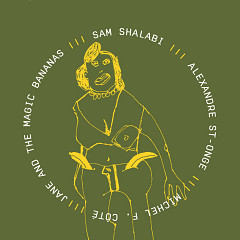
    Diary of a year in verse / Spring and summer months over-represented / Anderson’s declarative voice backed by minimalist noise trio / Shalabi, guitar / St-Onge, sensitive bass and electronics / Côté, drums and eerie microphone feedback / Daily mundane observations / Bodily functions, scenes on sidewalks, cats in the park / Alternate with metaphysical ramblings / Friend’s experience with chemotherapy / Very Montréal / Weather references / Drive to the country / Talk of the Casa, Pharmaprix and drinking. 8/10

    Very Montréal

    Jane and The Magic Bananas in Monsieur Délire

    “Listening Diary”, François Couture, Monsieur Délire, March 16, 2012
    Friday, March 16, 2012 Press

    On paper, it is tempting to approach Jane and the Magic Bananas as a variation on Klaxon Gueule. However, a first spin throws that away. It rather feels like a free form jam band. Tracks are short (nothing beyond five and a half minutes) and left relatively undefined — the whole album could be seen as a loose suite. I will have to revisit this one on a less frantic morning.

    I will have to revisit this one

    Ctenophora in Monsieur Délire

    “Listening Diary”, François Couture, Monsieur Délire, March 16, 2012
    Friday, March 16, 2012 Press

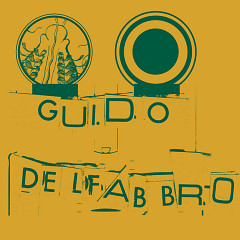
    This is a very different endeavour for Montréal violinist/multi-instrumentalist Guido Del Fabbro (Rouge Ciel, Fanfare Pourpour, etc.). This solo album is a whole different story than Carré de sable or Agrégats. Short at 35 minutes, it features five compositions superimposing tracks of electronics, analog synthesizers, and violin/recorder loops. Each track weaves a strange, alienating, yet fully functional soundworld. An odd but artistically successful proposition.

    An odd but artistically successful proposition.

    Anuraaqtuq in The Squid’s Ear

    “Heard In”, Kurt Gottschalk, The Squid’s Ear, March 12, 2012
    Monday, March 12, 2012 Press

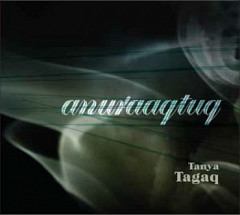
    Having earned her avant pop stripes working with Bjork and Mike Patton, Inuit throat singer Tanya Tagaq plunged deeper into the fringes at the 2009 Guelph Jazz Festival where she was paired with drummer Jean Martin and violinist Jesse Zubot, two movers in the Toronto out jazz scene. To say her music got stranger or more abstract would be hasty — the tradition she mines is pretty deep — but she now had a standing band and was plugged into the Canadian festival circuit.

    Tagaq is an animated performer. Enormously so, and the tradition of Inuit throat singing lends well to that. Similar in technique to the more familiar Tuvan throat singing (made known in the free improv world by Mongolian vocalist Sainkho Namtchylak), the Inuit style is more centered on storytelling and humor. The singer may portray hunting scenes, emulate animal sounds, or reach deep into fear, sadness, joy or sexuality. Tagaq draws from all of these in her evocative performances. She is raw and unbridled and often channels an eroticism unusual in the staid and intellectual free improv scene. (No sex please, we’re post-jazz.)

    Anuraaqtuq is Tagaq’s third record and her first with Martin and Zubot. The 2005 Sinaa received scant distribution outside Canada, despite winning several Canadian Aboriginal Music awards, so 2008’s Auk/Blood, released on Patton’s Ipecac label, was many listeners’ first introduction to her. It was a daring but uneven record, pulled in different directions by a varied cast of contributors. Anuraaqtuq on the other hand is an hour of out-of-her-gourd spontaneity. The freedom of the extended improvised session suits Tagaq well; She has nothing but room here to stretch and freak out. And drenched in reverb, the disc is far from a stark and pristine session. Martin and Zubot play their parts perfectly, always supporting her but never letting the ground beneath her feet get too firm.

    Ten years into her performing career, it still seems early to tell where Tagaq might go with her avant garde Inuit art. But there’s a world of long-form experimentation already inhabited by such vocalists as Namtchylak, Makagami Koichi and Phil Minton, which is there for the taking if she wants it.


    Anuraaqtuq is an hour of out-of-her-gourd spontaneity. The freedom of the extended improvised session suits Tagaq well; She has nothing but room here to stretch and freak out.

    Jane and The Magic Bananas in Vital

    “Review”, Frans De Waard, Vital, no. 823, March 12, 2012
    Monday, March 12, 2012 Press

    The other release is by at least two musicians by whom we hear more music on the same label: Alexandre St-Onge on bass and electronics and Michel F Cote on amplified drums, along with Sam Shalabi on electric guitar. All three known from their experiment in improvised music, and here they do the same, but with a slight twist. It seems to me they are using the ’no wave/no new york’ format of a slightly more pop-like character, sans any vocals of course. Nervous hectic playing on all three instruments, but occasionally leaping into a bit of a rock mode, all in a very free reign of play. Jazzy also times, but not as much as one could all too easily think. Quite a vibrant and energetic release. Exactly the right Ultra spirit, but then from Montréal.

    Quite a vibrant and energetic release.

    Ctenophora in Vital

    “Review”, Frans De Waard, Vital, no. 823, March 12, 2012
    Monday, March 12, 2012 Press

    The picture of Guido Del Fabbro shows a young man with a violin, which in the opening seconds/minutes of his Ctenophora release shows. But it quickly moves into something else, and that something else is not easy to define. At first it seems that it’s all electronic manipulation of those first few violin sounds, but the cover also lists ‘flutes a bec’ and ‘electroniques’ as well as ‘synthetiseurs’, but these instruments are also presented as they are. That makes an odd result of improvisation, composition, analogue and electronic music. Quite interesting music I must say, perhaps because its so difficult to define. At times very modern classical, but then with all those microscopic pulses, gliding electronic scales, crackles, also very much the work of improvised electro-acoustic music. Fascinating collision of styles and ideas in some gorgeous sounding set of five pieces. Could have been seven as far as I’m concerned, as every time I play it, I regret it’s over.

    … every time I play it, I regret it’s over.
  • 152
  • 153
  • 154
  • 155
  • 156
  • 157
  • 158
  • 159
  • 160