actuellecd

Blog

3585 results
  • 115
  • 116
  • 117
  • 118
  • 119
  • 120
  • 121
  • 122
  • 123
  • Time of the Sign in Nowamuzyka

    “Review”, Łukasz Komła, Nowamuzyka, January 13, 2015
    Tuesday, January 13, 2015 Press

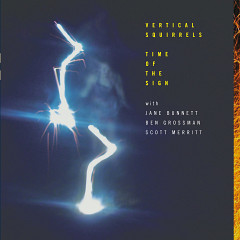
    Vertical Squirrels is a Canadian quartet — Daniel Fischlin, Ajay Heble, Lewis Melville and Ted Warren — that loves to work with other musicians, as confirmed on their latest album, Time of the Sign. The album includes organic sounds, hurdy-gurdy, guitar, flute, percussion, and wind instruments all merged in a very interesting way of improvising that comprises minimalism, post-rock, free jazz, and spiritual jazz. This is not reminiscent [as per their first album with AM] of the work of Frank Zappa, foreign, or German rock bands from the 70s — and I think fans of The Necks will love the album Time of the Sign.

    … very interesting way of improvising that comprises minimalism, post-rock, free jazz, and spiritual jazz.

    La règle in Nowamuzyka

    “Recenzje”, Łukasz Komła, Nowamuzyka, January 13, 2015
    Tuesday, January 13, 2015 Press

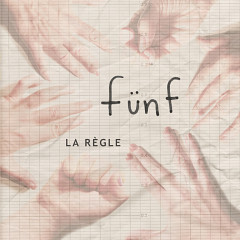
    Żeński kolektyw Fünf z Montrealu na swoim albumie „La Règle” zabiera nas do świata muzyki improwizowanej. Twórczość tych znakomitych artystek cechuje ich nietuzinkowe podejście do tworzenia systemów amplifikacji i instrumentów, a mam tu na myśli: własnej roboty syntezatory, oscylatory, hydrofony, różnego rodzaju odbiornik generujące fale radiowe i wiele innych instrumentów zrobionych z niepotrzebnych rzeczy, które w ich rękach dostają nowe życie. „La Règle” to dwanaście kompozycji z okolic elektroakustyki i improwizacji, a także czuć w nich fascynacje tym, co można było usłyszeć w latach 60. w zbiorach bibliotek muzycznych BBC.

    Pour en finir, Klaxon Gueule in BRBR

    Pour en finir de Klaxon Gueule…”, Ariane Gruet-Pelchat, BRBR, January 5, 2015
    Monday, January 5, 2015 Press

    Pour en finir n’annonce pas la fin du groupe Klaxon Gueule. À la limite, si le titre de ce sixième disque annonce quelque chose, c’est plutôt le début d’une nouvelle ère pour cet ensemble montréalais de «free electronic» actif depuis presque 20 ans.

    C’est en tout cas ce qu’Alexandre St-Onge suggère, sourire en coin, en faisant référence à la longueur du titre. Après les disques Bavards, Muets, Grain, Chicken et Infininiment, Pour en finir détonne effectivement avec ses trois mots. À l’intérieur de la pochette, on observe la pyramide formée par l’étalage des noms des pièces. C’est que les trois musiciens de Klaxon Gueule ont en commun un goût prononcé pour la littérature et les jeux conceptuels.

    Alexandre St-Onge, Bernard Falaise et Michel F Côté ont tous des parcours particulièrement diversifiés. Le premier — en plus d’être très actif dans l’art sonore, la performance et la littérature — a joué avec les groupes de rock expérimental Et sans, Feu Thérèse, Pink Saliva et Les esprits frappeurs. Les deuxième et troisième ont collaboré avec plusieurs artistes pop (Marie-Jo Thério, Jorane, Frank Martel, Urbain Desbois), en plus d’écrire régulièrement pour la danse et le théâtre.

    Ils se retrouvent quelques fois par année pour jouer ensemble sous le nom de Klaxon Gueule, que ce soit en spectacle ou pour enregistrer un nouveau disque. Si en spectacle Klaxon Gueule fait de l’improvisation totale, celle-ci n’apparait sur disque qu’une fois traitée. «C’est comme une vente aux enchères, relate Falaise. On se fait un souper, on écoute nos impros et on choisit celles qu’on veut prendre. Puis on part chacun de notre côté avec par exemple huit pièces chacun, pour les mixer.» «Ça crée plein de plans de matière qu’on peut structurer comme des compositions», complète St-Onge. Sur leur second disque, une même improvisation sert même de base à deux mix différents. Il faut dire qu’à l’époque de Muets, Klaxon Gueule était dans une phase considérablement bruitiste.

    «J’étais dans une passe assez radicale», avoue St-Onge, qui, à ce moment, avait complètement délaissé la basse. «On est arrivés pour enregistrer et Alex faisait juste des pssssssshhhhtttttt, et on l’a suivi là-dedans Michel et moi, raconte Falaise. Mais c’est ce qui fait que le groupe a perduré, parce que c’est devenu vraiment intéressant.» En s’attardant sur la discographie de Klaxon Gueule, on peut suivre un peu les tendances qui ont porté les trois musiciens pendant les 20 dernières années. Si le matériau utilisé par Falaise change peu (guitare électrique et pédales d’effets), celui de St-Onge et de Côté est rarement le même. St-Onge, qui fait de la synthèse sonore, n’utilise jamais ses sons deux fois. «On est passés par toutes sortes de trucs, explique St-Onge. Pour en finir est comme une synthèse de nos périodes électroniques avec un retour au free. Je rejoue de la basse articulée, ce que je n’avais pas fait depuis longtemps.» Même si l’électronique est abondamment utilisé dans les improvisations qui servent de base aux pièces finales, il a été utilisé avec parcimonie dans les mix.

    Parallèlement à Klaxon Gueule, les trois musiciens se côtoient régulièrement au sein d’autres projets. Le 14 décembre dernier, en même temps que le lancement de Pour en finir, St-Onge et Falaise sortaient aussi un disque sous le nom de Bibittes avec Éric Forget. Le 14 janvier prochain, à l’occasion du lancement du disque solo Le sujet modifiant le sujet d’Alexandre St-Onge et du disque Botul à la campagne de Michel F Côté et Tiari Kese sur Squint Fucker Press (on vous avait dit qu’ils ne chômaient pas), les trois joueront selon diverses configurations, notamment avec Sam Shalabi, avec qui Côté et St-Onge ont un groupe appelé Jane and the Magic Bananas. «Ce que je trouve fascinant, commente Falaise, c’est que dès que tu changes un membre à un groupe d’improvisation ou même de composition, tout change. Et même quand je suis avec Alexandre et Éric, mon rapport à Alex change comparativement à quand on est avec Michel. À chaque fois on se construit un vocabulaire qui marche avec les deux autres. La meilleure manière de ne pas se scléroser c’est de jouer dans plusieurs formations différentes, idéalement plus d’une fois.» Avec Klaxon Gueule, les trois musiciens évitent les longues improvisations. «On aime mieux explorer une chose et arrêter quand le tableau est fini. Souvent, dans les improvisations, les moments longs, fastidieux ou maladroits sont les transitions entre différents paysages», explique Falaise.

    Amateurs déclarés de la littérature oulipienne, les trois musiciens se sont encore une fois gâtés avec les titres des pièces de Pour en finir, évitant les «ennuyeux» titres illustratifs. En plus de former une pyramide, ceux-ci peuvent être lus à la suite l’un de l’autre ou indépendamment à la suite du titre. «Il y a plusieurs références à des grands textes de la littérature, ajoute St-Onge, comme Pour en finir avec le jugement de Deleuze et Pour en finir avec le jugement de dieu d’Antonin Artaud.» Ils avaient bien essayé d’autres idées, mais les symboles chimiques de différents poisons donnaient une allure inutilement sombre à un projet qui a toujours une touche d’humour.

    Pour en finir n’annonce pas la fin du groupe Klaxon Gueule […] c’est plutôt le début d’une nouvelle ère…

    Transparence in Le son du grisli

    “Chroniques en trois lignes”, Luc Bouquet, Le son du grisli, January 3, 2015
    Saturday, January 3, 2015 Press

    Du dédale que construit Philippe Lauzier ne pourront s’échapper que des souffles amples, vastes, abondants, amis. Ce souffle brise-glace fore le continu. Le souffle se module, se gonfle, admet de fines moisissures mais, toujours, refuse la désunion. A chaque nouveau tableau, un continuum. A chaque nouveau monde, la douceur des prologues. Clarinettes et saxophones malaxent la matière, cristallisent le granuleux. Ils oscillent et hypnotisent l’auditeur. Les techniques étendues ne sont que prétextes: le souffle ne se voudrait que fluet et menu qu’il ne pourrait cacher sa douceur, sa bienveillance. Précisément ceci: un disque de douceur et de bienveillance.

    Un disque de douceur et de bienveillance

    La vie commence ici in Wall of Sound

    “Review”, Neil Hobkirk, Wall of Sound, December 31, 2014
    Wednesday, December 31, 2014 Press

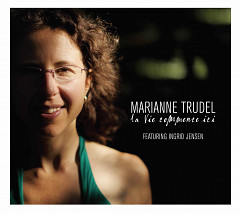
    The three times I’ve seen Marianne Trudel perform in person, she’s radiated rapture. Alert at the piano, she looked possessed by her music, expressions of intent thoughtfulness and unfettered joy alternately crossing her face. It’s important to emphasize:her music.” Ms. Trudel’s fingers can channel other folks’ notes, but so far her reputation has relied on her own composing.

    To sample the distinctive delights of Marianne’s music making, listen to the track “Soon” from her new album La vie commence ici. Despite the heavy tread of drummer Robbie Kuster—otherwise a member of rock band Patrick Watson—“Soon” soars aloft ineluctably. The lyrical main melody Trudel entrusts to trumpet and tenor sax, which hug each other tight throughout the tune. At one point Ingrid Jensen breaks away to dispatch a slithery trumpet solo atop the composer’s muscular piano comping. The second solo comes from Morgan Moore, whose unhurried fingerwork on double bass registers with a woody warmth familiar from his work on Ranee Lee’s recent release on the same label, What’s Going On (Justin Time, 2014). The final solo of the piece finds Trudel originating a rhapsodic tributary of notes, proof of her own improvisational prowess. Saxophonist Jonathan “Bunny” Stewart remains a stalwart team player throughout, thickening textures with his broad calm throatiness. Unfolding decisively with anthemic uplift, “Soon” impacts mission statement-style, like a musical calling card. Here’s a composer, it announces, with her own identifiable sound.

    And this is identifiably her album: managing matters from the keyboard, Marianne Trudel’s all over the place—at times soloing, at others supplying connective tissue between players or nudging them towards moments of surprise. Besides leading the band and composing the music, Trudel served as record producer. Production costs were partly covered through a successful Indiegogo crowd funding campaign, and La vie commence ici ultimately surfaced on Montreal’s Justin Time Records.

    Three years ago, Montreal’s other mainstream jazz label Effendi Records released Trudel’s truly marvellous album Espoir et autres pouvoirs (2011). As revealed in interviews with Peter Hum and Alayne McGregor, the thirty-seven-year-old French Canadian composer began formal jazz education by writing for big band, and that earlier septet date sounds indebted to the large ensemble writing of acknowledged influence Kenny Wheeler—right down to the use of wordless vocals. La vie commence ici returns to the quintet format of her second record Sands of Time (self-released, 2007) but preserves the great trumpeter/flugelhornist’s influence, with the ensemble disproportionately large-sounding and a trumpet star still in the ranks. For Espoir et autres pouvoirs, Ms. Trudel enlisted Lina Allemano, one of Canada’s most adventurous trumpet wielders and bandleaders. Though a formidable soloist, Allemano acted largely as an integral part of a seven-piece band. (To see the septet in action, watch a promo video and performance footage on YouTube.) This time Trudel has built more improvisational space into her pieces, prompting elaborate solo excursions from another maple leaf virtuoso. Nanaimo-born Ingrid Jensen herself cites Wheeler as an inspiration and contributes trumpet to her sister Christine’s Montreal-based Jazz Orchestra. Marianne Trudel’s compositions share a pervasive joie de vivre with Christine Jensen’s, likewise issued on splendid Effendi and Justin Time discs.

    Trudel’s new Justin Time opus opens with the elder Jensen sister in an exposed setting: trumpet in dialogue with piano. The two-minute “Question” breathes the same rarified atmosphere as Ives’ The Unanswered Question and Copland’s Quiet City. Piano keys enact tentative footfalls which the trumpet follows hauntedly, its tone bleached of emotional import. Half the length and halfway through the record, “In the Centre” sounds similar notes of desolate ambivalence. Her horn muted, Jensen splutters, slurs and smears pale colours across this tiny canvas while Trudel summons twangs and canorous clatters from inside the piano. Ninth of ten tracks, the four-minute “Night heron” begins as a similarly elemental snippet, but after a minute and a half of abstract equivocation the duo breaks out a gorgeous Trudelian melody delivered haltingly, mirroring a beauty fleetingly glimpsed.

    This third duo foray makes way for the album closer, “Choral.” After a reverently reserved piano progression, Bunny Stewart’s tenor calmly enters like a gentle giant alongside Morgan Moore’s reserved bass. A full-toned trumpet picks up the main theme, the tenor attentively shadowing. Amid exclamations from Kuster’s drums, Moore solos briefly, then Stewart, before Jensen’s horn offers open-throated exclamations of its own. The tune—and the album—tapers to a reposeful close with Trudel and Jensen communing companionably. (An alternate recording of “Choral,” featuring the same quintet, appears on YouTube.)

    The album’s other tracks similarly exploit the opulent sonorities of this small ensemble, arranged and recorded to sound room-filling. Recorded and mixed in Montreal by Paul Johnston, the stereo picture positions you right there on the piano stool beside Trudel, registering every detail of her music with keen immediacy. Her own instrument opens “Deux soleils” crisply with Gallic nonchalance, bringing to mind French forebear Fauré. (Marianne studied classical piano until age 16 and has acknowledged the influence of Romantic-era composers on her playing.) The main theme of this piece, taken up joyously by the full group, affirms her knack for making inspired beauty seem offhand, so readily does it come to hand for her.

    “Urge” confirms Trudel’s ready access to a melodic wellspring. This piece, on which the sax sits out, starts off quietly with serene piano and muted trumpet. Robbie Kuster sticks to brushes at first, then keeps time on ride cymbal as Marianne unwinds the meditative main theme. As the drumming grows forthright, she turns intense, improvising with increasing vigour and complexity. For the final minute and a half, Trudel treats the tune to down-home gospel chords, Kuster’s distinctive rimshots sealing the deal with calypso-inflected festiveness.

    When the sax sits back in, my ears perk up. “Featuring Ingrid Jensen,” the album cover declares, but Jonathan “Bunny” Stewart too contributes invaluably to the six quintet pieces. Familiars from McGill University jazz studies and Banff Centre workshops, Trudel and Stewart have maintained a productive musical partnership stretching back beyond his appearance on Sands of Time. In memory I sometimes revisit a 2008 duo performance by the Quebecois keyboardist and this Kingston, Ontario saxophonist. Before a small Kingston Jazz Festival audience, the pair evinced a special spirit of dialogue, collaborating on each other‘s tunes and improvising empathetically—a musical conversation I felt lucky to be in on. Beyond Trudel’s quintet discs, Stewart’s sax appears to fine effect on the EP Motianless (2012), a collaborative trio tribute to the departed Paul Motian and on the album Times & Places (2013) by the Kingston Jazz Composers Collective.

    Life Begins Here, translates Trudel’s album title. On the title track Stewart’s hearty tenor exhalations and Kuster’s depth-charge tom detonations darkly counterpoint the evolutionary process. This the other instruments enact playfully, Trudel applying extended techniques, Jensen unspooling stuttered lines, and Stewart unholstering his other horn. In a pool of electronics and multitracks, wavelets of trumpet and sax overlap as Bunny’s luminous soprano dances with Ingrid’s instrument and his own tenor. “À l’abri”—a grudging anthem, less resolute than ”Soon”—backgrounds bass and drums, reducing them to the barest pulse while piano, trumpet and tenor take comparatively straight-ahead solos. Bunny’s emerges gusty and gutsy against hushed trumpet accompaniment. On the exquisite tone poem “Le vent est une chance” his soprano sax reappears, intonation perfect. Framed by Trudel’s crepuscular musings, Stewart and Jensen playfully trade solos back and forth—two creatures caught cavorting at nightfall.

    A couple of things I’ve failed to emphasize: the odd appropriateness of Robbie Kuster’s clamorous drum technique, which superadds buoyancy to innately buoyant compositions; and the absolute perfection of the track sequence, which sustains a palpable non-verbal narrative right across the record. In light of such accomplished unity, let’s consider this whole album a calling card—a signifier of Marianne Trudel’s brilliant presence and promise.

    Unfolding decisively with anthemic uplift, “Soon” impacts mission statement-style, like a musical calling card. Here’s a composer, it announces, with her own identifiable sound. […] Absolute perfection of the track sequence, which sustains a palpable non-verbal narrative right across the record. In light of such accomplished unity, let’s consider this whole album a calling card—a signifier of Marianne Trudel’s brilliant presence and promise. […] The two-minute “Question” breathes the same rarified atmosphere as Ives’ The Unanswered Question and Copland’s Quiet City. The four-minute “Night heron” begins as a similarly elemental snippet, but after a minute and a half of abstract equivocation the duo breaks out a gorgeous Trudelian melody delivered haltingly, mirroring a beauty fleetingly glimpsed.
    La vie commence ici in SOCAN — Paroles & Musique

    “Critique”, Gilles Boisclair, SOCAN — Paroles & Musique, December 1, 2014
    Monday, December 1, 2014 Press

    La vie commence ici est un titre qui souligne l’esprit ouvert et chaleureux de la jeune pianiste Marianne Trudel. Délaissant l’expérience en trio de son prédécent projet TRIFOLIA, elle invite la trompettiste canadienne Ingrid Jensen qui vit depuis belle lurette à New York, pour ce nouveau quintette complété par Jonathan Stewart (saxophone ténor et soprano), Morgan Moore (contrebasse) et Robbie Kuster (batterie) qui joue habituellement avec Patrick Watson. Ses 10 compositions vont de la mélancolie (La vie commence ici, Question) à la tension. Marianne Trudel construit pas à pas une œuvre de plus en plus mature et sensible.

    Piece by piece, Marianne Trudel is building a body of work that is increasingly mature and sensitive.
  • 115
  • 116
  • 117
  • 118
  • 119
  • 120
  • 121
  • 122
  • 123