actuellecd

Blog

3585 results
  • 110
  • 111
  • 112
  • 113
  • 114
  • 115
  • 116
  • 117
  • 118
  • Monk Work in The WholeNote

    “Review”, Stuart Broomer, The WholeNote, no. 20:7, March 29, 2015
    Sunday, March 29, 2015 Press

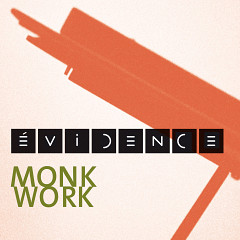
    The compositions of Thelonious Monk represent a unique body of work in the jazz canon, pieces that have been explored repeatedly by musicians from mainstream to avant-garde, many finding something new in Monk’s quirky puzzles of rhythm and harmony. Among the most dedicated advocates is the Quebec trio Évidence, consisting of electric bassist Pierre Cartier, saxophonist Jean Derome and drummer Pierre Tanguay who together have been exploring Monk’s music since 1985, and who in 2014 interpreted his complete works in a three-day Montreal marathon. Évidence brings its own voice to this selection, mixing and matching the familiar and obscure in Monk’s repertoire. Stylistically Évidence invokes another master, Ornette Coleman, with Derome developing a similar lyricism while the rhythm section work masterfully through the kind of flexible, sprung rhythms that distinguished Coleman’s early work. Derome plays baritone on Coming on the Hudson with a wry wit akin to Monk’s own, while Cartier maintains fluid rhythm and Tanguay sustains the mood with light, crisp, animating brushwork. Derome’s vocalic alto comes to the fore in the fine three-way dialogue of Skippy.

    Évidence brings its own voice to this selection, mixing and matching the familiar and obscure in Monk’s repertoire.

    John Cage: Four in Nowamuzyka

    “Recenzje”, Łukasz Komła, Nowamuzyka, March 27, 2015
    Friday, March 27, 2015 Press

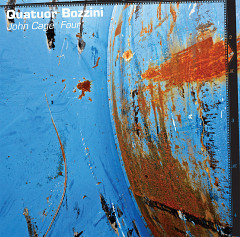
    Niezwykle ceniony kanadyjski kwartet smyczkowy Quatuor Bozzini: Clemens Merkel (skrzypce), Alissa Cheung (skrzypce), Stéphanie Bozzini (altówka), Isabelle Bozzini (wiolonczela), sięga po trzy różne nagrania Johna Cage’a. Pierwsza kompozycja to String Quartet in Four Parts (1949-50). W tamtym okresie Cage odchodził od typowej funkcji kompozytora i jednocześnie wcielał się w postać, która pozwoli mu przedstawić swoją twórczość bez większych emocjonalnych i narracyjnych intencji. Kilka dekad później stworzył Thirty Pieces for String Quartet (1983), z kolei w tym utworze Cage położył spory nacisk na określone sekwencje działań w określonych ramach czasowych. Zaś w 1989 roku Amerykanin napisał Four — prace nad tym dziełem rozpoczął już w 1987 roku i prowadził aż do śmierci w 1992 roku. Znakomite interpretacje tych kompozycji znajdziecie na albumie John Cage: Four. Materiał zarejestrowano w kwietniu 2014 roku podczas koncertów w Montrealu.

    Le Sacre du printemps in The Arts Desk

    “Review”, Graham Rickson, The Arts Desk, March 14, 2015
    Saturday, March 14, 2015 Press

    Pierre-Yves Martel’s Quartetski are based in Montreal. They’ve already reinterpreted Prokofiev’s Visions Fugitives and there’s a Bartók disc in the pipeline. Martel’s approach is looser and more anarchic than Hofbauer’s, the ballet recast for drums, electric guitar, reeds and violin. Martel plays viola da gamba, and, tantalisingly, what’s listed as “objets divers”. The 32-minute original is extended here to nearly 50 minutes. The score’s folky roots emerge more strongly, and the improvisation is a lot freer. The extended instrumental solos never outstay their welcome, and Martel’s pungent distillation of the work’s essence continually throws up surprises: the wonderful overlaying of duple and triple time rhythms in Augers of Spring, and the chilliness at the opening of the ballet’s second half. Quartetski’s Sacrificial Dance is a freer, spookier affair: drummer Isaiah Ceccarelli pounds out Stravinsky’s rhythms against a sustained chords and scratchy vinyl samples, before the music fades out. If you love this piece, don’t feel you have to choose between Hofbauer and Quartetski. Buy both.

    The extended instrumental solos never outstay their welcome, and Martel’s pungent distillation of the work’s essence continually throws up surprises…

    Invisible Backgrounds in Voir

    “Critique”, Alex Pelchat, Voir, March 13, 2015
    Friday, March 13, 2015 Press

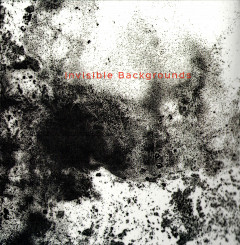
    Le trompettiste Philippe Battikha fut l’un des premiers trompettistes que j’ai eu la chance d’entendre lorsque je me suis intéressé à la scène locale de free jazz en 2008. C’est avec plaisir que je l’ai vu toucher à toutes sortes d’approches au cours des six dernières années, que ce soit avec le métal expérimental de La Part maudite, les improvisations free jazz avec Corse ou le travail plus noisy et électronique en solo. Invisible Backgrounds prend une approche singulière en incluant du matériel très éclectique, allant de la performance jazz solo très mélodieuse à des explorations plus électroniques ainsi que l’utilisation de field recordings. Bien que l’album soit majoritairement un projet solo, l’excellent contrebassiste Jonah Fortune accompagne avec brio Battikha sur deux pièces particulièrement bien réussies. Battikha a aussi profité du studio pour ajouter du piano sur certaines pièces ou pour “multiplier” sa trompette. Trop souvent, les albums solo en musique expérimentale s’en tiennent surtout à un seul son et le choix plutôt créatif de Battikha d’aller toucher à l’ensemble de son identité musicale offre un album de qualité tout en nuance et en beauté.

    Invisible Backgrounds prend une approche singulière en incluant du matériel très éclectique, allant de la performance jazz solo très mélodieuse à des explorations plus électroniques ainsi que l’utilisation de field recordings.

    Seven ElectroAcoustic Septet in Free Jazz Blog

    “Review”, Martin Schray, Free Jazz Blog, March 12, 2015
    Thursday, March 12, 2015 Press

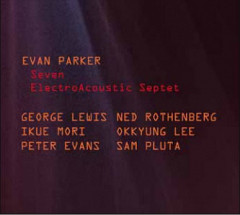
    It was Cecil Taylor who once said that the compositional process begins with the selection of the players. In an allusion to Taylor Evan Parker stated that his art of composition consisted in choosing the right people and asking them to improvise. He also meant that the resulting music arose from this sequence of decisions and that his art of composition consisted in choosing the right people. And with Ned Rothenberg (clarinets, shakuhachi), Peter Evans (trumpets), George Lewis (trombone, electronics), Okkyung Lee (cello), Ikue Mori (electronics) and Sam Pluta (electronics) he chose the perfect musicians for his ElectroAcoustic Septet, which was invited to the 2014 Victoriaville Festival.

    In the field of electro-acoustic contributions to improvised music Evan Parker is a pioneer. At a very early stage he has included electronics and processing in his music, e.g. with his long time companion Paul Lytton on Collective Calls (Urban) (Two Microphones) (Incus, 1972). His interest in sound processing led to the foundation of the Electro-Acoustic Ensemble in 1992, from their first album Towards the Margins (ECM, 1997) up to Hasselt (Psi, 2012), when the ensemble was expanded to 14 musicians (at their latest concerts there were even 18).

    For Seven Parker has reduced the band members for his project drastically, and he has chosen musicians mainly working in the US (often based in New York) with whom he has had a history. With Evans and Pluta he played in Rocket Science, he released a great trio CD with Lee and Evans, worked in a duo with Ned Rothenberg, and his cooperation with George Lewis is history (From Saxophone and Trombone, Incus, 1980). He has even joined Ikue Mori on Near Nadir.

    However, even fans of Parker sometimes have difficulties with his electronic excursions because they think that the part of “real” instruments, its warmth, the organic flow, and the authentic sound is underrepresented. But then again there is a perfect balance between the acoustic instruments and sound processing (Parker doesn’t like the term “electronics”) in his electro-acoustic ensembles because the processors manipulate and treat pre-recorded and live material — it’s rather a transformation of sound.

    The music on Seven sounds as if you were in the middle of a huge and crowded insectarium, with bees, dragonflies, ants, bumblebees, spiders, butterflies and mosquitoes, all grotesquely amplified. The result is a whirlwind of fizzling, gabbling and buzzing — it’s a strange drone. There are ostinato parts, small solos are interspersed, even far eastern elements are integrated (Rothenberg’s shakuhachi), and Parker is able to use his trademark, circular breathing, in a very effective and natural way, so that it becomes a perfect part of the interaction, the density of sound, and the overall consistency.

    Seven is beautiful noise par excellence, a marvelous piece of art, a successful communication, something you can get lost in endlessly. Just splendid.

    Just splendid.

    Volume 2 in The WholeNote

    “Unusual Formats for New Music”, Ken Waxman, The WholeNote, March 1, 2015
    Sunday, March 1, 2015 Press

    Everything old is new again doesn’t go quite far enough in describing formats now available for disseminating music. Not only are downloads and streaming becoming preferred options, but CDs are still being pressed at the same time as musicians experiment with DVDs, vinyl variants and even tape cassettes. Happily the significance of the musical messages outweighs the media multiplicity. […]

    Following up on the new vinyl emphasis, another Montreal-based duo, Pierre-Yves Martel, who plays viola da gamba, objects and feedback, and soprano saxophonist/bass clarinetist Philippe Lauzier, have released the LP Sainct Laurens Volume 2, even though Volume 1 was on CD. The choice is somewhat ironic since the textures the duo creates on these eight tracks relates more closely to computerized miniaturization than direct-to-disc mechanism. For a start, Martel treats the viola da gamba like a hammered dulcimer, using percussive resonation to clip and clank discursive blows even as they define the themes. Lauzier’s usual strategy is to pull strident, almost vibrato-less horizontal tones from his horns, creating parallel responses to Martel’s expositions. Emphasizing his instruments’ wood, metal and reed properties, Lauzier’s tone ranges from pan-flute-like airiness to violent glissandi. Additionally, triggered wave forms add below-the-surface comments, creating more sonic surfaces to explore. Volga is one instance where Martel’s steel-pan-like echoes meet equally bellicose bell-like gongs that are revealed as tongue slaps. As the buzzing timbres separate into reed blowing and sul ponticello string extensions, exhilarating timbres reach a crescendo, yet are craftily and abruptly cut off. This split-second timing plus startling tone integration and partition continues throughout the disc, making the pause between LP sides off-putting, but not insurmountable.

    Emphasizing his instruments’ wood, metal and reed properties, Lauzier’s tone ranges from pan-flute-like airiness to violent glissandi.
  • 110
  • 111
  • 112
  • 113
  • 114
  • 115
  • 116
  • 117
  • 118