actuellecd
  • This website is also available in English.

Blog

3585 results
  • 104
  • 105
  • 106
  • 107
  • 108
  • 109
  • 110
  • 111
  • 112
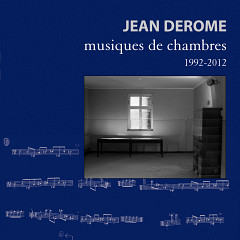
  • Musiques de chambres in Polyphonia

    “Recenzje”, Łukasz Komła, Polyphonia, July 1, 2015
    Wednesday, July 1, 2015 Press

    Jean Derome to jedna z najważniejszych postaci na kanadyjskiej scenie eksperymentalnej. Ten kompozytor oraz muzyk grający na saksofonie i flecie, tworzy już od kilku dekad. Był członkiem wielu eksperymentalnych/jazzowych i rockowych grup. Jest też współzałożycielem oficyny Ambiances Magnétiques. W 1973 roku powołał do życia jedną z pierwszych awangardowo-jazzowych formacji w Quebecu — Nébu. Teraz ukazał się przekrojowy materiał Derome’a z lat 1992 — 2012, gdzie mamy kompozycje rozpisane na różne składy i instrumenty (saksofon sopranowy, trąbka, fortepian, kontrabas, perkusja, marimba, rogi, flet, klarnet etc.). Bogate aranżacje przeplatają się z improwizacją, kameralistyką i minimalizmem, a do tego artysta wprowadza bardzo ciekawe podziały rytmiczne. To wydawnictwo trzeba poznać!

    Havres, À la plage in Revue & Corrigée

    “Chronique”, Pierre Durr, Revue & Corrigée, July 1, 2015
    Wednesday, July 1, 2015 Press

    Encore la scène québécoise… D’un côté […], d’autre part deux artistes sonores, la première impliquée depuis longtemps dans la scène des musiques nouvelles, surtout en tant que productrice radiophonique (elle est responsable de plusieurs créations, souvent enregistrées déjà, d’autres musiciens) et longtemps animatrice à Radio-Canada, la seconde productrice de pièces radiophoniques. […]

    Quoiqu’ayant déjà collaboré à certains enregistrements (de Claude Schryer en particulier) il y a près de vingt ans, ce n’est finalement qu’assez récemment qu’Hélène Prévost s’est engagée dans des créations personnelles plus régulières, comme en témoignent quelques pièces sur diverses compilations (Musicworks 104, par exemple), ou sa participation aux projets Montréal/Victoriaville, matière sonore* et A la plage constitue le premier recueil entièrement sous son nom. Cela pourrait être La plage, matière sonore. Encore que ce ne soit qu’un jeu de mot, la plage étant à prendre ici au sens d’espace enregistré. Il y en a dix. Dix plages donc! Chacune proposant une combinaison propre de sons, issus de bruits, de voix, d’instruments, de nature diverses, offrant chaque fois des climats divers, tourmentés, oniriques ou inquiétants, parfois proche du silence (plage 09)…

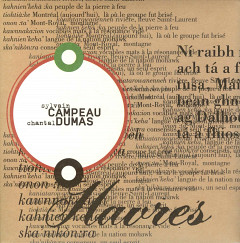
    On finira cette chronique avec l’évocation de Havres, une courte (17.35 min.) collaboration entre un poète (Sylvain Campeau et Chantal Dumas. Cette dernière fut d’ailleurs aussi une des artistes impliquées dans l’aventure de Montréal ou Victoriaville matière sonore, mais a un parcours de créations personnelles plus anciens. Ici, elle propose une bande sonore pour la mise en sons d’un poème, basé sur un quartier péninsulaire de Montréal, la Cité du Havre, en bordure du St Laurent, décliné en français, en Irlandais et dans la langue mohawk des amérindiens du lieu. D’où plusieurs récitants, et une bande-son évocatrice aussi bien d’une certaine quiétude (celle de parc) que de son histoire et de ses diverses communautés.

    * Respectivement Montréal, matière sonore Pogus P21041-2 et Victoriaville, matière sonore VICTO113

    Musiques de chambres in Voir

    “Critique”, Réjean Beaucage, Voir, June 26, 2015
    Friday, June 26, 2015 Press

    Comme on n’est jamais si bien servi que par soi-même, le compositeur et multi-instrumentiste Jean Derome a décrété que l’année 2015-2016 est «l’année Jean Derome», et si vous ne le connaissez pas, vous n’aurez pas trop d’une année pour faire le tour de l’extraordinaire production de ce pionnier de la musique actuelle (à voir ici: jeanderome.com). Le présent disque offre un programme différent des musiques improvisées ou du jazz d’avant-garde auxquels Derome est souvent associé; ici, le compositeur flirte davantage avec la musique contemporaine et présente des pièces écrites pour petits ensembles (solo, duo, quatuor, sextuor, octuor). L’écriture est fluide, le rythme enlevé, et les six pièces reproduites ici montrent bien que ce compositeur mérite d’être célébré à sa juste valeur.

    L’écriture est fluide, le rythme enlevé, et les six pièces reproduites ici montrent bien que ce compositeur mérite d’être célébré à sa juste valeur.

    Bozzini Quartet, Kyle Brenders in Soundstreams

    “Creating a new work with Quatuor Bozzini”, Kyle Brenders, Soundstreams, June 23, 2015
    Tuesday, June 23, 2015 Press

    Our Artistic Associate Kyle Brenders recently spent a week in Montreal, participating in Quatuor Bozzini’s Composer’s Kitchen. He wrote a blog post for us about his experience, and how he composes.

    Beyond what I do here at Soundstreams, I attempt to have a life as a practicing composer (and performer, but that’s a story for another blog post). I am constantly searching to find a balance between my own artistic practice, and that which I’m working to put on stage at Soundstreams. Some might say that my work as a creative musician is my second job, because I do it after I get home from Soundstreams. But I sometimes feel that Soundstreams is my second job, there to support my habit as a musician! All kidding aside, I recently participated in an emerging composer workshop—a departure from being the workshop designer, which is part of what I do at Soundstreams.

    I created a new work for string quartet as part of the Quatuor Bozzini’s Composer’s Kitchen. The Composer’s Kitchen is an annual musical “laboratory” conceived as an artistic “playground,” where composers workshop their new composition with direct support from the Quartet, as well as two composer mentors. The Composer’s Kitchen happens in three stages:

    1) A workshop in Montreal and performance of the new work;

    2) A few months of private revisions;

    3) Another workshop in London, UK, and concert of the final works.

    The workshop had four participants that were selected through an application process: two composers from Canada and two from the United Kingdom, supported by the amazing UK organization Sound and Music (you can read about the other participants here). The two mentor composers were Christopher Butterfield from Victoria, BC, and Christopher Fox from London, UK.

    This workshop reminded me of how intense the process of creating a new work really is. In my own compositional practice, I know I’ll be performing much of the music that I write. Because of this, I tend to leave a lot of musical information out of the score. Dynamics, articulation, bar-lines, time signatures, instructions for improvisation, and sometimes even the duration of notes, are aspects of the score that I leave out, and figure out either in real-time during the performance, or through the rehearsal process.

    I wasn’t going to be performing this new work, so I needed to create something clear and precise. However, I don’t believe in creating a score, handing it over, and expecting the piece to be performed directly as it appears on the page. I love openness, which requires the performers to make their own decisions. I love facilitating surprises for the performers as they play the music, and also for me as the composer of the work. This can create complications when working with musicians used to scores that have the composer’s instructions clearly written on the page. I knew this would a challenge going into this workshop, but I also knew that the members of Quatuor Bozzini would be game for anything.

    I had a breakthrough on my piece when another workshop composer mentioned that she views the compositional process as “creating an article of clothing”—composers have to put the pieces of thread together for the performers. I am slightly different in my work—I provide the performers with the buttons and thread, but they have to create the shirt. The materials I provide the performers with create specific musical events, but how each event progresses through time will be determined in each performance. This idea is also where my piece got its name: sewn.

    You can see a section of the score below and listen to how it’s all put together. There is a main set of materials that begin the section, and then each player is free to move through their own musical materials. Each player receives only their subsections, separate from the other four players.

    My music has a quirkiness that I encourage. I recently played with Bobby McFerrin at Roy Thomson Hall, and one thing he stressed was that everyone needs a level of quirkiness in their everyday, and suggested 10%. I think I’m there with this piece. The Quartet really explored the material with curiosity and wit. But remember, this is only one performance, and one way through the material. Each time the Quartet performed my piece, they created a new version. My music isn’t about capturing a final, flawless performance, but capturing the moment the musicians are presently in.

    Another amazing aspect of this workshop was collaborating with the other participants. They each created incredible pieces that inspired me to work harder (you can hear one of them here). Seeing another composer’s music being work-shopped is one of the joys of this process. I love watching how people put music together, hearing them describe what they’re doing, and seeing how the performers respond. It’s this joy of creation that made me first want to make music, and continues to drive me every day. Luckily, this workshop has a second stage, where we all come together again. I’ll write again in February after the third stage of the workshop, which will include a performance of the work in Aberdeen, Scotland.

    The Squiggle Game in Musicworks

    “Review”, Jonathan Bunce, Musicworks, no. 125, June 21, 2015
    Sunday, June 21, 2015 Press

    The Squiggle Game is that rarest of beasts, the free-improv disc you can air-drum along to. Its absorbing rhythmic heft, especially on tracks like the lead-off That Gum You Like, is unsurprising when you realize that it’s the brainchild of a drummer. Alexander MacSween has been a part of the Montreal music underground since the late 1970s, working on every shade of the spectrum between rock and jazz: with punk and indie icons such as The Nils, Pest 5000, and Bionic; numerous improvised music collaborations, such as Detention, his ongoing duo with guitarist Sam Shalabi, founded in 1998; as well as music for dance, theatre, film, and multimedia pieces. The Squiggle Game is an anti-concept album, in which MacSween aimed to overcome a writers’ block consisting of a surplus (rather than deficit) of ideas. He asked &records co-owner Fabrizio Gilardino to design an album cover in advance, including titles, durations, and even guest musicians. The plan initially worked well to help the artist overcome his block, but soon he felt creatively constrained by the parameters and began colouring outside the lines, so to speak. He’d just read English psychoanalyst Donald Winnicott’s description of “the squiggle game,” created for his child patients, in which he would doodle on a piece of paper and get the children to continue the drawing. MacSween’s pieces indeed have a childlike sense of playfulness, squiggling across the border between composition and improvisation. MacSween, who commands the drum set, marimba, keyboards, and rhythm programming, is joined by frequent collaborator Shalabi on electric and nylon-string guitar, as well as Ratchet Orchestra bassist Nicolas Caloia (who also adds some Korg synth action), and the revelatory playing of percussionist Corinne René, who fills in much of the tonal space between the other players, turning aural doodles into sonic paintings.

    The Squiggle Game is that rarest of beasts, the free-improv disc you can air-drum along to.

    Rubedo’ ro in The Squid’s Ear

    “Heard In”, Paul Serralheiro, The Squid’s Ear, June 19, 2015
    Friday, June 19, 2015 Press

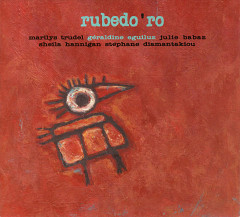
    A more magical cauldron of composition and improvisation could hardly be concocted than this creative collection of pieces for voice and string quartet. I had the opportunity of attending the premier performance of this project in Montreal before it got “waxed,” and the recording is every bit as magical as the live rendition of the pieces.

    Composer and singer Equiluz has imagined a finely inflected set of nine movements. Not always articulating an explicit text, the voice is used as a fifth instrument in a kind of multilingual scat style. The strong geo-historical connotations of the string quartet (i.e. Europe’s noble courts c. 1700s and on) are here subverted in idiomatic writing combining indigenous sounds of the Americas along with free improvisation and tightly rendered ensemble writing that evokes many local colors, from the lush valleys of Mexico, to the Brazilian Rainforest, to the shouting of the Thunder Beings on the North American plains, and more.

    Born in Mexico, the cosmopolitan Equiluz has lived in Columbia, Paris and Lisbon, before coming to Montreal by way of Quebec City. She has performed internationally and is a frequent collaborator with musicians in the thriving Musique Actuelle scene in the province of Quebec. In this ambitious project, a polyglot sensibility comes through loud and clear in the multi-stylistic qualities of the compositions, with titles in a number of languages, like the opener “Aluxes” which announces the music to come via allusions to a playful Maya spirit being, and other titles, like “Tiempo Herido,” that reflect a more mournful mood, or the rhythmically possessed piece called “Tonnere.”

    In Rubedo’ro, Equiluz is joined by four Montreal string players: violinist Marilys Trudel, viola player Julie Babaz, cellist Sheila Hannigan and bassist Stéphane Diamantakiou. The ensemble is honed to render in very precise playing the music Equiluz has penned, but as mentioned before, there is also plenty of improvisation, and individual expression worked in, which makes this release so interesting: it sings with a clear authorial voice, but is emboldened by the multiplicity of personalities, making this a very living, vibrant set of music. The stylistic twists and turns make for an exotic ride along the fine edge that composed material meets improvisation can provide, but the writing here is also a solid and taut high wire along which dance the many colors of Equiluz’s richly textured, warm and expressive voice.

    A more magical cauldron of composition and improvisation could hardly be concocted than this creative collection of pieces for voice and string quartet.
  • 104
  • 105
  • 106
  • 107
  • 108
  • 109
  • 110
  • 111
  • 112