actuellecd
  • This website is also available in English.

Blog

22 results
  • 1
  • 2
  • 3
  • 4
  • Brass Knuckle Sandwich in The Squid’s Ear

    “Review”, Paul Serralheiro, The Squid’s Ear, December 5, 2023
    Wednesday, December 6, 2023 Press

    It may be premature and overly optimistic to say so, but judging from this duet of improvisers on this release, aptly titled Brass Knuckle Sandwich, it seems that women have come into their own in high-energy jazz and brawny improvised music.

    Pianist Marilyn Lerner and trumpeter Nicole Rampersaud definitely pull no punches here and deliver seven solid tracks that keep the listener on the ropes. A blend of lyrical and abstract ideas communicated via extended techniques characterizes the music, as Rampersaud makes extensive use of air through the horn to articulate all kinds of noises and melodic and textural material tumbling along with Lerner’s percolating and multi-timbral rhythms on keyboard. A wide range of emotions run through the seven tracks, from the fiery and insistent Bristles, from the ironically tranquil pointillism of Clamour, to the lyrical long tones and piano ostinato figures of Susurration, the pedal-tone, loose-lipped airiness of Floufe, the pastoral beauty of Evermore, the other-worldly poignancy and study-in-contrasts of Nat.pit.hat, and the grand symphonic proportions of the closer Rizzoo. A lot is packed into this album.

    Snippets of lyrical motifs from famous tunes like Body and Soul and some Kenny Wheeler compositions (especially in Rampersaud’s horn on Rizzoo) blend in with elements borrowed from the avant-guard vocabulary established by people like Bill Dixon and Leo Smith, while the piano is reminiscent of a Paul Bley or Mal Waldron with touches of Bill Evans and Cecil Taylor, or at least those are the referential echoes that register with this listener.

    Recorded in 2018 at Studio Union Sound in Toronto and engineered and mixed by Jeff Elliott, Brass Knuckle Sandwich is evidence of women not only getting the opportunities they deserve to ply their creative imaginations, but also evidence of impressive mastery of their instruments in service to finely crafted real-time composition.

    Brass Knuckle Sandwich is evidence of women not only getting the opportunities they deserve to ply their creative imaginations, but also evidence of impressive mastery of their instruments in service to finely crafted real-time composition.

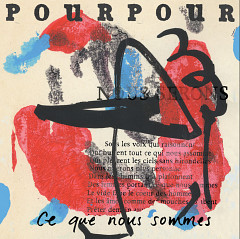
    Ce que nous sommes in Le Devoir

    “Critique”, Philippe Renaud, Le Devoir, November 24, 2023
    Friday, November 24, 2023 Press

    Ça alors, elle existe encore, la Fanfare Pourpour! L’orchestre officieux d’un Plateau-Mont-Royal d’alors, où les proprios de condos ne se plaignaient pas à tout coup lorsque la fête animait les petits lieux du quartier des spectacles original de Montréal! Le temps passe, les modes changent, mais la Fanfare — on dira aujourd’hui un orchestre de 21 musiciens — persiste avec sa musique familiale, inclusive, éloquente, qui pige, comme sur ses cinq précédents albums, dans le jazz, le klezmer, la musique improvisée, et un peu plus dans la musique de chambre, en témoigne la splendide Bathyscaphe, composition du clarinettiste Pierre-Emmanuel Poizat. Quasiment toute la tribu contribue à la composition et aux orchestrations, les piliers Claude Vendette (Le rêveur), Pierre Tanguay (Pierre), la relève Némo Venba (la circacienne Valse à Lou — pour Lou Babin, accordéoniste, l’âme de la Fanfare). Recevoir un tel album, bricolé main et magnifiquement enregistré, rassure: l’esprit de fête et de partage anime obstinément la Fanfare.

    … avec sa musique familiale, inclusive, éloquente, qui pige, comme sur ses cinq précédents albums, dans le jazz, le klezmer, la musique improvisée…

    Alvin Lucier: Navigations in harmonic series

    “Review”, Keith Prosk, harmonic series, March 1, 2021
    Friday, November 10, 2023 Press

    The string quartet Quatuor Bozzini perform five Alvin Lucier compositions that share a hyperfocus on the behavior of waves in the performance space on Navigations.

    Though most of these compositions have been in Quatuor Bozzini’s repertoire for over a decade, I believe this is their first recording of Alvin Lucier. For comparative listening beyond brief clips of past performances on the quartet’s own website, there’s at least Tapper from String Noise released just last year, Unamuno from EXAUDI, and Navigations from Arditti Quartet and Noël Akchoté. The track sequencing here feels balanced, with the longer beating pieces on either end and the vocal track in the center, separated by tapping pieces.

    Disappearances is a sixteen-minute track of clean, sustained soundings with harmonic beatings (or illusion of them) rising from them. Upon reaching a resonance with their instruments, each other, and/or the room, the overtone pulse alternately quickens and slows — buzzing, humming, singing — occasionally, true to the title, disappearing, I imagine from some canceling synthesis trick or perhaps a interruptive shifting harmonic configuration similar to the other pieces. The similarly durative, sustained, and beating Navigations seems multiphonically-played with a faint fluting accenting the disappearances. The ear might hear the rotating matrix of four tones and miniscule differences in pitch, decreasing volume, and decreasing tempo through the track, intended to draw attention to the room. The relatively brief Unamuno is another rearranging pattern of four tones with attention to performer placement in space; usually performed with voice, here it is mixed string and voice. Tapper uses the butt of the bow against the body of the instrument to collect information about the room as the performer walks the space, utilizing different tempos, forces, and parts of the body. In making it a group performance, the ear feels distracted from the character of the room itself towards the relative space of the performers and their overt polyrhythm, which is an interesting shift in perception. Representing the performance space in such a way, through multiple facets, requires a tenuous synergy from composers, performers, and recording and sound engineers; this recording achieves that inclusivity of the fifth instrument of the quartet.

    … this recording achieves that inclusivity of the fifth instrument of the quartet.

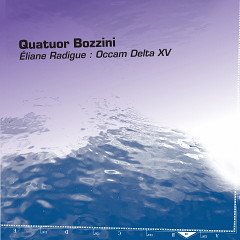
    Éliane Radigue: Occam Delta XV in Tempo

    “Review”, Caroline Potter, Tempo, September 1, 2023
    Monday, October 30, 2023 Press

    Since 2011, the compositional project of Eliane Radigue (b. 1932) has been a series of pieces titled Occam; at the time of writing there are over 80 such pieces. The title is derived from Occam’s razor, the principle that all else being equal, explanations and choices which are simple are likely also to be the best. The musical material for Occam Delta XV for string quartet is certainly minimal, though the listening experience is anything but.

    This release from the Montréal-based Quatuor Bozzini, published on their own label, was recorded in the Panthéon in Paris in November 2021. A huge cathedral-like space that looks from the outside like a Greek temple, the neo-classical Panthéon is a national site of homage to great men (and a very few women) of the past. A video released alongside their album, made by Gilles Paté, offers glimpses of the building and of Foucault’s famous pendulum, which is housed inside.1 The CD features two interpretations of the quartet, both just over 35 minutes in duration, with the first being over a minute longer than the second. In the sleeve note, the first violinist, Alissa Cheung, says, ‘You can’t recreate the performance, it’s so much about the time and the place.’ Cheung rightly believes that the quartet demands ‘an extended listening mode, between meditation and hyperconsciousness’.

    Like the other pieces in the Occam series, this work is not so much written for a particular medium as for a particular performer or group of performers. Occam Delta XV was developed through a collaborative process with Quatuor Bozzini, who are its dedicatees. Kate Molleson interviewed Radigue for her fascinating book Sound within Sound, and one insight she gleaned was: ‘Every new piece in the Occam series begins with Radigue and a performer sitting down in her apartment and talking about water.’2 In fact, the Occam Ocean works in the series are for ensemble — suggesting a larger body of water — while Occam Delta are for chamber formations, Occam River for a duo, and those simply titled Occam are for a solo instrumentalist. The quartet write in their programme note that Occam Delta XV (2018) ‘is like jumping in a lake when you know the water might be cold. It’s a question of trusting the people you’re playing with.’

    The experience of watching the sea, or being immersed in water, is probably the best analogue for a listening experience which is ever changing and yet eternally the same. Occam Delta XV consists of long sustained string lines and a constant four-part texture. This is a completely non-hierarchical work, with all four voices having equal value and making an equally important contribution. Quatuor Bozzini play without vibrato: their sound is at the same time pure and yet not in any way austere. Molleson writes that Radigue’s music is all about ‘perpetual transition’, ‘a recurring process of fade-in, fade-out, cross-fade’, and links this to her musical origins as a composer of musique concrete.3 But the rich circular droning of Occam Delta XV never sounds electronic: the cello usually sounds more like a murmur, and the deep listening the piece prompts means that we are aware of a bow changing direction, of the friction of hair on string, of harmonics and resonances. Occasionally the ear is drawn to one or other of the voices: I found my attention shifting, creating my own path through the music. Is that a violin line ascending, the viola suddenly bringing itself to my attention? Quatuor Bozzini realise an extraordinary feat of concentration and sustained bowing, enabling us as listeners to immerse ourselves completely in the soundworld. The very long fade-out in the last ten minutes or so of the first performance is just one illustration of their astonishing control.

    The two performances are of course different from each other: on one occasion I found the second performance rather more fragile and attenuated in the middle of the work than the first one, though I did not feel this was the case on another listen. Either this is an extremely novel type of CD where the performance actually changes each time it is played, or my personal journey through each performance was different each time I listened. Perhaps this is because the music facilitates deep reflection and provides a space for the listener to bring something of themselves to the music? Whatever your own journey through this fascinating recording will be, prepare for an immersive and time-altering experience.

    Quatuor Bozzini realise an extraordinary feat of concentration and sustained bowing, enabling us as listeners to immerse ourselves completely in the soundworld. The very long fade-out in the last ten minutes or so of the first performance is just one illustration of their astonishing control.

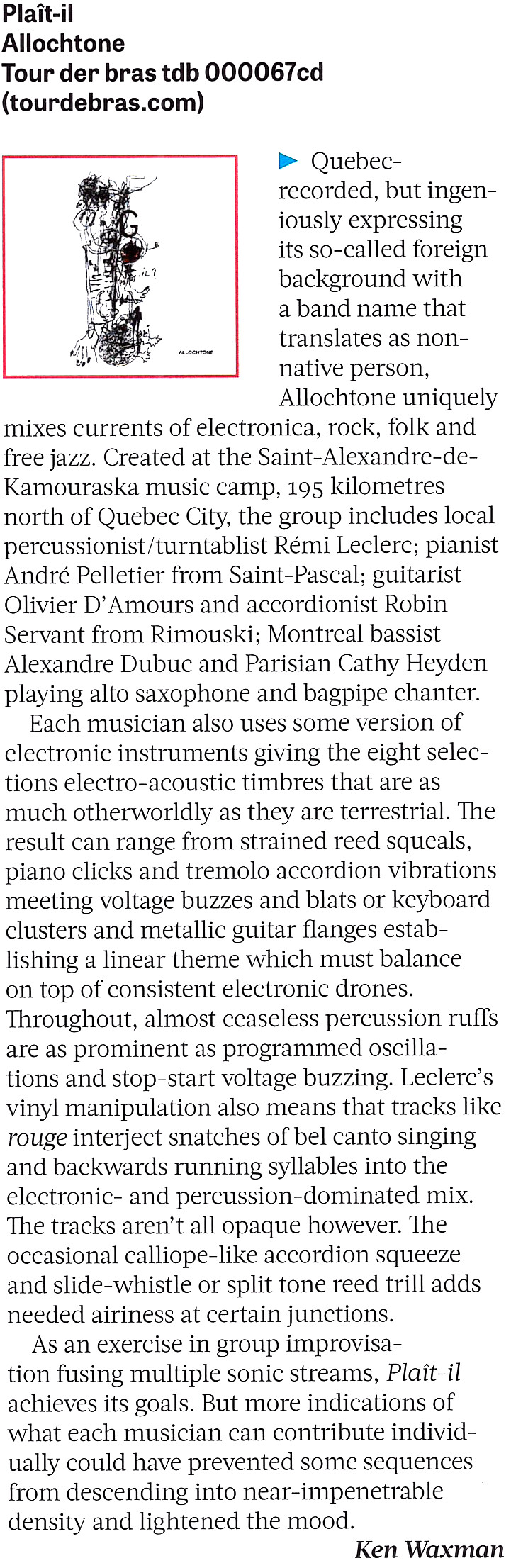
    Plaît-il? in The WholeNote

    “Review”, Ken Waxman, The WholeNote, no. 29:2, October 1, 2023
    Monday, October 23, 2023 Press
    As an exercise in group improvisation fusing multiple sonic streams, Plaît-il achieves its goals.

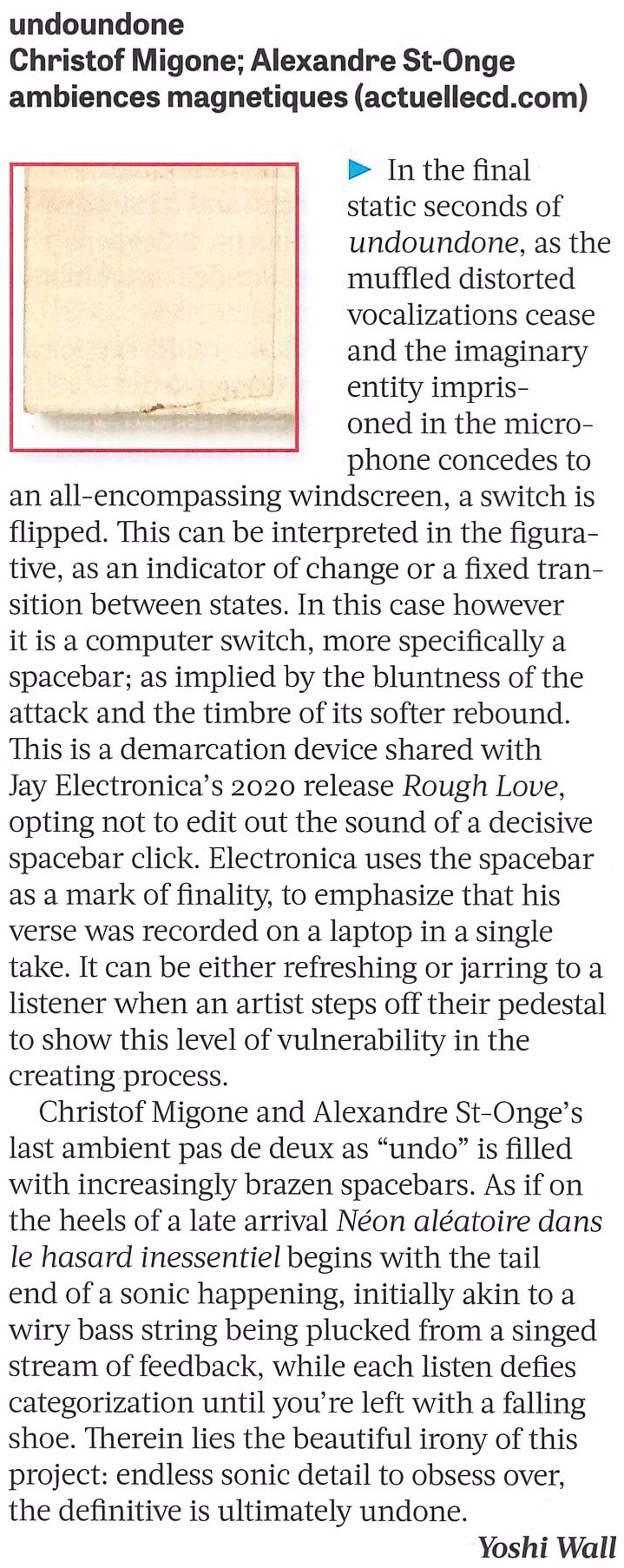
    undoundone in The WholeNote

    “Review”, Yoshi Maclear Wall, The WholeNote, no. 29:1, September 1, 2023
    Thursday, October 5, 2023 Press
    Therein lies the beautiful irony of this project: endless sonic detail to obsess over, the definitive is ultimately undone.
  • 1
  • 2
  • 3
  • 4