actuellecd

Blog

65 results
  • 3
  • 4
  • 5
  • 6
  • 7
  • 8
  • 9
  • 10
  • 11
  • Aldo Clementi: Momento in La Folia

    “Italian Vacation 14”, Grant Chu Covell, La Folia, May 1, 2016
    Sunday, May 1, 2016 Press

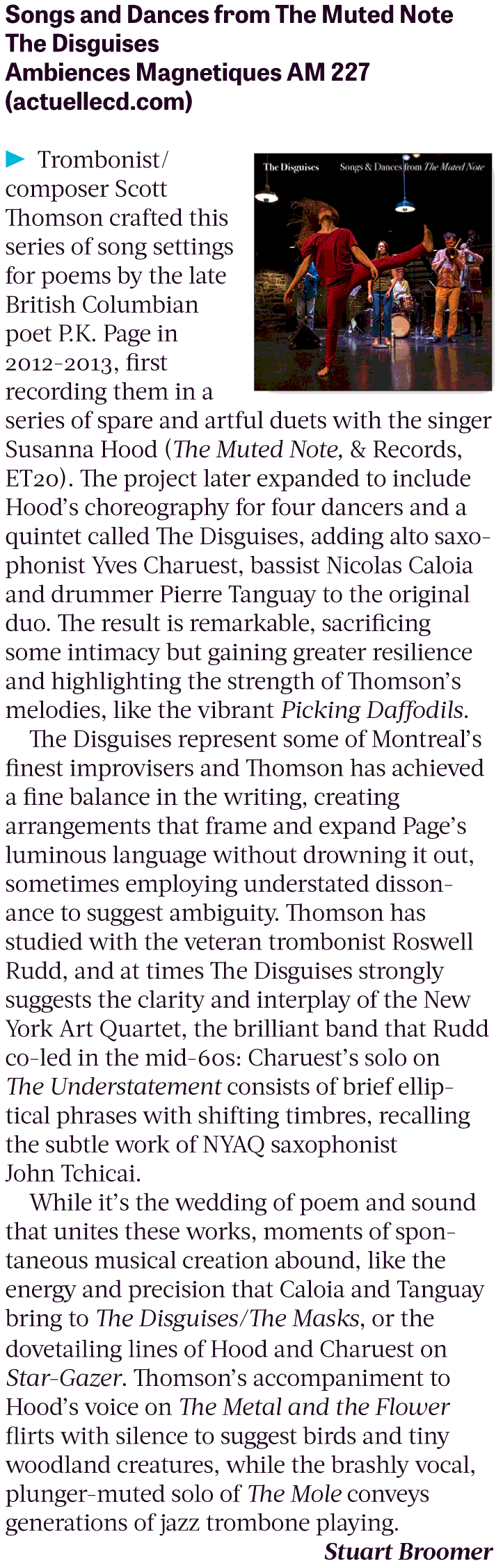
    To say Aldo Clementi uses canons, is like saying Wagner wrote operas or that Beethoven was good at variations. Clementi’s elegant constructions use all manner of repetitions at different speeds and intervals. It may be hard at first to catch the structure because of the alternately knotty and playful tapestries, so well does Clementi’s music deliver mesmerizing events. Some pieces are long; the wintry Momento is 18 minutes, whereas we get two versions of the flowering Canone which takes about 75 to 80 seconds per pass. These extracts from Otto frammenti last 22-and-a-half minutes and contain a contradictory subtitle, “canoni 1-8, 33-40,” which suggests that the eight fragments are repeated or perhaps that they embed a subset. In fact, the entire work rich in palindromes explores the possibilities of the 15th-century tune L’homme armé.

    The slipcase provides this telling artistic statement: “It has been my conviction for a number of years that Music (and Art in general) must simply assume the humble task of describing its own end, or at any rate its gradual extinction.” Imagine music boxes winding down after an intricately designed maximal moment. Taken together, this quartet program is powerfully autumnal. The Bozzini’s superbly blended colors have been mentioned before, and here they create galaxies that wobble before receding.

    Taken together, this quartet program is powerfully autumnal. The Bozzini’s superbly blended colors have been mentioned before, and here they create galaxies that wobble before receding.

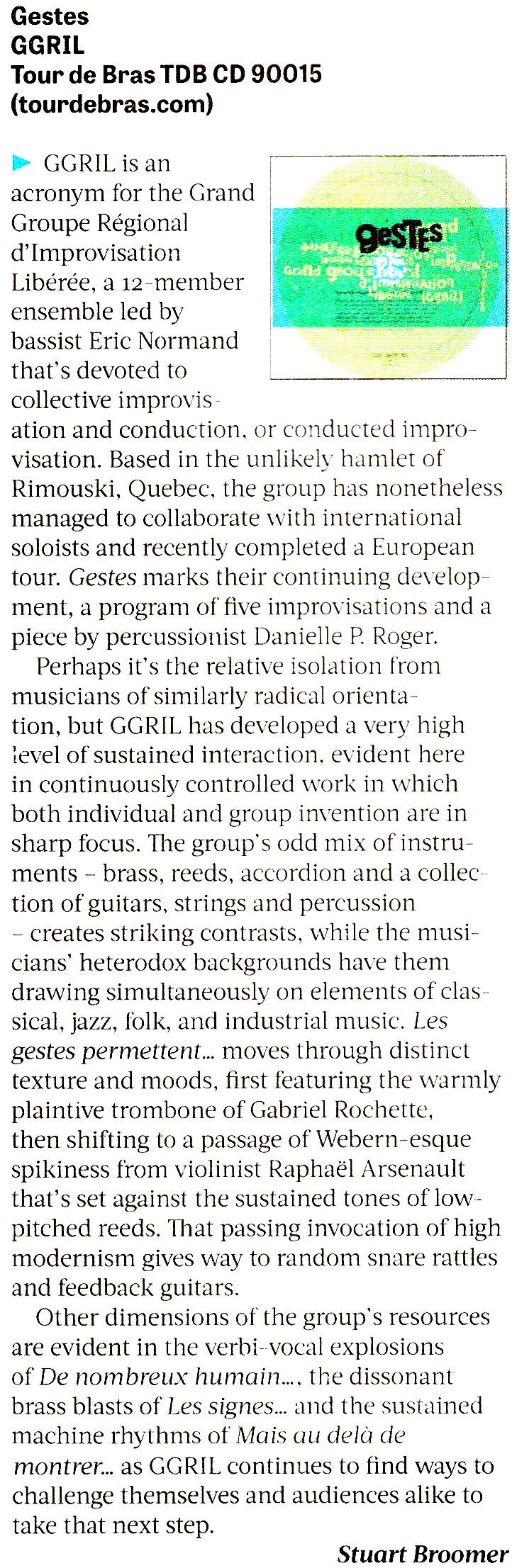
    Gestes in The WholeNote

    “Review”, Stuart Broomer, The WholeNote, no. 21:8, May 1, 2016
    Sunday, May 1, 2016 Press
    GGRIL continues to find ways to challenge themselves and audiences alike to take that next step.

    Mikrokosmos Sz 107 in Nowamuzyka

    “Quartetski”, Łukasz Komła, Nowamuzyka, April 30, 2016
    Saturday, April 30, 2016 Press

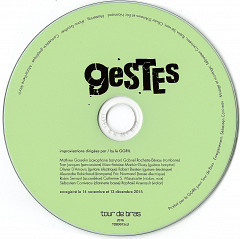
    Kanadyjski zespół Quartetski jest raczej mało znany w Polsce, ale od kilku lat członkowie tej grupy interpretują na nowo dzieła różnych kompozytorów. Tym razem padło na Béla Bartóka.

    Formacja powstała w 2007 roku w Montréalu z inicjatywy Pierre-Yves Martela (viola da gamba, bas elektryczny, kontrabas, syntezator, obiekty). Później dołączyli do niego tacy muzycy jak Isaiah Ceccarelli (perkusja, metalofony), Bernard Falaise (gitara elektryczna), Philippe Lauzier (klarnet basowy, saksofon sopranowy, melodyka) i Joshua Zubot (skrzypce).

    Do tej pory artyści wzięli na warsztat kompozycje Igora Strawińskiego, Modesta Musorgskiego, Johna Cage’a, Tobiasa Hume’a, Erika Satiego oraz Siergieja Prokofjewa. Teraz mamy Béla Bartóka i jego monumentalne dzieło Mikrokosmos napisane w latach 1926-1939, na które złożyły się 153 fragmenty zaaranżowane na fortepian. Kanadyjczycy tworząc swoje wersje miniatur Bartóka nie korzystali z brzmienia tego instrumentu. Woleli podejść do utworów węgierskiego kompozytora w mniej standardowy sposób, czego możemy doświadczyć na płycie Mikrokosmos Sz 107: Quartetski Does Bartók.

    Hello, I Must Be Going in The Squid’s Ear

    “Heard in”, Massimo Ricci, The Squid’s Ear, April 29, 2016
    Friday, April 29, 2016 Press

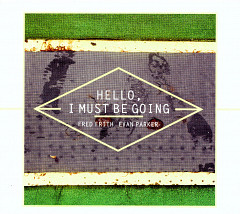
    Both this album’s title and the photos adorning its internal cover seem to hint at the necessity of finding a way to overcome impediments of any kind, thus avoiding the interruption of an essential flux. As old masters of the improvisational game, Fred Frith and Evan Parker know this need very well. Although this performance, captured at the 2014 edition of the Victoriaville Festival, doesn’t really seem to break new ground — never a given in the short span of a single evening — it still emphasizes the unique characteristics of artists whose reputation has deservedly grown over the decades.

    Each of the four tracks features what’s expected from the pair’s live embodiment. Frith’s resonant palette is as always efficient; he conjures up all kinds of dynamics and shades by rubbing, hitting, plucking, bowing and para-diddling long-suffering strings, a veritable multitude of objects and techniques at the service of the overall vibe. Especially notable are the expert use of the volume pedal, and the massive subsonic reverberations providing the meat in a couple of wicked crescendos. Parker adapts effortlessly to the electric environment, interacting with typical intelligence. In this context, his phraseology privileges the gradual modification of reiterating fragments and the employment of fluctuating snippets of (unsingable) melody. The soul-wrenching raucous spirals defining the reedist’s most stringent explorations of the self are only glimpsed, in favor of a somewhat improved contrapuntal intelligibility. Several moments of quiet contemplation and a few touches of dry humor (one of them causing Frith to laugh loudly during a section of Red Thread) enhance the partnership’s creative values.

    The note left by Hello, I Must Be Going reads like an invitation to keep the mind focused and the body trained. Not every day one wakes up ready to fight, or just willing to patiently translate quotidian nonsense into significance. But through constant discipline and the capacity of remaining “open” to the streams and interferences that inform the instants of existence, a method will be instinctively developed to identify stimulating accents and momentous flashes. Small steps of evolution can occur even in the ambit of something that, on a first attempt, does not appear to elicit fundamental questions. By keeping this music with you day in, day out, the absorption of its messages will be facilitated, without the urgency of a lookout for groundbreaking gestures.

    By keeping this music with you day in, day out, the absorption of its messages will be facilitated…

    Jean Derome in Le Devoir

    “Jean Derome, l’oulipien du jazz”, Serge Truffaut, Le Devoir, April 16, 2016
    Saturday, April 16, 2016 Press

    Au sud de la frontière, il y a John Zorn, le saxophoniste défricheur, l’arrangeur iconoclaste, le compositeur de fond comme on dit coureur de fond. Au nord, donc ici comme là, il y a Jean Derome qui est ce qu’est John Zorn, qui est également un homme de la renaissance, un encyclopédiste, un oulipien. Oulipien? Eh oui, il a même mis George Perec et son Chapitre sans E en musique il y a deux décennies de cela.

    Il y a 12 mois moins 12 jours, donc le 28 avril 2015, Jean Derome a amorcé la bien nommée Année Jean Derome. Bien nommée? Grâce à l’obtention de la Bourse de carrière accordée par un jury regroupant des personnalités de divers horizons et formé par le Conseil des arts et des lettres du Québec (CALQ), Derome a pu monter une série de spectacles déclinant, entre autres choses, ses 45 ans de carrière.

    Parmi les signes et les faits qui distinguent cette dernière, on retient celui qui les tient tous ensemble, qui est leur dénominateur commun: l’énorme travail accompli jour après jour. On insiste: notre saxophoniste et flûtiste travaille 48 heures en 24. «Tous les jours, je consacre une heure de pratique à la flûte et autant aux saxophones. Tu ne peux pas arriver sur scène et jouer à froid du baryton. L’aspect physique propre à cet instrument t’oblige à rester en forme, car il est lourd et exige beaucoup de respiration. Tu dois également faire attention à l’entretien de ces instruments.»

    Il joue des saxophones et non pas d’un, il joue des flûtes et non pas d’une, et il compose abondamment. Pour lui et ses diverses formations, soit Jean Derome et les Dangereux Zhoms, l’extraordinaire trio avec Normand Guilbeault à la contrebasse et Pierre Tanguay à la batterie, et celle dont il est membre depuis des lunes, soit la Fanfare Pourpour, mais aussi pour les films d’animation et des compagnies de danse.

    «Je compose tout d’abord dans ma tête. Puis avec un crayon et un papier, je fais des esquisses. Ensuite, j’ai recours au piano. Je n’utilise pratiquement jamais les saxes et les flûtes. Puis je termine à l’ordinateur.» Et les arrangements de Monk, Ellington, Roland Kirk et autres? «Je fais tout d’abord un portrait-robot. Puis, j’essaye d’oublier l’original. Avec Guilbeault et Tanguay, je donne un ou deux éléments, guère plus, car il y a une grande confiance entre nous. Tout est fait pour qu’il y ait une grande marge de manoeuvre.»

    Jusqu’à présent, l’Année Jean Derome a mis en relief le Derome compositeur davantage que le Derome instrumentiste. Ainsi, au dernier Festival international de musique actuelle de Victoriaville, Derome a dirigé un orchestre de 20 musiciens qui ont joué une de ses créations originales intitulée Résistances. Le quatuor de saxophones Quasar, dont André Leroux au ténor, a fait la tournée des maisons de la culture en interprétant la pièce Rouge. La Fanfare Pourpour a sorti un 5e album et se produira les 10 et 11 juin pour décliner Coïncidences, que Jean Derome a écrit cette année. Le 12 juin, Derome et ses amis concluront cette année à La Sala Rossa. La conclusion appartient à ce cher La Palice: chaque année devrait être une Année Jean Derome pour la bonne et simple raison qu’il est ce que l’on dit peu souvent: le Maître des musiques.

    … le Maître des musiques.
  • 3
  • 4
  • 5
  • 6
  • 7
  • 8
  • 9
  • 10
  • 11