actuellecd

Blog

96 results
  • 8
  • 9
  • 10
  • 11
  • 12
  • 13
  • 14
  • 15
  • 16
  • Pour en finir in Vital

    “Review”, Dolf Mulder, Vital, no. 970, February 16, 2015
    Monday, February 16, 2015 Press

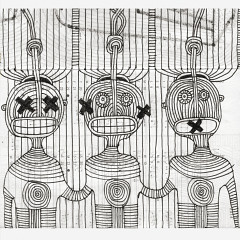
    Klaxon Gueule is around already for some 20 years now. It is the most long lasting combo initiated by Côté if I’m not mistaken. Besides Côté, Bernard Falaise and St-Onge are part of this trio. Falaise we recently met on the fantastic second album by another trio, called Subtle Lip Can. Likewise Klaxon Gueule write their music from a very own and distinct grammar. But how strange their language may be, they really express something relevant. They offer incredible, fascinating music. Complex, but not academic. Always with both feed in the mud. The music always moves strangely forward, but there is happening a lot in the meanwhile. Patterns change through uncommon cyclic procedures. Every little detail is functional and enjoyable.

    They offer incredible, fascinating music.

    Monk Work in Vital

    “Review”, Dolf Mulder, Vital, no. 970, February 16, 2015
    Monday, February 16, 2015 Press

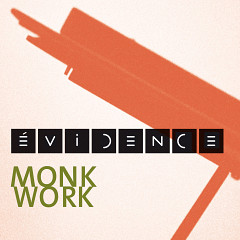
    Évidence present their third release of Monk interpretations. This group has a long history. Derome and Cartier played already Monk-compositions when they were operating as a duo in the 70s. For many years they played Monk for their own sake as a hobby. In 1993 they decided however to make a studio recording, Musique de Thelonious Monk. It was followed in 1999 by a live recording Live à la Casa. Now, some 14 years later they do another try. They choose 11 compositions, including Dreamland and Two Timer that are seldom performed. But also well-known pieces like Brilliant Corners. Their interpretations didn’t make me forget other interpretations, although they do it with joy and verve.

    This group has a long history.

    La règle in Monsieur Délire

    “Listening Diary”, François Couture, Monsieur Délire, February 6, 2015
    Friday, February 6, 2015 Press

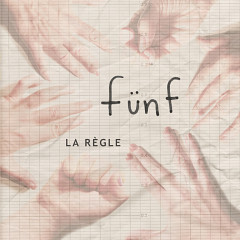
    Fünf (German for five) is an all-female twelve-handed collective: Magali Babin, Andrea-Jane Cornell, Martine H Crispo, Anne-François Jacques, Émilie Mouchous, and Erin Sexton, all based in Montreal. They all experiment with electricity and home-made or modified devices. This is the realm of circuit-bending, miniature sound sculptures, automatons, and the art of getting contact microphones to sing.

    The music is a form of microsonic free improvisation where silence, without being king, has its role to play. Rubbing sounds, scratching sounds, murmurs, slight movements, parasites, controlled feedback, field recordings — all these sounds are small, fragile, and measured. They tell a wide range of stories, some intriguing, some ridiculous, some are even moving, and not a single one is predictable.

    La règle (French for either “the rule” or “the ruler”) features twelve pieces ranging from a few seconds to close to nine minutes recorded between 2011 and 2014 in various groupings though never as a full sextet. I knew the work of three of the collective’s six musicians prior to this CD: Sexton, who plays with light and electrical interferences; Babin, whose Chemin de fer (No Type, 2002) remains a very fine listen; and Jacques, the lady with the little automatons, who has a nice duo CD with Tim Olive. Sadly (and that will be my sole criticism), there is no information on the jacket about who plays what and where, which means that I cannot really say that I have been acquainted with the other three members.

    Though, come to think about it, this might no be so sad after all. By hiding their parts, the collective are focusing our attention on the whole. And that whole boasts a unity of spirit that charmed me from listen number 1. Who’s responsible for this or that aural find? Fünf, who integrate it to Fünf’s other finds. The mix plays with a very large stereo spectrum where each sound is carefully (dis) placed, to a choreographic level. I recommended listening to La règle on headphones, in order to not miss this level of detail.

    My personal highlights are Retenue mystique, the album’s longest track, because its title (“Mystical Restraint”) describes it perfectly and I felt like I was in a space opera, right at the moment of calm before the storm. I am also fond of the subtle yet twisted humour in Aimes-tu ma porte?, and of Morceau de Fünf, where the collective is almost reinventing Luc Ferrari’s concept of presque rien (almost nothing).

    The mix plays with a very large stereo spectrum where each sound is carefully (dis) placed, to a choreographic level. I recommended listening to La règle on headphones, in order to not miss this level of detail.

    Not the Music in Vital

    “Review”, Frans de Waard, Vital, no. 968, February 2, 2015
    Monday, February 2, 2015 Press

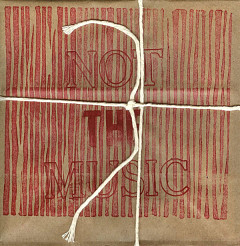
    Although the text here in front of me says there are three new releases on Tour de Bras, a label from Quebec, there are in fact on two in the mailer, of which one will be handled by someone else sometime soon. The other one is a duo disc of Philippe Lauzier (bass clarinet, soprano saxophone) and Éric Normand (bass and ‘caisse claire’, of which I couldn’t find a proper translation). The three pieces here were recorded in concert in March 2014 and the label defines the music as ‘chamber noise’. Both of these players have a history in the world of improvised music, having played with Martin Tetreault and Jim Denley among others. The music here could be labeled as ‘heavy’; ‘heavy’ as in noise based. Lots of this revolves around the scraping of sounds, with some added reverb to make it all a bit heavier. It peeps and scratches, likes feedback; like fingers on a blackboard, like the very early Organum at times. Not something for the weak of hearth, but if you are accepting then an excellent sound world opens up. The sound of what seems a 1000 violins being scraped simultaneously, but this duo also knows how to pull back, slow down and space out, such as in the second part. Tour de Bras? Tour de force is more like it. Excellent stuff.

    Excellent stuff.

    Time of the Sign in La Scena Musicale

    “Ambiant sounds”, Marc Chénard, La Scena Musicale, no. 20:5, February 1, 2015
    Sunday, February 1, 2015 Press

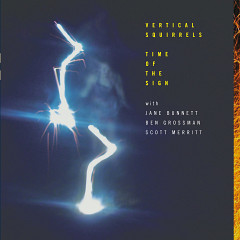
    Working out of the Toronto area, this collectively-named sextet is a new entry to the label. Its music, like its moniker, is an intriguing one. Describing it is not easy, save to say that it unfurls in an improvisatory fashion, yet it also relies on familiar compositional devices. For one, defined tonal areas recur throughout the 13 tracks, underscored by ostinato figures (most of which are played by pianist Ajay Heble, best known as the artistic director of the Guelph Jazz Festival). Revolving mainly around strings and percussion, the group is bolstered here by some added guests, most notably Jane Bunnett, in one of her rare detours from her latin bag. For wont of a better term, this ensemble’s music could be labelled as ‘world improv’, whereby all participants serve the whole rather than projecting themselves in front of it (as in jazz). Full marks then for the concept, but still a little too reliant on its devices.

    Full marks then for the concept

    Pour en finir in La Scena Musicale

    “Ambiant sounds”, Marc Chénard, La Scena Musicale, no. 20:5, February 1, 2015
    Sunday, February 1, 2015 Press

    They too are a trio like Evidence, but their musical bread and butter is no holds barred free improvisation. With some 20 years of playing together in a host of musical projects, Bernard Falaise (gtr.), Alexandre St-Onge (el. bass) and Michel F Côté (drs.) have a shared musical history, and the chemistry enables them to eschew the main pitfall of this musical practice: chattiness. In just under 41 minutes, they carve out 13 concise explorations, all but one of them clocking in under five minutes. Each piece evokes a kind of sonic micro-climate, with added electronic distortions provided for the most part by the guitarist. Together, these musicians are blessed with a sixth sense that allows them to stay in a place just long enough before moving on. But this is best arrived at when the partners know each other well, like these three gentlemen.

    Together, these musicians are blessed with a sixth sense that allows them to stay in a place just long enough before moving on.
  • 8
  • 9
  • 10
  • 11
  • 12
  • 13
  • 14
  • 15
  • 16