actuellecd

Blog

66 results
  • 1
  • 2
  • 3
  • 4
  • 5
  • 6
  • 7
  • 8
  • 9
  • Combines in Le son du grisli

    “Critique”, Pierre Cécile, Le son du grisli, July 1, 2014
    Tuesday, July 1, 2014 Press

    La couleur du vinyle aurait dû me mettre la puce à l’oreille… il y avait bien là de quoi faire monter la fièvre, d’autant que le GGRIL (pour Grand groupe régional d’improvisation libérée) tournait à plein régime (une douzaine de membres) et sans chef attitré (pas plus le bassiste électrique Éric Normand que le guitariste électrique Robert Bastien, même si…).

    Même si les deux hommes s’essayent au rôle de chef en face B et si le premier est l’auteur de ces «jeux pour improvisateurs». Mais alors, ces jeux? Ils en appellent autant à un folk tournant qu’à une conduction / déconstruction ambiantique, voire ambiantiste. Sa qualité évolue selon les «combines» ou les combinaisons: excellente quand tel ou tel instrument (la trompette d’Alexandre Robichaud, le vibraphone de Tom Jacques ou l’accordéon de Robin Servant, par exemple) s’éloigne du noyau dur de l’orchestre, moins remarquable (étrangement) quand l’orchestre cherche à jouer collectif. C’est difficile, la musique orchestrale; c’est pourquoi le GGRIL s’en tire avec non pas de beaux dommages mais avec de bien beaux honneurs.

    C’est difficile, la musique orchestrale; c’est pourquoi le GGRIL s’en tire avec non pas de beaux dommages mais avec de bien beaux honneurs.

    Le caillou in The WholeNote

    “Something in the Air: Translating a Singular Vision to a Large Ensemble”, Ken Waxman, The WholeNote, no. 9:19, June 25, 2014
    Wednesday, June 25, 2014 Press

    Reflecting one person’s imagination, musical composition is an intimate art. But, especially if the creation is wide ranging and sonically multihued, sympathetic interpreters are needed to express the composer’s vision. As this group of CDs demonstrates, notable interpretations of a composer’s singular vision can illuminate the writers’ concepts. […]

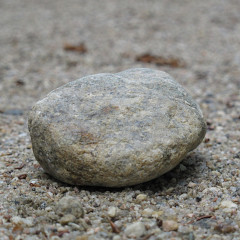
    For her part, Montreal percussionist Danielle Palardy Roger has such a consistent sonic concept that she can release a disc such as Le caillou with seven performances from 1998 to 2013 and have the disc sound as if came from one session. Featuring a shifting cast of 23 musicians called Ensemble SuperMusique, most tracks are variations on her original composition Le caillou (the pebble), a multi-faceted game piece which allows improvisers to collaborate on its musical development. Over the CD’s course everything from bel canto-like whoops to Sun Ra-like interplanetary percussion rumbles to top-of-range clarinet shrills and turntable scratching takes centre stage. With sequences that shift from rustic fiddle-and-guitar interludes to rock-styled drumming and intense jazz-like sax-and trombone lick trading, part of the fun for the listener being kept off balance. But this flexibility includes consistency. Even contributions from ebullient French bassist Joëlle Léandre, featured on one track, are no more prominent than others. Although The Stone the one Manhattan recorded tune is the most challenging in its strident stropped string and slapped percussion outlay, the defining track is Le cristal. Seemingly encompassing something for everyone from straight-ahead swing and martial rhythms, to splayed rock-guitar chords, dog-whistle altissimo to closely harmonized woodwinds the track encompasses bedlam, baroque and bop, Highlighted by a well-paced duet between Jean-Denis Levasseur’s clarinet and Jean Derome’s also sax, the climax preserves the beat and theme with jumping strings and to-the-point percussion. […]

    Danielle Palardy Roger has such a consistent sonic concept that she can release a disc such as Le caillou with seven performances from 1998 to 2013 and have the disc sound as if came from one session.

    En chute libre, En orbite in Le son du grisli

    “Critique”, Guillaume Belhomme, Le son du grisli, June 13, 2014
    Friday, June 13, 2014 Press

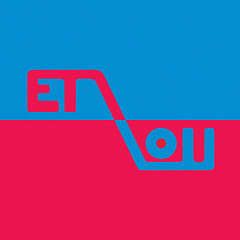
    Comme Martin Tétreault enregistra Le dernier disque de jazz du XXe siècle avec Pierre Tanguay et Xavier Charles, on ne sera pas étonné d’apprendre que le Canadien aux platines s’adonne sur ce CD au rock! A la colle avec le batteur Michel Langevin (du groupe de metal Voivod dont je l’avoue j’ignore tout), leur duo s’appelle Et\Ou. Première question, qui du duo fait le Ou du Et et le Et du Ou? Tétrault, Langevin? Bien, qu’importe, l’un ou/et l’autre.

    Deuxième question: tient-on là le dernier disque de rock du XXIe siècle? Pourquoi pas. Mais d’un rock vaudou qui fait tressauter et danser le tourne-disque, d’un rock sans complexe qui ose parfois le balourd (comme sur le Duo 8), d’un rock noise et saccadé, brut et abrupt… De quoi oublier toute dénomination, et ne plus bouder notre plaisir à l’écoute de ce rock qui n’en est tout simplement pas un.

    … rock vaudou qui fait tressauter et danser le tourne-disque

    Rubedo’ ro in Monsieur Délire

    “Listening Diary”, François Couture, Monsieur Délire, June 13, 2014
    Friday, June 13, 2014 Press

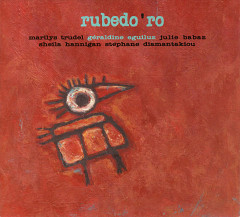
    Wonderful! Géraldine Eguiluz is simply wonderful! A singer full of charm, emotion, and creativity, she strongly brings to mind, on this debut CD for Malasartes, the great Iva Bittová, except that Eguiluz bases her wordless singing on Latin American influences instead of Central European ones — and this comparison is no disservice to Miss Eguiluz, believe me! Rubedo’ro features nine of her own compositions for a string quintet: four string instruments and her own vocal chords. Sleek arrangements that navigate the ocean between chamber music, Latin American music, and musique actuelle. I was completely won over on the first listen, and so will you.

    I was completely won over on the first listen, and so will you.

    Nicolas Caloia, Grand groupe régional d’improvisation libérée (GGRIL), Pierre Labbé, Ratchet Orchestra in Downtown Music Gallery

    “The 30th Annual Festival International de Musique Actuelle de Victoriaville”, Bruce Lee Gallanter, Downtown Music Gallery, June 11, 2014
    Wednesday, June 11, 2014 Press

    […] The second set of the night featured the Ratchet Orchestra with special guest Saturnian space-traveler Marshall Allen. The Ratchet Orchestra are a 19-piece avant/jazz orchestra from Canada who are led by bassist Nicolas Caloia and who’ve played a great set at the 2011 Victo Fest. Reeds master, Marshall Allen who is currently 89, became a member of the Sun Ra Arkestra in the late fifties and has been their leader since the passing of Sun Ra in 1993. This year is the 100 anniversary of Sun Ra’s birth on the planet earth. Considering that the Ratchet Orchestra has nearly twenty members for this concert, their sound is rarely too chaotic as Mr. Caloia is a strong leader. The orchestra sounds as if they are playing some of Sun Ra’s charts yet the music is often spacious and rarely held down to the gravity of Earth. I recognize the occasional Sun Ra melody although there are section which float in space sounding unsure of where they are going or will end up. Another Arkestra member named Pico is next to Mr. Allen and plays flute. He gets several chances to solo and is an exceptional flute player. Mr. Allen takes his time and finally solos on alto sax and an electronic wind instrument which sounds like it was being played by Sun Ra himself. There is an amazing duet between Allen on alto and Joshua Zubot on violin, free and intense as well as a couple of spirited solos from the great Lori Freedman on clarinets. Although there were several sections where the orchestra sounded a bit tentative, there were also a number of cosmic interludes when it all came together lifted off to parts unknown, most likely Saturn Sun Ra’s homeworld. […]

    […] Day Two started off up at the Pavillon with a small orchestra (13 piece) from Quebec called GGRIL (Large Regional Group of Liberated Improvisation). I had known about this group of younger Quebecois players since their leader, Éric Normand, sent me some of their discs. GGRIL have collaborated and recorded with Evan Parker and Jean Derome in the past. Their instrumentation is unique: 3 strings, 3 electric guitars, trumpet, reeds player, accordion, electric & acoustic bass and a percussionist who doubles on vibes. Each piece they performed involved different strategies or directions, some involved one or two conductors. The first piece utilized two conductors, each of whom directed half of the ensemble and occasionally trying to take the reins from each other. The players sat in a semi-circle and exchanged ideas carefully. There were always several layers going on simultaneously but it never got too dense or chaotic. The short, spirited solos seemed to fit just right. The second piece involved using a set of playing cards to direct or inspire some of the improvisations. The third piece was conducted & composed by Robert M. Lepage, Ambiances Magnétiques composer & clarinet player. I dug the way the players would repeat certain riffs with assorted shifting drones as the tempo slowly increased. There is now a long history of conducted improvisations to draw from. I could hear elements of a Butch Morris conduction or even the early John Zorn-like approach to small sound sparsity. Considering that the (Quebec-based) Ambiances Magnétiques label has been around for some thirty-plus years, great younger groups like GGRIL are pointing the way for the next generation of experimental musicians. […]

    […] The next set was a sort of Quebecois all-star quartet which featured Michel Faubert on vocals, Pierre Labbé on tenor & soprano sax, electronics & compositions, Bernard Falaise on guitar and Pierre Tanguay on drums. Aside from the vocalist, the other three musicians have long been involved in numerous bands/projects mainly for the Ambiances Magnétiques label: Labbé (solo & band-led discs, Les Projectionnistes), Falaise (Miriodor, Klaxon Gueule, solo CDs) and Tanguay (more than two dozen discs with Jean Derome, Joan Hétu & René Lussier). I wasn’t familiar with Michel Faubert who is a storyteller/vocalist and has worked with a traditional folk/a cappella bands. Mr. Labbé was the central figure here and talked or sang throughout consistently in French. Since my French speaking is minimal, I missed out on the various stories and observations that Mr. Faubert did. The response from the mostly French-speaking audience was most often giggles and laughter. So, I concentrated on the sound of his voice, his gestures and the music which was charming, quirky and consistently inventive. The music started out softly with Tanguay on a jawharp stomping his feet. The other three musicians did occasional backup vocals and there was a certain fun-loving charm that ran throughout the entire set. Each song or piece seemed to create a different mood. I liked the way the musicians used subtle gestures to evoke certain vibes, Falaise played his guitar in his lap and rubbed a cloth on it while Labbé played odd sax sounds & electronics without soloing very much to serve the story. I would’ve no doubt enjoyed the set more if I understood French but this was not the case. […]

    There is now a long history of conducted improvisations to draw from.

    À la plage in Monsieur Délire

    “Listening Diary”, François Couture, Monsieur Délire, June 2, 2014
    Monday, June 2, 2014 Press

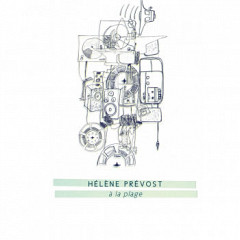
    The great communicator Hélène Prévost, who was for a long time the lead new music presenter at Canada’s francophone state radio, just released her debut solo album. There is nothing summer-like about À la plage — “At the beach”, but it is actually a play on the French word “plage”, which also means “track” — it is the result of serious research on sounds and their mechanical and poetical interrelations. Ten tracks ranging from two to ten minutes, and each track has its own soundworld, though these soundworlds are all related. Disembodied sounds — rumbles, tweets, taps — sampled instruments (especially a guitar), fragments of conversations. This is abstract hörspiel, sound art that presents, that says, and then listeners draw their own narration or evocation from it. It’s a demanding listen, no doubt, but a rewarding one.

    It’s a demanding listen, no doubt, but a rewarding one.
  • 1
  • 2
  • 3
  • 4
  • 5
  • 6
  • 7
  • 8
  • 9