actuellecd

Blog

66 results
  • 3
  • 4
  • 5
  • 6
  • 7
  • 8
  • 9
  • 10
  • 11
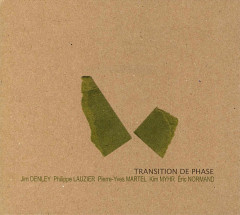
  • Transition de phase, Combines, Vivaces, Beau comme un aéroport in Skug

    “Kritik”, Curt Cuisine, Skug, February 10, 2014
    Monday, February 10, 2014 Press

    Tour de Bras nennt sich ein kanadisches Label, das sich komplett der improvisierten Musik verschrieben hat, und das darüber hinaus Konzertreihen, Workshops und ein zweijährlich stattfindendes Festival veranstaltet. Gefördert werden soll damit die Impro-Musik in der Region, wobei mit Region hier die Provinz Quebéc gemeint ist, mit 8 Millionen Einwohnern der besiedlungsdichteste Fleck in Kanada. Nicht unbedingt, was wir unter einer»Provinz«verstehen.

    Eines der Lieblingsprojekte des Labels ist Le GGRIL (steht für Grand groupe régional d’improvisation libérée), ein Live-Impro Ensemble aus einer Kleinstadt im Osten von Quebéc, das auf eine mittlerweile sechsjährigen Spielpraxis in eher schriller Zusammensetzung (etwa zwei Akkordeons, ein elektrischer und ein Kontrabass, Tuba und Fagott, sowie Violinen, Percussions und diverse Bläser) zurückblicken kann. Eine sehr feine Demonstration dieser Konstellation bietet die CD»Vivaces«von 2012, realisiert in 13-köpfiger Besetzung und offensichtlich doch nicht komplett free umgesetzt. Laut Labeleigendefinition handelt es sich aber ohnehin um»musique neuve et d’occasion«, was eigentlich einen sehr schönen Begriff in die Improvisationsmusik einführt, eben den der Okkasion. Bei uns leider viel zu einschlägig als günstige Gelegenheit oder gutes Geschäft besetzt, doch im Französischen ist die»occasion«viel näher am Begriff des Ereignishaften. Musik als Ereignis, für die Ort und Umstände und natürlich auch der Zeitpunkt des Entstehens essentiell sind. Zu diesen Umständen gehört auf»Vivaces«ein strukturiertes Miteinander einzelner Ensembleteile, was zusätzlich für eine angenehme Abwechslung gegenüber der sonst viel zu häufigen Monotonie im Improgenre sorgt. Auch der regionale Einschlag, der vor allem durch die beiden Akkordeons ins Spiel kommt und immer wieder Assoziationen zu einem außer Rand und Band geratenen Chanson-Abend unter Avantgardisten weckt, machen»Vivaces«zu einer charmanten Angelegenheit.

    Phasen und Flughäfen

    Zwei Jahre zuvor zeigte ein Teil des Le GGRIL-Ensembles, dass man auch ganz klassisch im Sinne der Improvisationsmusik kann. Auf»Transition de Phase«geben sich die zwei Saxophonisten Jim Denley und Philippe Lauzier gemeinsam mit Pierre-Yves Martel (Violakorpus und Elektronik), Kim Myhr (Akustikgitarre) und Éric Normand (Bass) die Ehre. Die fünf Herren gehen es weitaus introspektiver an und betreiben zugleich das Spiel gegen den instrumentalen Strich, also Überblasen, Schnattern, Kratzen, Bürsten usw. — eben alles was man tun kann, um seinem Instrument unerwartete Noises zu entlocken. Auch diese Übung ist prächtig gelungen, wenn auch nicht ganz so klangfarbenprächtig wie im großen Ensemble.

    Auf»Beau comme un aéroport«treffen wir die Herren Philippe Lauzier und Pierre-Yves Martel wieder. Gemeinsam mit fünf weiteren Herren haben sie offenbar beschlossen, unter dem halbwegs bescheuerten Gruppennamen Mecha fixes clock eine fast schon traumwandlerisch sichere Gratwanderung zwischen Impro und Jazz einzuspielen. Hier stimmt fast alles, hier liebt man fast alles, egal aus welchem Lager man kommt. Natürlich schlägt das Pendel in die eine oder andere Richtung aus, mal spielen Saxophon und Trompete herrlich trockene Phrasen, während die Kompagnons fröhlich dagegen bürsten, dann wieder knackst und noiselt es, bis das Piano unverfroren ein süßlich-minimalistisches Thema einstreut, das aber dann ebenso fröhlich wieder zerhäckselt wird. Und mitunter kommt sogar noch ein Beat dazu und man vertschüsst sich zeitweilig ins Sphärische. Sehr fein ist diese CD geworden, ein Leckerbissen für Quereinsteiger ebenso wie Genrefans. Auch toll: die außerordentlich hübsch gestaltete CD-Hülle.

    Vinylporno

    A propos besonders hübsch. Wir kehren zurück zum aktuellen Release von»Tour de Bras«, der unter dem Titel»Combines!«wieder das komplette Ensemble von Le GGRIL vereint. Nur dieses Mal auf Platte — und zwar auf knallrotem Vinyl, das in einer durchsichtigen Hülle, die natürlich mehr zeigt als versteckt. Ein Vinylporno, wenn man so will — und entsprechend geil anzusehen.»Combines!«wirkt streckenweise wie die Quintessenz aller bisher besprochenen CDs. Das strukturierte Ensemblespiel ist wieder da (ein Stück funktioniert als Improvisationsspiel, ein anderes ist für zwei Dirigenten ausgelegt), die disziplinierte Zurückhaltung, die in fast jazzige Reminiszenz gleitet (irgendwo zwischen spätem Gil Evans und frühem Cecil Taylor, aber wie gesagt nur fast), und natürlich das franko-kanadische Lokalkolorit. Alles zusammen ergibt eine hübsch spannungsgeladene, immer wieder fordernde, aber auch belohnende Ensembleimprovisation, die wirklich wärmstens empfohlen werden kann.

    Ach ja,»Tour des Bras«heißt übersetzt»Armumfang«, kann aber auch»Was das Zeug hält«heißen, je nach dem. Wer danach googelt, findet jedenfalls vor allem tätowierte Oberarme von einschlägigen Muskelpaketen.

    Transparence in The WholeNote

    “Something In The Air: Outstanding Solo Sets”, Ken Waxman, The WholeNote, no. 19:5, February 6, 2014
    Thursday, February 6, 2014 Press

    As the strictures of advanced contemporary music continue to loosen, more improvisers are taking advantage of the freedom to experiment. A parallel outgrowth is the number of players of almost any instrument willing to nakedly expose their skills in all solo sessions. Commonplace doesn’t mean accomplished however. Still the best dates, as the CDs cited here, offer original perspectives on the sounds of an individual instrument.

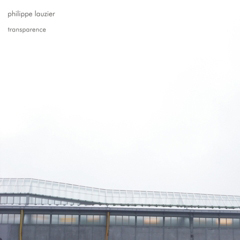
    Montreal’s Philippe Lauzier used three studios to record the 12 tracks which make up Transparence as well as coming up with different strategies for different instruments. Heard on bass and half-bass (sic) clarinet, alto and soprano saxophones plus motorized bells, he uses amplification, feedback and multi-tracking to express his unique ideas. Geyser for instance re-imagines the bass clarinet as hollow tube and percussion, swallowing and expelling pure air as he depresses the keys. Au-dessus on the other hand magnifies the soprano saxophone’s usually ethereal qualities into overlapping vibrations, with the next commencing before the previous one has died away. In contrast, alto saxophone feedback on L’object trouvé literally does as defined, managing to direct the echoes back into the horn’s body tube while making each finger motion and breath transparent. The audacity of Lauzier’s skill is most clearly delineated on En-dessous. Here the multi-tracking of four bass clarinets creates more variety among the timbres he exhales, but the intertwined and affiliated trills produced relate without question to the multiphonics he invented for a single horn. […]

    … more improvisers are taking advantage of the freedom to experiment.

    Canard branchu in Voir

    “Critique”, Réjean Beaucage, Voir, January 21, 2014
    Tuesday, January 21, 2014 Press

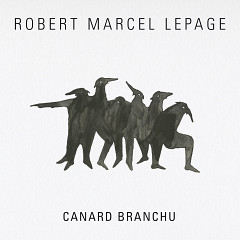
    La discographie bien fournie du compositeur Robert M Lepage s’est augmentée de deux disques ces derniers mois et le clarinettiste se fait plaisir sur celui-ci en réunissant un ensemble au sein duquel son instrument déploie un large éventail de couleurs. Il en joue lui-même sur deux pièces, comme Lori Freedman, mais Jean-Sébastien Leblanc, Pierre-Emmanuel Poizat, Guillaume Bourque et André Moisan (ce dernier au cor de basset) sont au cœur de l’ensemble, accompagnés par Pierre Tanguay (batterie) et Fraser Hollins (contrebasse); Nicolas Borycki ajoute une touche électronique légère et très appropriée sur trois titres. Des musiques très imagées, comme les titres qui les coiffent, qui nous emmènent au cirque avec les acrobates ou dans des boisés humides, avec les canards.

    Des musiques très imagées…

    Le caillou in Monsieur Délire

    “Listening Diary”, François Couture, Monsieur Délire, January 20, 2014
    Monday, January 20, 2014 Press

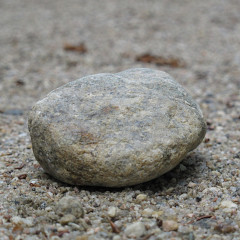
    Le Caillou [The Pebble or The Stone] is an improvisation concept by Danielle Palardy Roger. Here it is in five realizations recorded between 1998 and 2013, plus the other two movements (Le Cristal and Le Camion) of the suite it was first designed for. Personnel varies greatly (I’ll point out a guest appearance by Joëlle Léandre), locations too (live, in studio, in Montréal, in New York), but each take delivers top-notch structured improvising. The development of the improvisation bounces from musician to musician, allowing each one to establish their personality while also blending into the group’s playing. Ambiances Magnétiques fans know all the musicians here and will take pleasure in following them has the pebble changes hands.

    Ambiances Magnétiques fans know all the musicians here and will take pleasure in following them has the pebble changes hands.

    6 improvisations in Monsieur Délire

    “Listening Diary”, François Couture, Monsieur Délire, January 17, 2014
    Friday, January 17, 2014 Press

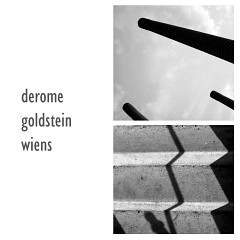
    A session recorded in April 2013 Montréal’s Studio 270. Non idiomatic free improvisation strongly reminiscent of the British school, especially of the Spontaneous Music Ensemble: collectivized individual playing, improvisers listening to each other, room for silence, thoughtful creativity. Derome on alto sax, flute, and objects; Wiens on prepared electric guitar and kalimbas; Goldstein and his ever-so-aerial violin. Demanding music that will surely be off-putting to the non-initiated. A fine trio.

    A fine trio.

    Canard branchu in Monsieur Délire

    “Listening Diary”, François Couture, Monsieur Délire, January 17, 2014
    Friday, January 17, 2014 Press

    So, it’s seems real: Robert Marcel Lepage is back. Let’s rejoice! Last fall he released his first CD in eight years: Le lait maternel (a collection of film music scores recorded in the last decade). Then, in December, came Canard branchu, a bona fide group record, his most substantial album since 2003’s La machine à explorer le tempo. Canard branchu consists of 14 lively, animated, bouncy compositions of 2 to 4 minutes, all nicely twisted — just a bit, just enough. A blend of jazz and this musique actuelle Ambiances Magnétiques introduced to the world in the 1980s. No, I’m not being nostalgic; it’s just that this record is a strong comeback, in tune with the Lepage heard on Chants et danses du monde inanimé, Adieu Leonardo!, and Les Clarinettes ont-elles un escalier de secours? Here, he entrusted his music to a group of four clarinet players (among them: Guillaume Bourque and Lori Freedman), whom he joins occasionally, a horn player, and a rhythm section (organ, doublebass, drums). The organist also does some subtle treatment work. The music flows naturally, in turns funny and moving, and listening to this CD is pure unabashed delight.

    The music flows naturally, in turns funny and moving, and listening to this CD is pure unabashed delight.
  • 3
  • 4
  • 5
  • 6
  • 7
  • 8
  • 9
  • 10
  • 11