actuellecd

Blog

162 results
  • 1
  • 2
  • 3
  • 4
  • 5
  • 6
  • 7
  • 8
  • 9
  • Martin Arnold: Aberrare in The Globe and Mail

    “Our verdict is in: This was the year’s best music”, Elissa Poole, The Globe and Mail, December 27, 2011
    Tuesday, December 27, 2011 Press

    It’s almost 2012 — so naturally, it’s time for a roundup of the best music that 2011 had to offer. Here are the Top 10 albums of the year (and the best in the classical category) according to The Globe’s music critics.

    Elissa Poole’s Picks

    1. Ann Southam: ReturningsEve Egoyan, piano — So different from the joyful minimalism of her earlier music, the late Ann Southam’s final works for piano, written for Eve Egoyan, are spare and haunting, inhabiting a circumscribed world where the expressive resonance of even the simplest musical element is questioned, and where resolution is always possible but rarely permanent.
    2. Hector Berlioz: Nuits d’été; Handel: AriasLorraine Hunt Lieberson, mezzo-soprano; Philharmonia Baroque Orchestra, Nicholas McGegan, conductor — The now-legendary Lorraine Hunt Lieberson sang Berlioz’s Nuits d’été in public only once, in 1995, but fortunately the microphones were there to capture that luminous performance, and it has finally been released. The orchestra may not be as suave as we’d like, but the singing is in a class all its own.
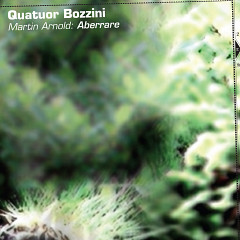
    3. Martin Arnold: AberrareQuatuor Bozzini — When is a string quartet not a string quartet? When it’s a string quartet by Martin Arnold, which is as likely to conjure a primitive consort of stone flutes or the musical ruminations of a medieval monk. Live inside this music for a while and consciousness alters.
    4. Poesie: Orchestral Songs by Richard StraussDiana Damrau, soprano; Munich Philharmonic, Christian Thielemann, conductor — Silvery sound, beautiful diction and an extraordinary range of expressive nuance give soprano Diana Damrau’s captivating performances of Richard Strauss’s orchestral songs — many of them written for his wife, with piano accompaniment only — the kind of intimacy we rarely get outside of chamber music.
    5. Max Reger: Piano Concerto in F Minor; Richard Strauss: Burleske in D Minor — Marc-André Hamelin, piano; Rundfunk-Sinfonieorchester Berlin, Ilan Volkov, conductor — How often do we listen to a late romantic concerto we haven’t heard a hundred times? Gone are the memory cues; gone the baggage of the canon. And who better than Marc-André Hamelin to make a formidable case for Max Reger’s virtuosic, semi-modernist tribute to Brahms and let listeners decide for themselves where it fits?
    6. Béla Bartôk, Richard Strauss, Edvard Grieg: Violin SonatasVilde Frang, violin; Michail Lifits, piano — Vilde Frang plays Bartok with astounding precision, but her performance is as potent as it is clear. Her instincts are also astute in late romantic repertoire, evident in her supple phrasing and tonal nuance. No wonder the music industry has its eyes on this young Norwegian violinist.
    Our verdict is in: This was the year’s best music

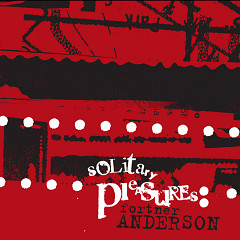
    Solitary Pleasures in Vital

    “Review”, Frans de Waard, Vital, no. 812, December 26, 2011
    Monday, December 26, 2011 Press

    Some entirely different is the music of Fortner Anderson, although its better to say the poetry and a bit of music of the person in question. We have reviewed his work before. Here a work of thirty-five short pieces, like a diary. Each piece starts with a date introduction and something about that date, along with improvised music of Michel F Côté, Sam Shalabi and Alexandre St-Onge on drums, guitar and electronics. Unlike Six Silk Purses: The Poems Of Fortner Anderson, this has however less variation in the execution. The voice is the same throughout and the music is all highly freely improvised. Some of these poems are quite nice, or even funny and sometimes sad (about a friend on chemo) but I wonder if I rather read the book (which is apparently also available, but I didn’t see it) and hear the music separately, but perhaps I am just not that much a poetry kind of guy. Or a CD single would be more in place and not one that lasts forty-eight minutes.

    The voice is the same throughout and the music is all highly freely improvised.

    La Formule Xyz in Vital

    “Review”, Frans de Waard, Vital, no. 812, December 26, 2011
    Monday, December 26, 2011 Press

    At cross-roads. That’s what comes to mind when listening to the trio disc of Pierre Yves Martel, Philippe Lauzier and Martin Tetreault. No instruments are listed on the cover, but let’s assume it’s a turntable and an assorted range of acoustic instruments and electronic sound generators. They are used to play improvised music, and so far nothing new. But the end-result is quite interesting: its as if these three men are attempting at something that is more noise based than is common in these circles. At a cross-road of improvised music and noise. Obviously not a HNW release but in a true experimental fashion a disc of intelligent noise. It seems all recorded straight to tape, with microphones picking up very closely the sounds that are produced, which makes this pretty ‘in y’r face’ release, perhaps with the exception of y = cZ + d, which sounds a bit distant. Things work best when all sound sources are used on an equal level, acoustic and electronic sounds colliding together in an infinite mixture of possibilities. An excellent release of fine noise.

    An excellent release of fine noise.

    Envoi in Paris Transatlantic

    “Jazz & Improv”, Marc Medwin, Paris Transatlantic, December 21, 2011
    Wednesday, December 21, 2011 Press

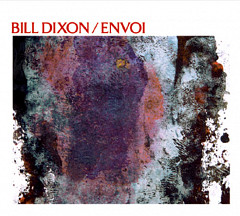
    “You’re sitting in a cab, maybe going over a contract, discussing mundane matters; you open the door, step out, and you’re confronted by the universe.” I can still hear Bill Dixon’s voice coming down the phone. It was a pivotal moment, because it was one of the few times he spoke of the emotive qualities underlying his music. It wasn’t that he was unwilling to discuss his work, far from it! He would fill extraordinary hours with the technical underpinnings of his unique compositional approach, but seemed unwilling to address directly the characteristics of his work that evoked matters of the spirit, those aspects of his vision that verbiage would not contain. And yet such concerns pervade every note he played and composed. Envoi is, in one way, just another Dixon composition, but the fact that it is his last performance lays on the work the burden of summation. Recorded at the Victoriaville Festival in 2010 and using the same forces as on 2008’s Tapestries, it does indeed look back while maintaining the autonomy expected from every Dixon performance.

    As is often the case, Dixon’s universe is a slowly expanding one. There are moments of white heat, such as the big bang and percussive roar that opens the piece, and in the final minutes, a monumental crescendo brings the whole work into sharp focus, as was the case with Seventeen Musicians in Search of a Sound: Darfur. Despite these bursts of catalytic energy, much of Envoi exudes calm and reflection that I can only attribute to age and experience. Nowhere have Dixon’s characteristic intertwining melodies been so beautifully realized as they are here by trumpeters Stephen Haynes, Graham Haynes, Taylor Ho Bynum and Rob Mazurek. Clarinetist Michel Côté adds to the sense of uhr-drone that has been so integral to Dixon’s music at least as far back as “A Quiet Feeling”, and Warren Smith’s tympani almost sound like another string instrument at times. Most surprising, though, are the pointillisms that keep the music moving, the sudden ring of a single pitch on vibraphone, or a strategically bowed attack from Glynis Lomon’s cello or Ken Filiano’s bass. Dixon was too ill to play on the performance, but I was not prepared for how perfect “Shrike” would be as an insert. A brief solo trumpet recording from the Odyssey box set, it combines long tones with dots of sound, recreating Envoi’s aesthetic in microcosm. It is the perfect point of transition, bringing Dixon’s past into a vibrant present. The recording is excellent, the playing superb all round, and the result is a fitting testament to the musical universe he created.

    The recording is excellent, the playing superb all round, and the result is a fitting testament to the musical universe he created.

    Jean René in La Scena Musicale

    “L’Off Festival de Jazz de Montréal: Jean René & Et Quart”, Mark Chodan, La Scena Musicale, December 2, 2011
    Friday, December 2, 2011 Press

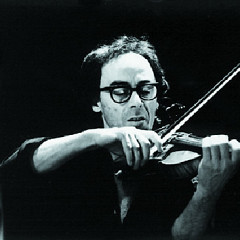
    Montréal’s creative music scene is not exactly a hotbed for violists, or anywhere else for that matter. Fortunately, we have Jean René as the local representative of this underrepresented string instrument. Jean René is best known for his contributions to projects led by René Lussier, Michel F Côté and Jean Derome. René performed for the second consecutive Off fest with his quartet Et Quart, featuring Joshua Zubot (violin), Nicolas Caloia (bass) and Pierre Tanguay (drums) at the Casa del Popolo. The quartet performed a mix of René’s own compositions, several from his latest solo viola release Fammi (&records) as well as others’. The quartet performance was easily as quirky as the studio solo album. Note that unlike the studio solo recording, René did not appear to make use of any electronic manipulations to his viola in live performance. The ensemble sounded very well integrated and thoroughly absorbed in René’s sound world. Very pleasing to the ear was the relationship of Zubot’s crystalline tone versus René’s very wooly viola tone, all against a backdrop of Caloia and Tanguay’s foundation. The performance was mainly about the compositions, but left room for the musicians to improvise, and in Zubot’s case, replete with a tremendous display of virtuosity. This is a group that needs to be recorded.

    This is a group that needs to be recorded.

    Ensemble SuperMusique (ESM), Joëlle Léandre in La Scena Musicale

    “L’Off Festival de Jazz de Montréal: Joëlle Léandre and the Ensemble Supermusique”, Marc Chénard, La Scena Musicale, December 2, 2011
    Friday, December 2, 2011 Press

    On the short list of name guest performers participating in this year’s festival, French double bassist Joëlle Léandre is surely the best known to anyone interested in the area of freely improvised musics. On the second evening, this musician was heard in two separate sets: starting off with a rather perfunctory half hour solo outing, Léandre was joined by the local Ambiances Magnétiques collective of free improvisers (7 in total comprised of its most usual suspects, Jean Derome, Lori Freedman, Joane Hétu, Jean René, Bernard Falaise, Danielle Palardy Roger, and a relative newcomer to the crowd, trombonist Scott Thompson. After the very well attended opening night double bill, turnout on this evening was rather thin, in spite of much advance billing and promotion. Because of this, there was a lack of atmosphere felt in the usually warm confines or the Lion d’Or, an old-theater space with much character to it. After more than three decades of professional activity and countless solo performances under her belt, Léandre’s musical world is well-established by now, and she offerred her usual fair, bowing for the most part (expected from any classically trained player) and indulging in her semi-onomatopeic vocalese while sawing away on her strings. She has recorded several solo albums over the years, and any of these are far more inspiring than this performance was. After the pause, she melted in the background with the ensemble, though she contributed one piece as an opener to the proceedings. This and the remaining numbers (one even played twice) were more like compositional frameworks, guiding the players according to a number of loosely defined parameters. Listeners familiar with this kind of ‘open-ended’ music making know that misses are inevitable, even if they hope to get enough hits to make the evening worthwhile. Truthfully, the latter were in short supply on that night, leaving us with a little too many of the former.

    French double bassist Joëlle Léandre is surely the best known to anyone interested in the area of freely improvised musics.
  • 1
  • 2
  • 3
  • 4
  • 5
  • 6
  • 7
  • 8
  • 9