actuellecd

Blog

202 results
  • 25
  • 26
  • 27
  • 28
  • 29
  • 30
  • 31
  • 32
  • 33
  • Live • 33 • 45 • 78 in Monsieur Délire

    “Listening Diary”, François Couture, Monsieur Délire, February 12, 2010
    Friday, February 12, 2010 Press

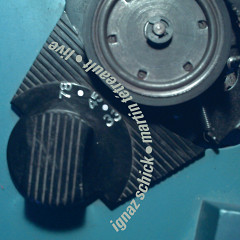
    Recorded in Europe in 2006, and finally out on Ambiances Magnétiques, this is the first (?) collaboration between two turntablists, Montréaler Martin Tétreault and Berliner Ignaz Schick (of Perlonex, who will be performing with Charlemagne Palestine at FIMAV 2010). Sixty minutes of textural improvisations on turntables, objects, and surfaces. Each participant is tucked in his own stereo channel, which makes it easier to identify their similarities and distinctive traits. And for those wondering, Live 33 • 45 • 78 is just as noise-based but a lot less noisy than Tétreault’s recent collaborations with Otomo Yoshihide. Abstract, demanding music, but it carries just fine. Note that Schick will be in Montréal in March.

    Abstract, demanding music, but it carries just fine.

    Shaman in Monsieur Délire

    “Listening Diary”, François Couture, Monsieur Délire, February 12, 2010
    Friday, February 12, 2010 Press

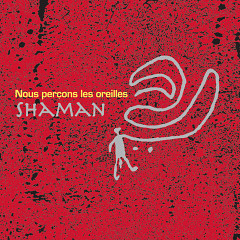
    Speaking of experimental vocalists, here is Joane Hétu and her inseparable partner (in music and life) Jean Derome, with a new CD by their duo Nous perçons les oreilles – the last one goes back to… wait a minute… [seeps through his music library]… 2002!?! Well, it was about time! On the surfce, Shaman is closer to their first (eponymous) album than to La vie, c’est simple – in other words, no songs this time around, only short improvisations (twelve of them, between one and six minutes in duration). Listening deeper though, Shaman is JUST AS different from the first two records as La vie, c’est simple was different from the first record, which goes to show how the duo keeps on evolving with time. The music is serious, intense (which doesn’t mean “noisy”), noisy (I know, I know, but “noisy” as in noise-based, not as in “a loud racket”), emotional, and atavistic since it arches back to a ritualistic yet a-rhythmic and a-melodic form of expression. Very impressive on first listen, and I’m looking forward to listen to it more attentively soon.

    Very impressive on first listen…

    Érick d’Orion in Les chroniques de Corinne

    “Critique”, Corinne Guimont, Les chroniques de Corinne, February 11, 2010
    Thursday, February 11, 2010 Press

    Vous avez jusqu’au 28 février 2010 pour contempler l’exposition étonnante d’Érick d’Orion: Solo de musique concrète pour six pianos sans pianiste. Une fascinante exposition vous attend. Vous entrerez dans un univers décharné où six pianos gisent dans la salle. Un concert qui allie sons et ambiance à partir des pianos en tant que caisse de résonance: étonnant… Essayer de deviner les pièces qui seront jouer dans l’enregistrement qui passe en boucle. Je vous conseille également le petit vidéo (sur place) qui explique bien la démarche de l’artiste. Très intéressant!!!

    Une fascinante exposition vous attend.

    Live at Upstairs 2008 in All About Jazz

    “Review”, Kurt Gottschalk, All About Jazz, February 6, 2010
    Saturday, February 6, 2010 Press

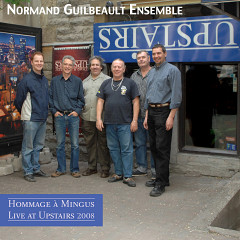
    It’s common, although not common enough, for the great bassist and bandleader Charles Mingus to be granted revered composer status in the jazz canon. The efforts of his widow Sue Mingus have kept the man’s name alive and music vital in the 30 years since his death but it’s rare to hear projects that seem to pinpoint with such precision particular moments in Mingus’ career as do recent tribute CDs by the Berlin quartet Dok Wallach and Montréal’s Normand Guilbeault Ensemble.

    Bassist (and worthy crooner) Normand Guilbeault led his small-in-number-large-in-scope big band through a set of the big man’s songs on 2005’s Mingus Erectus and ratchets them up to a sextet for Hommage à Mingus with the addition of pianist Normand Deveault, further fleshing it with guest vocalist Karen Young on two tracks. Guilbeault might be the strongest jazz classicist in the eclectic Ambiances Magnetiques collective and is a smart arranger who gets a remarkably big sound out of his group. Which means that, while the lineup might be closer to such classic Mingus albums as Ah Um or Blues & Roots, it’s less a soloist’s session than an arranger’s album, more like the fisherman’s wife’s shoes than her orange dress, if you get my drift. Their take on the little noticed Passions of a Woman Loved, from the 1957 album The Clown, even bears some resemblance to Mingus’ final big band works. Undercutting that point, however, is the mighty baritone sax of Jean Derome; his defining of Prayer for Passive Resistance alone makes good on the sticker price.

    Undercutting that point, however, is the mighty baritone sax of Jean Derome; his defining of Prayer for Passive Resistance alone makes good on the sticker price.

    Manivelle in Exclaim!

    “Review”, Bryon Hayes, Exclaim!, February 1, 2010
    Monday, February 1, 2010 Press

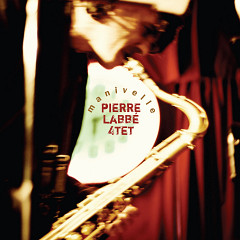
    Manivelle is the second album under Pierre Labbé’s leadership; it’s been six years since he released Risque et Pendule with his six-piece ensemble. Utilizing a pared down quartet featuring a completely different cast of characters, save guitarist Bernard Falaise, Manivelle strides that not so fine line between rock and jazz. Labbé and company come across as confident, world-weary travellers of the musical spectrum, incorporating a number of influences into their brew. Each of the nine tracks leads the group to a different destination, prodding them to explore untamed regions of sound. Labbé, Falaise, drummer Isaiah Ceccarelli and bassist Clinton Ryder are at the top of their game, having found a rare synchronicity. Labbé’s compositions are executed with grace, charm and a hint of intrigue. Manivelle is a stunning release from this Québécois mainstay.

    Manivelle is a stunning release from this Québécois mainstay.

    Shadows of Forgotten Ancestors in Blow Up

    “Recensione”, Dionisio Capuano, Blow Up, no. 141, February 1, 2010
    Monday, February 1, 2010 Press

    Rainer Wiens, chitarrista tedesco naturalizzato canadese, ha un altro album al suo attivo Bonunca Dream Music, la membership nei PO insieme a Sam Shalabi, John Heward, Alexandre St-Onge e varie collaborazioni (Malcolm Goldstein, Jean Derome e via così). Questo titolo, lo stesso di un libro di Carl Sagan e del film di Sergei Parajanov, è un florilegio di sue composizioni interpretate in solo e duo. Rainer Wiens, che si produce alla kalimba (The Valley of Green Ghost, Kawthoolie, The Taste of Pomegranate) imbastisce il discorso, sono gli amici-interpreti (Frank Lozano, Jean René, Joshua Zubot, Jean Derome e Malcolm Goldstein) a dare spessore alla arcaica atmosfera del disco. Già il violone di Joshua Zubot e il flauto di Jean Derome sviluppando il tema di Shadow of Forgotten Ancestors, ramificano la livida melodia post-impressionista fin fuori il pentagramma con una tensione drammatica che lascia attoniti. Ma a prender le budella è Shh… Whisper to the Wind, con i breathing sounds di vento malato e lo stridere delle corde fino alla visione di contorte arborescenze. Il resto, — sia la brillante viola di Jean René in Double Up, o l’archetto malinconico per Lipari-Stromboli, o i vibrati e trilli del flauto (Bird of Jade) – senza che ne venga meno la dignità artistica — sembra semplicemente disporsi intorno a quei due quadri sonori, come le formelle d’un polittico.

  • 25
  • 26
  • 27
  • 28
  • 29
  • 30
  • 31
  • 32
  • 33