actuellecd

Blog

198 results
  • 1
  • 2
  • 3
  • 4
  • 5
  • 6
  • 7
  • 8
  • 9
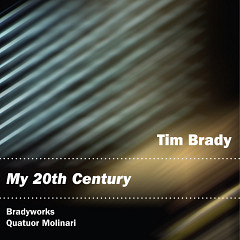
  • My 20th Century in Where’d All My Friends Go?

    “Review”, M, Where’d All My Friends Go?, November 11, 2009
    Wednesday, November 11, 2009 Press

    Bradyworks & Quatuor Molinari together constitute the audio half of a compelling new multimedia project, My 20th Century, by Montréal-based guitarist/composer Tim Brady. The two compositions align many styles Brady has previously employed but, right off, seems best suited to the voluminous chamber. With a film by videographers Martin Messier (also a renowned French-Canadian musician) and Oanu Suteu exhibited alongside four guitar-led narratives, Brady eloquently melds important artistic and social developments of the 20th century. Together, through abstraction and recognizable archetypes, it’s all very moving, at times even overwhelming. An interesting project, but Brady’s half of the deal is what I’ll casually return to.

    it’s all very moving, at times even overwhelming.

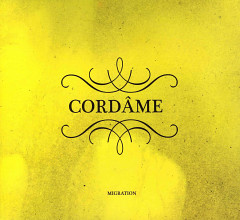
    Migration, Live au Upstairs in Le Devoir

    “Jazz — La victoire de Malasartes”, Serge Truffaut, Le Devoir, November 7, 2009
    Saturday, November 7, 2009 Press

    Allons-y avec une lapalissade. Il existe à Montréal un noyau de musiciens étonnants et singuliers parce qu’il regroupe des éclaireurs. Des bonshommes qui nous font voyager sans que nous ayons à nous déplacer avec armes et bagages. Précisons que cette évocation au voyage est à prendre au sens physique, géographique. Horizontal et non vertical.

    Si l’on a bien compris, le cœur de ce noyau est en fait un duo. Côté cour, il y a Damian Nisenson. Côté jardin, il y a Jean Félix Mailloux. D’origine argentine, le premier joue du saxophone ténor, de l’alto, et compose heureusement beaucoup. Le second? Il est contrebassiste et compose heureusement à point. Par là, le «à point», on veut dire… comment dire? Prenons le foie de veau, la tranche évidemment épaisse. Eh bien, elle doit être cuite à point. Ni trop cuite ni trop saignante. Ce détour culinaire accompli, on aura compris que les compositions de Mailloux étant toutes à point, elles sont à mille lieues des effets de l’esbroufe et du racolage. On le répète, elles sont «à point».

    À ces deux gardiens du désert des Tartares se joignent fréquemment Marie-Neige Lavigne au violon et Julie-Odile Gauthier-Morin au violoncelle. Sur l’instrument qui fit la fortune, au sens notoriété et non économique du terme, de Paganini, mademoiselle ou madame Lavigne défend avec ardeur les couleurs de l’audace et de la subtilité. Au violoncelle, mademoiselle ou madame — on tient à l’observation de la politesse élémentaire — Gauthier-Morin affiche un talent aussi pesant, dans le sens profond du terme et non rébarbatif, que l’inventaire de son identité: deux prénoms et deux noms propres. En espérant que cela ne choquera ni maman ni papa Gauthier-Morin. Si c’est le cas, on présente nos excuses les plus sincères. Dans le sens évidemment très vieille France.

    Des alchimistes

    Au gré de leurs aventures, ces explorateurs s’associent des maîtres trappeurs. On pense au percussionniste Ziya Tabassian, grand initié aux rythmes perses et amateur des musiques de la Renaissance, au guitariste Bernard Falaise, architecte de nappes sonores très denses, et à un de nos héros: le batteur Pierre Tanguay. De ce dernier, on croit que l’expression «s’il n’était pas là, il faudrait l’inventer» lui va comme un gant. De velours et non de boxe. Parfois, d’autres se joignent à eux.

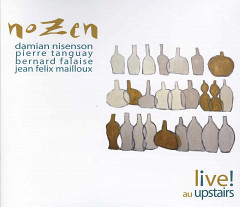
    Depuis peu, ces dames et ces messieurs, ou vice et versa, proposent deux albums parus sur étiquette Malasartes que distribue la famille Dame-Ambiances magnétiques. L’un s’intitule NozenLive au Upstairs. C’est Nisenson avec Tanguay, Falaise et Mailloux. L’autre a été baptisé Migration. Il s’agit du groupe Cordâme, dont Mailloux est le principal animateur parce que seul compositeur. Il est flanqué des deux dames ou demoiselles, de Tabassian et Tanguay ainsi que de Rémi Giguère aux guitares. De Giguère dont le jeu fait écho à celui de Marc Ribot.

    Et maintenant, le meilleur de l’histoire du jour qui est une des meilleures de l’année. Ce que ces artistes montréalais, et non strictement musiciens, nous proposent, vous offrent, est absolument extraordinaire. Ce qualificatif ayant été tellement galvaudé, on tient à lui greffer certains synonymes. Ces deux productions sont fantastiques sans être démentes, sublimes sans être ineffables. Parce que tous sont des alchimistes: une louche de jazz, une autre des musiques classiques orientales, une ou trois pincées de Bartók, une ou deux de Ravel, une de Brahms, le Brahms des quartettes et quintettes, etc. Après quoi, ils et elles touillent. Bref, l’étiquette Malasartes s’affiche comme le pendant exact de Tazdik, l’étiquette de Zorn. C’est tout dire et beaucoup dire.

    Ce que ces artistes montréalais, et non strictement musiciens, nous proposent, vous offrent, est absolument extraordinaire.

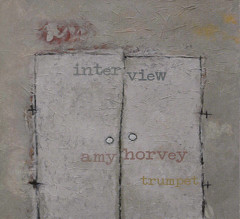
    Interview in Monsieur Délire

    “Listening Diary”, François Couture, Monsieur Délire, November 6, 2009
    Friday, November 6, 2009 Press

    A pretty record of contemporary music for solo trumpet. Montréaler Amy Horvey delivers a diverse program that runs from the unshaking placidity of Giacinto Scelsi to a vivacious composition by Cecilia Arditto. Also featured are pieces by Anna Höstman and Ryan Purchase (the latter is inspired by the works of Daniil Charms, which is always a plus in my book). The disc concludes with an improvisation with Jeff Morton’s music boxes and electronics. The focus is on ambiance and texture more than on technical display. I don’t know why – their approaches are way different – but Interview reminds me of Arve Henriksen’s first solo CD.

    A pretty record of contemporary music for solo trumpet.

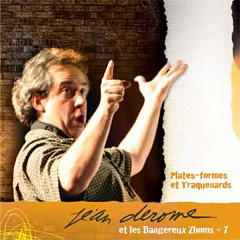
    Plates-formes et Traquenards in The Squid’s Ear

    “Heard In”, Kurt Gottschalk, The Squid’s Ear, November 4, 2009
    Wednesday, November 4, 2009 Press

    Within the eclectic arena of Montréal’s Ambiances Magnétiques collective, Jean Derome is one of the strongest and most consistent voices. He is also one of the biggest jazz devotees in the group, making him — within the context of his adventurous cohorts — something of a traditionalist. He has a long-standing Monk tribute group. He plays saxophone, for the love of Pete. And, unlike the neo traditionalists, he reliably contributes to the tradition. Along with Évidence, his Monk project, Les Dangereux Zhoms is one of his longest-standing groups. The quintet been on hiatus for a while, but returned to the 2008 Festival International de Musique Actuelle de Victoriaville more than doubled in size and with two of Derome’s most ambitious works to date; The pair of long suites made full use of his unusual jazz band plus viola, electric guitar and turntable, a big 12-tet that embarked on the Canadian festival circuit in the summer of 2009. And where Derome has an avowed love for Monk’s music, here he came off as a modern day Mingus. The big band is employed to sweeping, cinematic effect, with changes in mood and dynamic underlined by strong themes and, crucially, the rock solid foundation of Pierre Cartier on electric bass and Pierre Tanguay on drums. The tight adherence to structure allows Derome’s band, over the stretch of two 30-minute journeys, to go out while remaining in. Early in Plates-formes, an overtly lovely Guillaume Dostaler piano solo is interrupted by electrical buzzes and static. It’s not quite funny, but in that peculiar Ambiances Magnetiques way, it’s charming. And more importantly, within the structure Derome has built, it makes sense (or, at least, is made to make sense as the piece progresses). Likewise, a blistering electric guitar solo by Bernard Falaise or the outré vocalizations of Joane Hétu are force-fitted — without smugness or irony — into what remains a pair of works of jazz classicism. Victo’s reliably warm and present recording ensures that the breadth of the work is never lost. The performances captured on Plates-formes et Traquenards are dedicated to Productions Plateforme (FIMAV’s parent organization) and the Montréal production company Tranquen’Art, both of which celebrated their 25th anniversaries in 2008, as did Ambiances Magnetiques. Clearly something was in the Québécois air in 1993. Derome has issued a fantastic, and fitting, response.

    Within the eclectic arena of Montréal’s Ambiances Magnétiques collective, Jean Derome is one of the strongest and most consistent voices.

    Live au Upstairs in Monsieur Délire

    “Listening Diary”, François Couture, Monsieur Délire, November 3, 2009
    Tuesday, November 3, 2009 Press

    No Zen is Montréal saxman Damian Nisenson’s latest band. I’m fond of his previous CD with his trio. Here’s a quartet consisting of guitarist Bernard Falaise, bassist Jean Félix Mailloux, and drummer Pierre Tanguay. Montréal-style avant-jazz with Latin and Jewish touches, plus a rock influence that taps into Falaise’s peculiar talent. It’s probably the softest session Falaise has ever participated in, but he does a convincing job. Nisenson’s light and lightly plaintive sax sound rules throughout.

    Montréal-style avant-jazz with Latin and Jewish touches, plus a rock influence that taps into Falaise’s peculiar talent.
  • 1
  • 2
  • 3
  • 4
  • 5
  • 6
  • 7
  • 8
  • 9