actuellecd

Blog

198 results
  • 16
  • 17
  • 18
  • 19
  • 20
  • 21
  • 22
  • 23
  • 24
  • Live at Upstairs 2008 in La Presse

    “Dans le plus pur esprit mingussien”, Alain Brunet, La Presse, May 24, 2009
    Sunday, May 24, 2009 Press

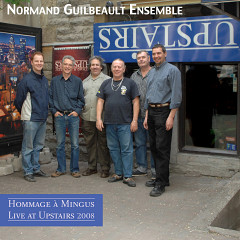
    Au sein de cet ensemble se trouvent les deux plus éminents spécialistes montréalais de l’œuvre du grand Charles Mingus: le contrebassiste Normand Guilbeault et le saxophoniste/flûtiste Jean Derome, auxquels se joignent le clarinettiste Mathieu Bélanger, le trompettiste Ivanhoe Jolicœur, le pianiste Normand Deveault, le batteur Claude Lavergne et la chanteuse Karen Young. La connaissance profonde de l’esthétique mingussienne a conduit cet ensemble à de formidables résultats, comparables aux meilleurs ensembles new-yorkais qui perpétuent l’œuvre et l’esprit du légendaire contrebassiste, leader visionnaire, indéfectible militant. L’ancrage dans le swing et le blues, les débordements extatiques, l’engagement viscéral, la modernité des ouvertures atonales, le puissant soutien rythmique, ce chaos organisé dans la grande virtuosité que préconisait Mingus, tout est là dans cet enregistrement public réalisé en 2008 à l’Upstairs. Album généreux s’il en est, cet Hommage à Mingus procède ainsi à de magnifiques relectures, de Passion of a Woman Loved à Weird Nightmare en passant par Sue’s Changes.

    La connaissance profonde de l’esthétique mingussienne a conduit cet ensemble à de formidables résultats, comparables aux meilleurs ensembles new-yorkais…

    Live at Upstairs 2008 in Voir

    “Critique”, Réjean Beaucage, Voir, May 14, 2009
    Thursday, May 14, 2009 Press

    Il y a 30 ans que Charles Mingus nous a quittés, mais le contrebassiste Normand Guilbeault prouve encore une fois, avec le troisième disque de son projet Hommage à Mingus, que sa musique est toujours bien vivante. Entouré de quelques-uns des meilleurs musiciens montréalais (des vents d’enfer avec Jean Derome aux saxophones, Ivanhoe Jolicœur à la trompette et Matthieu Bélanger aux clarinettes, l’excellent Normand Deveault au piano et le tout aussi habile Claude Lavergne à la batterie), Guilbeault leur laisse de la place en masse, et on s’en réjouit, parce qu’ils savent quoi faire avec! Karen Young chante aussi sur deux titres. Une prestation de haut niveau.

    Une prestation de haut niveau.

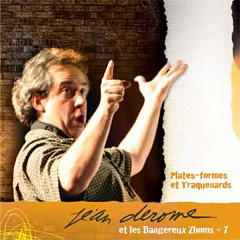
    Plates-formes et Traquenards in AllMusic

    “Review”, François Couture, AllMusic, May 12, 2009
    Tuesday, May 12, 2009 Press

    The FIMAV Festival offered the opening slot of its 25th edition to frequent participant and Montréal musique actuelle mainstay Jean Derome, who rose to the occasion with, basically, a new band and two new long-form compositions. Plates-Formes et Tranquenards documents the event in stellar clarity. Derome’s Dangereux Zhoms is a long-standing project, though it spent most of the 2000s under wraps. The unit had been reactivated in 2007 to release a new CD (To Continue), but none of that material is found here. However, the current DZ lineup provides the backbone of the project: Derome on flutes and saxophones (and some creative conducting), trombonist Tom Walsh, pianist Guillaume Dostaler, bassist Pierre Cartier, and drummer Pierre Tanguay. Augmenting the group are a cross-section of Ambiances Magnétiques’ larger circle of players, including vocalist Joane Hétu, guitarist Bernard Falaise (of Miriodor fame), and turntablist Martin Tétreault. This 12-piece ensemble performs two long suites (35 minutes each) by Derome, compositions that blend his typical driving odd-metered themes — the second and last parts of Plates-Formes, part six of Tranquenards, other sections, too — with jazzier bits, textural playing, and improvised and semi-improvised sections in subgroupings. Overall, the project sounds like a cross between Derome’s jazzier writing and Canot-Camping, his conducted improv project. It is prime Derome: soulful at times, perplexing at others, chaotic one moment, extremely well organized the next, both majestic (in a serial music way) and silly (in a circus fanfare way). A must for fans of Derome’s musique actuelle and an excellent audio recording to boot.

    soulful at times, perplexing at others, chaotic one moment, extremely well organized the next, both majestic (in a serial music way) and silly (in a circus fanfare way)

    Out of Nowhere in Free Jazz Blog

    “Review”, Stef, Free Jazz Blog, May 2, 2009
    Saturday, May 2, 2009 Press

    The title Out Of Nowhere says it all, on these eleven tracks, French bassist Joëlle Léandre and follow countryman Quentin Sirjacq on piano conjure up intimistic avant-garde music out of nowhere. Sure, you could argue that Léandre’s long-standing experience must have an influence on what she brings, and that’s true only to a point. You do recognize her voice on bass, and with even more certainty her real voice when she sings/shouts (luckily only on one track, Ruins, interestingly also the highlight of the album), but on the other hand she always tries to reinvent herself, as she does here, playing relatively fresh, more romantic than we’ve heard her before, accomodating young pianist Sirjacq, who is her student at Mills College in California, and who does sound a little intimidated at times. And that’s possibly the nice part about this music. Both musicians do make an effort to meet half-way, even if their natural styles are radically different. Sirjacq’s playing is impressionistic and sparse, he does not need many notes to create a captivating musical environment, which leaves lots of open space for Léandre to accentuate, deepen and contrast. She is much more daring than he is, understandably, adding the raw tones of her bowed improvisations sometimes like a knife cutting through lace, yet also sometimes sensitively and hypnotically laying a solid single tone foundation for the high piano tones, or adding a weeping arco melody over the intimistic piano chords. The contrast and the synergetic effect are both working well and superbly delivered. All the improvisations have a different character and approach, leading to a wealth of ideas, sentiments and styles, yet all fitting really well in the album’s overall unity. Léandre keeps amazing me, and Sirjacq has a great future in front of him. Strongly recommended.

    ★★★★ 1/2

    Strongly recommended
    ★★★★½

    Plates-formes et Traquenards in Downtown Music Gallery

    “Review”, Bruce Lee Gallanter, Downtown Music Gallery, May 1, 2009
    Friday, May 1, 2009 Press

    The Victo Festival & the Ambiances Magnétiques label both celebrated their anniversary in 2008, the year this concert took place. The Ambiances Magnétiques label, which has about 150 releases and the Victo label which this disc is number 114, are both from Québec and have nurtured & supported each other since the label and festival began. Hence, the 2008 Victoriaville New Music Festival began with this extraordinary performance.

    For long time fans of Jean Derome and his partner Joane Hétu (who runs the AM label), we notice how their pieces become involved, focused and successful, whenever we get a chance to experience their works. Mr. DeromeLes Dangereux Zhoms has been around since 1992, with four fine disc on AM. For Victo 2008, DeromePlates-Formes refers to the shifting on continents or structures. After so many years, Jean has gathered an incredible cast of seasoned musicians who can capture his sound/vision perfectly. Commencing with stark and suspense-filled sounds, the sublime, melodic written material soon emerges and with superb, warm and flowing harmonies for all. DeromeJohn Zorn’s game pieces when he conducts and pulls surprising sounds and combinations of players into fascinating areas. Other sections of this work remind me of the playful and complex structures that ZappaTraquenards which means “ambush” and again the shifting sounds are consistently engaging. What makes this music special is the seamless balance between the written and improvised sections. The ensemble is in fine form here, the music is progressive in its own way with some nutty voices used as occasional seasoning. Traquenards has a more cinematic sound, moving between the tranquil countryside near Victoriavile and hustle & bustle of Montréal. And of course like all discs on the Victo label, the sound is perfect, capturing the performance in all of its glory. Another gem from Jean Derome and his wonderful ensemble and another winner from our good friends up north at Victo.

    Another gem from Jean Derome and his wonderful ensemble…

    Victoriaville matière sonore, Vente de bagages in The WholeNote

    “Sampling Soundscapes”, Ken Waxman, The WholeNote, no. 14:8, May 1, 2009
    Friday, May 1, 2009 Press

    Creating musical sounds without instruments has become widespread ever since the availability of first the portable tape recorder and then the lap top computer. Melding oscillations created with software plus amplifications of so-called found sounds, often re-mixed, these soundscapes are notable for their subtle mixture of foreground and background.

    Canadians — especially Québécois — have been particularly proficient in this sort of composing, as these CDs demonstrate. So have Europeans, which is why Habitat (Creative Sources CS 105 CD), by the German dis.playce duo provides an interesting contrast to the Canadians’ work. For comparison, both that CD and Victoriaville matière sonore (Victo cd 0113) created by eight sound designers — Francisco López, Louis Dufort, Chantal Dumas, A_Dontigny, Steve Heimbecker, Mathieu Lévesque, Hélène Prévost and Tomas Phillips — are audio portraits of specific places.

    Geographical reflection is also involved in Bill Gilonis’ and Chantale Laplante’s Zürich-Bamberg (AD HOC 22) and Éric Normand’s Vente de bagages — Volume un (Tour de Bras TDB 3001), but these collaborations expose another electronic music variant. Montréaler Laplante and Londoner Gilonis, then living in cities which give the disc its title, collaborate on sound collages by tweaking individual audio files sent to one another. Rimouski-based Normand follows the collaborative pattern, although the found sounds he alters originated in different European cities and in Montréal.

    Hélène Prévost, one of Normand’s audio pen-pals, is the only person represented on two CDs; and that’s appropriate. One of the doyennes of auditory creation, her contributions fit individual situations in which they are placed. Matière sonore’s VSM for instance, suggest a story line with muffled male and female voices, a ticking clock and sirens intermingling with rumbling hisses, blurry rustles and reverberated intonation traceable back to computer programming.

    On Vente de bagages however (www.tourdebras.com), the bed track of static intonation and hiss from her side is reconfigured with audio effects and stutters created and equalized by the noises produced with a microphone held in Normand’s mouth. This overt physicality and evident sonic building blocks is what distinguishes Normand’s sound postcards from the other discs. On another track, his circular cackles, cries and cock-a-doodle-doos expand the quicksilver squeaks and tremolo flutters produced by the brass mouthpiece and valves manipulation of Toulouse-resident Sébastien Cirotteau.

    Organized by Spanish sound artist Francisco López to create an audio portrait of Victoriaville, Quebec, Matière sonore’s soundscape is more anonymous and selfless (www.victo.qc.ca). Sequentially panning across the aural landscape of the city which hosts an annual experimental music festival, private and public spaces are exposed and transformed. Particular starting points are mixed electronically and are simultaneously linked and divorced from sources. Louis Dufort’s Matério_***, for example, features snatches of gull caws and dog yelps, followed by slithery organ-like riffs and otherworldly shrills, and preceded by ring modulator echoes, plus swelling blurry thumps. Meanwhile Chantal Dumas tells her story on s/t w/t 2 with intonation from spectral railway-crossing peals, thunder claps and people shouting, plus radio dial twisting that locates and loses snatches of recorded music. She ends with door slamming sounds.

    Coincidentally Zürich-Bamberg (www.chantalelaplante.com) begins with the sounds of a door opening, follow by quivering piano strings. Completed by a couple of tracks of solo Laplante that alternate prolonged silences with fortissimo, stop-time abrasions and echoes, the CD’s key manipulated collages are These 12 Minutes and the title track. Undulating, intermittent oral gasps top an undercurrent of foot steps on the former. Eventually the textures are redirected together as backwards-running beats. Slivers of English, French and German phrases stud the title track as these disembodied voices philosophize, hector and promote. Also audible are intercut disconnected waves of melodic, hard-rock and Arab music that occasionally reveal simple guitar licks or drum patterns. Surmounting this are further processed sounds which originate in falling rain, whistling birds, draining sinks and idling engines. The result is both descriptive and disconcerting.

    … these soundscapes are notable for their subtle mixture of foreground and background.
  • 16
  • 17
  • 18
  • 19
  • 20
  • 21
  • 22
  • 23
  • 24