actuellecd
  • This website is also available in English.

Blog

198 results
  • 13
  • 14
  • 15
  • 16
  • 17
  • 18
  • 19
  • 20
  • 21
  • Élektrik toboggan in Downtown Music Gallery

    “Review”, Bruce Lee Gallanter, Downtown Music Gallery, June 12, 2009
    Friday, June 12, 2009 Press

    The fifth and final day of Victo 2008 began with a mighty fine trio that hadn’t played together previously: Otomo Yoshihide on turntable & guitar, René Lussier on guitars and Martin Tétreault on turntables. It is true that Otomo and Martin have recorded previously as have René & Martin, but this was their first meeting as a trio. It seemed obvious to me that these musicians have played together before since they worked so well together here. Starting quietly with soft turntable sounds, somber guitar fragments and eerie electronic sounds, building into a restrained yet quietly exciting sound. The next piece began with René and Otomo playing a thick double feedback guitar storm, howling notes erupting together just right, eventually calming down to hushed drones, humming noises and static. A perfect combination of odd sounds. Both guitars erupted once more into an intense rave-up with Martin’s turntable noise as a great accompaniment. Both Martin and Otomo played soft, haunting sounds on the turntables together at times sounding like some radiators hissing. One of the best things about this set is the way René alters the sound of his guitar on each piece to evoke a wide variety of guitar-led sounds and episodes. Otomo is also most selective musician whether playing turntables & manipulating their sounds or playing the guitar that rests in his lap. Martin Tétreault also plays turntables differently than anyone else, rarely using records and often just manipulating the turntable itself. This was a most magical set…

    This was a most magical set…

    Normand Guilbeault in Hour

    “Incredible 10. The musician-organized OFF Festival de Jazz celebrates a decade of success without excess”, Mike Chamberlain, Hour, June 11, 2009
    Thursday, June 11, 2009 Press

    “When we started the OFF Festival in 2000,” bassist Normand Guilbeault says, “we ran concurrently with the Montréal Jazz Festival. It was a statement that we local musicians are here, and this is what we do. But now, we don’t need to do that. The festival has found its place. Each year, many more musicians apply to play in the festival than can be accepted.” Indeed, the OFF has found its place. This year’s edition of the OFF is, incredibly, its 10th, its longevity a testament to the dedication of the musicians who organize the festival. They do it because they feel, rightly so, that it is vital to showcase both emerging and established local (and sometimes not-so-local) jazz musicians in contexts that are more amenable to an intimate music like jazz than a stage beside Ste-Catherine St. The focus is on the music, not on the amount of beer and hot dogs sold to tourists (not that they’re against selling beer and hot dogs to tourists, mind you). The OFF will run from June 18 to 27, presenting more than 30 performances, beginning with a piece for 50 musicians composed by Pierre Labbé in honour of the founders of the festival. It is a special event to be presented at Hangar 16 of the Quais du Vieux Port at 8:30 p.m. on June 18.

    The next 10 days will see performances at the Cheval Blanc, Lion d’Or, Chapelle Historique du Bon- Pasteur and Dièse Onze by artists including Miriodor, the John Roney Trio, Marianne Trudel, Pierre St-Jak and Frank Lozano. The festival will close with a special two-set performance by Guilbeault’s large ensemble doing rarely performed works by Charles Mingus such as Black Saint and the Sinner Lady at the Lion d’Or on June 27.

    This seems fitting, given the mercurial Mingus’s predilection for lecturing audiences who weren’t paying sufficient attention to the music. These musicians are making music that deserves attention, and they’ll do their best to make sure that you can experience it under the best possible conditions.


    This year’s edition of the OFF is, incredibly, its 10th, its longevity a testament to the dedication of the musicians who organize the festival.

    Arbor Vitæ in Octopus

    “Le CD de la semaine”, Jean-Claude Gevrey, Octopus, June 10, 2009
    Wednesday, June 10, 2009 Press

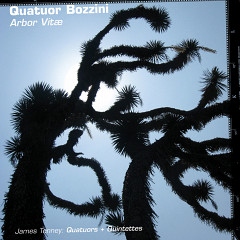
    Immense compositeur de la seconde moitié du vingtième siècle, James Tenney fut l’un des derniers géants de la musique contemporaine. Disparu en 2006, son œuvre demeure incompréhensiblement sous-documentée sur le plan discographique. Le bien avisé Quatuor Bozzini entend bien changer la donne en nous livrant rien moins que l’intégrale des pièces pour quatuor à cordes et quintet, la plupart inédites en CD. Que l’on parle ici des compositions rassemblées ou du groupe chargé de leur interprétation, une chose est sûre: l’ensemble est prodigieux!

    C’est un événement que la parution de ce double CD dans la Collection QB, dont les initiales (Quatuor Bozzini) nous rappellent que la formation montréalaise est aux commandes de la direction artistique. Possédant une affinité évidente pour l’œuvre de Tenney, Nadia Francavilla, Clemens Merkel (violons), Stéphanie Bozzini (alto) et Isabelle Bozzini (violoncelle) font preuve ici d’une précision et d’une limpidité qui requièrent, à l’évidence, la maîtrise absolue de leurs instruments mais, surtout, l’appropriation de la pensée intime du compositeur. Manifestation de cette alchimie: la pièce qui ouvre le recueil et lui donne son titre, Arbor Vitae (2006), commande du quatuor et œuvre ultime de Tenney qui n’a vu le jour que de manière posthume. Une apogée sereine où de longues et perçantes intonations forment une trame harmonique qui se déploie tel un rhizome laissant entrevoir, à chacun de ses embranchements, un microcosme sonore. A l’autre extrémité du spectre, le String Quartet in One Movement (1955) est d’avantage sous l’influence de Webern ou de Bartók et offre rétrospectivement un très beau portrait de l’artiste en jeune homme. Le sombre et bourdonnant Saxony se construit lentement par le flux et le reflux de vagues microtonales dont l’accumulation décalée forme une structure hypnotique. Un principe similaire est utilisé pour Koan for String Quartet qui réconcilie tout autant sérialisme et minimalisme en sillonnant les discrètes variations d’un mouvement perpétuel. Le second CD voit le quatuor augmenté par l’addition d’un percussionniste (Rick Sacks) sur Cognate Canons, d’une pianiste (Eve Egoyan) sur Diaphonic Studies ou d’une contrebassiste (Miriam Shalinsky) sur Quintext I-V: Five Textures. Les préoccupations restent les mêmes: exploration obsessionnelle des dissonances, réévaluation permanente des systèmes de composition et fascination infinie pour la prégnance du timbre. La dernière pièce, une suite de cinq études, fait écho à autant d’inspirateurs: Ruggles, Varèse, Partch, Xenakis et Feldman, reliant ces créateurs de génie par une ligne plus droite qu’il n’y parait et y en inscrivant son créateur par la même occasion. Plus bel hommage à James Tenney n’avait peut être jamais été rendu.

    Que l’on parle ici des compositions rassemblées ou du groupe chargé de leur interprétation, une chose est sûre: l’ensemble est prodigieux!

    Ice Machine in Monsieur Délire

    “Listening Diary”, François Couture, Monsieur Délire, June 5, 2009
    Friday, June 5, 2009 Press

    Finally, the collaboration between D Kimm and Alexis O’Hara has found its way on record. I saw this duo at FIMAV back in… 2007? 2006? Kimm and O’Hara are two multitalented poets/performer artists/sound artists. O’Hara tends toward derision and psycho-sexual sarcasm over a noise background; Kimm’s work is more nuanced, combining humour and tenderness, depth and pulsion. Together, they brew quite a sonic stew! Intriguing poems, coldish (hence the title) and occasionally trashy sound textures. Very well done.

    Very well done.

    Somewhere the Sea and Salt in CBC Radio

    “Non-Invasive Piano”, Li Robbins, CBC Radio, June 4, 2009
    Thursday, June 4, 2009 Press

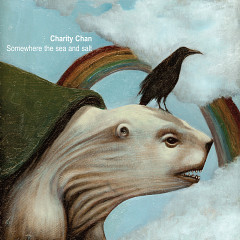
    Charity Chan calls her piano style ‘non-invasive.’ In other words — no prepared piano. But the piano still sounds like a whole different beast when it’s played by Chan. This evening The Signal features music from her latest recording, Somewhere the Sea and Salt. Chan thinks the music on this recording is a kind of “aural map” of the techniques she uses to coax unexpected sounds from the piano. Here’s how she sees (or hears) it: “I was often fascinated by the minute details of and subtle characteristics of these unconventional sounds. So often, the magic of what enthralls a performer is hidden or inaccessible to the audience. This recording is a way of allowing those sounds to be heard.” If you haven’t heard of Charity Chan as a soloist but follow new music, you may be more familiar with a previous project she was involved in with the group Fenaison. How’s about this for a celebrity endorsement — from Fred Frith: “Listening to Fenaison reminds me why I enjoy improvisation. They make music that is passionate, mysterious, and full of contradictions….in other words, it’s alive! And well…”

    Ice Machine in Pinkushion

    “En marge”, Fabrice Fuentes, Pinkushion, June 4, 2009
    Thursday, June 4, 2009 Press

    «Nous transcendons le Palpable et l’Impalpable, d’où notre nom: Mankind», annonce dans son Manifeste le duo féminin D Kimm et Alexis O’Hara. Enregistré dans ce haut lieu montréalais du post-rock qu’est l’Hotel 2 Tango, Ice Machine convoque le fantôme halluciné de William Burroughs, les greffes machinocorporelles de David Cronenberg, l’enfance trouble de Victor Erice, la fuite du temps de Béla Tarr et la poésie narrative de DM Thomas. Autant d’écrivains et cinéastes qui sont l’objet d’un hommage singulier sur Repressed Love, montage hétéroclite de bruitages électroniques et de voix épars, de bribes de dialogues filmiques et de récitations littéraires échappés d’un dictaphone, le tout sur fond de rythme myocardique, comme si le morceau offrait une déambulation poétique dans les méandres d’un cerveau littéralement dérangé. L’espace imaginaire du duo muli-instrumentiste déploie ainsi ses impulsions noisy et effusions ambient, souffle et rythmes vitaux mêlés à l’instar de l’ouverture Mile End Throat Singers, un morceau qui repose sur des «laborieux chants de gorge» et des «summer dog vocals» progressivement distordus par des loops et des effets de pad, jusqu’à laisser poindre une angoisse diffuse, coupée court par des rires espiègles. Que ce duo de Canadiennes revendique son manque de savoirs, préférant de loin faire et défaire une musique spontanée et inconfortable, souvent conçue à l’instinct, mais pensée après-coup, voilà qui nous comble quand trop de disques affichent une prétention et une maîtrise qui n’ont d’égal que l’ennui dans lequel ils nous plongent. Un raccourci, forcément réducteur, assimilerait Mankind à un CocoRosie trash: le bricolage élevé au rang d’art participe en effet d’un enchantement ou d’une trivialité qui génèrent des visons musicales proprement distordues et originales où une fausse insouciance enfantine côtoie constamment des marges plus interlopes de la conscience. Chez Mankind se produit une étrange intrication du cul et du cerveau, du beau et du laid, du léger et du profond. En somme, de la vie palpable et de l’impalpable mort.

    … le bricolage élevé au rang d’art participe en effet d’un enchantement ou d’une trivialité qui génèrent des visons musicales proprement distordues et originales…
  • 13
  • 14
  • 15
  • 16
  • 17
  • 18
  • 19
  • 20
  • 21