actuellecd

Blog

198 results
  • 10
  • 11
  • 12
  • 13
  • 14
  • 15
  • 16
  • 17
  • 18
  • Joëlle Léandre in Les Inrockuptibles

    “Les méandres de Léandre”, Guillaume Belhomme, Les Inrockuptibles, no. 710, July 7, 2009
    Tuesday, July 7, 2009 Press
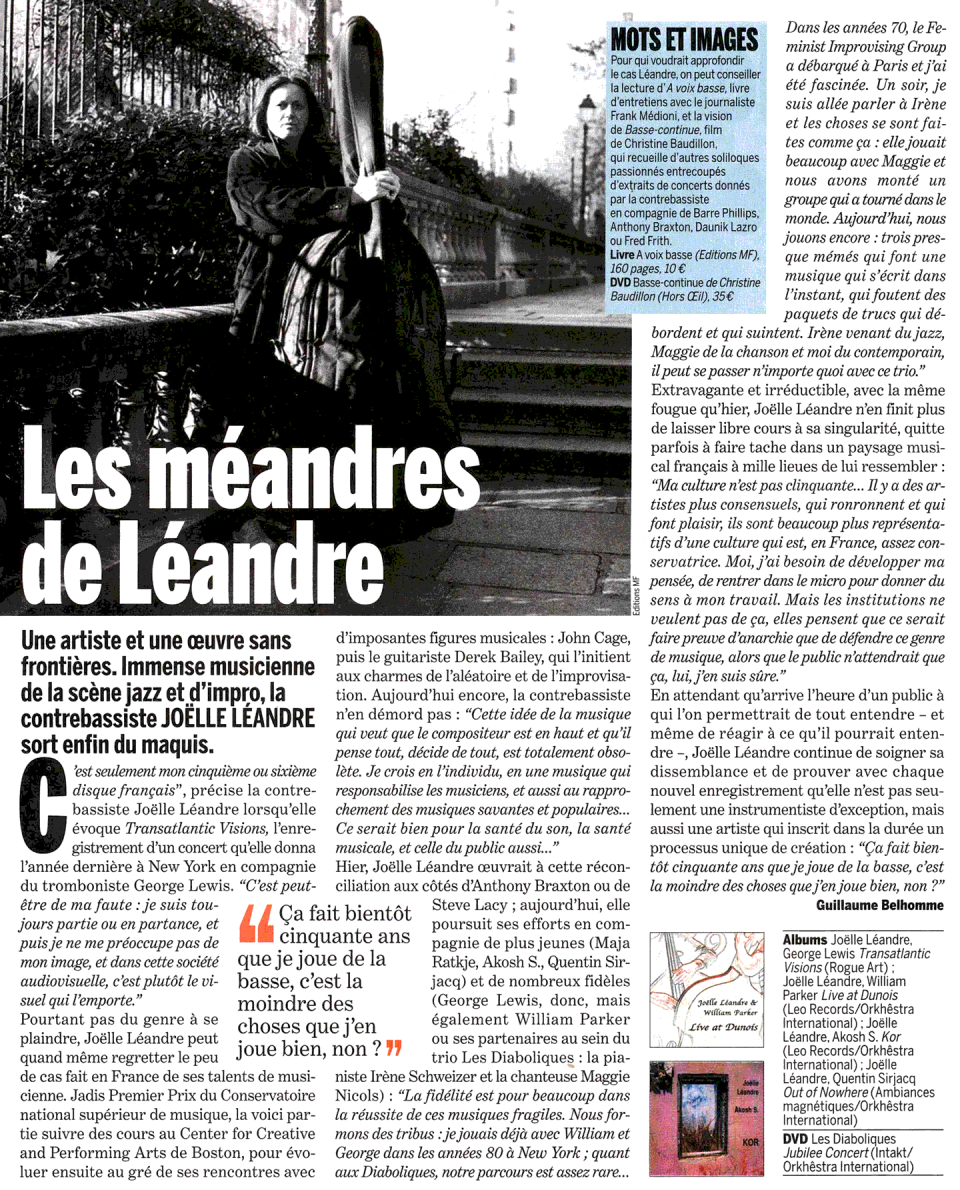
    Joëlle Léandre continue de soigner sa dissemblance et de prouver avec chaque nouvel enregistrement qu’elle n’est pas seulement une instrumentiste d’exception, mais aussi une artiste qui inscrit dans la durée un processus unique de création.

    Jean Derome in The Gazette

    “Montréal jazz fest 2009: Jean Derome on Lee Konitz”, Juan Rodriguez, The Gazette, July 6, 2009
    Monday, July 6, 2009 Press

    Montréal’s long-reigning avant-garde-and-mainstream horn explorer Jean Derome, after seeing iconic alto sax explorer Lee Konitz, 80, at the Gesù late Friday night at the Montréal International Jazz Festival: “I’ve listened to him for a long time. At the beginning I didn’t understand anything about what he was doing. But then I began to realize that he always plays the same tunes, but in different ways, even at a solo concert at Théâtre Saint-Denis, lots of silences and abstractions. I always come back to certain discs, among others his record with Sal Mosca, Spirits, and Motion with Elvin Jones. I remember when I was young Robert Daudelin filmed a dinner with Lee Konitz and I was very shy in his presence. Now it’s always nice to see artists that are in fine form despite diminished physical resources. His also has a great rapport with his group Minsarah; one of his great strengths has always been his deep ears. I feel fortunate to see him now and seem him en forme with creative juices. He’s always surprising. Now I can’t wait to see Ornette [Coleman, 79, on Thursday].”

    Érick d’Orion in The Gazette

    “The Surreal Sounds of the City”, Lorraine Mallinder, The Gazette, July 4, 2009
    Saturday, July 4, 2009 Press

    Québec artists run amok in an old Belgian town for a festival experimenting with sonics — from gunfire to spliced love songs.

    It’s a rainy afternoon in the legal district of Mons, Belgium. Up ahead stands the city’s Court of Justice, a stern concrete keep topped by an eye-like cupola. Gunmen fire from narrow slits around the perimeter of the building. Helicopters circle above; their intense drone is ear-splitting.

    No, Belgium has not turned into a police state. The dystopian soundscape — the gunfire and the helicopters — around the forbidding architecture was created by Québec artist Jocelyn Robert. His composition, part of a series entitled Invisible Cities, is designed to be heard on an MP3 player while following a set path through the winding cobblestone streets of Mons.

    This Court of Justice part is hardcore to say the least. “I find it really violent, like a cry of pain,” says 19-year old local student Émilie Kalecinski. It is, she says, a little harsh, even if the building is “quite sombre and austere.”

    Robert is one of six Québec artists who have descended upon the southern city of Mons for the launch of City Sonics, an experimental sound festival. This year’s event features a special focus on the sounds of Québec.

    The previous day, the festival had opened with off-kilter cultural commentary from Montréal’s Pop Core Duo. Imagine an Alcoholics Anonymous meeting on board a cruise ship in the middle of a stormy night with a psychotic master of ceremonies, and you’re halfway there.

    Manuel Chantre and Simon Laroche launch into their set with naval peaked caps, inviting the audience to smash a piñata to poppy electro sounds. But the festive mood changes abruptly as, blinking in the penumbra, Chantre strides out with a mike, asking the audience to share their tales of epiphany. Naturally, everyone freezes.

    Fortunately, Chantre has come prepared with some ready-made confessions, one of which involves redemption while singing in the shower and another about a devout cripple who discovers she can walk without God.

    Things get darker after that, as the duo navigate through stormy seas to the wails of crazed mermaids (a distorted sample of Daryl Hannah’s replicant in Bladerunner), with the set finally reaching a deafening, multi-layered crescendo. We wanted it to be a bit like a personal growth workshop, Laroche says afterward.

    Surreal? Well, this is Belgium, home of surrealism, after all.

    What to make, for example, of Erick d’Orion’s five pianos without pianists? Music from artists like Duke Ellington, Sun Ra and the Wu Tang Clan is piped through to vibrating motors installed in five dilapidated pianos. The deep, mechanical growls sound more like pneumatic drills than musical instruments.

    Clutching a can of ubiquitous Belgian brew Jupiler, d’Orion looks like a death metal fan who has just emerged from the mosh pit. The piano installation is all about creating sounds from objects in unexpected ways, says the Québec City native. He did a similar thing before with salad bowls.

    Ten minutes down the road at the Catholic University of Mons, fragments of How Deep Is Your Love by the Bee Gees are stretched into unrecognizably mystical form in the echoing confines of a 15th-century chapel. Maybe it’s just the surroundings, but standing alone beneath the stained-glass windows, Montréal artist Alexander MacSween cuts a vaguely monastic figure.

    His installation, Chapel of Love, is based on split-second splices from love songs by artists as diverse as Axl Rose and Franz Schubert. “I asked people to send me love songs eight weeks ago,” he says. “Oddly enough, most of them sent me heartbreak songs.” He expresses a desire to do the same thing in the churches back home: “People don’t go there anymore, but nobody wants to take them down. They are areas for reflection.”

    Upstairs, Simon Dumas is presenting a very personal take on the veracity of memory, based on his split with a girlfriend. Reconstructed photos — his ex now portrayed by a scantily clad actress — appear in dreamy slow motion interspersed with poetry and snatches of spoken word.

    A specific instance of how memory distorts past realities comes up in the video. Dumas, an artist and poet based in Québec City, explains that the recollection of his former girlfriend’s stomach problems led him to remember a photo of her with her forearm on her belly, a false memory since it had actually been placed behind her back.

    Next year, City Sonics’ organizers plan to up the Québec quotient. Overall, the first two days of this year’s festival have been a mind-altering experience. Gleefully anarchic, wilfully eccentric, with a good dollop of humour in places, it is perhaps one of Europe’s most original festivals — and this year, six guys from Québec have helped to make it happen.

    … perhaps one of Europe’s most original festivals — and this year, six guys from Québec have helped to make it happen.

    Out of Nowhere in Octopus

    “Oursins chroniques”, Laurent Catala, Octopus, July 2, 2009
    Thursday, July 2, 2009 Press

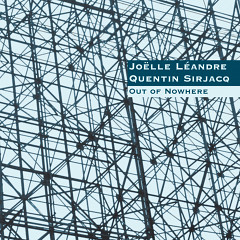
    On a bien trop souvent l’impression, en matière de musiques improvisées, qu’il y a une certaine distance installée entre l’artiste et son public, entre le maître et l’élève en quelque sorte, surlignée par la dextérité instrumentale affichée et l’expressivité qui en découle. Musicienne autant que militante de son art musical, la contrebassiste Joëlle Léandre s’est toujours élevée contre cette condescendance formelle, en ouvrant son concert musical au discours et à l’humour, mais surtout en multipliant les collaborations, avec des artistes parfois bien moins réputés qu’elle. Fidèle à son goût pour les duos, c’est donc avec son ancien élève du Mills College, le tout jeune pianiste Quentin Sirjacq qu’elle s’ingénie sur cet Out of Nowhere à trouver les pistes d’un dialogue fructueux. Souvent contenu, voire replié sur des éléments bruts propre au jeu de chacun des deux musiciens, les grincements boisés du frottement de violoncelle répondant par exemple aux notes éparses de piano sur Ruin, cet échange se fait immédiatement chaleureux et intime, laissant percer une connaissance réciproque qui fixe les ambiances dans des déclinaisons introspectives. Un parfum de plénitude flotte dans l’air, à la fois doux et envoûtant, et étrangement, alors qu’on attend continuellement la truculence habituelle de Joëlle Léandre, on est surpris du caractère atmosphérique qui se dégage de cette rencontre. Une surprise d’autant plus grande que cette approche plus dépouillée se révèle étonnamment pénétrante et enveloppante, pérenne jusque dans ses nuances. Certes, quelques emballements affleurent régulièrement, histoire de contraster les débats (Fragments 1 & 2, la transition Moon journey / Awakening), apportant un complément bienvenu à ce balisage discret des sens, mais ce n’est que pour mieux appuyer la complicité naturelle de deux solistes qui n’ont pas besoin de faire la course à la surenchère pour déployer leur talent.

    Un parfum de plénitude flotte dans l’air, à la fois doux et envoûtant…

    Arbor Vitæ, Bozzini Quartet in Thirty-One

    “Review”, Bob Gilmore, Thirty-One, July 1, 2009
    Wednesday, July 1, 2009 Press

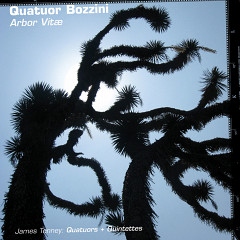
    Let’s get the “review” out of the way first, so we can talk about the music. This two-CD set of quartets and quintets by the American composer James Tenney (1934-2006) is one of the finest recordings to have come my way recently, essential listening not only for anyone interested in Tenney’s music or in microtonality in general, but for anyone wanting to understand some of the ways in which new music has developed in the past three or four decades. That’s a weighty claim but I stand by it. Relatively little played for much of his lifetime, Tenney’s music became better known only in the last dozen years of his life and now the ears of the new music world are wide open to it. With this new recording we have a Tenney release that offers superb performances of a collection of some of his finest, most individual works (here represented by Quintext I-V: Five Textures, Saxony, and Koan) together with some tougher nuts that nonetheless prove tastier as time goes by (works like Cognate Canons, Diaphonic Study, and his last work, the string quartet Arbor Vitae). Previous fine Tenney discs have appeared (Marc Sabat and Stephen Clarke’s recording of the violin and piano music on Hat Hut, the Barton Workshop’s of the Postal Pieces on New World Records, among others), but for all the excellence of the playing these earlier discs have often tended to offer works from what feels to me like the periphery of Tenney’s achievement rather than the centre. If you don’t like the music on this Bozzini Quartet release, you can conclude that Tenney is just not for you. The Montréal-based Bozzinis have established themselves beyond question as one of the finest new music quartets on the scene, skilful and dedicated young players with a consistently adventurous approach to repertoire. Their performances here are never less than outstanding.

    Tenney’s explorations of microtonal tunings began in 1972, more than a decade after his brief and argument-filled “apprenticeship” with Harry Partch at the University of Illinois in 1959. Tenney’s theoretical writings offer an expansion of many of Partch’s tuning concepts, placing Partch’s interest in extended just intonation (“extended” through the use of harmonies derived from the seventh and eleventh partials) in a broader conceptual framework that acknowledges the complexities of our perception of pitch and the sophisticated mechanisms our brain uses to process aural data. Not all of Tenney’s post-1972 works employ just tuning, although most of them use harmonic relationships made possible by the expanded pitch world of microtonality — more specifically, through a particular navigation of that world by means of a pitch matrix that Tenney termed “harmonic space”, which offers quantitative measures of “harmonic distance” between two or more pitches. These theoretical ideas, brought to sonorous life in his compositions, are described in his article “John Cage and the theory of harmony” — Soundings 13: The Music of James Tenney, ed. Peter Garland, pp. 55—83 (Santa Fe, NM: Soundings Press, 1984).

    At the conceptually simpler end of Tenney’s spectrum is a work like Saxony (1978), originally for saxophone with tape delay but heard here in one of its various possible incarnations, for string quartet with delay. This piece, like several others laced through his output, takes its pitch material from a single harmonic series. The series is revealed gradually, in an ever-more-dense texture, with the delay system catching the long tones and phrases of the players and re-injecting them into the texture. Characteristically for Tenney, this music avoids drama or incident (more so than does much of the contemporaneous “spectral music” from France, with which it otherwise has several things in common) and offers instead a rich listening context in which the listener’s perceptual experience seems to count for more than the decoding of any “message” from the composer. Koan, a 1984 reworking for string quartet of a much earlier solo violin piece, is a twenty-minute exercise in slowly moving string glissandi set against steady drone pitches. Conceptually elegant and perceptually engaging — if one is in the mood for it — the work can be a real challenge for many audiences not sympathetic to its particular sort of austerity. The Bozzinis play it superbly (with special praise due to violinist Clemens Merkel, who has to negotiate slow glissandi evenly and musically over long spans of time in a steady eighth-note rhythm continually crossing two strings).

    For me the real gem of this set, and practically a textbook of Tenney techniques, is the 35-minute Quintext I-V: Five Textures, never before recorded (and rarely, if ever, played complete). Subtitled “five textures for string quartet and bass”, this dates from the all-important year 1972. The individual movements are: “Some Recent Thoughts for Morton Feldman”, “Clouds for Iannis Xenakis”, “A Choir of Angels for Carl Ruggles”, “Parabolas and Hyperbolas for Edgard Varèse” and “Spectra for Harry Partch”. As the subtitle indicates, each movement creates and sustains a texture without dramatic change of any kind, and each has a connection to the work of the composer invoked in its title — although Tenney’s homage could never actually be mistaken for the music of the composer concerned. The first movement is a study in soft, sustained, non-developmental, dissonant vertical harmonies, an obsession in much of Feldman’s early work (especially, perhaps, the Vertical Thoughts series, from which Tenney derived his title). However, in “Some recent Thoughts for Morton Feldman”, the harmonies specified are microtonal, and tuned just intonation (using a scale of intervals analogous to the first 13 odd-number harmonics), one of Tenney’s own obsessions, but a concept totally at odds with Feldman’s devotion to equal temperament. The second movement is a tapestry of sound and silence, with the ‘sound’ sections being a homage to the string cluster textures of Xenakis’s Metastasis and other works, albeit randomly derived. The third movement is a sort of textural parody of Ruggles’s Angels, this time involving actual quotations of chords from Ruggles’s score, though once again in just intonation; it is played sul ponticello throughout, invoking the muted brass of the original. The fourth movement, with its continual but irregular glissandi finally converging around middle C, evokes the parabolas and hyperbolas that Varèse wanted to create in sound by use of instruments like the siren; again, however, the movement is technically speaking almost antithetical to Varèse’s own compositional methods, with its use of graphic notation and consequent degree of randomness. Finally, “Spectra for Harry Partch” proposes yet another sort of homage. In terms of its sonority and its compositional approach the piece is quite far from the sound of Partch’s music, yet the complex scordatura that Tenney specifies for the strings yields music that uses the most complex fabric of just intervals he had so far employed (surpassing in complexity, thanks to its use of intervals derived from prime number partials as high as the thirteenth, the harmonic resources of Partch’s own musical language).

    The two other quintets on this disc are much later works. Cognate Canons (1993), which adds a percussionist to the quartet, is dedicated to Nancarrow, some of whose rhythmic techniques it employs. (Among his many other achievements Tenney was among the first to study the music of the long-neglected Nancarrow, contributing detailed liner notes to the recording of Nancarrow’s Studies for Player Piano released by Wergo in the late 1980s.) Tenney gave me a cassette of Cognate Canons shortly after its premiere (by the Arditti Quartet and Robyn Schulkowsky), but it has taken me all these years to warm to it — here the persuasive playing of the Bozzinis and the sympathetic sound of the recording (by Hessischer Rundfunk in Frankfurt) do much to help a work whose material at first can seem rather anonymous and even stilted, its rhythms well calculated but not especially vibrant. The piano quintet Diaphonic Study is a thorny (and perhaps overly prolonged) exercise in dissonant counterpoint of the sort explored by Ruth Crawford and her husband Charles Seeger earlier in the 20th century, here recast in a microtonal tuning system. This work seems, at least initially, to resist straightforward aural comprehension in the way that Saxony or Koan positively revel in it, although for those listeners prepared to invest the necessary time Diaphonic Study offers its own particular rewards.

    The set also offers two early, short quartets — the String Quartet in One Movement of 1955 (a student piece; interesting, but to my ears not really more), and the Stochastic String Quartet of 1963, one of Tenney’s (and the world’s) first computer-generated compositions. While perhaps not especially engaging as a listening experience, the Stochastic String Quartet is representative of a way of working by means of which Tenney creates a field of musical experience mid-way between the architectural calculations of Xenakis and the intention-free indeterminacy of Cage. His last work, the string quartet Arbor Vitae, like the Stochastic String Quartet of more than forty years earlier, is also algorithmically derived, its expanding/contracting pitch range and increasing/decreasing temporal density having been worked out with the programming skills of the young composer Michael Winter during Tenney’s last illness in the summer of 2006. It’s a piece I found hard to make much sense of at first but, here again, repeated listenings reveal a world of sonic fascination and ever-more-audible structure. The Bozzinis commissioned Arbor Vitae, and their stunning recording of it and the seven other works on these discs is a monumental achievement, a fitting testimony to a composer whose real stature is becoming clearer with every year that passes.

    … one of the finest new music quartets on the scene, skilful and dedicated young players with a consistently adventurous approach to repertoire.

    Arbor Vitæ in Klassik.com

    “Das Innenleben der Klänge”, Stefan Drees, Klassik.com, July 1, 2009
    Wednesday, July 1, 2009 Press

    Dass das kanadische Quatuor Bozzini hierzulande nur am Rande wahrgenommen wird, hat sicher nichts mit der Qualität des Vortrags zu tun. Vielleicht liegt es eher am nicht ganz alltäglichen Repertoire, das die vier Musiker Clemens Merkel (Violine), Nadia Francavilla (Violine), Stéphanie Bozzini (Viola) und Isabelle Bozzini (Violoncello) ins Zentrum ihrer interpretatorischen Tätigkeit stellen. Seit seiner Gründung im Jahr 1999 hat das Quartett eine ganze Reihe ausgezeichneter CDs mit zum Teil sehr selten zu hörenden Kompositionen in dem ensembleeigenen Label collection quatuor bozzini im Vertriev von DAME (actuellecd.com) eingespielt, darunter ein ‚Portrait Montréal’ mit Werken von Claude Vivier, Jean Lesage, Michael Oesterle und Malcolm Goldstein (2004), eine fulminante Neuaufnahme von Steve Reichs Different Trains, die sich auch auf eine Neuproduktion der zur Komposition gehörenden Zuspielbänder erstreckte (2005), sowie die Platte Le livre des mélancolies mit Werken von Piotr Grella-Mozejko und Jean Lesage (2008).

    Ein amerikanischer Avantgardist

    Mit ihrer im vorigen Jahr erschienenen Produktion Arbor Vitae widmen sich die Musiker ausschließlich dem Schaffen des Amerikaners James Tenney (1934—2006), der wie nur wenige andere seiner Kollegen eine genuin amerikanische Tradition ‚avantgardistischen’ Komponierens verkörperte. Gegenstand der bemerkenswert runden und sehr hörenswerte Doppel-CD sind Tenney Streichquartette und Quintette mit Streichquartettbeteiligung — eine Musik, die es dem Hörer allerdings nicht gerade leicht macht, sondern ihn mit ungewohnten Klangsituationen jenseits des temperierten Tonsystems konfrontiert. Es ehrt die Musiker, dass sie sich mit dieser anspruchsvollen Musik so intensiv auseinandergesetzt haben, zumal die Umsetzung die Fähigkeiten des Ensembles bis ins äußerste Extrem herausfordert. Die Präzision der Ausführung ist außerordentlich und verdeutlicht, mit welch großem Ernst das Quatuor Bozzini diese Aufgabe in Angriff genommen hat.

    Viele von Tenney Stücke ähneln sich insofern, als sie einen sehr einfachen Formverlauf umschreiben, bei dem ein bestimmtes Prinzip solange wiederholt wird, bis gewissermaßen eine Sättigung eingetreten ist, der Prozess sich auf ähnliche Weise umkehrt und zu seinem Beginn zurückführt oder einfach abbricht. Das komplexe Geschehen findet daher im Innern der Klänge statt, denn der Komponist verwendet immer wieder Elemente wie reine (nicht temperierte) Stimmung und mikrotonale Harmonik. Hat man sich der Hörer erst einmal auf diese Voraussetzungen eingelassen, öffnet sich eine faszinierende Welt voller überraschender Schattierungen, wie sie besonders in Saxony für Streichquartett und Delay (1978-84) zum Zuge kommt: Hier wird über einem kontinuierlich unter Ausnutzung live-elektronischen Delays geformten Grundton ein ständig sich wandelndes Farbspektrum erzeugt, dessen Changieren durch Hinzutreten weiter entfernter (und nach unten transponierter) Obertöne immer vielfarbiger wird, um dann am Ende wieder in den einfachen Klang aus Grundton und Oktave mündet.

    Ebenso wirksam ist aber auch die Komposition Arbor Vitae (2006), von Tenney für das Quatuor Bozzini komponiert, die einen einfachen Bogen beschreibt. Dieser beginnt mit Flageoletts, die in höchster Höhe lokalisiert sind und aufgrund ihres Rauschanteils kaum wahrnehmbar sind, erst ganz allmählich durch allmähliche Erschließung der tieferen Registerbereiche und durch dynamisches Anwachsen in den Fokus der Wahrnehmung rücken, um sich danach erneut Ende nach oben zu entfernen. Und in Koan for String Quartet (1984) färbt der Komponist einen pulsierend dargebotenen Intervallrahmen durch eine gleitend den Tonraum zwischen den Rahmenintervallen durchschreitende Stimme ein und berührt dabei eine Vielzahl ungewöhnlicher Intervallbeziehungen. Das String Quartet in One Movement (1955) zeigt den 21-jährigen Tenney dagegen noch im Schatten einer expressionistischen, von Béla Bartók beeinflussten Musiksprache auf der Suche nach dem eigenen Weg, während das kurze Stochastic String Quartet (1963) einen rhythmisch komplexen Versuch darstellt, den beim Komponieren den Computer zum Einsatz zu bringen.

    Streichquartett und …

    Die zweite der beiden CDs beinhaltet jene Kompositionen Tenney, bei denen das Streichquartett durch jeweils unterschiedliche Instrumente zu einer Quintettbesetzung ergänzt wird, woraus ganz andere musikalische Fragestellungen resultieren. Die klanglichen Ergebnisse unterscheiden sich dementsprechend nicht unbeträchtlich voneinander: Cognate Canons für Streichquartett und Schlagzeug (1994; mit Rick Sacks, Schlagzeug) erweist sich als Verschränkung von crescendierenden, harmonisch immer anders gearbeiteten Streicherklangflächen und Schlagzeugaktionen, zwischen denen die Pizzicati der Streicher als eine Art verbindendes Elemente erklingen. Die Diaphonic Study für Streichquartett und Klavier (1997; mit Eve Egoyan, Klavier) bezieht ihren Reiz hingegen aus dem Gegenüber des temperiert gestimmten Tasteninstruments und der komplexen, auf Mikrointervallen basierenden Harmonik der Streicher, wodurch zum Teil extreme harmonische Spannungszustände ausprägt werden.

    Zu den eindrücklichsten Werken der Veröffentlichung gehört schließlich Quintext I-V: Five Textures für Streichquartett und Kontrabass (1972; mit Miriam Shalinsky, Kontrabass), eine Abfolge von sehr individuell geformten Studien, die völlig auf melodische Entwicklungen und dramatische Momente verzichten. Stattdessen treten, verstärkt durch eine in die in die Bassregion erweiterte Instrumentenpalette, essenzielle Klangcharakteristika der Streicher in den Mittelpunkt, die — worauf die Widmung der einzelnen Stücke an bedeutsame Komponistenkollegen des 20. Jahrhunderts hinweist — unter der Perspektive bestimmter ästhetischer Ideen betrachtet werden. Hier wird noch einmal im Detail deutlich, welche außerordentliche musikalische Leistung die Umsetzung all dieser Komposition tatsächlich darstellt: Dem Quatuor Bozzini und seinen Quintett-Mitstreitern ist dafür unbedingt Respekt zu zollen. Wer sich vor neuen Entdeckungen nicht scheut, sollte sich die Gelegenheit nicht entgehen lassen und in diese Produktion hineinhören. Schade ist einzig, dass der aufs Innere der Kartonhülle gedruckte (französische und englische) Begleittext als Einführung in Tenney Schaffen sehr mager ist.
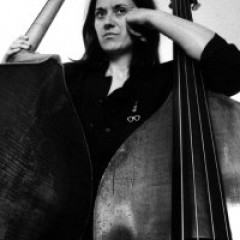
    Hier wird im Detail deutlich, welche außerordentliche musikalische Leistung die Umsetzung all dieser Komposition tatsächlich darstellt: Dem Quatuor Bozzini und seinen Quintett-Mitstreitern ist dafür unbedingt Respekt zu zollen.
  • 10
  • 11
  • 12
  • 13
  • 14
  • 15
  • 16
  • 17
  • 18