actuellecd

Blog

215 results
  • 3
  • 4
  • 5
  • 6
  • 7
  • 8
  • 9
  • 10
  • 11
  • 10 Taxonomical Movements in Sands Zine

    “Recensione”, EG, Sands Zine, November 10, 2008
    Monday, November 10, 2008 Press

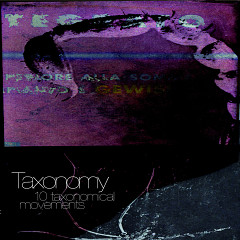
    Taxonomy atto secondo. 10 Taxonomical Movements è un disco più studiato e meditato del precedente A Global Taxonomical Machine, tanto da apparire strutturato in movimenti sulla falsariga di numerose opere classiche. È anche un disco più ‘suonato’ (intendendo con ciò suonato su strumenti tradizionali), oltre alle chitarre compaiono infatti violino, glockenspiel, zither, basso elettrico, melodica e clarone. Questo senza rinunciare a oggetti, giocattoli, portatili e campionatori, né alle voci e ai suoni rubati e/o trovati. Questi dieci pezzi che in realtà non hanno né un inizio né una fine rappresentano un’autentica ‘sagra della contemporaneità’, nel loro bilanciare la pace di un’oasi pubblica con la realtà stressante di un ufficio, la gioia sfrenata di una festa pirotecnica con le voci soffuse tratte da un film di culto (Ta’m e Guillas di Abbas Kiarostami), la sostanza di suoni che possono essere delicatamente ambient o scagliosi come un crotalo sovraeccitato, jazzy o impressionisti, popolari (sentite un po’ quando viene utilizzata la melodica) o strenuamente concreti. Sembra proprio che con 10 Taxonomical Movements i tre abbiano raggiunto quell’equilibrio che altri ensemble d’improvvisazione inseguono per una vita senza riuscire ad afferrarlo o ghermendolo solo per il rotto della cuffia. E così Taxonomy è all’oggi uno dei migliori gruppi di improvvisazione elettroacustica (e non solo) attivi in Italia e la sua musica è il punto d’incontro più accreditato fra Erik Satie, Eric Dolphy e Pierre Schaeffer.

    Taxonomy è all’oggi uno dei migliori gruppi di improvvisazione elettroacustica (e non solo) attivi in Italia.

    Pas de deux in Le son du grisli

    “Critique”, Le son du grisli, November 7, 2008
    Friday, November 7, 2008 Press

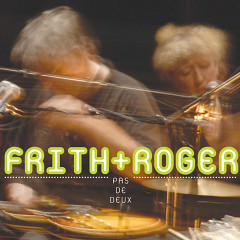
    Faisant de l’enregistrement de deux concerts donnés ensemble le matériau de base avec lequel bâtir Pas de deux, la percussionniste Danielle Palardy Roger et le guitariste Fred Frith élaborent un objet sonore aussi charmant que dérangé.

    De râles autrement découpés en relectures faites à l’envers, d’usages instrumentaux en décalages en exercices de style bruitistes et répétitifs, le duo met au jour un psychédélisme las qui aurait échangé son envie d’en imposer contre le détachement altier à opposer à tout idéal insaisissable: alors, sous l’expérimentation, d’heureuses découvertes.

    … la percussionniste Danielle Palardy Roger et le guitariste Fred Frith élaborent un objet sonore aussi charmant que dérangé.

    Érick d’Orion in marcgauthier.com

    Érick d’Orion élabore sur son inspiration pour les Excavations sonores chez Avatar”, Marc Gauthier, marcgauthier.com, November 6, 2008
    Thursday, November 6, 2008 Press

    Au cinéma, la scène est mythique: un monolithe noir apparaît, éclairé comme un monument divin, le tout accompagné par une musique orchestrale imposante. Il s’agit de la scène du film 2001: L’Odyssée de l’espace que tout le monde connaît.

    Érick d’Orion rend hommage au compositeur responsable de cette œuvre sonore désormais classique, Györgi Ligeti. Dans Déréliction, il évoque ainsi la méditation et la contemplation face au néant.

    L’artiste a également crée une seconde œuvre intitulée Radiations. En partant d’une anecdote sur les radiations émises par son téléphone cellulaire, l’artiste est parvenu à créer un appareil qui exploite cette matière brute et qui la transforme en son. Jouant sur la notion de vibration — également associée aux portables — il a monté une œuvre sonore qui marie bols de cuisine en acier inoxydable, moteurs 12 volts et ondes électromagnétiques.

    Ce travail sonore est présenté dans le cadre de la série Excavations sonores. Proposée par Avatar du Complexe Méduse, il s’agit d’une création originale et complexe. Il est bien évident que l’ensemble demande un effort d’écoute pour un public qui n’est pas habitué à ce type de travail. Au premier abord, il semble facile de classer ce genre de travail dans la catégorie du bruit.

    Pourtant, si on se laisse aller, qu’on ferme ses yeux et qu’on ouvre son esprit, le rythme nous envahit. Je vous invite à tenter l’expérience car les œuvres sont disponibles sur Internet dans le site du Nom de la chose, Radiations les premières 18 minutes, Déréliction par la suite; cette seconde œuvre est plus méditative.

    En écoutant le travail d’Érick d’Orion, on se laisse porter par sa cadence et son intensité. L’artiste crée un mouvement, il parvient à communiquer avec nous par le biais du son. À la limite, en jouant avec des moteurs qui font vibrer des culs-de-poule, il joue avec le cœur de l’entendeur.

    Ces œuvres musicales sont tout sauf pépères. Elles demandent une ouverture, une curiosité face à l’exploration et à l’expérimentation. Il s’agit pourtant de musique d’ascenseur, en un sens, puisqu’elles sont jouées dans l’appareil élévateur du Complexe Méduse pendant le mois de novembre. C’est une expérience que je vous invite à vivre comme une installation sonore. La musique des autres ascenseurs vous semblera encore plus ennuyante.

    Érick d’Orion a donné une conférence aujourd’hui sur sa participation aux Excavations sonores, à laquelle j’ai participé.

    En écoutant le travail d’Érick d’Orion, on se laisse porter par sa cadence et son intensité.

    Jean Derome in The Georgia Straight

    Jean Derome brings Montreal improv to Vancouver.”, Alexander Varty, The Georgia Straight, November 6, 2008
    Thursday, November 6, 2008 Press

    Language and geography pose formidable challenges to those who’d like to see more interplay between Quebec and British Columbia, but many artists are working to bridge that gap—most notably in improvised music, where there’s been a strong connection between Vancouver and Montréal for more than 20.

    The two cities share some common attributes, notably a degree of isolation from the mainstream and a willingness to experiment. But affordable housing and superior funding have allowed Montréal’s players to develop an idiom all their own: musique actuelle, which blends elements of American-style free jazz, progressive rock, contemporary chamber music, and Gallic joie de vivre in a sound that’s as sophisticated as haute cuisine and as earthy as joual.

    Vital though this music is, until recently some of its practitioners were feeling like it might be an endangered species.

    “I was really worried to see the players and the audience always getting older and older, with no renewal,” says saxophone and flute specialist Jean Derome, reached at his Montréal home. “It was like we were just kind of an error in history—something that happened that won’t happen again. But now we’re seeing a lot of younger musicians starting to do free improv, or mixing acoustic instruments with electronics and so on. There’s a new generation of musicians that is thinking creatively and not just standing on the shoulders of a few originals.”

    As one of the key architects of musique actuelle, Derome is understandably pleased by this influx of new talent—a phenomenon, he adds, that’s happening in Vancouver, too. This weekend, he’ll guest with Vancouver’s NOW Orchestra at its annual Hear It NOW festival, and while he’s long been familiar with bandleader Coat Cooke’s work, many of the faces in the recently revamped septet will be new to him.

    “I was really surprised to see that the lineup has changed, that it’s not anymore the big 19-piece band,” he says. “But I had the feeling that Coat was finding it difficult… there was so much history between all the players, and sometimes that can almost be a trap. You feel that things can’t change.”

    The new NOW band, which features a mix of jazz-based and rock-influenced players, is well suited to the material Derome’s bringing with him, which includes a few numbers culled from the repertoire of Les Dangereux Zhoms, the extroverted quintet that was for many years a fixture on the Montréal scene. The reed virtuoso will also have his own powers taxed: NOW has commissioned Vancouver New Music artistic director Giorgio Magnanensi to write a new piece for the band, and Derome reports that it includes a saxophone line that’s so complex even he’s having difficulty figuring it out.

    Telephone conversations with the composer are helping, however. “The music is difficult, but the guy is not,” says Derome of Magnanensi — an assessment that could be applied equally well to this engaging saxophonist and his work.

    Phénix in The Squid’s Ear

    “Review”, Kurt Gottschalk, The Squid’s Ear, November 5, 2008
    Wednesday, November 5, 2008 Press

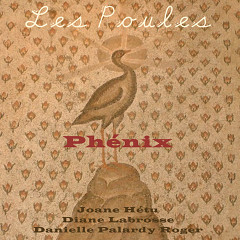
    It’s hard to think of a better source of inspiration for the longstanding Montréal trio Les Poules than that of the phoenix. The trio — saxophonist Joane Hétu, electronicist Diane Labrosse and percussionist Danielle Palardy Roger — has been playing together for more than a decade, which in the experimental music world mirrors the 500-year lifespan of the mythical bird. And birds are not only an interest for the group (their name translates as “the hens”), but can at times make for a nice metaphor for their sound: small and delicate yet, like a tree full of sparrows, able to kick up a good bit of cacophony.

    Phenix is comprised of five parts and a total of 24 tracks, all of which are under three minutes. But they seem to go by without break or pause, a series of innovative miniatures which never sound simply like a trio playing. As a sort of rhythm section, Labrosse and Roger are endlessly creative: the sampler is used to create low, resonating tones, static and white noise, and the percussion more often plays atop than pushes from behind. Which could leave Hetu’s sax and voice out front if she, too, weren’t so committed to the group process. Long exhalations, upper-register squeals and syllables sung slowly or whispered circle like little eddies throughout the mix.

    There’s something to be said in the improv world for the excitement of first-time meetings, but there’s also much to be said for years of working together in a small, tightly knit community. As central figures in the Ambiances Magnetiques collective, Les Poules have the knowledge of shared experience that allows them to flesh out ideas with their own soundworlds.
    Les Poules have the knowledge of shared experience that allows them to flesh out ideas with their own soundworlds.
  • 3
  • 4
  • 5
  • 6
  • 7
  • 8
  • 9
  • 10
  • 11