actuellecd

Blog

215 results
  • 7
  • 8
  • 9
  • 10
  • 11
  • 12
  • 13
  • 14
  • 15
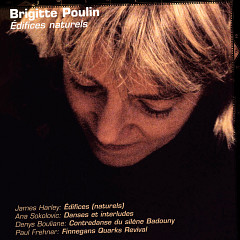
  • Édifices naturels in Vital

    “Review”, Dolf Mulder, Vital, no. 641, August 25, 2008
    Monday, August 25, 2008 Press

    Poulin is a classically trained pianist. Her repertoire covers all relevant periods, but she feels strongly attracted to modern classical music. Because of this she founded Trio Phoenix (flutes, cello and piano), an ensemble entirely dedicated to new music. Besides she worked with a great diversity of musicians and ensembles. “For a decade, Brigitte Poulin has been commissioning and premiering works by composers who, she thought, could help better define our own piano culture.” From this experience she choose four recent works that found their way to this CD: James Harley’s Édifices Naturels (2000), Ana Sokolović’s Danses et Interludes (2003), Denys Bouliane’s Contredanse du silène Badouny (1998) and Paul Frehner’s Finnegans Quarks Revival (2005-07). At the same she introduces four composers that were unknown to me… The composition by Harley consists of two parts. The first one bursts of energy. The second one is quiet and calm. The composition of Ana Sokolović is inspired on Balkan dance music. It consists of six dances and three interludes. As you can imagine rhythm is a dominant aspect here. The short work by Bouliane is a very ingenious and subtle composition. Finnegans Quarks Revival by Frehner is the longest work of the four. In eight parts this work evokes very different moods during its 35 minutes. Poulin’s choice offers a good insight into the richness of modern composed piano-music, and in Poulin we meet an accomplished and warm-hearted musician.

    Poulin’s choice offers a good insight into the richness of modern composed piano-music, and in Poulin we meet an accomplished and warm-hearted musician.

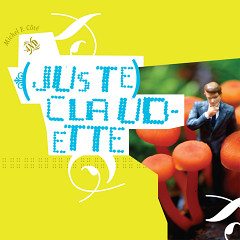
    (juste) Claudette in emoRAGEi

    “Critique”, Nicolas Pelletier, emoRAGEi, August 20, 2008
    Wednesday, August 20, 2008 Press

    Avec ce mélange de jazz déjanté, de «bruitisme» improvisé et de «beats» solides, le remarquable batteur Michel F Côté a cette fois les deux pieds dans la musique actuelle. Rien à voir avec le précédent album, Flat fourgonnette (Mescal free style) et son blues tribal (et quand même bien modifié) paru en 2005.

    Cet album en format quintet sous le nom (juste) Claudette a beau être bordélique, le tout n’est pas désagréable pour autant. Bernard Falaise est à son meilleur lorsqu’il utilise sa guitare pour générer des paysages sonores grandioses, mais il sombre malheureusement parfois dans la multitude de «petits mottons» de notes dissonantes. Des collaborateurs de longue date, Alexandre St-Onge, Jesse Levine et Gordon Allen, complètent l’équipe.

    Le jeu de batterie de Côté est, comme d’habitude, magnifique. Si spectaculaire, mais parfois tellement simple qu’on n’écoute que ça. Son instrument a une sonorité parfaite qui pourrait servir à de super «loops» pour des remixeurs comme Amon Tobin ou Moby. Qu’elle soit en avant-plan ou utilisée comme simple support, sa batterie est le centre d’attention. La sonorité de ce batteur, maintenant âgé de 50 ans, est tout simplement excellente, capable de rock, de pur jazz ou de lounge au détail près.

    Le jeu de batterie de Côté est, comme d’habitude, magnifique.

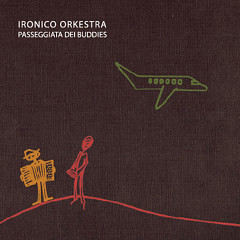
    Passeggiata dei buddies in Vital

    “Review”, Dolf Mulder, Vital, no. 638, August 5, 2008
    Tuesday, August 5, 2008 Press

    Like most CDs released on this label, the cd by the Ironico Orkestra is by a duo: Luzio Altobelli (accordeon, melodica) and Guillaume Bourque (clarinets). For their debut they took inspiration from traditional folk music of italian, jewish or other origin. Altobelli was active in the Montréal scene with his group Manouche for more than eight years. If the name does not mislead us, a group that focused on Django Reinhardt-like gipsy music. We find him also on Fanfare Pourpour recordings. With Passeggiata dei buddies he releases his first cd with this duo that was formed in 2004. Guillaume Bourque was also member of Manouche. Later he often participated in projects of Robert Marcel Lepage and Jean Derome. The duo performed at the Montréal Jazz Festival in 2005. So they had already an history together when they went to the studio for the recording of this album in 2007. Half of the compositions are by Altobelli, the other half by Bourque. The cd opens with Passeggiata I with unisono playing, quickly here after they take different roots, in order to return to unisono passages later. The combination of accordeon and clarinets works out okay. Both of them are good players. And many of their compositions are catchy. In spite of all these positive aspects, the cd failed to attract my attention from beginning to end. In some way it is all to thin. The same pieces re-arranged for a bigger ensemble would satisfy me more. More depth and interplay would be gained then.

    And many of their compositions are catchy.

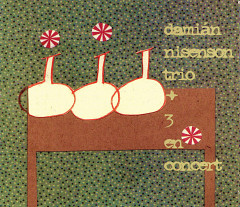
    En concert in Vital

    “Review”, Dolf Mulder, Vital, no. 638, August 5, 2008
    Tuesday, August 5, 2008 Press

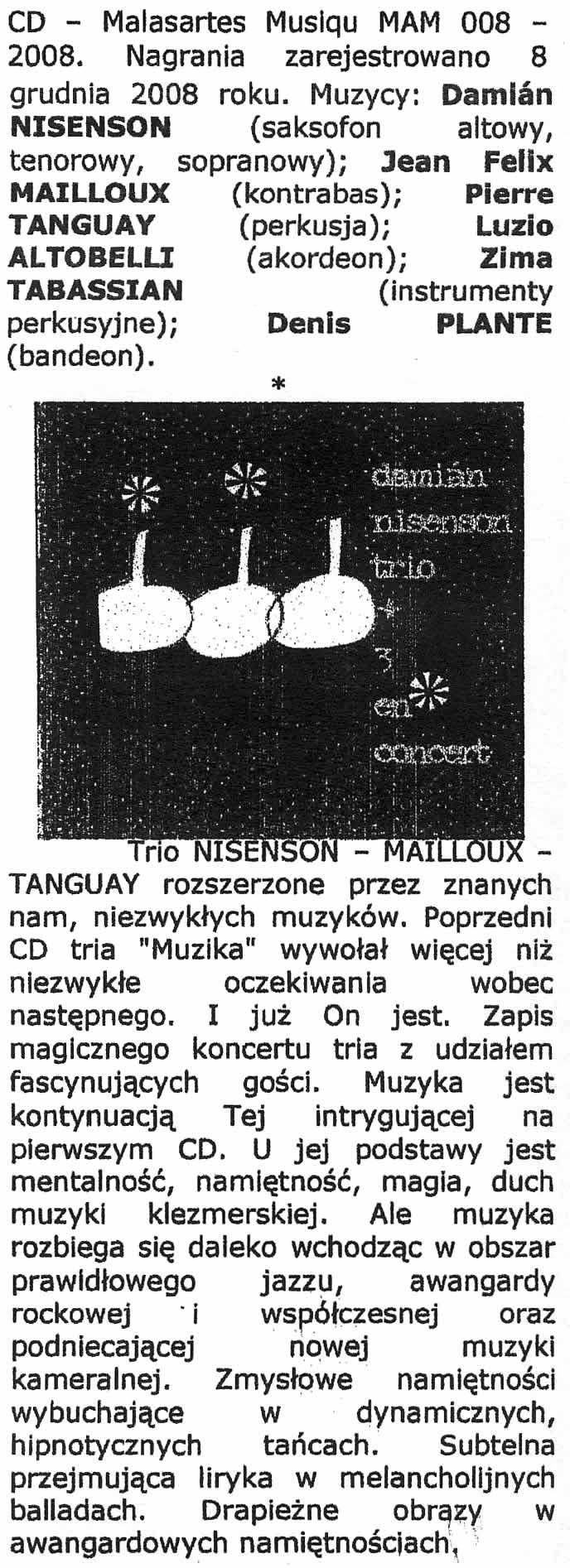
    Nisenson with his trio delivers us a more engaging melting pot and he has his biographical reasons for doing so. We will come to that later. Besides Nisenson himself on saxes, we hear Pierre Tanguay (drums) and Jean Félix Mailloux (bass), plus three guests: Ziya Tabassian (percussion), Luzio Altobelli (accordeon) and Denis Plante (bandonéon). Most compositions are by Damian Nisenson himself. We hear a live registration dating from december 2007. Nisenson takes his inspiration from Eastern Europe and Jewish music traditions. We hear many motives that sound familiar with we have heard before on so many klezmer records. Nisenson who grew up in Argentina is of jewish origin. In his youth he was surrounded by an older generation that spoke yiddish. But later he drifted away from his jewish roots. Only much later his jewish roots came back in his thoughts. “And one day I asked myself another question: what would the Jewish music have become if the Shoa — the Holocaust — had not taken place?” We will never know of course. But with this project Nisenson gives in fact his answer to this question by giving room to the jewish culture that is part of his biography.

    It is not the kind of project that tries to reconstruct as pure as possible the ‘original’ klezmer music, whatever that may be. Nisenson let his jewish motives loosely interfere with other musical traditions that formed Nisenson. With a guest on bandéneon, Denis Plante, it is evident that he also gives room to his Argentinean background. In Paspire his Argentinean roots dominate and the beautiful duet between sax and bandonéon bring that old record by Astor Piazzola and Gerry Mulligan to my mind. Chanson de rue #6 is opened with a Bo Diddly like riff, stating that also rock and roll is a relevant tradition for Nisenson. In the last track — but also in others — Nisenson tries to play like in the typical manner of jewish clarinetplayers, making clear that is above all that Nisenson wants to speak with a jewish voice on this satisfying record. Satisfying because he gives not a boring reproduction of klezmer music, but because he proves that klezmer ingredients mixed with other influences result in interesting and vivid music that appeal to many.

    … he proves that klezmer ingredients mixed with other influences result in interesting and vivid music that appeal to many.

    Clic in Vital

    “Review”, Dolf Mulder, Vital, no. 638, August 5, 2008
    Tuesday, August 5, 2008 Press

    Fantastic to have a record like this produced in these days. I will explain what I mean by ‘this’, but let me first introduce you to Bernard Falaise. This Montréal born guitarist and composer wrote music for the Ensemble contemporain de Montréal (ECM) and several other ensembles. Also he created music for exhibitions, television, theatre and dance. As a musician he is known for his many contributions to projects of Michel F Côté like Klaxon Gueule and Mecha Fixes Clocks. And I also would like to remind you of his work with Miriodor and Papa Boa. These references may give you a first indication of what we have to expect on Clic: it is fair to say that Falaise has a strong interest for new forms of rockmusic. And yes, this is also the case for his new soloproject Clic. His second one after Do released in 2000. For Clic Falaise is assisted by Gordon Allen (trumpet), Jean Derome (saxes, flutes), Lori Freedman (clarinets), Julien Grégoire (marimba), Jean Martin (drums, percussion) and Tom Walsh (trombone). Falaise himself plays guitars, banjos, etc. He wrote 13 compositions that came into being in the context of a pure studio project. The musicians didn’t actually play together simultaneously, but only one after another, with little room for improvisation. Complex music, almost impossible to perform live according to Falaise, because of the complex tempi, but one wishes it would be possible. In his own words: “With Clic, what I wanted to do was to experiment with unusual metronomic applications. For instance, the ever changing tempo in Yéti; the superimposed tempi in Mule, Thon, Neuf, and Fête; the tempo changes in Neuf, etc. Also, Watt and Clic feature two part canons, each with its own tempo.” Falaise mentions Aksak Maboul, Anthony Braxton, Captain Beefheart, Franco Donatoni, Les Granules, Conlon Nancarrow, Igor Stravinsky, and Robert Wyatt as points of reference. Falaise brings new life to the avant rock genre that is not allergic for melody and harmony. In a way he continues where groups like Henry Cow stopped. One can hear that he takes the advantages of new technology and musical principles. He must clearly feel at home in company of groups like Blast, Miriodor, and not to forget Albert Marcœur. His music is accessible and complex at the same time. The pieces have beautiful arrangements, a strong drive and are full of unsuspected twists. Because of the recording process we must also mention that Falaise did a great job in mixing it. An impressive and important album from a true talent. I hope it takes not another seven years for his next album!

    An impressive and important album from a true talent.
  • 7
  • 8
  • 9
  • 10
  • 11
  • 12
  • 13
  • 14
  • 15