actuellecd

Blog

223 results
  • 24
  • 25
  • 26
  • 27
  • 28
  • 29
  • 30
  • 31
  • 32
  • Cordes à danser… suite saguenayenne in La Presse

    “André Duchesne: nouvel élan post-Conventum”, Alain Brunet, La Presse, March 11, 2007
    Sunday, March 11, 2007 Press

    L’art d’André Duchesne témoigne d’un nouvel élan depuis qu’il a signé (l’an dernier) un excellent disque de chansons, Arrêtez les machines.

    Dans le même élan, il exploitait de nouveau son talent de compositeur et donnait du coup un nouveau souffle à sa musique instrumentale.

    Sur ce plan, il aurait pu s’en tenir à ses propositions antérieures en associant plusieurs guitares électriques (Locomotive et autres Guitaristes de l’Apocalypso Bar, des concepts intéressants qui ont fini par manquer de souffle) mais l’artiste montréalais d’origine saguenéenne a heureusement choisi d’opposer un trio rock à un quatuor à cordes.

    Ce dernier n’a rien d’ornemental, nous parlons ici d’une fort belle imbrication de cellules rythmiques, motifs guitaristiques et violonistiques. Les références y sont multiples, de la musique répétitive au rock progressif en passant par des harmonisations très contemporaines.

    Ce qui n’est pas sans rappeler Conventum, crucial au Québec à la fin des années 70. Or, dans le cas qui nous occupe, ces effluves du passé n’ont rien de nostalgiques, elles confirment plutôt l’intégrité d’un artiste qui a dû traverser des déserts avant de s’abreuver à de nouvelles oasis. Ces Cordes à danser, en somme, sont l’œuvre d’un compositeur accompli.

    La vie récompense parfois les esprits libres, on ne peut que s’en réjouir pour André Duchesne, qui signe par ailleurs la 13e Symphonie portuaire présentée par le musée Pointe-à-Callière demain, à 13h30.

    + L’originalité des imbrications. — Petites carences au plan de l’intelligibilité. 4/5

    Ces Cordes à danser, en somme, sont l’œuvre d’un compositeur accompli.

    Cordâme in Voir

    “Disques de la semaine”, Réjean Beaucage, Voir, March 8, 2007
    Thursday, March 8, 2007 Press

    Voici un trio dont la musique (que signe le contrebassiste Jean Félix Mailloux) baigne une patte dans une ambiance importée du Moyen-Orient en balançant l’autre d’un petit swing jazzé. On pense quelques fois en l’écoutant à ce que fait John Zorn avec son projet Masada, mais sans l’espèce d’urgence en feu qui caractérise la production du saxophoniste. On est davantage ici dans l’évocation d’atmosphère, ça sent le soleil du désert et les mirages enfumés. Le dialogue permanent entre la violoncelliste Julie-Odile Gauthier-Morin et la violoniste Marie Neige Lavigne donne lieu à de beaux échanges, auxquels participent aussi le percussionniste Pierre Tanguay et d’autres invités. (3,5/5)

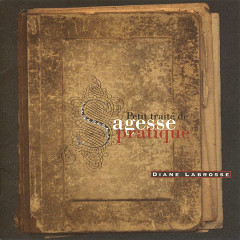
    Petit traité de sagesse pratique in smooth assailing

    “Review”, avant gardening, smooth assailing, March 3, 2007
    Saturday, March 3, 2007 Press

    Canadian Diane Labrosse is a part of the musique actuelle movement. Literally it means contemporary music. Yes, that is rather broad, isn’t it? The deeper meaning that’s applied to it serves to coin a genre which encapsulates elements of jazz, avant-garde rock as well as musical improvisation. Late 60s-70s avant-rockers Henry Cow (originally, Fred Frith and Tim Hodgkinson) are looked to as originators of musique actuelle.

    Labrosse is also a part of the Montréal based Ambiances Magnétiques Collective. It was an artist co-op before Joane Hétu founded the record label. That collective includes: Jean Derome, René Lussier (co-founded the collective along with Derome), André Duchesne, Robert Marcel Lepage, Danielle Palardy Roger, Joane Hétu, Martin Tétreault and Michel F Côté. The last two members were later additions, the other seven were the original 1983 members.

    There’s no shortage of releases (forty), or groups for Diane, either. Most of them involve members of the AMC including Justine, an all female affair including Danielle and Joane with the addition of Marie Trudeau. Wondeur Brass, which has essentially the same line-up as Justine only without Trudeau. There’s also repeated pairings with Tétreault. Île bizarre, which sees that duo aided by Ikue Mori is highly recommended.

    In English, Petit traité de sagesse pratique, translates to “a short treatise on practical wisdom”. According to AM’s press release on their website this album is “a series of miniature songs whose texts-some ironic or mocking, others of (intentionally) questionable value-are drawn from those great popular guides we call proverbs. These reflections on morality, often out-of-date, are re-examined, reworked… by Diane Labrosse”. Seeing as how the lyrics aren’t in English, my response is “if you say so”.

    Petit is thirty-seven tracks barely spanning forty-nine minutes. It should go without saying that there are a hell of a lot of ideas, musically and non—, packed into such a concise time frame. There are no songs over two minutes and only two under thirty seconds. While superficially, it might not seem like such time constraints would work for avant-garde music, after all, haven’t we grown accustomed to half hour tracks from the likes of keith rowe by now? While Petit’s mere approach itself may seem experimental, each piece of music is its own concrete statement. The brevity never seems to fracture anything and while there’s a plethora of tracks that I wish were longer, the album works and without any regrets. Diane may be receiving the sole-billing for this CD, but I have to imagine that there were quite a few other people helping her out as this is full of instrumentation (drums, upright bass, saxophone, digiridoo, flute and probably more that I don’t even know the names of) as well as male vocals on a few of the songs. One of the downsides to downloading music is that there’s no liner notes from which to reference and I can’t find any credits for this album online beyond Diane’s.

    Let’s get down to the musical content. Nearly every piece of music is punctuated by vocals of some manner; tribalesque bellowing (trust, me it sounds better than I worded it), chanting, reverbed shouting, talking, singing, laughing, maggie nicols-like wailing and maja ratkje-like vocal noisery (on the spot improvisational spelling by me). The music is just as diverse as the vocals. The most unexpected moment comes in at track number thirty-four, À tout seigneur, toute horreur, which is a charming piece of thrash rock that’s cut up, panned and otherwise manipulated with fantastic results. Going back to the Henry Cow influence, the shadow of that group’s unrest can certainly be felt looming over some of Petit. In a gross summation of sounds, there’s jazzier numbers, mellower and sparser ones, noisy passages, atmospheric music as well as some upbeat rockers to be found throughout the disc and it’s all expertly balanced. That balance is just as important as the music is, especially when you consider the amount of tracks versus the amount of time allotted for them. There’s no feeling of heaviness anywhere or segmentation, but there is a nice sense of flow.

    For me, Petit traité de sagesse pratique is an overwhelming success. If there were to be impasses in anyone’s enjoyment of it, I’d say that they would lie with the vocals; however, the tracks that I might be tempted to call questionable are few and far between and in most of the situations the music itself really elevates, not just accentuates, the vocals anyway.

    Petit traité de sagesse pratique is an overwhelming success.

    Nouvelle musique d’hiver in Downtown Music Gallery

    “Review”, BLG, Downtown Music Gallery, March 2, 2007
    Friday, March 2, 2007 Press

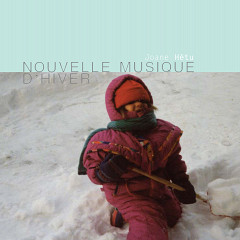
    The last release of Joane Hétu, Nouvelle musique d’hiver, which you may want to listen to while watching a bonfire, is a real audio documentary about winter in Quebec and is constructed in four sections: Joyeux temps (Happy Times), Être dans le vent (Standing in the Wind), La marmotte (The Groundhog) and Calcium sloche (Calcium Slush). Featured here are the musicians of the Ensemble SuperMusique: Jean Derome on flutes, objects & samples, Guillaume Dostaler on piano & synth, Joane Hétu on alto sax, voice & direction, Diane Labrosse on accordion & sampler, Lori Freedman on clarinets, Martin Tétreault on turntables, Gilles Derome on narration and Pierre Tanguay on drums. It gets mighty cold in the long winters of Quebec and I should know, as my fiancé lives year-round in Victoriaville, where the temperature drops to 20 below. Joane Hétu runs the grand Ambiances Magnétiques label, which has some 160 discs out. This label is the most formidable and engaging one in Canada and continues to challenge us all with numerous great discs, perhaps a dozen per year. Joane takes her time and works hard on each of her own discs, so that each one is special, unique in it own way. Nouvelle musique d’hiver is another fascinating work that unfolds slowly and winds its way through four long sections. Each section describes a part of the winter with words narrated in French, but with the English translation included in the liner notes. The difficulties and occasional happy moments of winter are described in Happy Times. It is the actual sounds that do the best in evoking the realities of winter with stark flutes, sax sonics, vocal snippets, layers of samples, piano bits and clarinet swirls. The closest thing I can compare to this is The ResidentsEskimo album, another bleak yet astonishing disc of alien wonders. Joane does a splendid job of directing this group, as each sound seems filled with meaning, like a great soundtrack to a marvelous movie for our minds.

    Joane does a splendid job of directing this group, as each sound seems filled with meaning, like a great soundtrack to a marvelous movie for our minds.

    Cordes à danser… suite saguenayenne in Downtown Music Gallery

    “Review”, BLG, Downtown Music Gallery, March 2, 2007
    Friday, March 2, 2007 Press

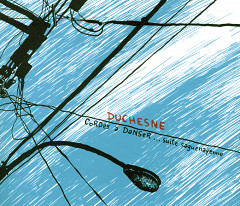
    Guitarist & composer André Duchesne is a major talent who we don’t hear from frequently enough. He was the co-founder of Conventum and the leader of the great Les 4 Guitaristes de l’Apocalypso Bar. This album is scored for guitar/bass/drums “power trio”, plus string quartet, and it has his usual blend of rhythmically interesting and melodically inventive work. Cordes à danser is an impressionistic rock suite of 12 instrumental pictures inspired by the landscapes among which he spent his childhood, in the industrial atmosphere of the Saguenay. One could see the relationship between quartet and trio as the reunion of a triangle and a square. One moves forward like an arrow or a ship, while the other develops and builds. Composition and improvisation. Dragged by three horses, the buggy rolls on through landscapes of bauxite lakes, factory chimneys and energy powers. You look at the sky and think it’s gonna rain cats and dogs.

  • 24
  • 25
  • 26
  • 27
  • 28
  • 29
  • 30
  • 31
  • 32