actuellecd

Blog

223 results
  • 15
  • 16
  • 17
  • 18
  • 19
  • 20
  • 21
  • 22
  • 23
  • Dix situations précaires in SOCAN — Paroles & Musique

    “Lancements”, Gilles Boisclair, SOCAN — Paroles & Musique, no. 14:2, June 1, 2007
    Friday, June 1, 2007 Press

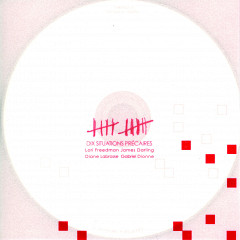
    L’album Dix situations précaires présente un quartet à l’instrumentation peu courante, James Darling, violoncelle, Gabriel Dionne, percussions, Lori Freedman, clarinettes et Diane Labrosse, échantillonnages, et leur musique de chambre contemporaine improvisée, où les instruments s’entrecroisent avec légèreté, complicité et même douceur. Le jeu de chacun est nuancé, comme par exemple l’approche toute en retenue de Diane Labrosse. Les musiciens jouent des phrases courtes, d’où se dégage une impression de pointillisme sonore.

    Snipettes! in SOCAN — Paroles & Musique

    “Lancements”, Gilles Boisclair, SOCAN — Paroles & Musique, no. 14:2, June 1, 2007
    Friday, June 1, 2007 Press

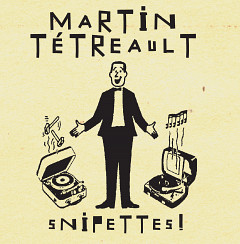
    Snipettes! est la 150e parution sous Ambiances Magnétiques, un tour de force pour un label de musiques actuelles. Tétreault s’y est amusé en 1e partie à marier la musique populaire instrumentale, en utilisant un 33 tours de la musique d’Eddie Osborne (orgue et bongos) avec la musique contemporaine (une sélection de vinyles de musiques sérieuses). Le résultat est intriguant et drôle. En 2e partie, Morceaux choisis 1984-1986 est une compilation de titres expérimentaux composés pendant cette période.

    GO [Guitar Obsession], Concentrés et amalgames, 3, Sextant in Signal to Noise

    “CDs”, Kurt Gottschalk, Signal to Noise, no. 46, June 1, 2007
    Friday, June 1, 2007 Press

    Montréal’s Ambiances Magnétiques has released some 169 records since 1984 with a pretty remarkable batting record. The original members of the collective (including Jean Derome, René Lussier, Martin Tétreault and Danielle Palardy Roger) have for the most part continued to do challenging work, while younger musicians have been brought into the fold.

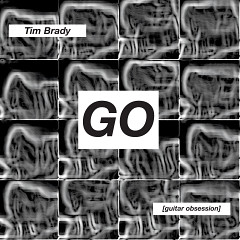
    Tim Brady is a talented guitarist with a rockish sensibility and plenty of jazz chops. He loves his instrument the way Jasper Johns loves paint: thick and apparent. His 2002 release Twenty Quarter-Inch Jacks was, in that sense, wholly satisfying. As is, in a certain way, his new offering, GO. It’s diverse, it’s raw, it’s pretty, it’s precise. Four compositions of his own and four by others, all strong but as a whole uneven. The disc feels as if Brady is trying to show off many approaches and styles he can pull off. And pull them off he does, so well that it sounds as if it could be a compilation album.

    Likewise pianist Gianni Lenoci’s wandering sextet record Sextant. At center, the group is a traditional enough line-up of keyboards, guitar, bass, drum and two saxophones, although the keyboards and guitars are sometimes electronically augmented. Two tracks not penned by Lenoci are Eric Dolphy’s Miss Ann and Morton Feldman’s Intermission VI. Lenoci’s pieces seem to follow the two worlds, skipping between minimalist and jazzy pieces, generally strong tracks, but ultimately seeming to be more a display of diversity than creating a unified feeling.

    The same charge could be leveled against clarinetist Lori Freedman’s new CD, culled from three nights of live performances with different trios. The difference here is that the record is exceptional regardless of her motives. A set with guitarist Lussier and turntablist Tétreault is a fascinating, warm rumble. A matchup with saxophonist Derome and guitarist/percussionist Rainer Wiens is strangely moody with touches of spaghetti western. And with percussionist Roger and bassist Nicolas Caloia she explores quiet, extended-improv techniques and jazzier explorations. Despite the different sources, the album holds together surprisingly well.

    A different sort of project is presented on the guitar duet by Arthur Bull and Daniel Heïkalo. It’s the sort of bashing-of-minds improv one would expect to find, at this point, in clubs and cafés around the world — busy, sometimes riotously so, and introspective, as if some personal space is being invaded simply by listening. Whereas the other discs ask to be listened to, Bull and Heïkalo seem forever to be changing the subject because a listener walked in.

    The Feeling of Jazz in Downtown Music Gallery

    “Review”, BLG, Downtown Music Gallery, June 1, 2007
    Friday, June 1, 2007 Press

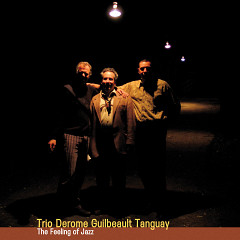
    Jean Derome is one the most gifted, diverse and distinctive saxists that Canada has produced. Jean has about two dozen superb discs out on the Ambiances Magnétiques label, which cover a wealth of influences and genres: jazz, progressive, rock, folk and a good amount of humor. He has a great trio called Évidence that only cover Thelonious Monk with an electric bassist. Their set at Guelph this year was super. Trio Derome Guilbeault Tanguay is Jean’s other jazz trio with two other longtime cohorts, contrabassist Normand Guilbeault and drummer, Pierre Tanguay, both masters in their own right. This is their second disc and this is mainly jazz standards. They cover the likes of Ellington, Sonny Clark, Cole Porter, Jerome Kern, Fats Waller as well as more contemporary tunes by Misha Mengelberg and Lee Konitz. Check out their inspired version of Duke’s Jump for Joy. Here done on baritone sax, wow, it does swing hard! There is something truly joyous about this trio, they sound like they love this music, these tunes and are having a wonderful timing doing it! Jean’s tone on alto sax is just so soulful and warm that I find it quite touching, stirring and directly from his heart to us. Oh yeah! I really dig their version of Sonny Clark’s Sonny’s Crib, with Jean squeezing off those quick boppin’ lines effortlessly and both Normand and Pierre trading lines with joyful delight. Even Jean’s sly singing on Five O’ Clock Whistle has an infectious quality to it. Jean Derome plays one incredible solo after another, while the rhythm team plays inventively throughout, also tossing off a number of superb solos as well. I never knew there were lyrics to Fats Waller’s Jitterbug Waltz, thanks Jean for clueing us in and also for that fabulous flute solo. A complete joyride from beginning to the very end, especially if you dig many of these old songs.

    A complete joyride from beginning to the very end, especially if you dig many of these old songs.

    Studio — Analogique — Numérique in Downtown Music Gallery

    “Review”, BLG, Downtown Music Gallery, June 1, 2007
    Friday, June 1, 2007 Press

    Following the electro-mechanical exploration of 21 Situations, Martin Tétreault and Otomo Yoshihide now focus on phonograms and the devices that transform them. An initial, intensely dynamic Studio encounter, recorded live and with no reprocessing, makes up CD1. Then both artists went to work with their respective equipment to reprocess raw material not used on CD1. Tetreault used obsolete tape recorders to create a flowing analogue remix: Analogique CD2. Yoshihide used an ultramodern computer to generate a vigorous, staccato digital reconstruction: Numérique CD3. Each produced his remix without consulting the other — these are two distinctive personal journeys, each taken with the aid of widely different equipment that marked the way the sounds were produced and reproduced throughout. The first listening was a surprise for them — there are three surprises in store for you!

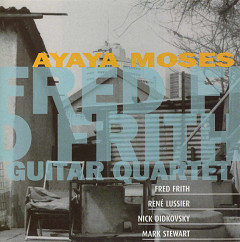
    Ayaya Moses in Downtown Music Gallery

    “Review”, BLG, Downtown Music Gallery, June 1, 2007
    Friday, June 1, 2007 Press

    What more can be said of Fred Frith? As with all musicians and composers of his caliber, he is a relentless inventor. His quartet, formed in 1990, highlights one of the quintessential instruments of ‘musique actuelle’, the electric guitar. Its first CD on Ambiances Magnétiques, Ayaya Moses features works by Claude Vivier and Olivia Bignardi, as well as original compositions by each member, scored for the quartet. Ten journeys through contrasting topographies, whether rigorously scored or spontaneously dreamed up, exploiting the resources of the electric guitar to the fullest imaginable degree, and featuring the kind of ensemble precision and dynamics usually associated with string quartets and chamber ensembles — but with unrelenting rock energy!

    Ten journeys through contrasting topographies, whether rigorously scored or spontaneously dreamed up
  • 15
  • 16
  • 17
  • 18
  • 19
  • 20
  • 21
  • 22
  • 23