actuellecd

Blog

223 results
  • 14
  • 15
  • 16
  • 17
  • 18
  • 19
  • 20
  • 21
  • 22
  • Lieux-dits in Musica Jazz

    “CD e DVD”, Libero Farnè, Musica Jazz, no. 63:6, June 1, 2007
    Friday, June 1, 2007 Press

    Il batterista, cresciuto in California e residente a Montréal dal 2003, è alla testa di un singolare quintetto (due sax-clarinetti-flauti, chitarra elettrica e contrabbasso) in un lavoro ispirato ai numerosi viaggi effettuati nei Pirenei e nelle Alpi francesi. La pulizia del suono e le movenze circospette tratteggiano un’improvvisazione cameristica, meditativa, che può far balenare l’immagine di un’atmosfera lacustre, immersa in una luce perlacea, tranquilla ma insidiosa: tant’è vero che verso la fine del Cd le acque si increspano leggermente, per poi appiattirsi definitivamente nel brano conclusivo.

    Dix situations précaires in Opus

    “Listening Post”, Ken Waxman, Opus, no. 30:2, June 1, 2007
    Friday, June 1, 2007 Press

    Utilizing the skills accessible from legitimate musical training, extended instrumental techniques and the supplementary textures available from an electronic sampler, these “10 risky situations” balance on the edge between free improvisation and contemporary classical music. Involved are two instructors at the Conservatoire de Musique de Rimouski (Quebec): James Darling, who is also the cellist of Quatuor St-Germain; and Gabriel Dionne, the Conservatoire’s percussion head. They’re matched with two Montréalers: clarinetist Lori Freedman, known for her free improvisation collaborations as well as notated New music efforts; and Diane Labrosse, here manipulating the sampler, though she usually composes multi-media, theatre and dance pieces. Overall, Labrosse’s instrument’s electronic pitch warbles and whooshing flutters plus the sinewy vibraphone resonation or ratcheting drum top pitter-patter from Dionne create background landscapes. In the foreground are the contrapuntal interactions of — or double counterpoint between — Darling and Freedman. One or the other advances a motif — say low-pitched legato bowing from the cellist, or squeaking, altissimo smears from clarinetist — and with the response, aggregate themes and variations are developed — then electronics and percussion fill in any spaces. Two pieces Parler tout seul and Marcher sur des œufs depart from this strategy with memorable results, as each extends virtuosity past the 10-minute mark. A darkly tinged nocturne, the former contrasts repetitive, low-pitched exhalation from the clarinetist with resonating tubular bell shimmers, until a conclusive cello vibrato provides the connective thread to make logical as well as musical sense of the tune. Initially as fragile as its title posits, the later piece unfolds on top of vibrating electronic crackle and drones plus pitter-pattering vibe and cymbal resonation, as both Freedman and Darling emphasize rigid instrumental timbres. Eventually, abrasive sul tasto string sweeps and high-pitched reed yelps sound unmodified, negating the delicacy of “egg walking”. Listeners who welcome aural challenges are rewarded with the sounds of distinctive four-way interplay.

    Listeners who welcome aural challenges are rewarded with the sounds of distinctive four-way interplay.

    Nouvelle musique d’hiver in Revue & Corrigée

    “Disques”, Pierre Durr, Revue & Corrigée, no. 72, June 1, 2007
    Friday, June 1, 2007 Press

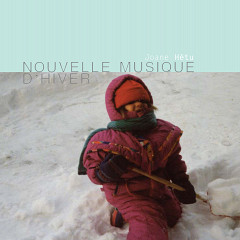
    Sept ans après un premier quadriptyque, Joane Hétu signe ici quatre autres tableaux évoquant la saison froide au Québec. Quatre nouvelles facettes (en en attendant d’autres?) d’une saison que chacun peut percevoir à sa façon, selon son humeur.Mais l’image sonore de l’hiver que nous livre ici la compositrice/instrumentiste, soutenue par l’Ensemble SuperMusique (un octet) ne se veut pas simplement personnelle. Il y a en quelque sorte une approche exhaustive, dans la mesure où le travail de création (les textes, évidemment, mais aussi les sons produits par les instruments acoustiques) s’inspire aussi de divers auteurs de fictions ou d’essais. Le premier tableau évoque les premières neiges et les temps de fêtes (un peu comme le peintre Rémy Clark qui évoque un Québec en hiver joyeux et coloré) durant lesquels les Montréalais vont faire de la luge sur le Mont Royal ou patiner au lac des Castors, évocation réalisée furtivement au travers de divers bruitages, quelques accords de jazz quelque peu transis, des déferlements de notes de piano, des piaillements d’appeaux, des babillages d’enfants… Le deuxième volet, Être dans le vent, offre une touche plus naturelle avec les notes plus graves et monocordes du piano, le souffle éolien des anches, quelques crépitements sonores, comme sortis de la cheminée, les hurlements des loups. L’hiver, c’est aussi l’hibernation. Il n’y a pas que la chaleur de l’âtre qui protège des vents froids, mais aussi la rencontre des corps…La Marmotte, ennui et plaisir, et toujours ces hurlements de loups. Le quatrième volet est plus angoissant: grincements divers, ambiances glauques, paysages de neige fondue, voix distantes des derniers râles rappellent que l’hiver est aussi une saison où l’on meurt. Nouvelle musique d’hiver ou l’hiver et ses beautés, ses petites et grandes misères. Peut-être pas à écouter en hiver même, mais à suivre en été et à méditer?

    Nouvelle musique d’hiver ou l’hiver et ses beautés, ses petites et grandes misères.

    Décor sonore in Revue & Corrigée

    “Disques”, Pierre Durr, Revue & Corrigée, no. 72, June 1, 2007
    Friday, June 1, 2007 Press

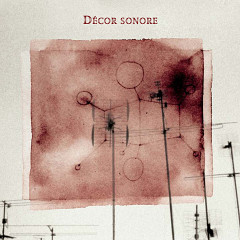
    Puce à l’oreille, son premier enregistrement pour Ambiances Magnétiques, présentait, dans le cadre de divers duos, une violoncelliste usant de textures et de sonorités variées. Un peu comme un catalogue de possibilités, séduisant certes, mais auquel il manquait peut-être un fil conducteur. Avec Décor sonore, il y a une unité conceptuelle dévoilant un projet très personnel auquel Mélanie Auclair associe d’autres intervenants (laptop, bruitage, piano, guitare, clarinette basse, récitant). Avec délicatesse, ces musiciens tracent un paysage mouvant et chalereux, vivifiant, dans lequel l’auditeur ne peut que se fondre avec exaltation, un paysage sonore parcouru de souffles et de marées, de frémissements berçant ses oreilles. C’est finalement davantage qu’un simple décor.

    Avec délicatesse, ces musiciens tracent un paysage mouvant et chalereux, vivifiant

    Karusell Musik in AllMusic

    “Review”, Dave Lynch, AllMusic, June 1, 2007
    Friday, June 1, 2007 Press

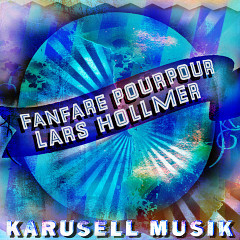
    In his many years of music-making the world over, perhaps nowhere has Swedish composer, keyboardist, and accordionist Lars Hollmer consistently found as many kindred spirits as in Quebec. Thankfully, Montréal musique actuelle godfather Jean Derome has continued a transatlantic conversation with Hollmer in the years since Derome joined the Swede’s Looping Home Orchestra back in the early ‘90s, as documented on the Victo label’s Door Floor Something Window live CD from 1993. Hollmer and Derome have certainly kept busy with separate endeavors during the years hence, but they are back together again on 2007’s Karusell Musik, and a huge bunch of Derome’s Quebec friends are along for the ride this time, recording in a Montréal studio during the fall of 2006 following a pair of festival appearances in la belle province during 2004 and 2005. Top billing on the CD cover goes to the wild, unruly, and fun-loving Fanfare Pourpour big band, whose ranks swelled to 20 musicians (including Hollmer and Derome), pumping away on instruments including accordions, clarinets, saxophones, violins, flutes, guitars, mandolin, banjo, melodica, piccolo, trumpet, euphonium, sousaphone, bass, drums, and percussion. Derome, whose baritone sax is particularly impressive, orchestrated new versions of Hollmer chestnuts dating all the way back to the first tune on his first solo album, the sprightly waltz Avlägsen Strandvals from 1981’s XII Sibiriska Cyklar. This song, featuring a vocal turn from Hollmer that pushes well past merely enthusiastic, is one of 17 concise little numbers — usually in the range of two to three minutes long and nearly entirely instrumentals — performed with high energy and infectiously good spirits by the gargantuan yet nimble aggregation. The opening tune, Ännu Ingen Pelle, first heard on 1985’s Tonöga in a version with Hollmer overdubbing all the instruments, leaps out of the gate with nearly outrageous exuberance; it’s the sound of a berserk brass band running amok as the composer rushes through the melody on his squeezebox, shouting encouragement as the bandmembers clustered around him ratchet up the intensity still further before the song slams to an abrupt finish.There are plenty of appealing tunes on Karusell Musik that would seem ideal for revving up the crowd at an Oktoberfest beer garden, driven by emphatic backbeats or Hollmer’s signature syncopated rhythms (Ante Flöttar Ja Te Sjöss, also from XII Sibiriska Cyklar; Skiss Mellan Brest Och Segosero, again from Tonöga), along with interludes that take a more avant-gardist stance but are refreshingly without the high-mindedness that sometimes afflicts “serious” musical experimentalists. In fact, there is a piece simply called Experiment, with herky-jerky stops and starts as the Fanfare members shout and generally carry on in a crazy counterpoint to Lars, who, way up front in the mix with a deep bass-baritone vocal, speak-sings in cracked English that “This might be the most difficult I ever made.” He wonders “if there is any reason at all…to even try to do it,” except of course that “this gives me always fun.” Appropriately, Experiment is followed by a brief free-form improvised intro to the two Cirkus pieces from Hollmer’s Swedish Grammy-winning Andetag, here given utterly madcap big-top readings. And, as in its previous incarnations on the LHO’s Vendeltid in 1988 and the aforementioned Door Floor Something Window, Karusell Musik winds faster and faster until it threatens to tumble off the rails, with its dissonant two-chord intro and bridge hinting at the sometimes dark RIO world that included not only Samla Mammas Manna but Univers Zero and Art Zoyd in its roster of bands back in the day. This tune cried out for a full-on large-ensemble arrangement, and the version here is arguably definitive. The same might be said for the ever-popular Boeves Psalm and the album-closing Simfågeldans, songs that ideally capture Hollmer’s singular ability to mix the innocent with the bittersweet. Ever since Boeves Psalm first appeared on XII Sibiriska Cyklar in a version with all instruments overdubbed by Hollmer in his Chickenhouse studio, it has remained one of his most well-known and best-loved numbers. Those who have heard and admired Boeves Psalm played solo or by a small group need to hear it performed by a 20-piece ensemble with diverse instrumentation and variegated textures and timbres, and Karusell Musik provides just such a chance. This is, after all, a piece that Guy Klucevsek described as “one of the most beautiful melodies ever written” and “Blue” Gene Tyranny has compared to Mozart. Here, as the charming theme progresses, it receives the expected embellishments from strings and flute, horns, and then the bass instruments and percussion with just the beautiful and dramatic buildup you would hope for, and the Fanfare Pourpour prove themselves up to the challenge in their expert balancing of neo-classical nuance and power. Simfågeldans touches the emotions in a similar fashion to Boeves Psalm, but with a livelier and more upbeat approach — and as rendered on Karusell Musik seems a perfect meld between Scandinavian folk melodicism and the exuberant polyphony of New Orleans classic jazz. As they jam out past two minutes after the closing theme, reaching and then retreating from crescendos like a single ebbing and flowing organism, Lars Hollmer and the Fanfare Pourpour pull the listener into a world of joyous celebration, and one wishes the vibe could continue long past the moment when the music has wound down into silence.

    Lars Hollmer and the Fanfare Pourpour pull the listener into a world of joyous celebration, and one wishes the vibe could continue long past the moment when the music has wound down into silence.
    Tombak in SOCAN — Paroles & Musique

    “Lancements”, Gabriel Bélanger, SOCAN — Paroles & Musique, no. 14:2, June 1, 2007
    Friday, June 1, 2007 Press

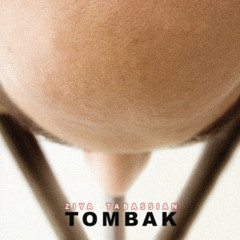
    Le percussionniste Ziya Tabassian offre au public un premier album solo. Connu pour sa participation à différents ensembles, il est actif autant dans le milieu de la musique ancienne que contemporaine. Il présente ici des pièces pour tombak (connu également sous le nom de zarb), principal instrument percussif de la musique persane. Cet opus est le fruit de ses réflexions musicales les plus récentes et retrace les rythmiques de la musique ancienne persane tout en y apportant une touche contemporaine.

  • 14
  • 15
  • 16
  • 17
  • 18
  • 19
  • 20
  • 21
  • 22