actuellecd

Blog

199 results
  • 4
  • 5
  • 6
  • 7
  • 8
  • 9
  • 10
  • 11
  • 12
  • Sextant in Jazz Word

    “Review”, Ken Waxman, Jazz Word, November 1, 2006
    Wednesday, November 1, 2006 Press

    Mixing modal, minimalist and avant-garde impulses, the pieces on this CD stem from teaching methodologies workshops Italian pianist Gianni Lenoci leads in his hometown of Monopoli. But there’s nothing fussy or academic about the date.

    Taking jazzman Eric Dolphy’s buoyant intensity and composer Morton Feldman’s horizontal sound development as its contrasting boundries, the Lenoci sextet not only plays a composition by each man, but also original tunes that bound from one extremity to the other, sonically coloring in the often elusive middle distances.

    Playing piano, electric piano, synthesizer and electronics, Lenoci – who has recorded with French bassist Joëlle Léandre – is especially noteworthy on Sestante, where his sprinting glissandi and flashing octaves simultaneoulsy reference legato fantasia and tremolo improvisation. Buoyed by the hocketing undulations of saxophonists Fabrizio Scarafile and Francesco Massaro, his keyboard note clusters still leave space for distorted guitar reverb from Adolfo La Volpe.

    Louder and more boppish, Punto showcases Massaro’s swaggering baritone saxophone growls on top of organic keybaord comping, while Rothko flirts with electronics. Except for an occasiomal cymbal clap from Marcello Magliocchi and slurping chirps from the saxes, this piece is all Lenoci, who outputs broken chord cadenzas and cascading arpeggios that expose internal string slides and ring modulator- triggered gongs.

    With bassist Francesco Angiuli on side to keep the band grounded during the more traditionally jazzy and electronic compositions, the composer/pianist confirms that fluent improvisations can arise from cerebral forethought as well as in-the-moment playing.


    Muzika, Aurores boréales in Vital

    “Review”, Dolf Mulder, Vital, no. 550, October 31, 2006
    Tuesday, October 31, 2006 Press

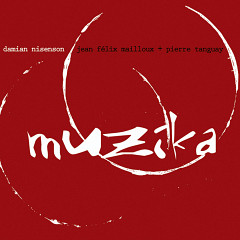
    You may have noticed that the canadian Ambiances Magnétiques label concentrated on new jazz in the last few years with there series of jazz releases. This trend is continued with the new associated label Malasartes. Although this label welcomes any new music, the first two releases are definitely jazz. The label is founded by Damian Nisenson, an argentinian born musician and actor who came from Europe to Montréal in 2005. He assimilated quickly it seems, as he presents now his own record on his own label. Not bad. Under the wings of DAME distribution his music will now also attract international attention, which was not the case for his musical activities in Argentina with Dosaxos 2 and the Nisenson Kabusacki Dawidowicz Trio. Except for one traditionel tune, Nisenson composed the rest of the music on Muzika. Performers are Jean Félix Mailloux on bass, Pierre Tanguay on drums and Nisenson on tenor, alt and sopranino saxes. If I’m not mistaken I hear klezmer-like influences in some the compositions. Also in his phrasing Nisenson I hear the influence of jewish music at some moments. These and other influences are melted succesfully in a music that in the end is very jazzy in nature. Nisenson proves himself as a disciplined and devoted player who knows what atmosphere he wants to create. The very experienced Tanguay delivers wonderfull contributions.

    On Jean Félix Mailloux I can say more listening to the cd of his trio. With Arden Arapyan on piano and Jonathan Racine-Ménard on drums and Mailloux himself on bass this trio brings to life nine compositions of Mailloux. All three of them are young musicians of Montréal, active in miscellaneous musical contexts, which is the modus operandi nowadays for so many musicians that are open to what is happening. In the combination of this trio they met each other for their love for a very lyrical — nightclubbish — kind of jazz. The drummer shuffles his way almost timidly, as does the bass with its warm sound. This way both give room to the pianoplayer, who with his nice touch, plays wonderfull melodies. The compositions are ok, but also very conform the rules of this standarised kind of music. Nothing wrong with it, as it is very well done, but not my piece of cake. Allthough, I have to admit that this cd did tremble my prejudices on their feet, wanting to surrender to the swing.

    These and other influences are melted succesfully in a music that in the end is very jazzy in nature.

    GO [Guitar Obsession] in Ici Montréal

    “Sélection CD”, François Nadon, Ici Montréal, October 26, 2006
    Thursday, October 26, 2006 Press

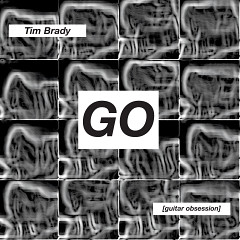
    L’émérite compositeur montréalais récidive avec un album solo de guitare électrique. Ces cinq dernières années, Tim Brady a fait paraître sur l’étiquette Ambainces Magnétiques, cinq disques qui vont de compositions pour petits ensembles à l’opéra. Ici, outre ses propres compositions, le musicien nous propose celles de Jean-François Laporte, d’Alexandre Burton, de Laurence Crane et de Tristan Murail. La musique y est largement écrite et le traitement de la guitare va du son épuré à la très virile distorsion. Avec cet opus, Brady nous démontre encore une fois que sa polyvalence le propulse au-delà de toute convention. 3,5/5

    Avec cet opus, Brady nous démontre encore une fois que sa polyvalence le propulse au-delà de toute convention.
    ★★★½

    Ellen’s Bar in Voir

    “Critique”, Réjean Beaucage, Voir, October 26, 2006
    Thursday, October 26, 2006 Press

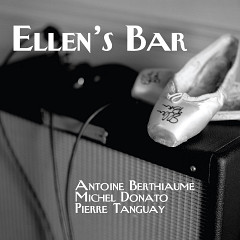
    Ceux qui ont découvert le guitariste Antoine Berthiaume par ses deux premiers disques seront surpris: pas de triturations des textures ou d’improvisations totalement abstraites ici, mais plutôt un retour aux racines du jazz. Berthiaume, qui a fait ses premières armes dans le genre avec le prof Ben Charest au Cégep de Saint-Laurent avant d’aller s’éclater à Londres avec Derek Bailey, s’entoure ici de deux solides acolytes: Michel Donato à la contrebasse, et Pierre Tanguay sans autre instrument qu’une batterie bien standard. Le trio de base. Le guitariste signe 9 des 11 titres en se souvenant de ses gigs à l’air du temps. C’est bluesy par moments, enfumé malgré les règlements, et ça s’écoute le soir venu. (4/5)

    C’est bluesy par moments, enfumé malgré les règlements, et ça s’écoute le soir venu.

    Concentrés et amalgames in AllMusic

    “Review”, François Couture, AllMusic, October 24, 2006
    Tuesday, October 24, 2006 Press

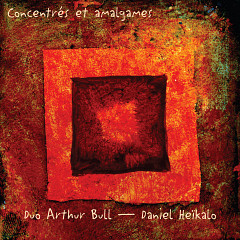
    Concentrés et amalgames is this duo’s second album for Ambiances Magnétiques (six years after Dérapages à cordes) and their third overall (Deuxième Acte came out in 2002 on Daniel Heïkalo’s own cottage label). This is hands down their best effort to date. Clearly, Arthur Bull and Daniel Heïkalo have kept on refining their musical relationship. The level of integration between Bull’s fragmented “serious” playing and Heïkalo’s much wilder side is higher than ever. The latter once again shifts between acoustic guitar and junkyard drums, with the percussives being heard on more tracks than on previous albums. On the guitar duet front, two pieces stand out: La solution de l’énigme and Tassez-vous donc. The first one may be the duo’s best piece released to date, with its tightly woven interplay, acute listening, subdued melodicism and relentless supply of ideas. The second one features Bull playing deconstructed blues licks on electric guitar while Heïkalo pulls all the stops on acoustic guitar, indulging in a rare and oh so effective display of virtuosity. The guitar/percussion pieces are generally a lot of fun, with Heïkalo hitting and clashing all around while Bull weaves oddly distant narratives. In that particular setting, the two men seem to willingly ignore one another, letting serendipity work things out by itself — and it works. Concentrés et amalgames is indeed a concentrate of what Bull and Heïkalo have been doing for years now, and the 11 short pieces included here have been carefully selected to showcase the duo at its most focused. A must-have for fans of Derek Bailey, Fred Frith or René Lussier.

    A must-have for fans of Derek Bailey, Fred Frith or René Lussier.

    July 5th, 1961 in Both Sides of the Mouth

    “Review”, Brad, Both Sides of the Mouth, October 23, 2006
    Monday, October 23, 2006 Press

    So today I dug deep into my library to see if I could remind you of anybody, and so I stumbled onto Brooklyn duo The Eastern Stars. Thanks to their ever knowledgable site:The Eastern Stars took their name from Masonic roots. The Order of the Eastern Star is the largest fraternal organization in the world in which both men and women may belong.” So, The Eastern Stars are, clearly, about male/female unity, and unity indeed — this duo take their charm from the use of contrasting male/female vocals. The soft, deep whispers of Rob Corradetti blend smoothly with Kaia Wong’s hushed, airy voice, and it was this attribute that qualified them a while back for my Some Are Lovers, Some Are Friends mix. The Eastern Stars’ sound definitely carries an air of folk, and their debut LP, July 5th, 1961, progresses from straight-out folk to a more experimental hand in that genre. Overall, they carry a very simplified sound that seems very stripped and bare, but it definitely works. The duo hopes to tour early next year, and is already in plans to open for Of Montréal in early March. Oh, and as for July 5th, 1961 — nothing seems to have happened that day, in case you were curious.

    The soft, deep whispers of Rob Corradetti blend smoothly with Kaia Wong’s hushed, airy voice…
  • 4
  • 5
  • 6
  • 7
  • 8
  • 9
  • 10
  • 11
  • 12