actuellecd

Blog

199 results
  • 2
  • 3
  • 4
  • 5
  • 6
  • 7
  • 8
  • 9
  • 10
  • Idiolalla in Revue & Corrigée

    “Disques”, Pierre Durr, Revue & Corrigée, no. 70, December 1, 2006
    Friday, December 1, 2006 Press

    Deux vocalistes, femmes, et un batteur, homme. Une pochette illustrée d’un clown. Un concept, “idiolalla”. Terme désignant l’utilisation d’un langage inventé correspondant à une condition psychiatrique (bref, ce n’est pas le kobaïen, encore que Vander apparaît souvent comme un possédé!). Le martèlement, parfois erratique, parfois plus régulier de Jean Martin est propice à toutes les outrances orales, plus proches de la pratique d’un Phil Minton que de Lauren Newton ou de Maggie Nicols, puisque le langage de DB Boyko et de Christine Duncan est fait d’onomatopées, susurrées, éructées, vomies. Mais pas seulement. Cetrains passages se rapprochent des voix diphoniques mongoles, peuvent aussi évoquer certaines pratiques ethiniques collectives — les youyous, par exemple. Christine Duncan travaille régulièrement la voix aux côtés de Jean Martin au sein de Barnyard Drama, basé à Toronto (quatre CDs depuis la fin des années 90) après avoir œuvré dans des formations de gospels. DB Boyko est, comme elle, originaire de Vancouver mais s’est plutôt produite sur la scène contemporaine (acoustique et électroacoustique). Tous les trois ont déjà émargé sur le label québécois dans le récent oratorio de Danielle Palardy Roger Bruiducœur, prières des infidèles. Ecoutez Idiolalla. Une expérience des plus vivifiantes, à défaut d’être totalement inédite.

    Une expérience des plus vivifiantes

    Tombak in Ici Montréal

    “Sélection CD”, Yves Bernard, Ici Montréal, no. 10:10, November 30, 2006
    Thursday, November 30, 2006 Press

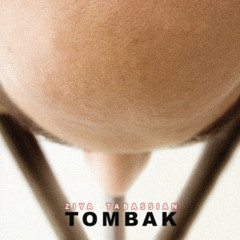
    Parallèlement à ses expériences au sein de Constantinople ou avec son frère Kiya, le Kronos Quartet et Kayhan Kalhor, Ziya lance enfin son premier disque. Un album instrumental avec pour seul instrument le tombak, principale percu de la musique savante persane, qu’il joue à mains nues,sans superpositions et qu’il sort habilement de son contexte premier. Le Montréalais se sert de toutes les cavités du tombak, le frotte, le gratte, le frappe, le triture, le fait ronronner, siffler, crisser, tonner, danser,en arrondit le son, lui fait faire la vague, le dédouble. Un disque déroutant mais nécessaire!

    Un disque déroutant mais nécessaire!

    Chronopée (2) in Vital

    “Review”, Frans de Waard, Vital, no. 553, November 21, 2006
    Tuesday, November 21, 2006 Press

    A collaboration of many kinds, this one. Dirk Dresselhaus is at the core. The man from Schneider TM, as well as band member of Locust Fudge, Pancake and Dr Drek has played with Hildur Gudnadottir before, on the CD Good Sound under the banner Mr. Schmuck’s Farm (on the same label as this new one) and also with Ilpo Väisänen is active as Angel. Väisänen is most known for his involvement with Pan Sonic, but also played with Bruce Gilbert, Alan Vega and a forthcoming release with The Hafler Trio. Back when reviewing Mr. Schmuck’s Farm I had no idea who she was, but she is part of Kitchen Motors collective in Iceland, as well as playing the cello with many people on Iceland. In April 2005 the three played together at the Transmediale festival for more than an hour, and the result is now available on CD. This release continues the style set out by Mr. Schmuck’s Farm rather than the music of Angel. One long piece of drone music. The basic rule, so it seems, is that they agreed to start out in a rather soft manner and then make a sweep into noise land and land safely in more quieter realms. The noise part really cracks out here. I believe that the two men pick up the signals produced by Gudnadottir and process these through their own blend of electronics, by which we don’t understand laptops, but all sorts of black boxes with knobs. This has only vaguely something to do with drone music, but it is made on entirely different level than the usual drone suspects of Vital Weekly. Powerful music, as opposed to music that is supposed to lull you to sleep. It’s great to see at least something moving away from the usual path.

    Joe Colley is also someone who shouldn’t need much introduction. Years ago he was active under the name Crawl Unit, but who remembers that? It’s been Joe Colley for some time now and as such he is quite active as a recording artists (solo, but also in collaboration with say people like Francisco López and Jason Lescalleet), performing around the world, and putting up sound installations. His work got recognition at Ars Electronica and Transmediale (but I wonder who would care about that really?). Colley is a man who loves the sound of decay. Things that are on the fringe of being broken beyond repair find a good place in his hands. The last breath of something electrical is in good hands with him. All to easily you could think that Colley deals with ‘just’ noise. Not so at all. He is also a man who loves drones — how he conceives them is not really of great importance, certainly not through a laptop, but he has them. These two ends, the drones and the noise, may seem opposite s but be assured they are in very capable hands. The opening piece Bruise Voltage And Field Error is a loud beast of a broken contact microphone choir and cable hum. The Last Audience closes the CD with a heavy drone piece that could almost be derived from feedback, but it stays away from the real noise bursts. In between the journey went through various stages, various moods (not all that negative, which seems to hover around his work) and various forms. Joe Colley’s music is an unique blend of highly intelligent noise, blending the harsh end with the more soft side, but always remains listenable. From his solo work this is perhaps the best so far.

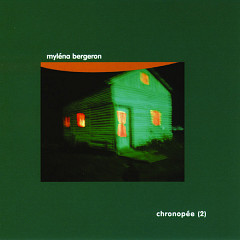
    The final new release on Oral is by someone of whom I never heard, Mylena Bergeron, and still don’t know anything, other than her working methods. She collects raw, concrete sounds which she then dully processes. In this process she wants to preserve the essence of the sound, which is done in the third phase, harmonization, through methods of editing. She calls her compositions “evocative and narrative sound landscapes”. Many of the pieces here (twelve in total) seem to be made with the sampler. She loops small particles and creates per piece indeed a sort of landscape, or rather a picture of landscape. The original sources are not always to be recognized, even when we hear voices, the supermarket, muzak and such like, but they are embedded in the overall processed sound. It took some time for me to get into this, as at first it all sounded a bit too simple, too easy, but as the CD progressed I got the drift of it, and thought it was quite nice, but perhaps a bit long. Sometimes Bergeron seems to be taking a little too much time to tell her story without knowing where to end it. A bit more concise and perhaps with a couple of pieces skipped, this would have been an absolute gorgeous CD, now it’s just pretty much alright.


    Muzika in The Toronto Star

    “Review”, Geoff Chapman, The Toronto Star, November 16, 2006
    Thursday, November 16, 2006 Press

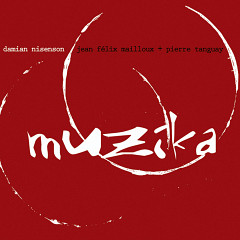
    Exotic material is delivered here via Montréal’s avant-saxist Nisenson on tenor, alto and sopranino (sometimes two at once à la Roland Kirk) on 10 tunes, all but Druse Dubke by him, along with fellow-futurist bassist Jean Felix Mailloux and volatile, versatile drummer for all seasons Pierre Tanguay. Mideast melodies are scrunched and stretched by Argentine-born Nisenson, whose flighty, churning improv is a continuous restless journey. This combo set-up gives trio members maximum freedom, and they take full advantage on a never dull outing.

    This combo set-up gives trio members maximum freedom, and they take full advantage on a never dull outing.

    Muzika in The Gazette

    “New Music: Newly released compact discs”, The Gazette, November 9, 2006
    Thursday, November 9, 2006 Press

    Saxophonist/composer Damian Nisenson, born and raised in Argentina and now part of the Montréal scene, showcases a variety of musical influences and styles on this lively CD. Playing alto, tenor and sopranino, Nisenson moves from the danceable and surreal to the comic, and on to the declarative. European and Jewish influences abound, as do references to the jazz tradition and his Argentinian roots. The trio gets more serious with the avant statement Carne da mia perna, but lightens up with the playful Nikadance, in which Nisenson sings Rock-a-Bye Baby in Spanish for textural effect. In these pieces, the avant co-exists with the lyrical. Nisenson’s first recording in Canada makes us beg for more. (4/5)

    Nisenson’s first recording in Canada makes us beg for more.

    Chicken in Bad Alchemy

    “Kritik”, Rigobert Dittmann, Bad Alchemy, no. 52, November 1, 2006
    Wednesday, November 1, 2006 Press

    Auch Klaxon Gueule, klaxon wie Hupe und gueule wie Maul, Rachen, ist ein Tummelfeld für Côté percussions & électroniques. Zusammen mit Falaise an guitares & claviers und St-Onge an basses & électroniques spielte er die stark elektrifizierten Improvisationen Bavards (1997), Muets (1999), Grain (2002) ein. Dabei wandelte sich das anfängliche ‘electrolyptische’ Powertrio bald in einen in sich gekehrten Paulus. Mit dieser Hermetik zum Soundkern vorgestossen, zeigt Chicken (&03, 2004) nun ein Trio, das konzentriert seinen bruitistischen Neigungen frsnt und verblüffende Techniken entwickelt hat, seine Instrumentalsounds derart zu molekularisieren, dass man kaum noch an Handarbeit glauben kann. Spielt einmal das Schlagzeug Schlagzeug, bohrt ein Posaunenklang from Nowhere ins Ohr. Wenig ist, was es scheint. Die Differenz von Musique concrète, die dabei evolutionäre Fühler zum Flow von Electronica hin ausstreckt, und von Plinkplonking, etwa der Sofa-Familie (Zach, Grydeland), von Perlonex, aber vor allem von franzäsischen Grenzverwischungen zwischen elektronischer und instrumentaler Improvisation (Marchetti, Noetinger, Triolid etc.), sie scheint hier implodiert zu sein. Beständig träpfelt ein aleatorischer Nieselregen aufs Trommelfell, ausgeläst von ins Unkenntliche mutierten Gitarrenfitzelchen und Basstupfern. Man fühlt sich wie in einem Aliendschungel voller unglaublicher fra fron fron-Pflanzen(?) und unwahrscheinlicher roken dodelijk-Vägel(?), deren dwong-Gezwitscher und moko braun-Geknarre von Kristallnadeln und Metalloidblättern reflektieren. Klänge, wie sie in der Dämmerung von der Insel des vorigen Tages herüber hallen, fremd und paradiesvogelig.

  • 2
  • 3
  • 4
  • 5
  • 6
  • 7
  • 8
  • 9
  • 10