actuellecd
  • This website is also available in English.

Blog

199 results
  • 24
  • 25
  • 26
  • 27
  • 28
  • 29
  • 30
  • 31
  • 32
  • Ensemble SuperMusique (ESM), Joane Hétu in La Scena Musicale

    Joane Hétu’s Filature: Theatre of Sound”, Paul Serralheiro, La Scena Musicale, no. 11:6, March 1, 2006
    Wednesday, March 1, 2006 Press

    The role of music in the theatrical arts is usually a secondary one, used to highlight dramatic action or inspire a choraographer’s vision. Music seems mone abstract than words or gestures to most people. With her latest creation, Filature, premiered this month at Usine C, musique actuelle composer, vocalist and improvising saxophonist Joane Hétu sets out to show the theatrical potential of music and how other arts can be put to its service.

    During a recent conversation held at the offices of Ambiances Magnétiques, of which she is the label’s chief adminstrator, Hétu explained her vision as being inspired by the art of weaving, once an occupation of hers. “Musique actuelle is a hybrid form, born of mixing disparate things. Weaving has similar principles — the craft involves mixing various threads to create a pattem, a pleasing artistic form.”

    In this “Théâtre sonore” of hers, the threads are the instrumental “voices” of the musicians, with counterpoint provided by a pair of dancers, and important visual components including costumes, lighting and video projections. Still, the musicians are at the heart of this project, a point Hétu further elaborates upon. “I have to know who I’m writing for. I’m not just writing for a particular instrument — it starts with a particular musician.” The work is dividad into three acts, each based on a principle of weaving: Act I is titled Chaîne, Act II Trame and Act III Motif, weaving terms that translate as “warp”, “weft” and “weave”. “In the opening act, male musicians are on stage with a male dancer, followed by an all-female cast in Act II and all 10 musicians share the stage in Act III, their lines interweaving with each other’s. Most importantly, everything grows out of the music.”

    Even if there are improvised parts, Hétu hastens to add, “The music is mostly written, with the visuals borne out of the music.” In this way, the contributions of video artist Pierre Hébert, lighting designer Guillaume Bloch, costume designer Louis Hudon and sound engineer Bernard Grenon are all in keeping with the music. “So this is a turning of the tables, at least with respect to what usually happens with music and other performing arts,” explains Hétu.

    The musical component will be handled by some of musique actuellets best know characters, among them Jean Derome, Diane Labrosse, Pierre Tanguay and Normand Guilbeault, the featured dancers being Daniel Soulières and Séverine Lombardo. “We’re working with textures,” Hétu reminds us, “but the underlying structure behind these are the music. Always.”

    Musique actuelle is a hybrid form, born of mixing disparate things. Weaving has similar principles — the craft involves mixing various threads to create a pattem…

    Estrapade in Musicworks

    “Dinamically Charged Pleasure”, Chris Kennedy, Musicworks, no. 94, March 1, 2006
    Wednesday, March 1, 2006 Press

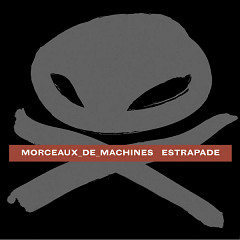
    Dontigny and d’Orion have been working together since the ’90s, when they founded the now defunct radio program Napalm Jazz on [Quebec City]’s CKIA. Theirs is a dynamically chargod improvisation, with a lot of space between the standard loud whiteouts and the quiet passages. Unlike many noise bands that keep their instruments burning in the red, morceaux_de_machines are unafraid to pull back and let moments of tangential beauty into their noisier explorations. Despite its early posturing, the threat of violence is never realized. Instead, the music’s energy is discovered through the passion of creative fire.

    morceaux_de_machines are unafraid to pull back and let moments of tangential beauty into their noisier explorations.

    Steve Reich: Different Trains in Revue & Corrigée

    “Disques”, Pierre Durr, Revue & Corrigée, no. 67, March 1, 2006
    Wednesday, March 1, 2006 Press

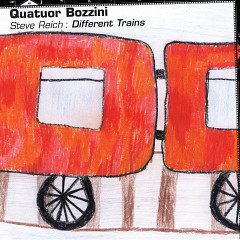
    Different Trains est probablement une des œuvres fondamentales de Steve Reich, prélude à ses opéras-vidéos, en introduisant dans la trame répétitive divers effets, collages, voix (la bande magnétique complémentaire superpose trois quatuors à cordes, servant de repère à la prestation scénique du Kronos Quartet). Sur scène, pour peu que la scénographie, la répartition des enceintes acoustiques soient à l’unisson, l’œuvre permet une visualisation sonore à la fois ouverte et ciblée.

    Plusieurs versions en ont été enregistrées depuis celle du Kronos Quartet en l988, sans oublier celle, plus récente (2003) de l’orchestre national de Lyon et ses 48 cordes. Le Quatuor Bozzini, dont c’est ici le second enregistrement, ne pouvait qu’integrer à son répertoire cette œuvre majeure du vingtième siècle finissant. Présenté en public il y a plus d’un an, Different Trains, évoquant la Seconde Guerre mondiale, était associé à Black Angels — thirteen images from the Dark Land (relatif au Vietnam) de George Crumb, lors d’un récital titré «in tempore belli» (en temps de guerre). Le Quatuor à cordes canadien s’est particulièrement impliqué à retravailler l’œuvre de Steve Reich, allant jusqu’à réenregistrer lui-même la bande magnétique complémentaire, ce qui permet aux quatre musiciens de jouir d’une liberté d’exécution et de sonorité que les différents quatuors interprètes n’avaient pas en utilisant la bande préenregistrée initialement par le Kronos. Une manière donc de s’approprier, avec le consentement de Steve Reich lui-même, une heureuse et dynamique relecture de l’œuvre.

    … une heureuse et dynamique relecture de l’œuvre.

    AnteNata in Revue & Corrigée

    “Disques”, Pierre Durr, Revue & Corrigée, no. 67, March 1, 2006
    Wednesday, March 1, 2006 Press

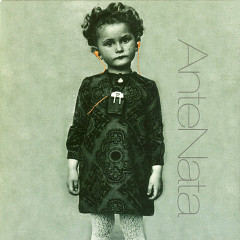
    Antenata présente un air quelque peu familier. Ce n’est pas le fait qu’on trouve au sein de cette formation italienne quelques musicien(ne)s déjà croisé(e)s au sein de la scène bolognaise (Daniela CattivelliFastilio, LMI — et Pierangelo Galantino — avec Paolo Angeli, LMI et Corsetti) ou ailleurs (Fabrizio Spera). Plutôt une parenté musicale qui nous est chère. Bref, un petit air — frais — de rock in opposition, versus Art Bears. À l’origine un duo (Sabina Meyer et Daniela Cattivelli, respectivement aux voix, échantillonnages, theremin et saxophone, échantillonneur), Antenata s’est mu en un sextet pour réaliser ce premier opus. Si l’approche de la voix de Sabina Meyer, au service de textes librement adaptés en allemand, en français et en italien dus à divers auteurs (Sylia Plath, Marina Cetaeva, Meret Oppenheim, Anne Sexton Simone Weil, Ingeborg Bachmann, Patrizia Cavalli, Patrizia Valduga) rappelle inévitablernent celle de Dagmar Krause, les arrangements, les astuces sonores, le jeu des divers protagonistes (violoniste, guitariste, saxophoniste, percussionniste…) inscrivent Antenata dans la filiation d’un courant qui fut l’un des plus défricheurs et novateurs il y a une vingtaine d’années, tout en réussissant à en garder la fraîcheur, l’esprit d’ouverture, le sens du travail collectif, la générosité d’un projet alliant improvisation, musique de chambre, poésie, voire, par petites touches, l’électroacoustique. Une très belle surprise qui conjugue la complexité du propos à une interprétation très aérienne.

    Une très belle surprise qui conjugue la complexité du propos à une interprétation très aérienne.

    Mingus Erectus, Pee Wee et moi, The Feeling of Jazz, Ambiances Magnétiques Jazz in Coda Magazine

    “Label Spotlight: Ambiances Magnétiques Jazz, Jazz becomes Actuelle”, Ken Waxman, Coda Magazine, no. 326, March 1, 2006
    Wednesday, March 1, 2006 Press

    Need further proof that Quebec is a province pas comme des autres? At a time when jazz record labels and musicians lament lack of acceptance and opportunities, Ambiances Magnétiques, the longestablished, Montréal-based musique actuelle label has just set up a specific jazz imprint.

    The reason is partially artistic and partially marketing, explains Joane Hétu, founder member of the AM collective, and artistic director of DAME, its distribution and marketing wing.

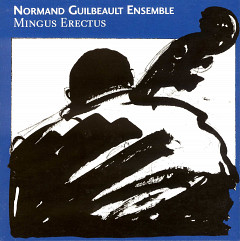
    Musique actuelle as defined by our community implies that the composer is also performer of his music,” she says, elaborating the philosophy that has guided AM since its inception in 1983. Yet with many of AM’s founders recently involved with projects honoring the compositions of jazz icons, such as bassist Normand Guilbeault’s new CD, Mingus Erectus, the need for a specific jazz label became apparent.

    “Montréal’s jazz community is active all year long,” she notes. “With l’Off Festival de jazz de Montréal, a new Regroupement des artistes de jazz et de musique actuelle du Québec and a new interest in jazz from many musicians, now seemed as good a time as ever to support these artists.”

    However, after having released more than 150 CDs, AM has established a certain reputation and market, the couple of jazz sessions previously released by the label “often ended up in the wrong sections in stores or in the hands of reviewers more interested in musique actuelle,” she adds. “Ambiances Magnétiques Jazz (AMJ) allows our jazz releases to be clearly identified, categorized, reviewed and marketed in the jazz family.”

    Although AMJ’s first CDs — clarinetist Robert Marcel Lepage’s Pee Wee et Moi and reeds-bass-drums Trio Derome Guilbeault Tanguay’s The Feeling of Jazz are the others — came out at the same time as Mingus Erectus in late 2005, this clustering was “just luck,” she concedes. Each artist, an AM founding member, happened to have a project ready, although Hétu adds “having many releases over a short time period should help put our jazz label on the map.”

    It’s too early to gauge AMJ sales, but like most of the label’s product, there’s a close correlation between live performance and a CD’s popularity. “It’s all about playing live,” she declares. “The more concerts the more sales.”

    Among the 10 or so CDs AM releases each year, she expects that two to four will be jazz. But since AM is designed to give artists mastery over their work, it depends on what projects are offered to the label. Already scheduled for spring release is a trio disc by Quebec guitarist Antoine Berthiaume with bassist Michel Donato and drummer Pierre Tanguay and another by Italian pianist Gianni Lenoci’s Ensemble. Lenoci’s CD will be AMJ’s first disc by a nonCanadian. However since the parent label’s releases aren’t limited by geography, Hétu suspects AMJ will follow the same policy.

    Again though, Hétu cautions that AM’s overriding raison d’être is to release, distribute and market CDs by its founding members or those recommended by a member committee. Busy with its own projects, AMJ won’t go out of its way to seek out new jazz talent. “We’ll leave the creation of a Canadian Jazz Idol to someone else,” she jokes.

    … Montréal-based musique actuelle label has just set up a specific jazz imprint.

    Atlas Epileptic, Oralizations in Musicworks

    “Two Extremes of Oral Sound Art”, René Van Peer, Musicworks, no. 94, March 1, 2006
    Wednesday, March 1, 2006 Press

    These recent CDs of Canadian sound poets Paul Dutton and Pierre-André Arcand show two artists operating in the same field, but at virtually opposite ends. While Dutton’s work is basically acoustic, being rooted primarily in the amazingly virtuosic command he has of his speech organ and the cavities directly connected to it, Arcand squeezes his voice through all manner of electronics for his pieces. Dutton’s work is as pure and austere as you can get. On Arcand’s Atlas Epileptic the voice is not the be-all and end-all as on Dutton’s album, but rather a starting point for hypnotic sonic excursions.

  • 24
  • 25
  • 26
  • 27
  • 28
  • 29
  • 30
  • 31
  • 32