actuellecd

Blog

199 results
  • 1
  • 2
  • 3
  • 4
  • 5
  • 6
  • 7
  • 8
  • 9
  • 3 in Exclaim!

    “Review”, Glen Hall, Exclaim!, December 8, 2006
    Friday, December 8, 2006 Press

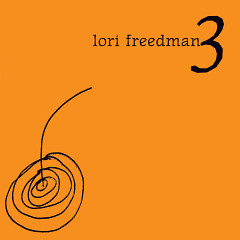
    Clarinetist/bass clarinetist Lori Freedman puts her ass — her artistic credibility — on the line every time she steps up to record. And Lori Freedman 3 follows its predecessors by capturing music that is intelligent, engaging and daring. LR3 has that weird and delightful quality of having tracks that are hauntingly reminiscent of something we’ve heard before, but know full well we haven’t. This is largely due to Freedman’s depth of musical experience; what she plays has heavy recognisable resonances of new music, free jazz, klezmer and noise. On LR3 she is joined by three sets of duo partners who, between them, cover an encyclopaedia’s worth of musical experience themselves. Guitarist René Lussier and turntablist Martin Tétreault weave atmospheric threads of sound, sometimes Stockhausen-ish etheric, sometimes delta blues palpable, like Spaghetti Brulé. Next up is saxophonist Jean Derome and string shapeshifter Rainer Wiens, whose sibilance proves a stimulating counterfoil to her clarinet’s malleable tone, as on Chrysalis, an outstanding piece of collective listening and creation. Bassist Nicolas Caloia and percussionist Danielle Palardy Roger are minimalist and miniaturist, keeping things quiet, relatively sparse and brief. The restrained roars of Tigresse clocks in at a tad over three minutes. Highly recommended.

    3
    Highly recommended.

    3 in Downtown Music Gallery

    “Review”, BLG, Downtown Music Gallery, December 8, 2006
    Friday, December 8, 2006 Press

    This disc was recorded live over three nights and later reworked in a studio. I’ve caught Lori Freedman some half dozen times of the past few years, playing solo, in duos and doing improv, at Victo, Guelph and also at the Vision Fest. She is an excellent musician, her solo set at Guelph in 2005 was one of the best sets that year. For this fine release, Lori works with three different trios of Quebec’s finest players, each trio quite different in sound. The first trio features our friend René Lussier on guitars and Martin Tétreault on turntables, often without records. There is an odd balance between Rene’s diverse and ever-changing guitar approaches and Martin’s electronic-sounding turntables manipulations. Lori is in the middle, twisting her clarinets into a variety of odd shapes and sounds. At times I am reminded of Zorn’s cartoon music, always changing and using that sly humor behind the unexpected twists and turns. The trio with Jean Derome on sax & objects and Rainer Wiens on prepared guitar is also a strange one. As Rainer plays Frith-like quiet guitar soundscapes, Jean plays his charming, fractured early Zorn-like mouthpiece manipulations. Lori is a good match, also bending her notes a similar way and blending perfectly with her two gifted partners. The third trio features Nicolas Caloia on double bass & Danielle Roger on percussion. I am unfamiliar with Nicolas but I do know Danielle from different disc on AM, as well as seeing her in a duo with Frith last year in Montréal. This trio is the most minimal, slowly weaving their sounds cautiously around one another. Some of these pieces were reworked in the studio, here we find Lori’s snake-like clarinet panning around in the mix, often closely mic’d with careful attention to each sound. This is quite a strong batch of trio improvisations that work together well as a whole connected work.
    3
    This is quite a strong batch of trio improvisations…

    GO [Guitar Obsession] in Vital

    “Review”, Dolf Mulder, Vital, no. 555, December 7, 2006
    Thursday, December 7, 2006 Press

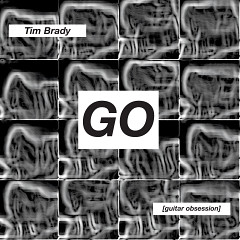
    A great album for lovers of the electric guitar. It should appeal for instance to fans of mister Fripp. There are already out a great many records from canadian Tim Brady. Most of them cover Brady as a composer. Go is his first solo-album and focuses on Brady as a guitar player. It’s an album that I instantly liked. We hear rich and multi-layered patterns, all generated by the guitars and electronic devices of Tim Brady. The feeling of blues, (hard) rock, jazz is always nearby, but most of the compositions are situated on a higher abstract level. The compositions range from quiet soundscaping like in Le Chant des baleines, to very loud heavy metal like excursions like in Vampyr!. All is done very intelligently and with great affection. The first four compositions are by Brady himself, and reworkings of pieces he composed in the 80s. The other four are works by four different composers: Jean-François Laporte, Alexandre Burton, Tristan Murail, Laurence Crane. 3 tracks were recorded live, the others in the studio. But the sound quality is very homogeneous. Brady leads us through a variety of atmospheres and musical idioms, ending up in Bobby J, a pastoral and elegant finale to this very enjoyable CD.

    It’s an album that I instantly liked.

    Concentrés et amalgames in Vital

    “Review”, Dolf Mulder, Vital, no. 555, December 7, 2006
    Thursday, December 7, 2006 Press

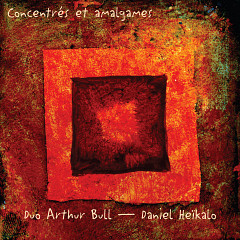
    Two canadian guitar improvisors joined hands once again. As a duo they play since 1995 and in 2000 it was time for their first duo-recording for Ambiances Magnétiques. Arthur Bull is a veteran from the canadian improv scene and played with Michael Snow, Paul Dutton, John Oswald, etc. As a poet he published three books. Heïkalo is an improvisor and composer. He also runs his own label: Heïkalo Sound Productions. Having a look in this catalogue learns that Heïkalo released many solo-albums that show his interest in a diversity of strings instruments and also in electroacoustic music. This label released also the second duo-recording of Bull and Heïkalo. So with Concentrés et amalgames were are listening to their third collaboration. Bull plays electric and prepared guitars and e-bow. Heïkalo we hear on acoustic and classical guitars, but also on drums and percussion. The album features six guitar duets and five duets for guitar and percussion. In their playing they show a great togetherness that results in great music. Improvised music at its best. Both gentlemen speak their language of free form and non-idiomatic improvising very well and give way here to some very communicative and musical interaction in the classical Derek Bailey-style.

    Improvised music at its best.

    Sextant in Vital

    “Review”, Dolf Mulder, Vital, no. 555, December 7, 2006
    Thursday, December 7, 2006 Press

    Sextant is the second cd by this Italian composer and improvisor for Ambiances Magnétiques. In 2003 he recorded a cd of improvised duets with Joëlle Léandre. Now he returns with a totally different multifaceted album of nine compositions for a small ensemble. They originated from workshops given by this italian pianist at Nino Rota Conservatory in Monopoli, where he worked with new teaching methodologies. Most compositions are by the hand of Gianni Lenoci himself who graduated from Santa Cecilia Conservatory in Rome and studied improvised music with Mal Waldron and Paul Bley. They are performed by: Adolfo Lavolpe (electric guitar, electronics), Fabrizio Scarafile (soprano saxophone), Francesco Massaro (alto & baritone sax), Francesco Angiuli (doublebass), Marcello Magliocchie (drums) plus Gianni Lenoci himself on (electric) piano, synthesizer and electronics. In the centre of this cd however we hear a work by Morton Feldman: intermissionVI. A piece very close to silence. Tense and breakable. It is as if we are in the centre of a hurricane with this meditative piece, as most other pieces before and after are much more loud, jazzier, etc. intermissionVI is preceded by rothkovariations a piece that is about sound and texture with lots of electronics, plus piano and reeds. The second piece of this album intersezione and the last track of this album notturno frattale are both very otherworldly electronic-only pieces, that are absolutely non-jazz. Most other pieces are very free jazz like works that share similarities with the music of Ornette Coleman of Shannon Jackson. They catch attention most of all because of the very strange combination of odd electronic sounds combined with saxes, drums, etc., like in the opening track or in the title track. The works differ enormously in style and character. I wonder what the underlying musically unifying concept is for this album, if there is any. But of course there is nothing wrong with showing very different faces.

  • 1
  • 2
  • 3
  • 4
  • 5
  • 6
  • 7
  • 8
  • 9