actuellecd

Blog

199 results
  • 8
  • 9
  • 10
  • 11
  • 12
  • 13
  • 14
  • 15
  • 16
  • Sextant in La Scena Musicale

    “Au rayon du disque”, Charles Collard, La Scena Musicale, no. 12:1, September 1, 2006
    Friday, September 1, 2006 Press

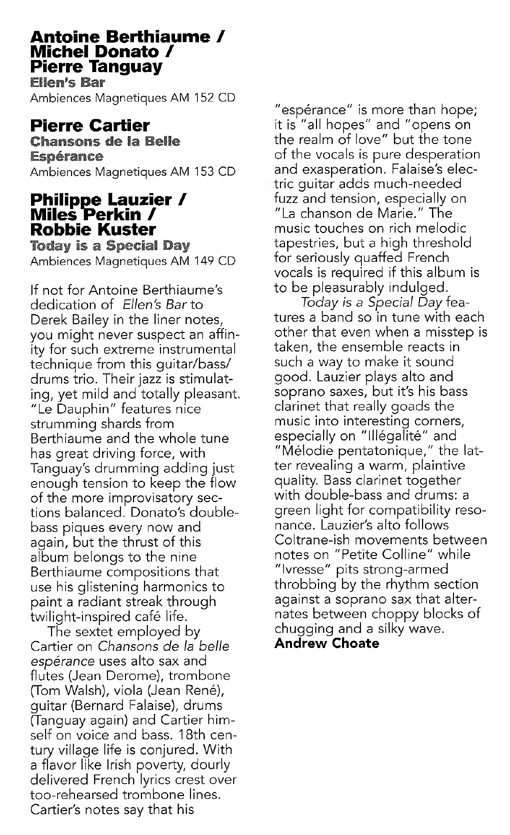
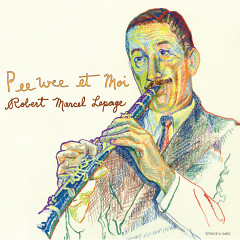
    Premier d’une nouvelle manne de onze (!) disques à paraître chez Ambiances Magnétiques durant l’automne, ce dernier-né de la série jazz de l’étiquette est, à ce jour, le plus audacieux de tous. Vivant dans le sud de l’Italie, le pianiste Gianni Lenoci signe ici son deuxième enregistrement pour le compte de cette maison de disques, le premier étant un duo de miniatures intimistes avec la contrebassiste Joëlle Léandre (Sur une balançoire). Proposition toute autre cette fois-ci car il s’agit, comme son titre le dit, d’un ensemble à six constitué de deux saxos, un guitariste, un bassiste, un batteur et le pianiste. Pourtant, ces seules informations ne disent pas toute l’histoire; outre ces instruments acoustiques, il y a également une quincaillerie électronique qui se greffe à l’ensemble, élargissant de ce fait la palette sonore. D’une part, on retrouve des pièces de factures plus traditionnelles, à l’apanage d’un certain post-free jazz européen (Realtà, en ouverture, et une mise à jour assez décoiffante, mais trop brève de Miss Ann d’Eric Dolphy); d’autre part, on passe de ce côté plus maximaliste à un minimalisme électro très dépouillé (Intersezione et Notturno frattale), sans passer sous silence (terme approprié s’il en est un) une composition de Morton Feldman, soit Intermission VI. Rares sont les disques, de nos jours, où ces deux mondes se côtoient et il était temps que quelqu’un le fasse. Merci M. Lenoci pour cette belle offrande. Cela dit, on espère bien voir cela chez nous un de ces jours…

    Engagement & Confrontation in Musicworks

    “Reviews”, Ken Waxman, Musicworks, no. 96, September 1, 2006
    Friday, September 1, 2006 Press

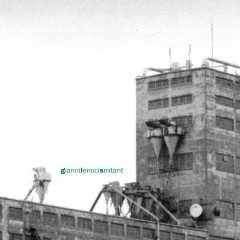
    Thrusting himself wood, strings and bow-first into very fast company, Montréal-based double bassist Pierre-Yves Martel has unselfconsciously created his own solo bass CD.

    Although the session betrays many of the limitations of a young musician doing his first record, the 27-year-old Vanier, Ont. native’s recital contains enough originality to be considered in a field pioneered by such masterful soloists as France’s Joëlle Léandre and the United Kingdom’s Barry Guy.

    Martel does this by making Engagement & Confrontation an elaboration of the sounds produced when the bass’s four strings are prepared by placing sticks, paper clips and rings among them. Additionally the sound is captured in studio with multiple microphones – there are 10 in total – to literally amplify every movement. The end result is a selection of tracks, ranging from 35 seconds to 4 and a half minutes, whose improvisations develop midway between conceptual and accidental. There’s no overdubbing involved.

    The bassist, whose background includes playing musique actuelle with clarinetist Lori Freedman and guitarist Antoine Berthiaume, Balkan-jazz with the band Foreigners, and early, baroque and so-called classical music elsewhere, has the chops and background for experimentation. On some tunes in fact, you marvel at his sheer audacity, constructing pieces out of fingered drones and scrapes of the instrument’s spike on the studio floor.

    But youth’s audacity also plays second fiddle to impudence on the set. Evidentially intent on showing off his developing prowess, Martel has packed 18 tracks into a CD that’s only slightly more-than-48-minutes long. This produces some sections of different compositions which are mere technical exercises, which are also not given enough latitude to develop into coherent statements, and worse of all, sporadically sound like other passages on the date.

    At his best the bassist keeps you guessing at his next move, as when he seems to be vocalizing through his string set or somehow produces oscillating wave form vibrations that create secondary bass lines – as if his primary notes were being accompanied by another bassist.

    Percussive more than dissonant, his sul ponticello bowing on a piece like Fromage en crottes moves from ear-wrenching shrills down to violent pizzicato smacks. He’s isn’t above whacking the bass’s waist and belly either, or producing what sound like wood rending pressure below the bridge for additional resonance. On tracks like Pneus semi-pneumatiques walking bass lines quickly evolve into the vibrating buzz created by torqued strings. Meanwhile Dresser – which may be a salute to the masterful American bassist of the same name – features guitar-like finger-picking pirouettes that when coupled with percussive motions suggests the African balophone as well.

    On the other hand, Benibraun’s onomatopoeia-like sound reflects its title; the balladic For D/C evolves reflectively in broken octaves from high-and-low-pitched strumming; and Correspondances domestiques melds lumbering squeaks and caws into a low-key, burbling theme.

    With much of his musical life ahead of him, the young Franco-Ontarian has created a notable debut. It implies that eventually he may attain membership in the highest ranks of improv’s low-pitched string fraternity.

    With much of his musical life ahead of him, the young Franco-Ontarian has created a notable debut.

    Pee Wee et moi in Nate Dorward’s Music Reviews

    “Review”, Nate Dorward, Nate Dorward’s Music Reviews, September 1, 2006
    Friday, September 1, 2006 Press

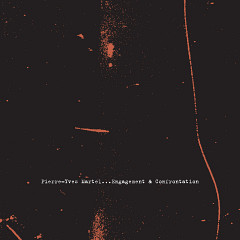
    An album featuring a choir of seven clarinettists might be overkill, but Pee Wee et Moi, Robert Marcel Lepage’s tribute to the clarinettist Pee Wee Russell, turns out to be a charmer. Tribute albums to jazz’s canonical royalty – Coltrane, Monk, Bird and so on – tend to feel self-conscious and overburdened by the Great Tradition; but there’s no such problem with Russell, one of jazz’s great mavericks (and great faces: Lepage’s cartoons of his mournful basset-hound visage adorn the CD sleeve). Lepage’s composite mosaic portrait of the dedicatee takes its inspiration from his blues-playing: Pee Wee’s Blues and Muskogee Blues are played straight and also serve as sourcebooks for Lepage’s own originals. A few abrasive postmodernist touches keep this from turning into a revivalist project, but most of the album works off a slinky, warped blues vibe that’s absolutely faithful to the spirit of Russell’s music. René Lussier’s razzledazzle Eddie-Condon-meets-Eugene-Chadbourne guitar work is the finishing touch.

    A Global Taxonomical Machine in emoRAGEi

    “De zéro à disque”, Nicolas Pelletier, emoRAGEi, August 31, 2006
    Thursday, August 31, 2006 Press

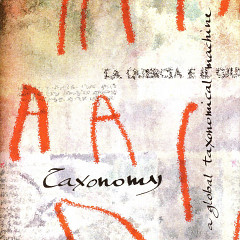
    Taxonomy réunit deux membres des improvisateurs d’Ossatura [sic] (Elio Martusciello, guitariste, et Roberto Fega, échantillonnage), à Graziano Lella, au laptop. Ce trio italien propose un mélange de séquences électroniques et de bruits concrets agrémentés de passages acoustiques. Le travail présenté sur cet album sent la minutie à plein nez. S’il y a eu improvisation, c’était avant les traitements informatiques, d’une formidable précision. Loin d’être brouillonne, la musique de Taxonomy se savoure en prêtant attention aux détails dans la texture, la variété et la profondeur des sons. Plusieurs niveaux de lecture (ou d’audition, si vous préférez) sont ainsi possibles. Les titres sont plutôt contrastés (la ballade Bear Witness Against Themselves précède le rocailleux voyage sidéral de Light the Fires of Insubordination), mais il y a pourtant un fil conducteur qui unit ces enregistrements datant des années 2003-04. Intéressant!

  • 8
  • 9
  • 10
  • 11
  • 12
  • 13
  • 14
  • 15
  • 16