actuellecd

Blog

192 results
  • 23
  • 24
  • 25
  • 26
  • 27
  • 28
  • 29
  • 30
  • 31
  • Playing Guitar: Symphony #1 in Hour

    “Review”, Mike Chamberlain, Hour, February 3, 2005
    Thursday, February 3, 2005 Press

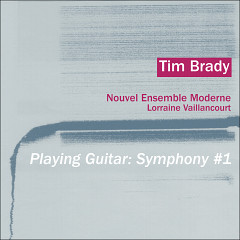
    Montréal’s Tim Brady is a true mad scientist of guitar sound, placed here on Earth, it seems, to smash the barriers between high and low culture. His wild guitar sounds are daggers in the heart of classical music pretense, and God love him for it. The title of Brady’s latest tells much of the story, as it’s certainly the guitar playing that deserves top billing. Here, the music has a relentless drive to it and, to be honest, it is a bit wearying at times, but at the same time, one has to admire the way that Brady works with Lorraine Vaillancourt’s NEM to bring out their playful side.

    … one has to admire the way that Brady works with Lorraine Vaillancourt’s NEM to bring out their playful side.

    Estrapade, morceaux_de_machines in Jade

    “Critique”, Julien Jaffré, Jade, no. 17, February 1, 2005
    Tuesday, February 1, 2005 Press

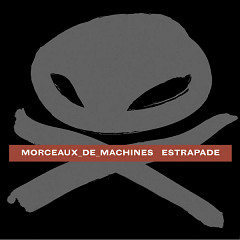
    morceaux_de_machines, projet piloté par Érick d’Orion et A_dontigny, repart en guerre contre le conformisme et les clichés attenants aux sphères des musiques improvisées en proposant un cross-over, une auberge espagnole ou hip-hop, électroacoustique et électronique se tiennent la main. L’estrapade était un supplice qui consistait à faire tomber une personne au bout d’une corde, soit dans l’eau, soit à quelques pieds du sol. En un sens, cette machine nous livre des fractions de styles, portant notre curiosité à quelques pieds au-dessus du vide, sans jamais réellement nous laisser prendre pied dans un style en particulier. Ces segments de genre s’agrègent et se décomposent au bon gré de leur auteur. Free-jazz, musique improvisée, death metal, techno. morceaux_de_machines refuse les partis pris et compose une musique spontanée et libre, en synthétisant son goût musical. Ça en offusquera certains, laissera les autres dans l’expectative à moins que ça ne stimule la curiosité de ces derniers. Le second propos du disque est de ne pas faire allégeance au minimalisme, mais de traduire dans une forme bruyante, «hideuse», la masse sonore accumulée. Mathias Richard, dans son essai sur les musiques bruyantes en avait déjà fait l’éloge. L’idée défendue est qu’il est des musiques qui ne peuvent subir d’être écoutées en salon, mais qui réclament la violence des «infrabass» et des vibrations. Ils réutilisent d’ailleurs un néologisme, le terme Maximalisme; sans parler de bruits blancs, on peut au moins reprendre leur terme monuments de bruitisme, même si ce tsunami de sons, cette masse sonore brute se conjugue quelquefois avec la fragilité de processeurs électroniques. Ces 2 garçons ont su, comme rares d’entre eux conserver la spontanéité de l’adolescence et s’émerveiller de ces aspects qui rapprochent des marges de l’audible. Cet album permet également la confrontation et l’échange puisque morceaux_de_machine a invité 3 collaborateurs de luxe, en la présence de 2 «turntablistes» de renoms, Martin Tétreault et Otomo Yoshihide ainsi que de l’artiste sonore Diane Labrosse. Estrapade confond l’énergie du désespoir à la folle embellie de la jeunesse. Exigeant et captivant.

    … ce tsunami de sons, cette masse sonore brute se conjugue quelquefois avec la fragilité de processeurs électroniques.

    Estrapade, 1. Grrr, morceaux_de_machines in Blow Up

    “Recensione”, Stefano Isidoro Bianchi, Blow Up, no. 81, February 1, 2005
    Tuesday, February 1, 2005 Press

    I canadesi Aimé Dontigny e Érick d’Orion sono i morceaux_de_machines. Il primo maneggia il giradischi, il secondo il computer (cioè l’ordinateur, come dicono i francesi e così gli sciovinisti canadesi francofoni, travisando come d’abitudine concetto e forma). Questo è il loro secondo album e rispetto al predecessore (liberum arbitrium) allenta la presa del rumorismo tendendo a farsi carne. E che carne! Una bistecca da cinque dita, una fiorentina pepata dalla collaborazione di Diane Labrosse, Otomo Yoshihide e Martin Tétreault, che con loro danno vita e anima a un coacervo strappabudella di scratch e schriiitch, perturbazioni acustiche organizzate con violenza e senza tregua ma anche con tanta creatività ribelle, con fantasia ‘industriale’, con profondo senso del ritmo (persino della ‘canzone’ hip hop) e neanche un’ombra di gigioneria. Sarà forse l’interazione tra i due elementi a dare risultati così rigorosi e massicci, laddove il computer di d’Orion limita la tendenza allo straripamento dell’altro proponendogli un calcolo a monte, una ragione ragionante e ragionata che sta a priori e che neanche volendo i due riescono ad evitare: una collaborazione pressoché perfetta.

    Temevo invece per il duetto di Tétreault e Yoshihide, che fanno tutto da soli con due giradischi. Essendo autorità riconosciute dello strumento, si sarebbero potuti permettere di giocare al gatto & topo organizzandosi il festino con ammenicoli e pezzetti d’oggettistica varia attaccati alle puntine, ai microfonini, agli ampli-ini: a partire da presupposti simili abbiamo sentito spesso polpettoni indigeribili. Stavolta invece i due si concentrano solo sugli strumenti, li prendono e strapazzano con frugale brutalità e ne tirano fuori una girandola calorifera d’improvvisazioni bercianti, autentiche, prepotentemente ‘volgari’ e rigorosamente ‘punk’. Pare impossibile accreditare a due semplici giradischi queste evoluzioni e strutture, tanti sono forza e impatto ‘rock’ dei singoli episodi. Rispetto ai morceaux_de_machines la coppia punta proprio allo stomaco piuttosto che alla testa: a tratti parrebbe di sentire un redivivo Hendrix, altrove i Melvins polverizzati in una nebbia sulfurea. Quando si dice ‘uso creativo dello strumento’.

    … una collaborazione pressoché perfetta.

    Chicken in Altremusiche

    “Recensione”, Michele Coralli, Altremusiche, February 1, 2005
    Tuesday, February 1, 2005 Press

    Un lavoro che, per chi conosce quanto già espresso dal trio canadese, costituisce una sorta di sintesi delle precedenti esperienze, se si esclude il disco d’esordio Bavards, molto più vicino all’idea di rock di quanto lo sia stato tutto ciò che ha poi fatto seguito. Abbiamo parlato di canzoni per un’impressione di fondo che viene indotta nel corso dell’intero lavoro. Siamo invece entro un terreno che, pure nell’epigrammaticità del passo, attiene al mondo dell’elettronica, delle sue estetiche manipolatorie e dei suoi paessaggi trasfigurtati. Eppure qualche tarlo irriverente torna a suggerire testi, ritornelli o chorus: Wawawo, brano con cui si apre Chicken, è il titolo della canzone il cui testo fa proprio “wawawo” e la stessa cosa può dirsi delle onomatopeiche Fra fron fron e Bo doum.

    La forma può oggi considerarsi totalmente usurata, ma dare un senso così ricontestualizzato di essa può fornire il LA ad alcuni possibili sviluppi. È come lasciare per quarant’anni Bob Dylan dentro una stanza di decompressione ad ascoltare Hymnen di Stockhausen e Poème électronique di Varèse messe in circolo in un eterno loop. L’effetto è possibile esperienza in Dwong, un ricordo techno/etnico in forma di pulsante dijeridoo elettronico. Meraviglie dell’era digitale che tutto muove, tra ciclo e riciclo.

    Meraviglie dell’era digitale che tutto muove, tra ciclo e riciclo.

    Mingus Erectus in La Scena Musicale

    “Off the Record”, Paul Serralheiro, La Scena Musicale, no. 10:5, February 1, 2005
    Tuesday, February 1, 2005 Press

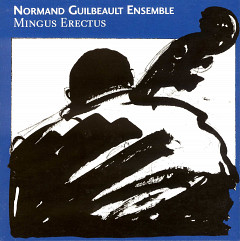
    As Andrew Homy mentions in his liner blurb, it is because the members of this Montréal band make this music their own that they are able to play Mingus’ works convincingly. With a slightly different line-up than a usual Mingus ouffit, the present quintet, under the savvy leadership of one of Montréal’s prime bassists, retains much of the boisterous energy and lyricism that typifies the creations of the Master. Furthermore, this excellently captured live performance bears much of the forcefulness and immediacy, which characterize the Mingus style. Qn the whole, the up-tempo tunes are more successful, wherein the soloists shine over a driving rhythm section. Ivanhoe Jolicoeur, whose appropriately hard bop trumpet playing is full of spark and ideas, turns in some sizzling work; Jean Derome (saxes and flute) and Mathieu Bélanger (clarinets) are no slouches either, each of them deftly navigating through all seven idiosyncratic vehicles heard here. That said, they come up short on Peggy’s Blue Skylight, where their reading of the tune seems a little too pedantic and the energy level flags along the way. In contrast, they attack Pithecanthropos Erectus with soulful abandon, and likewise for that mouthful of a tune entitled All the Things You Could be by Now if Sigmund Freud’s Wife Was Your Mother. Elsewhere, the mid-tempo Fables of Faubus, partly an update on politico-idiocy which zeroes in on George Dubya and his war on Iraq, is only slightly better, but MDMD, a tune penned by Derome in the style of a Mingus dirge and showcasing Guilbeault’s playing to great effect, is both convincing and relevant. Once again, this band is really more engaging in the faster tunes, like the closer Moanin’, best known for its funky signature baritone sax riff.

    … it is because the members of this Montréal band make this music their own that they are able to play Mingus’ works convincingly.

    Sur une balançoire in The WholeNote

    “Review”, Phil Ehrensaft, The WholeNote, no. 10:5, February 1, 2005
    Tuesday, February 1, 2005 Press

    French bassist Joëlle Léandre is a very important performer of contemporary music, both composed and improvised, on both sides of the Atlantic. She has performed with the likes of Anthony Braxton, Marilyn Crispell, Georges Lewis, Evan Parker, Steve Lacy, and John Zorn, is a member of Pierre Boulez’s Ensemble intercontemporain, and an accomplished composer in her own right. Like Léandre, the Italian pianist Gianni Lenoci is at home both in jazz and composed music. His mentors in jazz were Mal Waldron and Paul Bley, and he shares Léandre’s passion for the music of John Cage and Morton Feldman.

    Lenoci teaches at Italy’s Nino Rota Conservatory. He invited Léandre to give a clinic there, and also proposed a free improvisation recording session, and approached the Belgian radio presenter John Rottiers to handle the production end.

    Sur une balançoire translates as “on a teeter-totter,” and it’s an apt term for the interaction between these two master musicians. There are fourteen beautifully crafted improvisations ranging from one-and-a-half to just under five minutes in length. The pace varies from intense to stately. Each performer employs the entire stretched range of contemporary techniques that are available for their instruments. They are so well attuned to each other that it’s hard to believe that they are not long-term collaborators.

    As of late, Montréal’s Ambiances Magnétiques label has been quite successful in the export market. Albums like Balançoire are the reason.
    As of late, Montréal’s Ambiances Magnétiques label has been quite successful in the export market. Albums like Balançoire are the reason.
  • 23
  • 24
  • 25
  • 26
  • 27
  • 28
  • 29
  • 30
  • 31