actuellecd

Blog

192 results
  • 14
  • 15
  • 16
  • 17
  • 18
  • 19
  • 20
  • 21
  • 22
  • Estrapade, morceaux_de_machines in Splendid E-Zine

    “Review”, Dave Madden, Splendid E-Zine, May 30, 2005
    Monday, May 30, 2005 Press

    Other than the self-imposed isolation of a studio, the lack of artistic compromise and proverbial spitting in the face of mainstream success, there’s something that many experimental musicians lack that discourages even the most stalwart fans: a personality. Said individuals often seem academic, overly serious and just plain bland — something that, for better or worse, seeps into their music.

    Fortunately, people like Érick d’Orion (aka Érick d’Orion) and Aimé Dontigny (aka A_dontigny), the duo behind morceaux_de_machines, exist in this world to counter stereotypes of what the so-called avant-garde should do. Their stint under the name Napalm Jazz, both as a radio program on Québec’s CKIA FM and a band of the same name, gives them a different approach to the improvisation/composition realm, one somewhere between Anthony Braxton, Penderecki and Public Enemy. Some listeners dub them the “B-Boys of musique concrète”. Very cool.

    Their set incorporates a fused conglomeration of elements, something that never backs down from a challenge, even if it means bending two poles to meet — a mix that sits comfortably atop a history book while swilling cheap merlot from a paper cup. m_d_m propel Fonçage de pieux with hyperactive scratching, serious cutting that will leave a mark, while Tinkerbell melodies drift in and out over a pulsing, clicking rhythm and processed Rite of Spring-style symphonic punctuation. Everything works itself into a calculated frenzy; d’Orion and Dontigny are careful to keep their mix tight and pristine until they bust into an atmospheric film of sine waves, fragmented and carefully placed breakbeats, nearly exploding again but happy to perch under a cloud of low-frequency feedback. Next up, Onanisme is sure to raise eyebrows in the concert hall and while waking up the professor’s bored children, who’ll exclaim, “This is fun!” It employs an irresistible Neu/Crass quasi-disco beat, founded on a distorted handclap/bass drum pattern and manic, twirling basslines, that weaves and grows, keeping time but having its way with the meter. Guests Diane Labrosse (of Justine and a flock of other acts) and Martin Tétreault (visual artist/turntablist, currently concerned with the sound of the (turntable) motor) add their contributions throughout the disc, notably on Sélavy, where needles meet concrete, machine hum faces envelope filters and Loverboy’s Hot Blooded joins a nuclear aftermath for a picnic in a fallout shelter. Otomo Yoshihide joins m_d_m for Omlegging, bringing his signature “no-record turntable” fidgets, scrapes to trade off with Tétreault and the boys.

    Of course, this genre owes a great deal to the pioneers of the Twentieth Century, from Dadaists to Constructivists to even Classicists. d’Orion and Dontigny are well aware of this foundation, but after they tutor you for your final in Semiotics 502, they’ll drag you along for a night of beers and mischief.

    … somewhere between Anthony Braxton, Penderecki and Public Enemy.

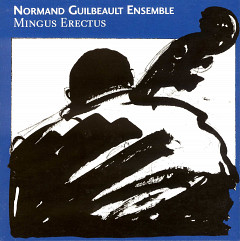
    Mingus Erectus in Vital

    “Review”, Dolf Mulder, Vital, no. 475, May 18, 2005
    Wednesday, May 18, 2005 Press

    Canadian bassplayer and composer Norman Guilbeault offers an album of seven compositions by Charles Mingus. With his ensemble he already works some 15 years on the repertoire of this jazzlegend. His ensemble is a quintet consisting of the following musicians: Jean Derome (saxophones, flute), Ivanhoe Jolicoeur (trumpet, flugelhorn ), Mathieu Bélanger (clarinet), Claude Lavergne (drums, voice) and Guilbeault himself on doublebass and voice. All of them are top-players and feel very happy in the universe of Mingus as this CD shows.

    Earlier albums of this ensemble often contain one or two Mingus-compositions. In 1995 Guilbeault released his first album completely devoted to Charles Mingus and now he compiled another album of works by this famous bassplayer and play a few standards like Pithecanthropus Erectus and Moanin, but also some lesser known works, such as All the things you could be by now if Sigmund Freud’s wife was your mother and Conversation. Jean Derome contributes also with a composition on this album called MDMD.

    I’m not a dedicated listener of the jazz classics of Ellington, Parker, Mingus or any other. I do feel some affinity with the work of Sun Ra and Ornette Coleman, but in the end I must say jazz its not my thing. On the other hand I enjoy listening to — often European — free improvised music. So it’s from this perspective that I’m listening now to Mingus Erectus. I can’t judge whether this quintet stays close to the original and merely copies them, or whether they reinvent the compositions. I’m always a little suspicious when musicians play old jazz standards, as jazz is the art of improvising, which implies not merely repeating music from the past. But the marvelous playing of this quintet is tempting. Its done with soul and great energy. And this makes me forget the discussion I was just pointing at. For the piece Fable of (George Dubya) Faubus the lyrics have been changed and seem to concern president Bush, another sign of their up to date approach. All in all this is a very inspired live recording from 2004.

    Its done with soul and great energy.

    Orbiting With Screwdrivers in Vital

    “Review”, Frans de Waard, Vital, no. 475, May 18, 2005
    Wednesday, May 18, 2005 Press

    Although Michel F Côté is announced as a ‘veteran of Montréal’s thriving experimental’, I never heard from him. He is active in the musique actuelle community (and perhaps better known by Vital Weekly’s Dolf Mulder). As Mecha Fixes Clocks he recorded an album with himself playing electronics, percussion, keyboards, accordion, machines, computer and home-made instruments, but inviting a whole bunch of people from Montréal to play a whole bunch of other instruments, such as clarinet, bass flute, trumpet, viola, piano but also sampled CD, needles (by Martin Tétreault) and home spun electronics (by Christof Migone). Despite the long list of people playing on this record and the vast amount of instruments, this is rather a ‘quiet’ record, almost pastoral in atmosphere. Sustained notes played on wind instruments, usually only a few at a time, a guitar being strummed in sheer isolation, the field recording of an otherwise empty desert: it is perhaps easy yet not be avoided, but one can say that this is music for films — I’m not sure what kind of film it would be, but the sparsely orchestrated richness offers potential to anyone with a camera. Great music, where less is more, indeed.

    the sparsely orchestrated richness offers potential… Great music…

    Leaves and Snows in The Gazette

    “Review”, Irwin Block, The Gazette, May 12, 2005
    Thursday, May 12, 2005 Press

    Guitarist composer Antoine Berthiaume ventured to Mills College in San Francisco to record this remarkably fluid musique actuelle session with the contemporary palette of acoustic pianist Quentin SirJacq and the electronics of Norman Teale-a tasty and intriguing mix.

    … a tasty and intriguing mix.

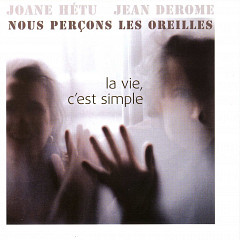
    La vie, c’est simple, Jean Derome, Joane Hétu, Nous perçons les oreilles in Jazz Convention

    “Bari Taverna del Maltese — Nous perçons les oreilles”, Alberto Francavilla, Jazz Convention, May 12, 2005
    Thursday, May 12, 2005 Press

    Per la rassegna Idillio màgico, organizzata dai musicisti pugliesi Gianni Lenoci e Mario “Jillo” Volpe, in collaborazione con Dream Lab, in scena, alla Taverna del Maltese di Bari, il duo canadese Nous perçons les oreilles (NPLO).

    Gli NPLO, fondatori dell’etichetta Ambiances Magnétiques, sono senza dubbio due tra gli artisti più interessati alla sperimentazione e alla contaminazione di linguaggi nel panorama mondiale. Come ben esplica la breve presentazione che precede il concerto, amano definirsi «due sax, due voci, due gorgogliatori, due satiri, due forze della natura che si dimenano, cinguettano, soffiano, mordono e trasformano la musica in incantazione profana e festa di suoni.»

    Non è una caso che Jean Derome (sax, flauto, voce e “small instruments”) e Joane Hétu (sax e voce) abbiano deciso di essere accompagnati da Gianni Lenoci (tastiere) e Mario “Jillo” Volpe (elettronica, oggetti sonori), che da sempre hanno cercato di smuovere il panorama musicale pugliese con progetti originali e d’avanguardia. Ed infatti il concerto, completamente improvvisato, si articola in pratica in una sola traccia, all’interno della quale, però, è costante il mutamento di suoni e, conseguentemente, la creazione atmosfere diverse.

    Derome e Hétu si confermano nella veste di agitatori, sovvertendo i tradizionali canoni della melodia sonora, grazie all’utilizzo insistito di vocalizzi, ma anche di particolari sonorità ottenute con le labbra e persino con i denti!

    Dal canto loro, Lenoci conferma la sua consolidata fama di pianista versatile e foriero di soluzioni armoniche alternative. Si integra perfettamente con le stravaganze del duo canadese, partecipandovi anzi attivamente con particolari vocalizzi; Jillo assume una funzione quasi di «regista», essendo incaricato alla distorsione di suoni e voci, e partecipando alla costruzione di questo particolare clima con il ricorso a strumenti improvvisati (per es. legnetti, una scodella e persino un tubo!):ancora una volta, quindi, ribadisce il suo caratteristico ruolo di «manipolatore di suoni».

    Risulta chiaro l’intento, peculiare dell’attività di ciascuno dei quattro artisti sul palco, di ricercare nuovi linguaggi sonori, dimostrando che la musica è un elemento intrinseco alla natura, e dunque che si possono creare melodie utilizzando oggetti tipici della nostra vita quotidiana. Inoltre è propria l’intenzione dei NPLO di «suonare il corpo», in modo da esprimere una nuova dimensione della fisicità, che diventa «naturalmente» melodica, anche se in alcuni momenti sfiora l’abrasione uditiva. Non si può comunque negare che la performance risulti molto originale, ed ottiene indubbiamente l’effetto di provocare in taluni punti una sensazione di inquietudine, se non proprio di angoscia. Questa percezione sarebbe forse stata ancora più efficace, se fosse stata accompagnata dalla proiezione di immagini (diapositive o video), che ne avrebbero aumentato il potenziale suggestivo; purtroppo la fusione tra arte sonora e arte visiva (che è una particolarità del duo Lenoci-Volpe, nda) non è stata in questo caso possibile, dato che era la prima volta in assoluto che essi si trovavano ad esibirsi col duo Derome-Hétu, e perlopiù si trattava di un’improvvisazione.

    Per concludere, il concerto è risultato di difficile comprensione per un pubblico che è apparso «improvvisato» e impreparato; d’altronde è questo il rischio di esibirsi in un pub, solitamente ricco di avventori e gente «di passaggio». Ciò ha causato in più momenti un fastidioso brusio che impediva una ascolto accurato, per un’esibizione che aveva bisogno di più attenzione e, quindi, di maggiore silenzio. Rimane innegabile, però, che la Taverna del Maltese risulti ancora una volta tra i locali più attenti, nel panorama barese, nel dare voce a nuove forme artistiche e musicali, promuovendo prodotti ed iniziative che si muovono su terreni nuovi, un fenomeno che è difficile riscontrare da queste parti.

    Labo MTL in Vital

    “Review”, Frans de Waard, Vital, no. 474, May 11, 2005
    Wednesday, May 11, 2005 Press

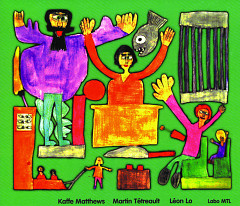
    The recordings on this CD were made at Radio Canada, under the guidance of Hélène Prevost who curates the Labo MTL program. Two of the three musicians may be well-known: turntablist Martin Tétreault and Kaffe Matthews (electronics) are both renowned players in the world of improvisation. Léon Lo is the unknown one. He plays violin and effects here. As you can imagine this is music from the department of ‘careful crackling’: the stylus of Tétreault hitting the surface, Matthews static sounds and gliding tones and the electronical treatments of Lo’s violin, it fits perfectly the traditions of new improvisation, where electronica and acoustica meet up. In that respect this is nothing new under the sun, but this trio of excellent, skilled improvisers perform their work with great care. The only objection I have, is that it’s all a bit too long for my taste. It requires some intense listening here and sometimes my concentration failed. A little bit shorter and a little more precise editing would have enhanced the CD even further.

    … fits perfectly the traditions of new improvisation, where electronica and acoustica meet up.
  • 14
  • 15
  • 16
  • 17
  • 18
  • 19
  • 20
  • 21
  • 22