actuellecd
  • This website is also available in English.

Blog

239 results
  • 12
  • 13
  • 14
  • 15
  • 16
  • 17
  • 18
  • 19
  • 20
  • Diversion in Coda Magazine

    “Review”, Marc Chénard, Coda Magazine, no. 296, September 1, 2004
    Wednesday, September 1, 2004 Press

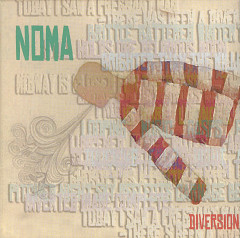
    A musical eclectic, trombonist Tom Walsh has become a fixture of Montréal’s actuelle scene since his move from Toronto in 1990. Around that same time, he put together a middle-size group, NOMA, with musicians from both cities. As a kind of free-form funk band that had definite Prime Time connections, it could groove with the best of them, but the difficulties of holding such a group together led to its eventual disbanding. A decade later, a slimmed down version was re-introduced, this time with an all-Montréal lineup of seven, divided into a funk rhythm section (with electric bass, guitar and drums) and a jazz one (with acoustic bass, guitar and drums), with the leader directing traffic, knob-turning his sampler and turning in a few trombone spots (in that order). Thirteen years after its debut release, Climbing the Waltz, this long delayed follow-up appears, but time seems not to have altered much of its basic portent. Indeed, the groove element is very much at the heart of the music, but the pieces (11 in total) are much more fragmented, or modular, implying they’re never assembled the same way from one performance to the next. Like the first disc reviewed above, this one is also a composerdriven project, albeit looser, with spot solos, mainly by electric bassist Al Baculis, but not that many from the leader himself. The jazz connection is more covert than overt, apart from Bud’s Dub, the rollicking theme of which is actually Monk’s “ln Walked Bud” (uncredited). An unusual feature is that all but two pieces have been further subdivided, resulting in 32 tracks (a deliberate choice of the leader to allow listeners to surf through the music according to their own whims).

    Puce à l’oreille in Splendid E-Zine

    “Review”, Justin Kownacki, Splendid E-Zine, August 23, 2004
    Monday, August 23, 2004 Press

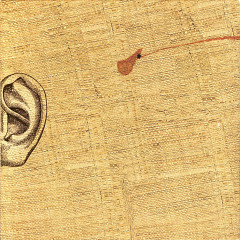
    Albums like Puce à l’oreille divide the audience into three groups: those who get it, those who don’t get it and think it’s ludicrous, and those who don’t get it but are willing to believe that someone out there probably does. I like to think I’m in camp three, though there are times when I start to look toward the second camp and suspect that they may have a point. Then I realize that I’ve learned more about myself and my own tastes while listening to Puce à l’oreille than I did about the album itself.

    The disc is the product of an afterthought: Mélanie Auclair, a singer and cellist, wanted to explore music with several artists who had influenced her over the years. What began as an informal jam session evolved into the tracks we hear on the album. However, this is no Phish concert; this is minimalist, modal jazz, world music, ambient acoustics and verbal noises that don’t pass for lyrics in the Western world. As such, I’m reluctant to dismiss the album out of hand because it’s clearly not targeted at my own personal demographic — and especially as I enjoyed a good deal of it. Auclair is a wonderful cellist with an incredible experimental streak and the musicians she has surrounded herself with are all highly skilled, if unconventional. The raw string duets between Mélanie and Eric Auclair on Puce à l’oreille 4, and her pairing with saxophonist Charles Papasoff on Puce à l’oreille 5, engage me because these are instruments I can relate to, albeit played in nouvelle (to me) ways. But as the album veers into the occasional vocals, which are really a barrage of guttural noises somewhere between sex and death, and which at one point resemble vomiting parakeets, I’ll admit that I can’t help but glance back at camp two and wonder if they’re the ones who are missing something, or if I am.

    Auclair is a wonderful cellist with an incredible experimental streak…

    Sur une balançoire in Vital

    “Review”, Dolf Mulder, Vital, no. 435, August 18, 2004
    Wednesday, August 18, 2004 Press

    Joëlle Léandre is a very well known improvisor from France, a momument of european improvised music. Her discography is enormous, her collaborations are numerous. She needs no further introduction. Gianni Lenoci on the other hand is a rising star from Italy. He teaches Jazz and Contemporary Music at the Nino Rota Conservatory in Monopoli. He is known for his work as a member the Eugenio Colombo Quartet, a famous quartet in Italy. With computer music composer Franco Degrassi he made an album for the british ASC Records. As a performer of contemporary music he feels affinity with the music of Morton Feldman, John Cage, a.o. This he has in common with Joëlle Léandre who considers John Cage to be one of her most important teachers. How did the meeting between the two come by? Lenoci invited Léandre for a clinic at his conservatory, but also for a recording session because Lenoci had the feeling that “this was the right moment to organize a recording session with Joëlle Léandre.” Alas liner notes do not explain what established this “right moment”. Anyway, to be more exact, on may 31, 2003 they spend a day in a studio in Bari, and recorded 14 improvisations that are all named Balançoire (1 up to 14). Listening to the music the expression ‘civilised improvisation’ came to my mind. The playing is a little clean and controlled, no wild outbrakes or cry from the heart. Léandre and Lenoci stay very kind to each other. But the music is intense and spontaneous on the other hand. Without question we hear two very capable improvisors with great vocabulary and a successfull first meeting. The last track, Balançoire 14, is the most funny track, were Lenoci touches on all kinds of idioms, and you can feel the joy they must have had. Maybe a good starting point for a next meeting.

    … you can feel the joy they must have had.

    Le bal, Sautons ce repas de midi in Vital

    “Review”, Dolf Mulder, Vital, no. 435, August 18, 2004
    Wednesday, August 18, 2004 Press

    Monsieur Fauteux is a sublabel of Ambiances Magnétiques. It is specialised in more accessible music then normally released on Ambiances Magnétiques. Martel began as a poet and published two collections of his poetry. Later he learned playing the guitar and developped himself into a singer/songwriter. He wrote all the songs and lyrics for his third solo-album Sautons ce repas de midi. Also he plays little guitar, ukelélé, theremin and harmonica.. He is accompanied by Bernard Falaise (guitar, mandolin, keyboards, voice), Éloi Deit (basses) and Michel F Coté (drums and percussion). Martel is not a great singer. I suppose the lyrics are very important — Martel is a poet. But alas I do not speak french, so I can’t say anything about it. Happily the arrangments and playing are very funny and full of ideas. Each song has it’s own atmosphere. This make this album enjoyable and worthwhile also for those who don’t understand french. It’s especially the guitar playing of Bernard Falaise that catches the attention.

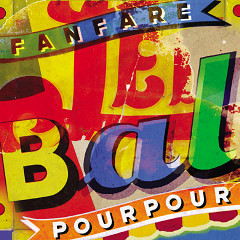
    Fanfare Pourpour reminded me of the Willem Breuker Kollektief or the belgian “ballroom” ensemble Julverne. This Fanfare has 15 members and is assisted by 5 other musicians in some of the tracks. We hear saxes, trumpette, clarinette, flutes, but also accordeon, guitar, violin, banjo, etc. On a reunion in 1995 several veteran musicians decided to play again together and Fanfare Pourpour was born. Nowadays veterans and young talents are united in this great ensemble.As the title indicates the ensemble plays a very danceable music, albeit often plunged in a melancholic atmosphere. Music from and for people. No self-indulgent art, or music for the sake of experiment, but music that wants to serve an audience, to make a party. The 16 compostions come from members Suzanne Babin, Luc Proulx, Jean Derome and others. The opening track opens very promising in a gypsy style, but halfway the piece takes another direction. We hear many waltzes, swing and more uptempo pieces, like the excellent La noce du brigand by member Guido del Fabbro. Although I’m open for this kind of music, my attention faded away from time to time. Some of the compositions are a little unsignificant, plus arrangements and playing do not sparkle throughout the ride. But surely an album of honest and pleasant music that will please many.

    … honest and pleasant music that will please many.

    Le bal in AllMusic

    “Review”, François Couture, AllMusic, August 1, 2004
    Sunday, August 1, 2004 Press

    The Fanfare Pourpour’s second album is not as much a leap forward from the first, but an overall solidification of the group’s assets. While remaining true to the debut CD Tout le Monde, Le Bal is more cohesive, entertaining, daring, and better recorded. Sax player Jean Derome, one of the most important artists on the Montréal avant-garde scene, produced the album and contributed five new pieces, including the brilliant title track, a painstakingly slow waltz with a Nino Rota-like melody. The line-up of the ever-changing group still features a healthy blend of amateur, semi-professional and established musicians. The core of the group is back: accordionist Lou Babin, guitarist Luc Proulx, violinist Guido del Fabbro, trumpeter Nemo Venba, valve bass player per Christine Lajeunesse, and the one-of-a-kind rhythm section of Jaco Duguay (marching bass drum and cymbal) and Jonas Slowanski (snare drum), a.o. In addition to Derome, Normand Guilbeault (the hardest-working jazz bassist in Montréal) and Claude Vendette (ex-4 Guitaristes de l’Apocalypso-Bar and other André Duchesne projects) round up the ranks. Special guests include violinist Mara Tremblay and drummer Pierre Tanguay, along with singer Tomás Jensen (of the group Les Faux-Monnayeurs) who delivers the dark “Monsieur.” Whether it is a fast-paced street fanfare number or a nostalgia-tinged waltz, every song is heartwarming, entertaining, and highly creative. The group draws inspiration from musette, avant-garde jazz, Quebec and Cajun folk, and dixie, adding its own brand of street-bound big band music with a communal spirit. Certain pieces are simple to the bone, fueled only by the joy of playing together and the craft of its arrangements, while other tunes (namely Derome’s and Del Fabbro’s) push back the bounderies, toying with unusual chord changes and melodies that hide their originality in a second or third listen. Favorable comparisons to Pascal Comelade and the Japanese group Pascals are absolutely in order, as the music finds a striking balance between naive and soulful. Le Bal is highly refreshing, imaginative and creative — and despite the above mentions, one of a kind. Highly recommended.

    Le Bal is highly refreshing, imaginative and creative…

    Puce à l’oreille in Voir

    “Critique”, Réjean Beaucage, Voir, no. 740, July 29, 2004
    Thursday, July 29, 2004 Press

    Le seul fait qu’elle ait frotté les cordes de son violoncelle dans des projets avec Lhasa de Sela, Martin Léon ou Mario Pelchat et que ses cordes vocales aient secondé la voix de Steve Hill prouve déjà que Mélanie Auclair a une palette stylistique assez éclectique. Son prernier effort solo creuse cette veine en proposant six improvisations en duo (et un trio) qui sont autant de «rencontres» avec différents musiciens: claviériste, percussionniste chanteur, etc. Les rencontres semblent souvent rester au niveau du premier contact, chacun demeurant assez réservé, mais certains moments valent le détour: entre autres, le duo avec le guitariste Bernard Falaise ressort vraiment du lot. Le sax baryton Charles Papasoff et le contrebassiste Éric Auclair offrent également de grandes collaborations.
    Mélanie Auclair a une palette stylistique assez éclectique.
  • 12
  • 13
  • 14
  • 15
  • 16
  • 17
  • 18
  • 19
  • 20