actuellecd

Blog

179 results
  • 1
  • 2
  • 3
  • 4
  • 5
  • 6
  • 7
  • 8
  • 9
  • La spirale de l’escargot in Voir

    “Critique”, Réjean Beaucage, Voir, November 21, 2002
    Thursday, November 21, 2002 Press

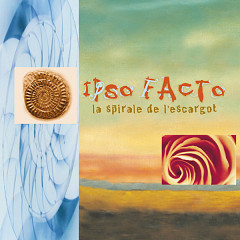
    Le quatuor Ipso Facto est formé de musiciens qui ont de solides formations et une ouverture aux musiques du monde qui leur inspire un son unique et universel. Résolument acoustique, la musique du groupe se métisse d’influences gitanes et latines, le violon de Chantal Bergeron et la guitare de David Bussières semblant danser joyeusement sur les rythmes chauds tenus par le percussionniste Francis Bergeron et le contrebassiste Simon Dolan, avec de temps à autre juste ce qu’il faut de swing pour évoquer le fameux duo Grappelli/ Reinhardt. La prise de son de Bernard Grenon est magnifique. Ipso Facto sera en concert le 26 novembre à 21 h 30 à la Sala Rossa, et on nous promet même pour cette occasion, entre autres interprétations, des musiques de John Zorn.4/5
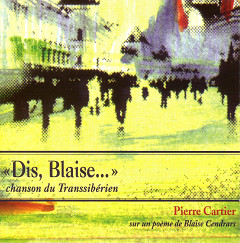
    «Dis, Blaise…» chanson du Transsibérien in Vital

    “Review”, Dolf Mulder, Vital, no. 346, November 21, 2002
    Thursday, November 21, 2002 Press

    The poem Prose du Transsibérien et la Petite Jehanne de France written in 1913 by Blaise Cendrars inspired Cartier for this double cd. The poem evocates a journey by a teenager across Russia and Siberia during the 1905 war between Russia and Japan. Cartier sings the poem entirely. “Sings” is not the right word. What Cartier does is somewhere between singing and recitiating. It is obvious that Cartier is impressed by this poem from the swiss writer Cendrars. So in order to enjoy this cd fully it is needed that you have no difficulties with the french language. Because I don’t, I’m not wild about this one. As the music is in function of the text. The composition to this poem is played by Jean Derome (sax, flute), Jean René (viola), Tom wlash (trombone), Bernard Falaise (guitar) and Pierre Tanguay (drums). Plus Cartier himself on doublebass. He also composed the music. Cartier studied doublebass on the conservatory in Montréal and chose a career as a classical musician. He specialized himself in medieval music and gregorian chant. But that’s not all. Cartier met Pierre St-Jak and Jean Derome in 1973 and plays jazz, improvised music and forms of new music that are typical for the Ambiances Magnétiques scene. He guests on many cds by his mate Jean Derome. His own releases reflect a post-bop kind of jazz. With Chansons de Douve (1996) Cartier presents something new, a song cycle for two opera singers and eight musicians. Many influences are melted together in an impressive whole. Dis Blaise… continues more or less in the same vein. It is also a cycle of songs. Not a kind of jazz that is to identify as bop or whatever. Compostions are much more personal here, moving towards modern chamber music.

    Compostions are much more personal here, moving towards modern chamber music.

    liberum arbitrium, morceaux_de_machines in Jade

    “Critique”, Julien Jaffré, Jade, no. 8, November 6, 2002
    Wednesday, November 6, 2002 Press

    Comment ne pas s’intéresser à deux jeunes artistes dont le premier groupe avait eu la pertinence de se baptiser Napalm Jazz, (également émission de radio), échos lointains des Naked City côtoyant les assauts digitaux de Merzbow. morceaux_de_machines se fait un malin plaisir à brouiller les pistes, à tel point qu’on ne sait vraiment plus si ils ajoutent du bruit à la mélodie ou si ils restreignent le bruit à la mélodie. Acharné de l’improvisation, le duo canadien se lâche volontiers, citant au passage l’Art du bruit de Luigi Russolo ou Anthony Burgess (Orange mécanique) pour soutenir leur discours, leur évocation libre de la création artistique. À cheval entre l’ambient, le jazz, le hip-hop baclé et le bruit blanc, morceaux_de_machines tisse des atmosphères tendues, catharsis numérique de processeurs furibonds et de lignes de programmation effrénées. Paradoxalement, leur musique n’est pas sans évoquer les productions de Deathprod sur Biosphère ou d’un Stock, hausen & walkman remixé par Kevin DrummDontigny et d’Orion se détachent de ces références en gardant une spontanéité et un abandon de soi à leur art. Ou une manière habile de garder le sourire en se bouchant les oreilles.

    … morceaux_de_machines tisse des atmosphères tendues, catharsis numérique de processeurs furibonds et de lignes de programmation effrénées.

    Chemin de fer in %Array

    “Review”, Christopher Murphy, %Array, November 3, 2002
    Sunday, November 3, 2002 Press

    No Type are probably best known for their quality back catalog of (free) mp3 / gif offerings at www.notype.com which are, without exception, worth downloading in their entirety. Their welcome move into hardware territory has resulted in a number of releases since 2001’s excellent 2CD The Freest of Radicals. Magali Babin’s Chemin de fer features a collection of digitally massaged textures — simple, yet seductive, the crisp recordings feature the magnified sounds of everyday objects placed within spacious soundfields. Opening with the breathy textures of Triturations, Babin sets the scene perfectly for a series of pristine studies, each one mesmerising. Petit jardin features five magnified minutes of razor sharp textures which throb and sparkle, pulsing through repeated patterns. La corde — the sound of a cord pulled taut before sounds are wrenched from it — is childlike in its simplicity, but anything but simplistic. The very ordinariness of the sounds Babin favours mask a delicate ear and deft touch: Monsieur et madame Watt glistens with high frequency electricity underpinned by low frequency murmur; while E resonates like a digital gamelan. It’s perhaps best to close with No Type’s own, apt, ‘file under’ categorisation of Babin’s work:

    File under: microsonic poetry.

    … simple, yet seductive, the crisp recordings feature the magnified sounds of everyday objects placed within spacious soundfields.

    Polaroïde in Splendid E-Zine

    “Review”, Daniel Arizon, Splendid E-Zine, November 2, 2002
    Saturday, November 2, 2002 Press

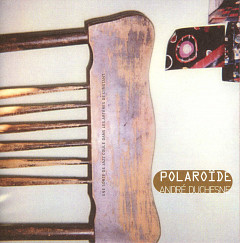
    For thirty years, classical guitarist André Duchesne has been playing Left Bank (Left Bank? How gauche!) cabaret jazz. Smoke-filled improvisation rules most of this album, with song structure either out of the picture, or too complex to be appreciated fully. There is no doubt as to Duchesne’s ability: he paints himself into a corner many times, only to gracefully slip away. This is not to say that all lovers of the nylon strings will enjoy Poloroide; it is quite demanding, and does not lend itself to casual ears. Duchesne asks his listeners to tolerate all of the aimless, uninspired parts in order to hear the more sublimely melodic in a new light.

    Typical of Duchesne’s sound is Polaroide II, which opens with an amiable guitar solo reminiscent of Debussy’s The Girl with the Flaxen Hair. Suddenly, the melody gives way to an atonal mode. As Duchesne’s guitar tone darkens, it is also marked by a wash of cymbals and a mournful violin, completing the threnody. Not exactly Django Reinhardt, but I’m sure that Duchesne would welcome the contrast. His music is purposefully difficult and hard to follow (imagine start-stop experimental jazz improvised by a guitar novice), but his readings retain a healthy measure of poetry. Luckily, the musicianship saves this album from its most awkward moments, creating a fine snapshot indeed.

    Luckily, the musicianship saves this album from its most awkward moments, creating a fine snapshot indeed.

    liberum arbitrium in Desiderata

    “Review”, B Wildered, Desiderata, no. 12, November 1, 2002
    Friday, November 1, 2002 Press

    At first, comes off as a busy sounding cd combining lots of noisy electronics and various samplings of voices and what sounds like acoustic instruments. Everything sounds broken up and jammed in together, without much mixing or blending on the first 4 tracks. Suddenly, with track 5 (prime shake), the sounds seem to resolve & form a more coherent depiction of a moving landscape in sound. Quite a difference, with direction and less broken up elements cluttering jumbled edges of the parts. Instead, a streaming rush of bits of semi-obscured events passing thru, similar to audio sources fading in and out of range of a moving persons hearing. A tendency towards a slightly more sparse mix allows the sounds to reveal themselves better. A diverse cd which is impressive on the more developed pieces, and seemingly lost in the scatter on others.

  • 1
  • 2
  • 3
  • 4
  • 5
  • 6
  • 7
  • 8
  • 9