actuellecd
  • This website is also available in English.

Blog

179 results
  • 20
  • 21
  • 22
  • 23
  • 24
  • 25
  • 26
  • 27
  • 28
  • Océan à vendre / For Sale, Océan pour la suite in Vital

    “Review”, Dolf Mulder, Vital, March 28, 2002
    Thursday, March 28, 2002 Press

    Sylvie Chenard (Valleyfield, 1957) is a multi-talented artist: composer, performer (electric guitar), writer. She fights many battles. Her work reflects her engagement with feminism, pacifism, and many social and ecological (whale) themes. Les projets de la Baleine for example reflects her interest in the strugge for surviving of the whale. For this cd she collected compositions recorded between 1994 and 1996. With these two new cds all attention goes to the environment of the whale, that is the ocean. The oceans are for sale. Culture is for sale. The cult of consumerism is for sale. There is nothing left to buy. Océan à vendre is a cooperation with composer, performer and multi-instrumentalist Jon Asencio. He is a veteran of the Montréal music scene. He played punk, reggae, pop, jazz, experimental and electronic music. For this cd with Sylvie Chenard we have an example of his electronic and experimental music. Asencio is playing bass, voice and sampler. Chenard plays electric guitar, electronics and voice. As a guitarist she is inspired by Frisell, Ribot, Chadbourne and Frith. No conventional guitarplaying here. She developed a style that is non-agressive, but on the other hand she does not want to comfort lazy ears. No pompous political songs, but radical experimentation. She seems to prefer to work in duo combinations. As the cd Hybride (1999) and Manifeste pour contrer la violence faite aux femmes (2000) have also duos. Océan pour la suite has Chenard duelling with Tetreault (tourne-disques), Poulin (sax) and St-Onge (bouche électronique). The duets with Martin Tétreault I like most. But that’s because I’m a admirer of Tétreault. Other pieces made no strong impression on me. But I can recommend her music to those who are in for radical improvisations.

    No pompous political songs, but radical experimentation.

    Chant des adieux, chant de la solitude, Zucchini, Rouge ciel, Interférence sardines in Vital

    “Review”, Dolf Mulder, Vital, March 28, 2002
    Thursday, March 28, 2002 Press

    Three new cd’s on Ambiances Magnétiques and new sublabel Monsieur Fauteux…. Most of the time releases on this label have the newest output from well known artists like Derome, Lussier, Duchesne and others. Although this are often releases of considerable quality, I’m happy that this time we have three new cds from groups of the ‘next generation’.

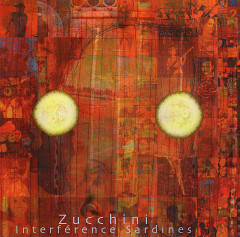
    What new talents do we have here? In general the most striking difference with the first generation is that these bands are more rock-orientated. This is also the the case for Papa Boa (1999). Especially with Interférence Sardines and Rouge Ciel we enter a new chapter in the kind of art-rock that Henry Cow developed in the 70s. This kind of rock music flourished in the first half of the 80s with bands like Univers Zero, Samla, Debile Menthol, and many others. But creativity came to end and boring music like that of Art Zoyd was what was left. Since then I have been waiting for new bands to pick up were many ended in the 80s. But listening to Interférence Sardines it became clear to me that we have a new creative outburst here. Let me present the bands in more detail. Interférence Sardines is a quintet: Andrée Bilodeau (violin, alto, voice), Sébastien Doré (electric bass, clap, voice), Marc Gagnon (violin, electric violin, voice), Fréderic Lebrasseur (drums, percussion, piano, voice) and Philippe Venne (guitar, piano, voice). Assisted by four guests. Most pieces are composed by Philippe Venne. Their second cd Zucchini is a very nice piece of work. Their music can be compared in a way with that of Debile Menthol, a famous swiss group from the 80s. Complex art-rock mixing rock, jazz and contemporary in a nice blend of composition and improvisation. The music is full of surprises. The playing is very tight and convincing.

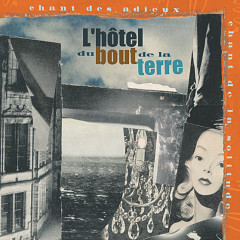
    Rouge Ciel is a quartet: Guido del Fabbro (violin, mandoline, pick ups), Simon Lapointe (piano, claviers, melodica), Antonin Provost (acustic and electric guitar) and Nemo Venda (trumpet, drums, percussion). They debute here with a fresh mix of rock and improvisation. They do not reach the creative level of Interférence Sardines, but it still is very good music. Both bands I can recommend to anyone who like — I don’t know a better name — art-rock bands like Curlew, 5uu’s, etc. L’hotel du Bout de la Terre is the more conventional one of these three bands. No new territories here. This group was started in 1995 by Lou Babin (accordeon, voice ), Marie-Hélène Montpetit (voice), Pierre St-Jak (piano), and Norman Guilbeault. On this cd they are assisted by guests like Claude Fradette (guitar) and Pierre Tanguay (drums, perc. ). They present a collection of 12 songs composed by St. Jak and Montpetit. Melancholic and impressionistic songs. Texts written and sung by Montpetit. Although this may be a relatively new group someone like pianist Pierre St-Jak is a veteran of the Montréal jazz scene. Personally I never liked his piano playing very much which can also be heard on this one.

    … listening to Interférence Sardines it became clear to me that we have a new creative outburst here.

    Qu’ouïs-je? in Rubberneck

    “Review”, Chris Blackford, Rubberneck, March 28, 2002
    Thursday, March 28, 2002 Press

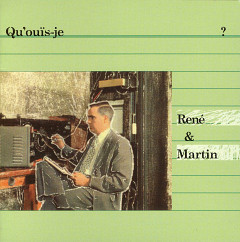
    Qu’ouïs-je? sees Lussier and Tétreault ditching the guitars and turntables of their previous releases and turning instead to daxophone (Lussier) and synthesizer, pick-up and drum machine (Tétreault). Tétreault’s preoccupation with the raw scratching of the cartridge thus gets free rein, unhindered by the exigency of having to actually play records, and Lussier adds screeching bowed textures and bass drones. As you can guess, this isn’t a CD to have playing in the background of your next dinner party, but it is remarkably compelling: the sounds may be unforgivingly harsh, but they’re assembled with an ear for space and dynamics, and the improvisatory wit and concision of the duo’s previous release (Dur noyau dur, on the same label) isn’t lacking here.

    … it is remarkably compelling…

    Solos de guitare électrique in Touching Extremes

    “Review”, Massimo Ricci, Touching Extremes, March 25, 2002
    Monday, March 25, 2002 Press

    Pretty much an unique voice among fellow guitarists, Lussier placed a set of microphones all across the room to capture the whole essence of his guitar sound and give it to us absolutely untreated. This CD can be fully appreciated by lovers of the Bailey/Frith/Kaiser old school; could instead be a little difficult to people not used to this kind of expression. Being a guitarist myself, I loved it but I also must say that I prefer Rene as the wonderful composer that he is (please check Le corps de l’ouvrage!!!)

    Les contes de l’amère loi in Outsight

    “Review”, Tom Schulte, Outsight, March 17, 2002
    Sunday, March 17, 2002 Press

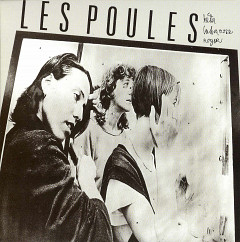
    Les Poules is a 1990 experiment in improvisation and electronic music by figures that later loom large out of the Montréal electroacoustic scene. The female trio is Joane Hétu (alto saxophone, synth and vocals), Diane Labrosse (synthesizers and voice) with Danielle Palardy Roger on percussion and synthesizers. Long out of print from the original LP issue until this CD, the album features abrasive sonic experiments like Les siamoises, Residents-like minimalist electro-pop (Chanson du pain) and synthesizer-fueled electronic free jazz around Hétu’s sax as on En criant su’l’perron. About half the pieces are instrumental and for those that contain lyrics, those words are provided in the French and translated into English.

    … the album features abrasive sonic experiments, Residents-like minimalist electro-pop and synthesizer-fueled electronic free jazz…

    Zucchini in Outsight

    “Review”, Tom Schulte, Outsight, March 17, 2002
    Sunday, March 17, 2002 Press

    This innovative Quebec quintet features two violinists, one sometimes on electric violin. Their sophisticated Rock In Opposition sound boasts the jazz stylings, sound samples, bold strokes and occasional humor of modern art rock. Breathing beyond technique with crazy wisdom, the dozen largely instrumental pieces here mix composition and improvisation. Bright alto and soprano saxophones are often the voice of these witty works. A controlled use of sonic pyrotechnics and a brisk montage of instrumental timbres make Zucchini a smart and memorable disc.

    Breathing beyond technique with crazy wisdom…
  • 20
  • 21
  • 22
  • 23
  • 24
  • 25
  • 26
  • 27
  • 28