actuellecd
  • This website is also available in English.

Blog

163 results
  • 12
  • 13
  • 14
  • 15
  • 16
  • 17
  • 18
  • 19
  • 20
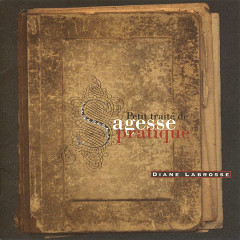
  • Petit traité de sagesse pratique in Kerozen

    “Critique”, BN, Kerozen, no. 23, June 1, 2000
    Thursday, June 1, 2000 Press

    Sur Petite traité de sagesse pratique, Diane Labrosse remodèle et actualise trente-sept proverbes en leur collant chacun une ambiance bien distincte. Ce qui nous donne droit à un «free jazz» pour le proverbe Rien ne sert de mourir quand on a tout son temps, à une pièce de type «crooner» pour Qui aime trop souvent récolte l’Herpès et à un «jingle» sur Bière qui coule fait de la mousse. Et il ne s’agit que de trois exemples sur trente-sept! La cohabitation langage/musique est tellement éminente qu’elle nous force à tenir compte du tout et non à écouter seulement ce qu’il nous plaît. L’humour avec lequel chacune de ces pièces miniatures est traité rend l’écoute de l’album facile et légère sans jamais être insipide. Tiré de son spectacle Petit à petit l’oiseau fait son cri, Labrosse (accompagnée d’une dizaine de musiciens) a bien recréé les ambiances moqueuses et fantaisistes qui se dégageaient du Théâtre de la petite chapelle à Montréal (quelques pièces du disque proviennent de ce concert). Une fois de plus la gang d’Ambiances magnétiques prouve que les concepts se suivent mais ne se ressemblent pas.

    L’humour avec lequel chacune de ces pièces miniatures est traité rend l’écoute de l’album facile et légère sans jamais être insipide.

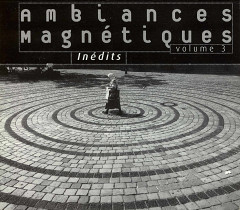
    volume 3: Inédits, Ambiances Magnétiques in White Noise

    “Review”, Scott Russell, White Noise, June 1, 2000
    Thursday, June 1, 2000 Press

    Samplers tend to be the orphans of most labels’ output, often incoherently compiled hand me downs from previously released discs they are frequently overpriced and tend to be acquired by accident or misfortune. Few people would openly admit to considering them worthy purchases. Inedits (from Canadian electro-acoustic label Ambiances Magnétiques) is such a rattlingly entertaining set which is so well conceived and organised, it comes over like a single piece of work rather than a sampler. The performers work predominantly in small groups; duos trios and soloists, but their use of cut’n’paste montage techniques combined with turntables, tapes and live electronics adds a whole world of dimensions to the proceedings. Amongst the stand out tracks is Martin Tétrault and Marc Tremblay’s fabulous Chronique du disque which opens with a blast of vinyl scratches that sounds like a thunderstorm then segues into a cheesy jazz vibes ensemble which is overtaken by a plunderphonics sequence that resembles the work of cartoon composer Carl Stalling. Elsewhere Jean Derome contributes 8 duo and trio’s (with Tétreault again and Joane Hétu) from a film project entitled Retour au Blanc. It sounds improvised with the players going at it with a variety of weapons including queasily manipulated orchestral music, fidgeting hand held objects. air emptying out of a balloon, groaning sax, manipulated percussion and a bit which sounds like the laser gun fight out of Forbidden Planet. René Lussier contributes impeccable solo guitar piece that (in my mind at least) recalls players like Fred Frith and Gary Lucas in it’s brightness of tone and attention to space and texture. There are so many other terrific moments (André Duchesne & Diesel playing fiddly, Henry Cow like fusion; Robert Lepage pitting his Clarinet against the electric scrapes and flutterings of The Impromptistes) that warrant attention that I’m ay a loss which to describe next. That alone is a singular achievement and one that makes this complation well worth your attention.

    … well worth your attention.

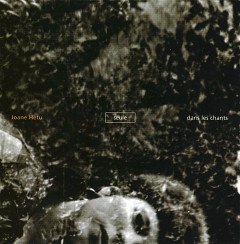
    Seule dans les chants in Cadence

    “Review”, Frank Rubolino, Cadence, no. 26:6, June 1, 2000
    Thursday, June 1, 2000 Press

    Free spirited alto player and vocalist Joane Hétu digs into her inner self during a solo performance on Seule dans les chants. Using a combination of vocal utterances, verbal expressions, and interruptive or linear saxophone pronouncements, she explores a world of unusual musical and non-musical sounds. Naturally, all words and music were created by Hétu (Chant de plainte / Chants de bouche / Cris dans les champs / Chants portuaires / Chants de bouche / Chants de bêtes / Chants de brume / Chants de la buzzée. The selections incorporate her voice as an avantgarde instrument that competes with the irregular tones emerging from her alto. She makes use of mouth expressions and throat utterances often in repetitive sequences, to establish a pattern of communication that is unpredictable and extreme. Words are typically not part of her vocabulary, but all the other sounds the mouth is capable of making are. As an alto player, Hétu spews out equally unsettling sounds of either elongated or fitful nature. She bends a series of notes in lengthy analysis of their meaning or creates a jagged series of staccato blasts to dislodge any passivity that may have settled in. Often her playing and singing are merged together as one collage of sound. Hétu takes a very serious look at discourse from an instrumental and vocal stance. She pushes the envelope of creativity to achieve a unique recording of introspective sound analysis.
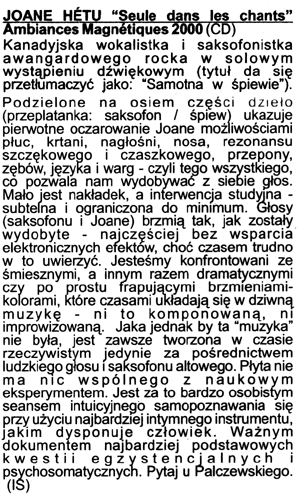
    Free spirited alto player and vocalist Joane Hétu digs into her inner self during a solo performance on Seule dans les chants.

    Une mâchoire et deux trous, Alexandre St-Onge in Angbase

    “Review”, Carlos M Pozo, Angbase, June 1, 2000
    Thursday, June 1, 2000 Press

    The quote on the inside of the elegantly designed digipack informs us: “the source material for this record consists of various field recordings of my mouth, as well as audio documentation of having a microphone in my mouth while sleeping in front of my apartment building.” Anyone who’s turned on a recorder, walked away, and later listened to the results knows that the resulting sounds have more to do with tape hiss, ambient hum, and electrical interference than with any earth-shakingly weird aural phenomena one might have wished to capture on tape. From these building blocks St-Onge crafts some rough and beautiful pieces of mysterious and very visual scrapes and groans. Track 2 is 6 tense minutes of waiting for something to happen, as the listener sinks in a static sound field of low volume mic rumbles and what is possibly the sound of the tape recorder’s motor. This track could be nothing but what it is — a mic in someone’s mouth. The kicker to track 2 is that if you make it to the final minute, the tape is cut off abruptly, and something actually does happen: a voice pops out, speaking (Russian?) clearly and calmly for a few seconds. There is obviously an artist’s hand at work here, as each piece is crafted into textures that transform the basic scratchy whirling hisses into a fairly unique set of sound works. An excellently presented disc on a promising new label.

    An excellently presented disc on a promising new label.
  • 12
  • 13
  • 14
  • 15
  • 16
  • 17
  • 18
  • 19
  • 20