actuellecd

Blog

109 results
  • 11
  • 12
  • 13
  • 14
  • 15
  • 16
  • 17
  • 18
  • 19
  • Nous perçons les oreilles, Jean Derome, Joane Hétu, Nous perçons les oreilles in Revue & Corrigée

    “Critique”, Pierre Durr, Revue & Corrigée, no. 39, March 1, 1999
    Monday, March 1, 1999 Press

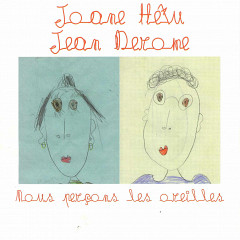
    Justement, c’est le registre qu’a choisi — encore elle — Joane Hétu dans un second opus en compagnie de Jean Derome (par ailleurs compagnon de Castor et compagnie) Nous perçons les oreilles s’inscrit en effet dans la suite logique des récents enregistrements bruitistes de Lussier / Tétreault ou de Labrosse / Mori / Tétreault, avec une approche nettement plus acoustique: ici ni échantillonnages, ni tourne-disques, mais une confrontation ludique et presque innocente de saxophones alto, de divers instruments à vents (appeaux, etc.), de percussions, de voix à l’image d’une iconographie enfantine.

    une confrontation ludique et presque innocente de saxophones alto, de divers instruments à vents, de percussions, de voix à l’image d’une iconographie enfantine.

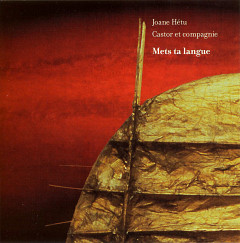
    Castor et compagnie: Mets ta langue, Joane Hétu in Revue & Corrigée

    “Critique”, Pierre Durr, Revue & Corrigée, no. 39, March 1, 1999
    Monday, March 1, 1999 Press

    Ce n’est pas vraiment Sade, mais les textes sont bien osés, délicieusement érotiques et ils auraient bien entendu convenus à Justine. Joane Hétu a préféré se les garder pour elle et son groupe.

    Gémissements et râles mais aussi d’autres délires vocaux sont ainsi au rendez-vous d’une musique fortement structurée et puissante, qui mêle l’humour et la tendresse mélodique à des effets bruitistes issus d’une pratique d’improvisation sonore qui caractérise de plus en plus le collectif québécois.

    … une musique fortement structurée et puissante, qui mêle l’humour et la tendresse…

    Nous perçons les oreilles, Jean Derome, Joane Hétu, Nous perçons les oreilles in Cadence

    “Review”, Frank Rubolino, Cadence, no. 25:3, March 1, 1999
    Monday, March 1, 1999 Press

    Joane Hétu (alto and voice) and Jean Derome (alto, small instruments, percussion, and wice) appear as a duet on Nous perçons les oreilles (Ambiances magnétiques). This time, the music is the more dominant influence, with the vocals adding color and texture to the fierce alto screams rather than acting as a story-telling device. Hétu again uses scatting vocal utterances in conjunction with the music, but she devotes equal concentration on this set to the alto that she blows with reckless abandon on many of the selections (Nous Perçons / Le Poinçon / Jonquille / Les osselets / Lea / Les oreilles / L’enclume et le marteau / L’étrier / La ouate / Les orteils / Ça va pas). The use of voice to complement music has become standard fare with Derome (he scripted all the text), and he and Hétu use it intelligently on this date as an alternate for additional instrumentation. Their voices interact with their instruments in staccato fashion to provide a diverse sound stage of irregular beat and freedom playing. When the two are in tandem on alto, they play either a cat and mouse sound game or blow intensely in freeform style. The cacophony of the horns melts into screechy vocal outbursts or guttural tones to yield strange but musical results. This recording is unusual but certainly excitinq and original.

    The use of voice to complement music has become standard fare with Derome , and he and Hétu use it intelligently…

    Castor et compagnie: Mets ta langue in Cadence

    “Review”, Frank Rubolino, Cadence, no. 25:3, March 1, 1999
    Monday, March 1, 1999 Press

    Joane Hétu plays alto and sings on Mets ta langue (Ambiances magnétiques 62), an ambitious project combining multiple musical cultures. Her companions include Canadians Jean Derome (reeds, piano, small instruments, voice, and cassette manipulation), Diane Labrosse (sampler, accordion and voice), and Pierre Tanguay (drums and voice). The music has many dynamic highs of freely expressed instrumentation intermixed with vocal parts. The four create full-bodied sound at high volume levels that has punch and drive (Mets ta langue / L’eau du puits / Beauté / Le travail des animaux / Dans la joie l’amour / Un bout de papier / Mes odeurs preférées / Ben satisfaite / Ta maniere. 58:38). Multi-instrumentalist Derome is a powerful force on the recording, being reunited with Tanguay who propels furiously as the driver. Derome, a very talented and original artist, is a forceful blower when ignited, but he also shows a delicate and sensitive side here. The vocal segments, done principally in French with many sexual overtones, take on the fomm of operatic theater, being inserted in chant fomm that mixes smoothly into the oftenboisterous music. It is a pint effort, with everyone involved in the story telling while simultaneously generating the spirited instrumentation. Hétu also uses vocal utterances that blend into Labrosse’s accordion tones in unique fashion. The entire presentation from this talented foursome is a diverse approach to collective creativity of Jazz and theater.

    … a diverse approach to collective creativity of Jazz and theater.

    Upbeat in Studium

    “Review”, Ireneusz Socha, Studium, no. 17-18, March 1, 1999
    Monday, March 1, 1999 Press

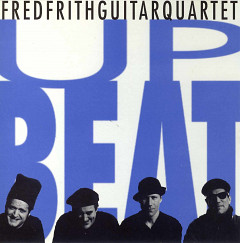
    The live recordings from the 1997 European tour include compositions by all FFGQ members. Nearly thirty-year musical career of Fred Frith has always distinctly confirmed his consequent attitude of breaking the fossilized conventions of rock music. One cannot help noticing that this attitude serves as the example for other rockmen, especially guitarists who since The Beatles’ times have been considered the most attractive figures on the rock scene.

    While it is obvious that each decision on abandoning deep ruts of any behavioral pattern is always painful, any effort aimed at changing rock music habits is nearly destructive for the apostate. I can tell out of my own experience that to break the conservatism of rock fans is almost impossible: in majority they will surely go on listening exclusively to new mutations of Velvet Underground, MC5 or Sex Pistols. Frith keeps on changing himself all the time. He changes himself, but continues to develop his creative method, and that is why both old and new listeners still find him attractive.

    When ten years ago Fred presented his electric guitar quartet for the first time (the idea itself being not new, cf. Glenn Branca, Robert Fripp or Fred’s experiments of the Seventies) his fans bore a grudge against it and complained that he did not choose to simply continue the old Henry Cow or Skeleton Crew line instead. But Frith insisted on systematic developing new skills of interaction in music on electric instruments. The original expression, so characteristic of rock music, was now to excite listeners’ emotions through giving them an opportunity to follow the clear four-person teamwork relations and preferably to implement the organization samples in their private lives. Any solos, duos, trios and quartets that might have resulted from the given composition depicted some emotional relations borrowed from real social and political life. It is clearly visible in a live situation when we can see how the musicians communicate with each other by way of some special gestures or face expressions, how they share instruction and leadership waiting until the right time.

    With this CD Frith’s quartet evokes a slightly different atmosphere. Since its members willingly participate in various projects, which stylistic range can make any purist dizzy, their individual experiences naturally influence the quality of the music they create together. The leader stays as the most influential among them taking advantage of his arsenal of unorthodox playing techniques still improved since the mid-Seventies. Stewart and Didkovsky are characterized by the rare ability to keep balance while zapping between desperately discordant genres, which not devoid of distance and humor enables the group to tell its stories with impressive sprite and eloquence. Lussier, somewhat “hidden” or “blended” into the quartet sound, seems happy to go on as the masterly precise reader of the group’s scores. His full capabilities are better demonstrated only in his solo of Tout de suite.

    Chansons de Douve in CFLX 95.5 FM

    “Délire actuel: Critique”, Francois Couture, CFLX 95.5 FM, February 25, 1999
    Thursday, February 25, 1999 Press

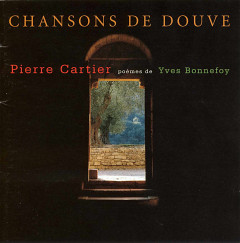
    Pierre Cartier est un bassiste/contrebassiste montréalais. Il a commis quelques disques à tendance fortement jazzée, tels Dirigeable (un vinyle indépendant) et Les fleurs du tapis (CD sur Ambiances Magnétiques), en plus de participer au groupe Les Dangereux Zhoms de Jean Derome. Si ces disques présentaient surtout le musicien et jazzman qu’est Pierre Cartier, Chansons de Douve, un double CD, nous fait découvrir un compositeur de haut niveau.

    Chansons de Douve a pour assise les poëmes de Yves Bonnefoy extraits de Du mouvement et de l’immobilité de Douve, parus en 1953. Des textes dépouillés qui imagent la présence et le vide, l’existence évanescente d’une femme, Douve.

    Ces textes sont chantés par une soprano (Angèle Trudeau) et une mezzo-soprano (Noëlla Huet), de même que par Cartier lui-même. Les musiciens proviennent de l’écurie d’Ambiances magnétiques: Jean-Denis Levasseur (saxo), Jean Derome (saxo et flûte), Ivanhoe Jolicoeur (trompette), Sylvain Jacob (trombone), Tom Walsh (trombone), Pierre Tanguay (batterie) et Julien Grégoire (percussions).

    La musique tient fortement de la musique pour petit ensemble, épicée à l’occasion de jazz. Des influences de Philip Glass s’entendent distinctement. On pourrait aussi faire d’importants rapprochements avec les Bradyworks du guitariste Tim Brady (principalement ses Revolutionary Songs). Des ambiances feutrées, parfois chaleureuses, parfois inquiètantes. Une grande maîtrise de l’orchestration. Il se dégage de cet album une beauté qui rayonne des poêmes et s’amplifie à travers la musique.

    Chansons de Douve constitue une grande œuvre de la musique contemporaine, un projet de grande envergure qui séduit en tous points. Ce disque devrait consacrer Pierre Cartier comme un des grands compositeurs et musiciens québécois. Et Chansons de Douve est un des meilleurs disques qu’Ambiances magnétiques ait produit depuis quelques années. À découvrir.

    “Chansons de Douve” nous fait découvrir un compositeur de haut niveau. Un des meilleurs disques qu’Ambiances Magnétiques ait produit depuis quelques années.
  • 11
  • 12
  • 13
  • 14
  • 15
  • 16
  • 17
  • 18
  • 19