actuellecd

Blog

59 results
  • 2
  • 3
  • 4
  • 5
  • 6
  • 7
  • 8
  • 9
  • 10
  • Chants et danses du monde inanimé, Robert Marcel Lepage, René Lussier in Cadence

    “Review”, Chris Kelsey, Cadence, no. 23:5, May 1, 1997
    Thursday, May 1, 1997 Press

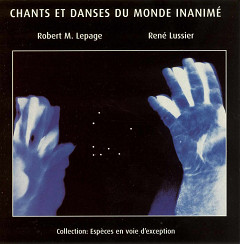
    The most interesting thing about this CD of mostly free improvisation is the opportunity it affords us to monitor the artists’ progress from 1984, when the first seven tracks were recorded, to 1996, when cuts 8 through 16 were laid down. In ’84, both Lussier and Lepage were well on their way to developing their own voices, though both were still manifestly groping. Lussier’s style was a mechanistic abstract-expressionism; his timbres were harsh, his lines jagged, his melodies and hammonies of little consequence given his extreme textural freedom. By ’96, the guitarist has his materials under control. The rough edges are leH that way purposely; they are no longer perceived as accidents. Lussier’s increased skills have given his work a more humane cast- ironic, perhaps, given this album’s stated intent, which is as a parody of our mechanized consumer society. Lepage’s development is similar. Where in ’84 he was searching — playing two saxes simultaneously, manipulating his tone and articulating in an extreme and sometimes clumsy manner — by’96 his chops are together. The harshness is leavened by a control that wasn’t there twelve years earlier. The mature Lepage concentrates on clarinet, upon which he has a comprehensive technique; hence, his lines are informed by a melodic sense that was far less pronounced on the earlier date. The duo benefits from the individual evolution of the piayers. Where, in the first recordings, the improvising moves in a more parallel direction — the players’limitations prohibit a more integrated, interactive perfommance — the later tracks are far more well-coordinated. The’84 cuts were made by a pair of talented students; the recent tracks by mature fine artists. Consequently, we have one-half of a very fine album — enough, I think, for me to recommend it.

    Chants et danses du monde inanimé, René Lussier in Octopus

    “Critique”, AR, Octopus, no. 6, April 1, 1997
    Tuesday, April 1, 1997 Press

    Même accompagné, ce dernier excelle. En compagnie de Robert Marcel Lepage, il forme un duo — clarinette, saxophone et guitare — d’une «espece en voie d’exception», celle des folkloristes urbains. Echappant au conditionnement culturel, privilégiant le ludique et l’aléatoire, nos deux compères artisans «artbrutistes» se livrent à un étrange rituel mécaniste où des danses singulières aux titres énigmatiques sont â un train d’enfer les unes aux autres emboîtées. Le moins que l’on puisse dire est que René Lussier (il a entre autre enregistré avec Fred Frith, Jean Derome, Chris Cutler et son Trésor de la Langue reste une inépuisable source d’émerveillement) ne se prend pas au sérieux, préférant ne pas définir sa musique à l’humour décapant. Ou plutôt non. S’il devait la décrire, nul doute qu’il parlerait de «nouille-age woolworth best électroencaustique». Autant dire que ce pataphysicien mériterait d’être decoré de l’Ordre de la Grand Gidouille

    Fin du travail (version 1), Robert Marcel Lepage, René Lussier in Octopus

    “Critique”, AR, Octopus, no. 6, April 1, 1997
    Tuesday, April 1, 1997 Press

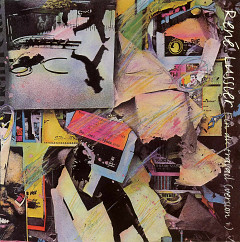
    Vous rêvez de découvrir un compositeur mélant dérision, inventivité et sens de l’orchestration. Vous êtes prêt a passer une petite annonce utopique pour trouver quelqu’un répondant à ce profil rare: un inclassable aux idées larges et au style unique. Vous alliez même engager un chasseur de têtes… êcoutez donc René Lussier. Il campe, sur la photo du livret CD, assis sur un banc à côté de son vélo, prêt â partir. Son sourire est malicieux et plein de sympathie. Fin du travail, c’est le titre de son premier album. C’est incroyable comme ses compositions faites de séquences et d’orchestres forment un monde cohérent, en dépit du nombre exponentiel d’idées qui traversent ce disque. Vous aimez Hugues le Bars, Albert Marcoeur, vous attendiez un renouveau chez Comelade, vous aimeriez que la musique contemporaine fuse en éclats de rire. Ecoutez René Lussier qui campe â côté de son vélo!

    C’est incroyable comme ses compositions faites de séquences et d’orchestres forment un monde cohérent, en dépit du nombre exponentiel d’idées qui traversent ce disque.

    Les contes de l’amère loi in Option

    “Review”, CW Vrtacek, Option, no. 73, March 1, 1997
    Saturday, March 1, 1997 Press

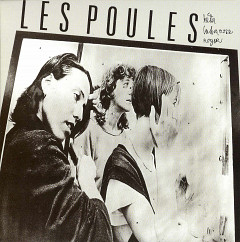
    Les Poules (The Chicks) are Joane Hétu (alto sax, synth, voice), Diane Labrosse (synth, voice) and Danielle Roger (drums, drum machine, synth and voice), and together they have one of the strongest grasps of how to manipulate sound that I’ve heard in a long time. There are some vague traces of early Henry Cow, even earlier Gong, and Matching Mole, but past that the album moves quickly off to define itself on its own terms. “Human Pinball” sets up a skittery and sometimes silly sonic edge, while Solliloque pour Simone uses a slow, open drum pulse to pin together watery washes of synths and a lonely, poetic sax line, all to great effect. Faust et son pain is a muscular and tense,bit of music quite apart from the two pieces I first described. In fact, if there’s a weakness to this album, it might be that it’s a little disjointed. All the cuts stand up just fine on their own, but strung together as an album, the overall effect is an unpredictable mood, shifting emotions and some bits that shine more than others. But these women have really got a handle on their sound structures, and l’d like to hear them focus their musical efforts around a central theme with more Iyrics. An engaging album, and heavy potential.

    An engaging album, and heavy potential.

    Chants et danses du monde inanimé in Revue & Corrigée

    “Critique”, Pierre Durr, Revue & Corrigée, no. 31, March 1, 1997
    Saturday, March 1, 1997 Press

    Non, ce n’est pas à proprement parler une réédition. D’ailleurs, le thème principal -en durée- de l’édition vinyl, Beyrouth, à défaut d’être mort n’y figure pas! Il sera inclus, retravaillé, sur un enregistrement ultérieur (de Lepage? de Lussier?), il s’agit plutôt d’un rappel (collection 1984), à confronter à une nouvelle série de pièces (collection 1996)

    Première approche, non auditive:moins de préoccupations d’ordre politique (Beyrouth justement mais la collection 1984 comprenait aussi -et maintient- Chiens de garde culturels, États asservis… ) alors que l’intitulé des pièces récentes à un côté satiesque ou pataphysique Berceuse pour un petit bidon, L’art de remplir des boîtes, et autre L’ablation des sinusoïdales.

    Deuxième approche: s’il s’agit toujours d’un dialogue de deux instrumentiste, on sent une différence d’approche: en 1984, les rythmes saccadés, les sonorités grouillantes, ou stridentes de la guitare semblait surtout constituer des supports fluctuant à un jeu parfois déstructuré, mais plus ample qu’un saxophone; dans la collection 1996, cette impression de deux niveaux a disparu: les deux instrumentiste évoluent sur le même plan, se partageant les rôles sur ce qu’on pourrait qualifier de «devant du son». Les deux démarches aboutissent également à la constitution de petites cellules sonores évolutives… Ce monde n’est pas si «inanimé» que le titre le laisse entendre…

    … ce monde n’est pas si «inanimé» que le titre le laisse entendre…
    Navré in Option

    “Review”, David Krasnow, Option, no. 73, March 1, 1997
    Saturday, March 1, 1997 Press

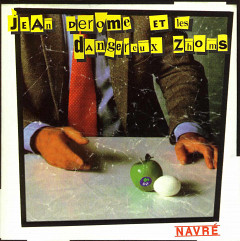
    All the works on Navré, the second record from this Montréal sextet, were composed by saxophonist Derome during tours with a variety of groups. The influence of the road might show in his predilection for extended structures in which long, slow passages are interrupted by sudden bursts, like the bebop-ish head of Navré or the staccato drumming of “Toronto. “ Or maybe that’s the influence of John Lurie. Like the Lounge Lizards, Derome and his crew are skillful handlers of both atmospherics and dynamics, grounding moody, meandering lead lines in steady, rocking rhythms. They use rough textures—groaning “daxophone” on Anchive, the choked guitar comping on Train pour Nuremberg, the trombone’s growl on Navré—as counterpoints to eloquent melodic elements like the bright flute run on Casse-cou and the rollicking, R&B-flavored baritone sax of Train pour Nuremberg. Guitarist René Lussier, in particular, seems almost more inventive in the background than in the fore. Only Lindau seems derivative, edging towards lite jazz. It’s hard to tell on Navré what’s composition and what’s improvisation. Finer group playing is hard to come by.

    Like the Lounge Lizards, Derome and his crew are skillful handlers of both atmospheric and dynamics, grounding moody, meandering lead lines in steady, rocking rhythms… Finer group playing is hard to come by.
  • 2
  • 3
  • 4
  • 5
  • 6
  • 7
  • 8
  • 9
  • 10