actuellecd

More from the blog

21 results
  • 1
  • 2
  • 3
  • 4
  • All Is Bright, But It Is Not Day in Downtown Music Gallery

    “Review”, BLG, Downtown Music Gallery, June 1, 2007
    Friday, June 1, 2007 Press

    The three musicians involved in this trio have known each other for a long time, but this CD is the result of a very new collaborative project. Recorded in a California studio, this CD is also the singular result of spontaneous, real-time sound processing. Only a listen will demonstrate the breadth of this sturdy musical exchange between three excellent musicians, virtuosic with listening and improvisation, and a rogue recording engineer. Fred Frith has invented his own way to improvise. Since his first solo guitar recording in 1974, he has been perceived like a radical innovator of great talent. On the course of 30 years, he has been working around the world with famous artists who are equally interested in similar creative processes. Composer and saxophone player Jean Derome, and percussionist Pierre Tanguay, are two of these artists. Derome and Tanguay have played together in a myriad of projects since 1980. Based upon intuitive communication, the result of a long friendship, Jean Derome and Pierre Tanguay continually establish a joyous ambience, blooming with precision and freedom. As for the recording and mixing engineer, Myles Boisen, he shows himself to be both sensitive and audacious. The meeting of Frith, Derome and Tanguay, three highly experienced musicians, with Boisen produces nothing less than explosive psychedelic music. Real-time processing is a fundamental asset here, as the new sound matter it brings forward have a radical effect on the perception of music.

    Only a listen will demonstrate the breadth of this sturdy musical exchange between three excellent musicians, virtuosic with listening and improvisation, and a rogue recording engineer.

    Nominations aplenty for DAME!

    Monday, December 8, 2003 New releases

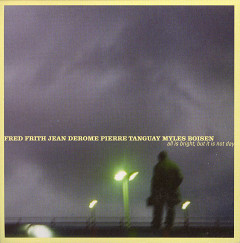
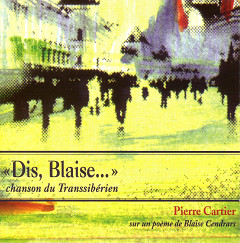
    It is the time of the Year where award nominations are revealed and DAME musicians are harvesting plenty. Pierre Cartier («Dis, Blaise…»), Tim Brady (Unison Rituals), the {nbio:frith_fr}, {nbio:derome_je}, {nbio:tanguay_pi}, {nbio:boisen_my} quartet (All is bright…) and Lori Freedman (À un moment donné) all received nominations to the Opus Prizes, handed out yearly by the Conseil québécois de la musique (Québec Musical Council, CQM). Moreover, {nbio:freedman_lo} (clarinet), Pierre Tanguay (percussions), Tom Walsh (trombone) and Jean Derome (musician of the Year) are also nominated for the National Jazz Awards. The public is invited to vote online [now closed].

    All Is Bright, But It Is Not Day in Revue & Corrigée

    “Disques”, Pierre Durr, Revue & Corrigée, no. 56, June 1, 2003
    Sunday, June 1, 2003 Press

    Ces deux enregistrements [All is bright, but it is not day et Whisperings (Wintsch, Baumann, Frith, Trontin)] sembleraient presque jumeaux. A peu de choses près. Mais ce peu de choses est toutefois fondamental. Le lecteur de ces lignes a, sans doute, remarqué sur chacun la présence de Fred Frith. Par ailleurs, la formule instrumentale basique est — presque — identique: un batteur percussionniste (Pierre Tanguay dans le premier cas, Bernard Trontin dans le second; la flûte est tenue par Jean Derome dans All is bright… , par Franziska Baumann dans Whisperings; un environnement sonore à base d’échantillonnages et de claviers avec Michel Wintch ou le traitement sonore de Myles Boisen.

    Les deux productions — issues respectivement d’un enregistrement live à Oakland en février 2001 et d’un concert à Zurich en décembre 1999 — diffèrent toutefois par l’utilisation des séquences de traitements sonores. Dans le cas de All is bright… , c’est le travail du trio Frith, Derome, Tanguay qui est traité en temps reel par Boisen, et réintroduit dans la confrontation sonore, un peu comme le fit Bob Ostertag dans sa tétralogie say no more/Verbatim. Dans Whisperings, la modification électronique ne joue que sur l’instrument ou la voix de l’instrumentiste lui (elle)-même avant sa confrontation avec ses partenaires. Bref, deux démarches distinctes.

    Par ailleurs la palette sonore des partenaires québécois de Frith ne se limite pas à un ou deux instruments de base mais s’étoffe d’harmonicas, de guimbardes, d’appeaux et d’objets divers. Celle des musiciens suisses est plus sobre, Franziska Baumann utilise toutefois la voix et l’électronique. Du point de vue sonore, il y a donc bien deux réalisations différentes. Et chacune présente ses spécificités. Au-delà du traitement sonore de Myles Boisen sur All is bright, but it is not day, Fred Frith semble bien contrôler la trame d’ensemble, lui insufflant sa logique de composition, sur laquelle Derome greffe ses effets tantôt bruitistes, tantôt naïvement mélodiques et que Tanguay ponctue de ses propres interventions extra-rythmiques.

    All Is Bright, But It Is Not Day in The Squid’s Ear

    “Review”, Phil Zampino, The Squid’s Ear, May 23, 2003
    Friday, May 23, 2003 Press

    The album opens as a sinister laugh cackles and Fred Frith saying “That’s an interesting technique you have there.” The laugh becomes oddly infectious as Tanguay pushes the first improv off with a hearty beat, interrupted by a ruptured duck call, strange wind instruments and distant guitar strumming. Interesting technique is what defines this album, and it’s no surprise that three improvisers of this stature have created a series of works that are dynamic, encompassing, humorous, psychedelic and fascinating.

    Guitarist Frith and multi-wind instrumentalist Jean Derome are well known, and equally deserving of such attention is the excellent drummer Pierre Tanguay (Derome and Tanguay are each part of Montréal’s Ambiences Magnetiques collective). San Francisco-based engineer Myles Boise might also be little recognized, functioning here both as engineer and real-time sound manipulator. The musicians are all masters of their instruments and it shows as they pull off a sometimes introspective, sometimes dizzying, often melodic display of ideas. Boise intervenes, subtly shifting the sound quality of one or all of the musicians, panning and manipulating the image of the sound or even chopping the sound out to shake up the listener. Derome here would give John Zorn a run for his money, with a host of saxes, small wind instruments, hand percussions and game calls. He provides the most melodic moments of the release, generally on breathier instruments where he plays with a kind of naivety to good affect. Tanguay is very active, cutting up and holding together the improvisations, and also providing unusual percussive elements and “objets”. Frith is perhaps the most conservative on this session, more often creating underpinnings over which the ideas are developed. The works are neither predictable nor chaotic, and everyone is clearly listening closely as they move into adventurous territories or pull back to let the music surround.

    The entire album was realized in one day in a California studio, and one can’t imagine that any alternate takes exist of any of these works. They are as ethereal as they are interesting, and monumental as an almost telepathic display of master improvisers working together and having a good time of it. The music is dramatic, playful, frightening, complex, joyous, thoughtful, accessible and a little bit tilted. All improvisations should be so successful!

    The music is dramatic, playful, frightening, complex, joyous, thoughtful, accessible and a little bit tilted. All improvisations should be so successful!
    All Is Bright, But It Is Not Day in ImproJazz

    “Critique”, Luc Bouquet, ImproJazz, no. 95, May 1, 2003
    Thursday, May 1, 2003 Press

    Le Frith de demain c’est sans doute All Is Bright, But It Is Not Day. Constatant son incapacité à brouiller les pistes, Frith trouve en l’ingénieur du son Myles Boisen, un parfait docteur Mabuse, apte à transformer, détourner, contusionner la musique du trio Frith Derome Tanguay. Même si le traitement de son est réalisé en temps réel et avec parfois un respect certain du cadre originel (Where Your Children Are), cette succession de triturations mentales et rhéthodiques, ces soubresauts continuels, ce brouillage des sens me semble ici terriblement stérile. C’est de l’espoir qui s’envole dans ce western métallique au casting pourtant prometteur. Trop de brouillage détourne l’auditeur, aurait pu conclure l’expert Tati.

    All Is Bright, But It Is Not Day in KindaMuzik

    “Kritiek”, Bas Ickenroth, KindaMuzik, April 8, 2003
    Tuesday, April 8, 2003 Press

    2003 het jaar van Fred Frith? Het lijkt er wel een beetje op. De avantgarde gitarist laat dit jaar het een en ander van zich horen: in de laatstwe week van vorige maand waren er uitvoeringen van zijn gecomponeerde stukken door het ASKO ensemble in Amsterdam en Rotterdam, in mei zal dit zich herhalen in Victoriaville, op het Hollandfestival in juni zal hij verscheidene composoties met orkest ten gehore brengen, en hij zal samen met o.a. John Zorn optreden in een hoogst unieke reunie samenstelling van het legendarische Naked City. En nu dus All is bright, but it is not day op het befaamde Ambiances Magnétiques label van Joane Hétu. Samen met freejazz duo Derome en Tanguay, en ‘real-time sound manipulator’ Myles Boisen, heeft hij de plaat vol geïmproviseerd. Met freejazz heeft het echter nagenoeg niets te maken. De heren zijn hoorbaar van alle markten thuis, maar verkiezen sfeer en instant-compositie boven vrije instrumentale expressie. Met een gedrevenheid en intensiteit die af en toe doet denken aan Frith’s impro-noiserock band Massacre (samen met Bill Laswell en This Heat-drummer Charles Hayward) rocken de mannen zich door het afwissellende materiaal dat de ene keer bijna meditatief van aard is en het volgende moment lekker hard kan blazen. De elektrische gitaar van Frith lijkt de voornaamste geluidsbron, maar vergeet niet al die bizarre blaasinstrumenten van Derome! De man kent zijn objecten door en door, en is in al zijn subtiliteit behoorlijk virtuoos. Tanguay slaat op alles wat los en vast zit, en laat zijn percussie perfect aansluiten bij de andere muzikanten. Het is echter geluidsmanipulator Boisen die voor de spreekwoordelijke krenten in de pap zorgt. Hij laat het complete groepsgeluid door filters en effecten gaan, versterkt het ene en verminderd het andere, en laat daardoor een compleet ander, en redelijk psychedelisch, geluidsbeeld ontstaan dan je op basis van vrije improvisatie zou verwachten. Indrukwekkend plaatje.

  • 1
  • 2
  • 3
  • 4