actuellecd

Blog

223 results
  • 30
  • 31
  • 32
  • 33
  • 34
  • 35
  • 36
  • 37
  • 38
  • July 5th, 1961 in Exclaim!

    “Review”, Sari Delmar, Exclaim!, February 1, 2007
    Thursday, February 1, 2007 Press

    Well, what would you do if you were armed with a large passion for ’60s pop folklore, a need to go on sabbatical from your main stage, indie, psychedelic pop act (Mixel Pixel) and enough diversity and unique talent to possibly stand out in the opus of New York’s struggling artist scene? Well, you write one of the most enchanting and delicately sewn, entirely brilliant pieces of experimental rock to drop the jaws of Stars or Isabel Campbell fans, and leave the rest of the nation wishing on rainbows and praying to dandelions, of course. For Rob Corradetti and Kaia Wong, that option seemed easily attainable due to their experienced, sonically perfect vocal blending. Rob’s dark timbre leads into hollow, soothing tunes, while Kaia’s whispering, breathy additions add mysteriously beautiful and refreshing embellishments. In the midst of the 9/11 tragedy, and living right in the shadows of the Empire State Building, Corradetti and Wong composed a breathtaking girl/boy tribute to bands like the Vaselines, and an album of inspirationally depressing ballads that are just as intriguing as they are essential for every fan of divergent art.

    … one of the most enchanting and delicately sewn, entirely brilliant pieces of experimental rock to drop the jaws of Stars or Isabel Campbell fans…

    Sextant in Musica Jazz

    “Recensione”, Angelo Leonardi, Musica Jazz, no. 63:2, February 1, 2007
    Thursday, February 1, 2007 Press

    I vari ambiti della ricerca musicale di Lenoci si susseguono in questo bel lavoro nato nei suoi laboratori didattici al conservatorio di Monopoli, nel settembre 2004. La musica (con Lenoci, La Volpe alla chitarra, Massaro al contralto e baritono, Scarafile al soprano, Angiuli al contrabbasso e Magliocchi alla batteria) spazia da riferimenti alle avanguardie statunitensi degli anni Sessanta e Settanta (il Davis elettrico, Dolphy e quant’altro) alla ricerca contemporanea di derivazione classica fino alla sperimentazione che va dal camerismo astratto all’estetica aleatoria.

    Lieux-dits in Jazzman

    “Critique”, Thierry Lepin, Jazzman, no. 133, February 1, 2007
    Thursday, February 1, 2007 Press

    Né au Canada (Colombie-Britannique), grandi en Californie, Isaiah Ceccarelli — sans lien de parenté avec André — a un parcours riche en rebondissements: éleve de la Berklee de Boston à la fin des années 1990, puis du CNSM parisien au début de la décennie suivante, il n’a pourtant rien du profil du premier de la classe. S’il a suivi l’enseignement d’Ed Shaughnessy, s’il affectionne Paul Motian ou Ed Blackwell, il cite tout autant Lê Quan-Ninh parmi ses références. Installé à Montréal depuis 2003, il multiplie les rencontres au sein de la scène des musiques actuelles, avant de confectionner ces Lieux-dits comme un ouvrage de compositeur. Ce premier album à l’univers singulier conjugue thématiques et fenêtres d’improvisation libre. Dans chaque pièce, l’amplitude dramatique développe avec minutie une tension à la fois intimiste et abstraite. Leader plus percussionniste que batteur, Isaiah Ceccarelli offre une palette de coloriste en parfaite adéquation avec le choix des timbres des vents. Chacun s’affirme dans le jeu collectif sans perdre le fil des idées, une mise en place privilégiant les petites formes, le découpage érudit des scénarios proposés. Une écriture à la personnalité rare dans ce contexte musical.

    Une écriture à la personnalité rare

    Ellen’s Bar in Jazz Magazine

    “CD, DVD & Livres”, Guy Darol, Jazz Magazine, no. 578, February 1, 2007
    Thursday, February 1, 2007 Press

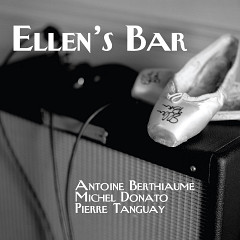
    Ses idoles étaient Jimmy Page, Andy Summers, David Gilmour mais la rencontre de Fred Frith a tout chamboulé. Antoine Berthiaume, jeune guitariste québécois, eut l’opportunité d’être à la fois formé par le fondateur de Henry Cow et de réaliser un album avec lui. Il n’avait pas 25 ans. L’album intitulé Soshin avait un troisième partenaire: Derek Bailey. Entouré de tels maîtres, Antoine Berthiaume ne pouvait délivrer qu’un style compositionnel libéré, une musique aggravant l’agréable. Avec Michel Donato et Pierre Tanguay, il confirme sa prédilection pour le trio et surtout la qualité d’une jeu guitaristique à la fois véloce et souriant. Le titre de l’album est un battement de paupière adressé au souvenir d’Ellen Bar, une danseuse du New York City Ballet qu’Antoine Berthiaume connut autrefois, au temps qu’il reçut le coup de foudre du jazz. La passion n’est pas flapie comme en témoigne cet opus sans temps mort ni déchet. Un édifice de munificence, un hommage à la musique naturelle, dénuée d’adjuvants électroniques et de tout overdub. Légèreté de la guitare posant chaque note sur l’aile d’un papillon, efficacité de la section rythmique qui ne s’accorde aucun fracas. Quelque chose de grand s’annonce qu’il convient désormais de guetter.

    Un édifice de munificence, un hommage à la musique naturelle, dénuée d’adjuvants électroniques et de tout overdub.

    Yé-Yi-You-Ya in Voir

    “Disques de la semaine”, Réjean Beaucage, Voir, February 1, 2007
    Thursday, February 1, 2007 Press

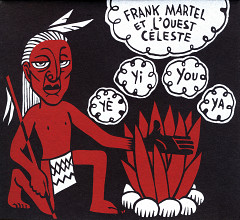
    On a pu voir Frank Martel en joueur de thérémin dans différents projets de musique actuelle, mais il troque une fois de plus l’impalpable instrument contre le ukulélé et la guitare, et passe d’un rôle muet à celui de poète country sur son troisième effort. Comme ses mots, sa musique n’est pas aussi simplette qu’elle le laisse d’abord croire, et la présence du guitariste Bernard Falaise (aussi arrangeur et réalisateur) garantit une certaine subtilité dans les mélodies. Dans tous les cas, malgré le fond country, on reste loin de Marcel Martel; ici, l’ensemble dérive entre le surréalisme urbain et la divine inspiration des «last calls».

    l’ensemble dérive entre le surréalisme urbain et la divine inspiration des «last calls».

    Bozzini Quartet in Uppsala Nya Tidning

    “Canadian Bozzini Quartet Offered a Program Filled with Contrasts”, Gunnar Tibell, Uppsala Nya Tidning, January 31, 2007
    Wednesday, January 31, 2007 Press

    The chamber music society’s contacts with Rikskonserter gives interesting possibilities for unusual performances, as in last Monday when Canadian Quatuor Bozzini perfomed in Alfven-salen. The name of the group is taken from the last names of the musicians in the two lower voices, violist Stephanie and cellist Isabelle. The two violinists are Nadia Francavilla and Clemens Merkels, who took turns playing the first violin part.

    Among Canadian composers Claude Vivier holds a prominent place and the quartet had chosen to begin its concert with Pulau Dewata, inspired by native Balinese music. The title translates as “The Island of the Gods”, and it was quite possible to imagine how it could sound on the island, even though the instrumentation would most likely be completely different. Changing rhythms, accents, viola and cello in octaves with violins as birdsong, and finally a traditional signature which the composer, according to the program, wished to present to the people of Bali. We happily accept the offer of such a fine example of Canadian art music.

    The next piece, an unfinished string quartet by Franz Schubert, was a huge contrast to the first. It has been touted as a precursor to later masterworks, and shows clear indication of the melodic charm which we recognize from the music of Schubert. Nadia, playing first violin in this work, was maybe unnecessarily discreet in her role.

    The ensemble playing continued to be excellent.

    Last year the 100th anniversary of the birth of Dmitri Schostakovitch was celebrated all over the musical world. That the year has come and gone does of course not mean that his works won’t be performed any more. The quartet had chosen his 11th string quartet, in f minor — a seven movement work which provided ample opportunities for impressive ensemble playing and exciting sonorities. The composer switches between elegiac moments and rather merry ones, all performed in changing constellations, keeping the listener engaged in the music.

    Finally yet another of the masterworks of the quartet repertoire, Johannes BrahmsQuartet in B Flat Major opus 67, written in 1875. Despite the fact that the year had seen much music of newer styles, Brahms stays in an almost classical expression. Here is the romantic side, the melodic as in the second movement’s hymnal character, or the carnival mood of the third movement. In this movement the quartet succeeded remarkably well in bringing out the transparency of sound and to let the melodic material move freely between the four voices. The variations in the final movement included a beautiful section with the two violins playing legato against the lower string pizzicatos, all leading towards a powerful ending. Warm applause will follow the musicians on their eight concerts tour.


    [In Brahms’ Quartet in B Flat Major opus 67] the quartet succeeded remarkably well in bringing out the transparency of sound and to let the melodic material move freely between the four voices… Warm applause will follow the musicians on their eight concerts tour.
  • 30
  • 31
  • 32
  • 33
  • 34
  • 35
  • 36
  • 37
  • 38