actuellecd

Blog

198 results
  • 21
  • 22
  • 23
  • 24
  • 25
  • 26
  • 27
  • 28
  • 29
  • Five A’s, Two C’s, One D, One E, Two H’s, Three I’s, One K, Three L’s, One M, Three N’s, Two O’s, One S, One T, One W in The Squid’s Ear

    “Review”, Kurt Gottschalk, The Squid’s Ear, April 1, 2009
    Wednesday, April 1, 2009 Press

    Upon repeated listens, the first 5 minutes of Five A’s, Two C’s, One D, One E, Two H’s, Three I’s, One K, Three L’s, One M, Three N’s, Two O’s, One S, One T, One W start to seem very strange. Strange because the brief opening is familiar yet out of place. Veteran experimental musician is heard playing jazz piano, a bit discordant yet not too jarring. And it is something that, if you put the record away for a while, you’re likely to forget. A few minutes in, Aki Onda’s manipulated cassette player rips the fabric of the piano melody with a surprising whoosh. Alan Licht’s guitar soon follows, ambient at first but soon becoming imposing. The piano makes one last attempt with a little filigree before disappearing entirely. Music has lost, and sound is left to impose its will. For much of the rest of the set, recorded live at the 2007 Victoriaville festival in Quebec, Snow generates sounds from a synthesizer and a radio. In deference, perhaps, to the MIA piano, Licht’s guitar refrains from making recognizable sounds, and the remaining 40 minutes are filled with disembodied tones, ghost voices and anxious static. The result is something like a maximal AMM: the instrumentation is similar to the legendary British group in its recent trio form, but the line-up says little about the resultant sound. Snow, Licht and Onda create a nervous, visceral frenzy laced with the feeling of turning knobs. Dozens, it seems, hundreds of knobs, electrical impulses running awry. When at length the piano returns, it provides scant solace.

    Snow, Licht and Onda create a nervous, visceral frenzy laced with the feeling of turning knobs. Dozens, it seems, hundreds of knobs, electrical impulses running awry.

    Antoine Berthiaume in The Gazette

    “SuperMusique’s Dueling Guitars”, Adam Kinner, The Gazette, March 25, 2009
    Wednesday, March 25, 2009 Press

    The folks at SuperMusique, a production company responsible for some great improvised and new music concerts, are presenting a show on Wednesday the 25th at Sala Rossa.

    Called Ça Frappe, the concert features one of our more ambitious local guitarists, Antoine Berthiaume, in concert with the great Elliott Sharp. Sharp is a fascinating guitarist, composer, and improviser known for ingenuity and cross-genre agility. He’s as comfortable having his work played by the Ensemble Modern as he is playing guitar with his blues band Terraplane. Like Marc Ribot and Bill Frisell, Elliott Sharp is another mature guitarist with a voracious appetite and impeccable taste. Alongside Berthiaume, Sharp should find a suitable partner in music-making. The local is one of the best we have to offer.

    Philippe Lauzier (saxes, clarinets), Martin Tétreault (turntables) and Pierre-Yves Martel (viola de gamba) will open the show.

    Antoine Berthiaume in La Presse

    Elliott Sharp et Antoine Berthiaume au cœur de la turbine”, Alain Brunet, La Presse, March 25, 2009
    Wednesday, March 25, 2009 Press

    Les Productions SuperMusique proposent ce soir un concert «ancré dans l’immédiat autour d’un dialogue guitaristique» entre Elliott Sharp, figure centrale de la musique d’avant-garde aux États-Unis, et Antoine Berthiaume, jeune musicien montréalais dont le dynamisme est à la hauteur de la vision.

    Depuis les années 80, les mélomanes qui fréquentent les festivals de musique d’avant-garde (dont celui de Victoriaville) ont été mis au parfum des nombreux projets d’Elliott SharpOrchestra Carbon, Tectonics, Terraplane. Qui plus est Sharp est un pionnier dans les transpositions musicales de la géométrie fractale (qui étudie les formes irrégulières et morcelées), de la théorie du chaos et autres métaphores génétiques.

    Rien de tel pour l’apéro!

    Blague à part, le travail d’Elliott Sharp est sollicité par de nombreux ensembles qui jouent ses œuvres dont l’ensemble de la renommée Juilliard School ou encore le Jack Quartet, nouveau quatuor à cordes bien en vue dans le milieu musical américain.

    D’entrée de jeu, on lui rapporte cette impression d’avoir pénétré à l’intérieur d’un moteur d’avion ou dans la turbine d’un réacteur nucléaire. C’était à l’écoute de certaines pièces de Base, un album créé par Sharp et Berthiaume (étiquette Ambiances Magnétiques) et lancé ce soir à l’occasion du concert prévu à la Sala Rossa.

    «Au centre d’un réacteur? Voilà une belle façon d’illustrer notre travail… mais j’ose croire que nous invitons aussi l’auditeur à fréquenter des lieux plus accueillants! Textural, dites-vous? Absolument. Lors des sessions d’enregistrement, nous avons emprunté cette voie où les guitares génèrent des textures sonores, mais je dirais que ça s’est passé davantage dans la post-production de cet album. Le mixage, il faut dire, a mis encore plus d’emphase sur cette dimension du jeu. J’ai donné à Antoine et l’ingénieur du son mon aval pour accomplir ce dont ils avaient envie», explique le musicien américain.

    L’album Base, à l’origine, est une initiative du guitariste et compositeur montréalais Antoine Berthiaume. Membre fondateur du groupe Rodéoscopique (country folk instrumental d’avant-garde?), féru de jazz et d’improvisation libre, le guitariste et compositeur ne cesse de s’exprimer sur les scènes des musiques improvisées. Parmi ses collaborateurs, on citera Pierre Tanguay, Michel Donato, Fred Frith, feu Derek Bailey, Takumi Seino et, bien sûr, Elliott Sharp.

    «Antoine m’a contacté il y a quelques années. Il m’a d’abord fait parvenir sa musique, notamment ses enregistrements avec feu Derek Bailey. Et j’ai beaucoup aimé ce que j’ai entendu. Puis il m’a visité à New York, nous avons eu une première séance d’improvisation. Ce fut concluant dès le départ, j’ai réalisé qu’il était un guitariste accompli, doté d’une écoute singulière», raconte son collègue new-yorkais.

    Avis aux amateurs qui préféreraient écouter Base au salon, la résultante sur scène pourrait s’avérer fort différente.

    «Chaque discipline comporte ses qualités propres, insiste Elliott Sharp. Le processus de remixage, par exemple, peut modifier les impressions d’un enregistrement. Cette idée de présenter la musique de différentes manières me plaît, et je dirais préférer le «live». Le concert trouve d’ailleurs une nouvelle énergie par les temps qui courent, particulièrement à cause de la dépréciation de la musique circulant sur l’internet.»

    Ce qui n’empêchera pas Elliott Sharp et Antoine Berthiaume de lancer leur album ce soir. Bienvenue au cœur de la turbine…

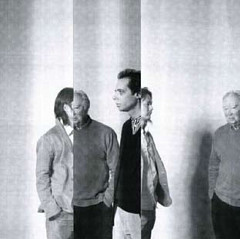
    un concert «ancré dans l’immédiat autour d’un dialogue guitaristique» entre Elliott Sharp, figure centrale de la musique d’avant-garde aux États-Unis, et Antoine Berthiaume, jeune musicien montréalais dont le dynamisme est à la hauteur de la vision.

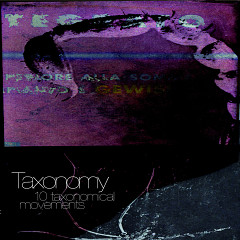
    10 Taxonomical Movements in Vital

    “Review”, Dolf Mulder, Vital, no. 672, March 23, 2009
    Monday, March 23, 2009 Press

    Taxonomy is an italian trio of Elio Martusciello, Graziano Lella and Roberto Fega. 10 Taxonomical Movements is their second release. Again this is an exploration in techniques and structures on a very abstract level, avoiding much intellectual blah blah. The first piece is called Ouverture, the last one Epilogue, suggesting an unity between the 10 pieces. Tracks in between carry titles as Adagio, Andante and Crescendo. A piece like Crescendo — Maestoso I like most because of the dramatic impact. Solenne — Vivo is a mysterious sounding piece with deep drones, completed with other sound material. Each piece is structured differently from the others. Another difference, in Tranquillo — con fuoco laptops and electronics dominate, in Larghetto — appassionato (tema) conventional instruments are preferred. All this makes it a varied CD.

    This is an exploration in techniques and structures on a very abstract level, avoiding much intellectual blah blah.

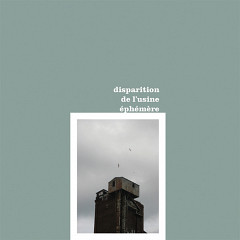
    Disparition de l’usine éphémère in Vital

    “Review”, Dolf Mulder, Vital, no. 672, March 23, 2009
    Monday, March 23, 2009 Press

    Disparition de l’usine éphémère is a first collaboration between Philippe Lauzier (alto sax, clarinet), Pierre-Yves Martel (viola da gamba), Kim Myhr (acoustic guitars) and Martin Tétreault (recordplayers). Surprising it is to hear a viola da gamba in such a modern undertaking. We hear long sustained tones combined with chaotic scratchy sounds from guitars and viola da gamba. In their long extended groups improvisations they successfully combine old and new instruments. The musicians share a common approach. Speaking the same language of sound and noise they develop several fantastic musical conversations.

    Speaking the same language of sound and noise they develop several fantastic musical conversations.

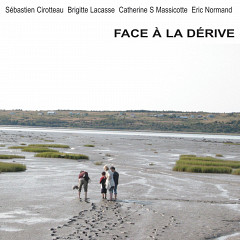
    Face à la dérive in Vital

    “Review”, Dolf Mulder, Vital, no. 672, March 23, 2009
    Monday, March 23, 2009 Press

    Face à la dérive is a soundportrait of the Saint-Laurent river, painted by four young musicians that are new for me: Sébastien Cirotteau, Brigitte Lacasse, Catherine S Massicote and Éric Normand. They made field recordings along this big river, including voices of people who live close to it. These recordings play a dominant role in the two lenghty pieces on this CD. Besides we hear small musical structures played on acoustic instruments as piano, accordion, violin, bass, etc. For my ears this combination did not always work. But it is an engaging piece of work if you are interested in how to evoke an environment in a sound work.

    It is an engaging piece of work.
  • 21
  • 22
  • 23
  • 24
  • 25
  • 26
  • 27
  • 28
  • 29