actuellecd

More from the blog

20 results
  • 1
  • 2
  • 3
  • 4
  • Pee Wee et moi in Jazz Word

    “Review”, Ken Waxman, Jazz Word, March 6, 2006
    Monday, March 6, 2006 Press

    Explorations among the wood, metal and air columns of the reed family […] Pee Wee et moi has a different agenda. Featuring Robert Marcel Lepage, one of the major players in Quebec’s musique actuelle scene, it’s an exploration of his links to Pee Wee Russell (1906–1969), jazz’s most idiosyncratic reed player. Russell, who over the course of his career played with everyone from Bix Beiderbecke to Thelonious Monk, was his own man in any situation. The strength of his oeuvre is such that Lepage, who composes theatre, dance and film pieces as well as improvises, felt, that long with a rhythm section, he had to invite six other clarinetists to share the clarinet role.

    Although six reedists often playing in unison may conjure up bad memories of retro-jobs like Supersax, Québécois quirkiness prevents this. With the reed section, including Vancouver’s François Houle, made up of outright modernists and the rhythm section members – guitarist René Lussier, bassist Normand Guilbeault and drummer Pierre Tanguay – leaders of their own projects, this isn’t a band likely to play a Dixieland Jazz hotel party any time soon.

    Instead, two Russell compositions and 12 of Lepage’s are used to sketch a slightly off-kilter view of the older clarinetist’s legacy. Taking Dixie-Swing conventions and turning them on their heads, at any time some of the musicians work from a 1930s base, while a few others are resolutely in the 21st century. Part of the date’s success has to be attributed to Maxime Séguin, who collaborated on the arrangements.

    Look what’s done with Russell’s own Muskogee Blues, for instance. With Tanguay playing a simple backbeat and Lussier jangling T-Bone Walker-like licks, the tune surges polyrhythmically as one clarinetist growls in false registers like a modern version of Russell, while another emits a more elegant Jimmy Hamilton-like tone. Just after the turnaround the entire ensemble suddenly speeds up, then slows down to mid-tempo for the finale.

    Unfortunately the booklet notes don’t name any of the clarinet soloists – surely Lepage couldn’t do all the work himself – but the key to this collection of blues lines is how Séguin and Lepage alter our perception of Quebec’s musique actuelle musicians as much as the purported Dixielanders.

    Guilbeault, whose avowed influence is Charles Mingus, slaps his bass à la Pops Foster on Pee Wee fait des archaïsmes, moi je fais des anachronismes, while Lussier’s strings scratching suggests a tinny version of Tiny Grimes’ style. Right in the middle of the composition there’s a quick turnabout as the tempo leapfrogs from andante to agitato, followed by a high-pitched clarinet solo that in this context, sounds like Pete Fountain fronting a 1930s Swing Era band.

    Similarly, Pee Wee joue aux échelles et serpents is a parody two-step, riding on Tanguay’s paradiddles. Here the guitarist showcases distorted strumming in Eddie Lang fashion, as the horn section riffs around him. Reed solo exhibitions include double-tonguing harmonic vibrations and chalumeau excursions.

    Portrait de Pee Wee à la face longue finds Lussier procuring a Middle-Eastern, lotar-like sound from his axe, creating finger-picking reverb that meets a chorus of spetrofluctuation from one of the clarinetists, with the duo surrounded by repetitive legato riffs from the other reeds.

    Fully POMO, despite the instrumentation, other tracks are redolent of Miles DavisBirth Of The Cool sessions – if that session had featured crisscrossing rasgueado guitar work; one of Gerry Mulligan pseudo-Swing Era lines, with a clarinet lead, two-beat drumming and the threat of bursting into barnyard cacophony every chorus; and Dixieland as interpreted in the style of French chanson by a marching band. The last includes a species of musical fanfare that springs from the European roots that influenced both Russell and Lepage.

    Then there’s Dixie chinois, which sounds a lot more like Heavy Metal than Chinese music. Still, it does prove that the combined smeared overblowing of seven clarinets, often adding pedal-point snorts, can be as solidly rhythmic as any guitar-laden hard rock band.

    Rippling unison section work from the reeds doesn’t upset the foot-tapping fervor of most of the tunes. Who knows maybe because of this the musique actuelle types will investigate Pee Wee’s Dixieland and – though doubtful – perhaps a few Classic Jazz fans will try to listen to POMO – or even MO – improvisations.

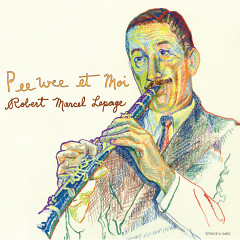
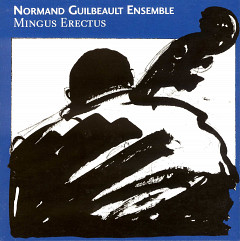
    Mingus Erectus, Pee Wee et moi, The Feeling of Jazz, Ambiances Magnétiques Jazz in Coda Magazine

    “Label Spotlight: Ambiances Magnétiques Jazz, Jazz becomes Actuelle”, Ken Waxman, Coda Magazine, no. 326, March 1, 2006
    Wednesday, March 1, 2006 Press

    Need further proof that Quebec is a province pas comme des autres? At a time when jazz record labels and musicians lament lack of acceptance and opportunities, Ambiances Magnétiques, the longestablished, Montréal-based musique actuelle label has just set up a specific jazz imprint.

    The reason is partially artistic and partially marketing, explains Joane Hétu, founder member of the AM collective, and artistic director of DAME, its distribution and marketing wing.

    Musique actuelle as defined by our community implies that the composer is also performer of his music,” she says, elaborating the philosophy that has guided AM since its inception in 1983. Yet with many of AM’s founders recently involved with projects honoring the compositions of jazz icons, such as bassist Normand Guilbeault’s new CD, Mingus Erectus, the need for a specific jazz label became apparent.

    “Montréal’s jazz community is active all year long,” she notes. “With l’Off Festival de jazz de Montréal, a new Regroupement des artistes de jazz et de musique actuelle du Québec and a new interest in jazz from many musicians, now seemed as good a time as ever to support these artists.”

    However, after having released more than 150 CDs, AM has established a certain reputation and market, the couple of jazz sessions previously released by the label “often ended up in the wrong sections in stores or in the hands of reviewers more interested in musique actuelle,” she adds. “Ambiances Magnétiques Jazz (AMJ) allows our jazz releases to be clearly identified, categorized, reviewed and marketed in the jazz family.”

    Although AMJ’s first CDs — clarinetist Robert Marcel Lepage’s Pee Wee et Moi and reeds-bass-drums Trio Derome Guilbeault Tanguay’s The Feeling of Jazz are the others — came out at the same time as Mingus Erectus in late 2005, this clustering was “just luck,” she concedes. Each artist, an AM founding member, happened to have a project ready, although Hétu adds “having many releases over a short time period should help put our jazz label on the map.”

    It’s too early to gauge AMJ sales, but like most of the label’s product, there’s a close correlation between live performance and a CD’s popularity. “It’s all about playing live,” she declares. “The more concerts the more sales.”

    Among the 10 or so CDs AM releases each year, she expects that two to four will be jazz. But since AM is designed to give artists mastery over their work, it depends on what projects are offered to the label. Already scheduled for spring release is a trio disc by Quebec guitarist Antoine Berthiaume with bassist Michel Donato and drummer Pierre Tanguay and another by Italian pianist Gianni Lenoci’s Ensemble. Lenoci’s CD will be AMJ’s first disc by a nonCanadian. However since the parent label’s releases aren’t limited by geography, Hétu suspects AMJ will follow the same policy.

    Again though, Hétu cautions that AM’s overriding raison d’être is to release, distribute and market CDs by its founding members or those recommended by a member committee. Busy with its own projects, AMJ won’t go out of its way to seek out new jazz talent. “We’ll leave the creation of a Canadian Jazz Idol to someone else,” she jokes.

    … Montréal-based musique actuelle label has just set up a specific jazz imprint.

    Pee Wee et moi in Jazzman

    “Critique”, Pascal Anquetil, Jazzman, no. 122, March 1, 2006
    Wednesday, March 1, 2006 Press

    Compositeur à succès de musiques de films et de séries télévisées (Urgences), ce Québécois hyperactif s’affirme comme un touche-à-tout ironique qui pratique l’autodérision avec un sérieux magnifiquement imperturbable. Sa grande passion, c’est la clarinette. Dans un précédent album, il s’était posé cette question cruciale: «Les clarinettes ont-elles une âme?» Dans ce nouvel opus dédié à la ‘danseuse d’ébène’, il tente cette fois d’éclaircir sa relation arnoureuse avec Pee Wee Russell. Génie célibataire sans filiation ni descendance, ce clarinettiste hors catégorie a côtoyé tous les styles et toutes les époques. Au crépuscule de sa vie, il pouvait sans mentir se vanter d’avoir joué avec Bix Beiderbecke et Thelonious Monk. Qu’est-ce qui peut donc réunir ces deux individus aussi différents l’un de l’autre? Ce blanc de peau de Pee Wee a passé toute son existence à se noircir systématiquement, sans aucune modération, pour avoir le droit dans un monde très straight de jouer le blues de façon excentrique. «Moi, précise Robert Marcel Lepage, je ne bois jamais et je joue de la clarinette de façon plutôt straight entouré de musiciens excentriques.» lls étaient donc faits pour se rencontrer. Le résultat: ce disque en forme d’hommage décalé pour lequel Robert Marcel Lepage a écrit une douzaine de blues habilement tordus, une suite savante et désinvolte qui se veut une invitation à explorer un aspect particulier du phrasé de Pee Wee. Pour ce faire, il s’est entouré de toute une confrérie d’oiseleurs, une fanfare richement boisée. Au final, cela donne un agréable divertissement, une fantaisie très distinguée. Il y manque sans doute l’essentiel de ce qui fait le génie de Pee Wee Russell: le swing de la titubation et le lyrisme du gémissement. Personne n’est parfait.

    Au final, cela donne un agréable divertissement, une fantaisie très distinguée.

    Pee Wee et moi in La Scena Musicale

    “Off the Record”, Paul Serralheiro, La Scena Musicale, no. 11:5, February 1, 2006
    Wednesday, February 1, 2006 Press

    The wit and poetry of the late great clarinetist Pee Wee Russell are given a post-modern treatment by Montréal clarinetist Lepage and a host of other practitioners of the instrument. A total of seven clarinetists show up for this gig, along with a stellar rhythm section of René Lussier on guitar, Normand Guilbeault on bass and Pierre Tanguay on drums. It’s not surprising that it takes this much ebony to pay homage to Russell’s legacy. Lepage and company lead off with Pee Wee’s Blues, a Russell original, then explore various readings, variations in the blues form on the Russell style, winding up after the multi-referential romp with another Russell piece, Muskogee Blues. Through the journey, essentially consisting of studies in style, there are many delightful moments. Lussier’s twangy resonator-acoustic guitar blends right in, with its quirky evocations of cartoonish humour. In the spirit of play is a heartfelt tribute, making this a must for Pee Wee Russell fans and lovers of the clarinet in general.

    In the spirit of play is a heartfelt tribute, making this a must for Pee Wee Russell fans and lovers of the clarinet in general.

    Pee Wee et moi in JazzoSphère

    “Critique”, Éric Norman, JazzoSphère, no. 27, January 1, 2006
    Sunday, January 1, 2006 Press

    II y a de ça un an, le label Ambiances Magnétiques, rattaché à la scène des musiques actuelles montréaiaises depuis des décennies, lançait sa nouvelle collection Jazz. Nous savions bien qu’ils avaient dans leurs écuries des musiciens qui pouvaient nous faire swinguer solidement.

    Les deux plus récentes parutions de la collection sont d’ailleurs le fait d’habitués de l’étiquette AM, Robert M Lepage et le trio de Jean Derome, Normand Guilbeault et Pierre Tanguay. Ils nous proposent tous deux un regard rafraîchissant sur le passé, une petite pirouette ludique et passionnée dans l’histoire du jazz.

    Cinq ans aprés un superbe hommage rendu à Jimmy Giuffre (Joue free AM 089), Robert M Lepage replonge dans l’histoire du jazz avec Pee Wee et moi, une suite de compositions en souvenir de Pee Wee Russell . Dans les deux cas, le blues et la clarinette sont à l’honneur. Auteur d’un Petit Robert Illustré de la Clarinette, Lepage se plaît à thématiser son instrument dans divers jeux de variation et de stylistique. Si Joue free trouvait le blues dans la volupté du chant, Pee Wee et moi l’insinue dans une affaire de structures, de jeux ludiques sur les caractéristiques et les tics de l’instrument et de l’instrumentiste.

    Il regroupe une suite de petits «blues tordus» au profit desquels Lepage s’est entouré de six autres solides clarinettistes (dont François Houle et André Moisan), en plus de la guitare de René Lussier et de la rythmique Guilbeault-Tanguay. Ludique, la musique de Lepage nous entraîne dans un univers fait de connu — dixie, swing, etc.- en conservant toute son originalité mélodique. Elle se construit à partir des effets stylistiques propres au jeu de Russell, en déduit des structures, empruntant à la fanfare, au jazz et à toutes les musiques de notre époque. «Il état buveur, jouait de la clarinette de façon excentrique dans un monde straight…je ne bois jamais et je joue de manière plutôt straight entouré de musiciens excentriques. Nous étions faits pour nous rencontrer». Et avec un de ces excentriques, René Lussier, la complicité est encore une fois confirmée. Bravo!

    … la musique de Lepage nous entraîne dans un univers fait de connu — dixie, swing, etc.- en conservant toute son originalité mélodique.

    Pee Wee et moi in Le Journal de Montréal

    “Critique”, Christophe Rodriguez, Le Journal de Montréal, December 24, 2005
    Saturday, December 24, 2005 Press

    Après Derome, le clarinettiste et compositeur Robert Marcel Lepage nous fait redécouvrir un musicien de premier plan: Pee Wee Russell. Associé principalement au style Nouvelle-Orléans, ce clarinettiste caméléon partagea la scène avec le prêtre du be-bop, Thelonious Monk, et le maître des harmonies, Jimmy Giuffre. Sur le mode de la conversation et des inventions, Robert Marcel Lepage a réuni sept clarinettistes, dont le très solide André Moisan, pour faire voguer son trois-mâts à la charpente solide. Quatorze plages de compositions originales à offrir sur-le-champ. 5

    Quatorze plages de compositions originales à offrir sur-le-champ. 5
  • 1
  • 2
  • 3
  • 4