actuellecd

Blog

239 results
  • 32
  • 33
  • 34
  • 35
  • 36
  • 37
  • 38
  • 39
  • 40
  • Carré de sable in AllMusic

    “Review”, François Couture, AllMusic, January 15, 2004
    Thursday, January 15, 2004 Press

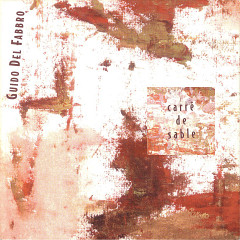
    Known for his participation to the Fanfare Pourpour (an avant-garde street fanfare) and Rouge Ciel (a hyper-complex avant-prog group), violinist Guido Del Fabbro reveals his inner sound world with Carré de Sable (or Sandbox). Truly a one-man band, he is credited for playing 29 different instruments ranging from his trusty violin to banjo, recorder, turntable, outdated keyboard, various hand-held percussion instruments, voice, even water. Each one of the 19 tracks features a different instrumentation and the music itself shifts from one style to another, eluding classification. There are elements of Quebec and Irish folk (Del Fabbro’s other projects are all influenced by folk music to some degree), bedroom electronica, the naive junk/toy ensembles of Frank Pahl or Pascal Comelade, and home-brewed sound experiments reminiscent of the Jewelled Antler Collective. The whole thing is a bit dizzying at first and can be seen as a case of hit and miss. The track list occasionally jumps out of hand: for instance, the beautiful pastoral overture La Bergerie I is followed by Jaka, a rather miserable attempt at lo-fi techno (even if it is meant as an ironic take on the genre, and it may very well be). Other sections on the other hand are obviously the result of careful attention to editing. Adventurous listeners will find gems buried in this pile of fragile melodies and strange textures, and they will differ for each person. But the best moments arise when Del Fabbro throws everything into the pot, like when an elegant duet between violin and bass clarinet (Pierre-Emmanuel Poizat, a rare guest) is backed by gritty guitar drones in Gaviscon. These short pieces recorded while on the road give the impression of a little meddler (to pursue the childhood metaphor developed by Del Fabbro in the booklet). The album has the pros and cons of a scrapbook: variety, lots of imagination, but a lack of organization and cohesion.

    … variety, lots of imagination…

    Diversion in Downtown Music Gallery

    “Review”, Downtown Music Gallery, January 8, 2004
    Thursday, January 8, 2004 Press

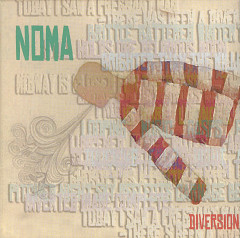
    Featuring the great Montréal-based trombonist Tom Walsh with two different quartets at two live sets in Montréal and Toronto from 2002. The Cote Cour quartet features Guy Kaye on electric guitar, Alan Baculis on el. bass and Francois Chauvette on drums, while the Cote Jardin unit features Rainer Wiens on el. guitar, Norman Guilbeault on contrabass and Pierre Tanguay on drums, with Walsh on trombone and sampler. While I am unfamiliar with all members of the first quartet, the Jardin unit includes both Norman and Pierre, whom I’ve caught up at the Victo fest on more than one occasion. The Cour Qt. features some fine intricate and haunting playing with Guy’s ghost-like spidery guitar, the rhythm moving together in waves, ebbing to and fro. There are some eerie samples floating through the mix and at times it difficult to tell who is doing what since it could me some modified guitar or trombone. This is a well balanced blend of progressive and jazz/rock tendencies, hard to predict which direction will surface next. Each player is utilized to their fullest as many of these pieces shift between a variety of complex schemes. It will probably take a while to enjoy all of this, since there is so many unexpected twists and turns. Most impressive.

    … well balanced blend of progressive and jazz/rock tendencies, hard to predict which direction will surface next. Each player is utilized to their fullest as many of these pieces shift between a variety of complex schemes.

    Speaking in Tongues in Ici Montréal

    “Têtes fortes 2004”, François Couture, Ici Montréal, January 8, 2004
    Thursday, January 8, 2004 Press

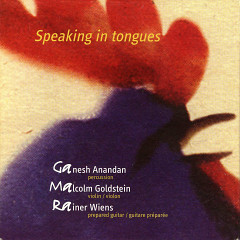
    En 2003, le percussionniste d’origine sud-indienne Ganesh Anandan a attiré les regards. Lui qui s’activait dans l’ombre d’artistes «world» et de danseurs s’impose de plus en plus comme un improvisateur et un créateur. Deux disques, Imaginaria (un duo de percussions avec Patrick Graham) et Speaking in Tongues (en trio avec Rainer Wiens et Malcolm Goldstein), ont témoigné de ce regain d’activité en 2003. La nouvelle année sera-t-elle aussi chargée? «Je pense que oui!» pouffe-t-il au bout du fil, ravi. C’est qu’il prépare un spectacle solo pour février, qui sera présenté au Théâtre La Chapelle, dans une mise en scène de Guy Laramée, avec projections vidéo de Dominique Sicotte. «Ça s’appelle Ici et là-bas. C’est basé sur l’immigration. Toute la présentation est centrée sur le tambour sur cadre (frame drum) et je raconte entièrement en français.» Le projet promet de révéler l’originalité de cet artiste encore méconnu. Mais ce n’est pas tout. Un nouvel album avec Rainer Wiens, Up North, devrait paraître au printemps. Le duo ira à Vancouver en juillet, après quelques jours à Ulan Bator, Mongolie, où ils participeront à un festival de musique actuelle! «Wolfgang Stryi, le clarinettiste de l’Ensemble Modern, sera notre invité.» C’est qu’Anandan vient de terminer une collaboration avec le prestigieux ensemble allemand, qui avait invité quatre compositeurs d’origine indienne à soumettre de nouvelles œuvres. Le projet paraîtra sur disque en cours d’année. Et ce n’est que la pointe de l’iceberg. Gardez l’œil ouvert; vous croiserez le nom de Ganesh Anandan à plusieurs reprises en 2004.

    Unstable Friends in Sands Zine

    “Recensione”, Alfredo Rastelli, Sands Zine, January 3, 2004
    Saturday, January 3, 2004 Press

    Parte con un blues oscuro e stravolto questo disco d’esordio dei BOB, trio formato dal percussionista dei fantastici Klaxon Gueule, Michel F. Coté, insieme a Eric Bernier e Guy Trifiro. Sono canadesi e questa dovrebbe essere la prima uscita dell’etichetta &Records. La musica che c’è dentro Unstable Friends è un cantautorato allucinato che ricorda per mood le ultime uscite di Gira o Steve Von Till. La differenza è che il gruppo esplora a fondo la forma e la tipologia della canzone, la intinge di ‘soul” deviato, e soprattutto utilizza dosi abbondanti di suoni elettronici generati da computer e macchine, facendo della musica quasi la messa in scena di un possibile futuro prossimo venturo. Non abbiate fretta di giungere a conclusioni errate, però, perché non è un disco elettronico in senso stretto. Bisogna infatti fare i conti con gli interventi più propriamente ‘musicali’ effettuati degli ospiti di questo disco. Li voglio citare tutti perché il loro contributo mi sembra non di quelli da poco per la riuscita del disco: Jean Derome ai fiati, Normand Guilbeault al contrabbasso, il grande Alexandre St-Onge agli electronics e Bernard Falaise alla chitarra elettrica, questi ultimi due già compagni di Coté nell’esperienza dei Klaxon Gueule. Ciò che ne esce fuori è dunque un riuscito districarsi con classe ed equilibrio invidiabile tra l’analogico e il digitale, tra l’elettro e l’acustico, un chiaroscuro di suoni e atmosfere, colonna sonora ideale per i film di David Lynch (ogni volta che sento il nome Bob mi torna sempre alla mente Twin Peaks; ormai sono segnato a vita) o i libri di Philip K Dick. Non solo blues ritroviamo in queste undici tracce ma anche molto pop. Nelle strutture scheletriche dei pezzi si inseriscono deviati arrangiamenti calibrati alla perfezione. Se l’inizio, come abbiamo accennato, è alquanto cupo, oltre alla traccia d’apertura Love Is… menzione d’obbligo per il sound da Birthday Party del futuro di Be Aware, le cose si fanno più distese nel pop di Bank of Life e Landscape of Panic o in Puffy Face, un vero e proprio pezzo di trip-hop intimista. The Scratch ci riporta in ambientazioni metropolitane post-industriali, quasi la riattualizzazione di certa new wave (come dei Mark Stewart & Mafia più malleabili). Il canto, tesissimo, di Eric Bernier, tra il poetico e il teatrale, è funzionale ai suoni, rimane sempre sospeso e carica maggiormente di tensione una musica che già da sola non scherza affatto, e quando ti aspetti un’accelerazione o un’impennata vocale, vieni ricambiato con un’inquietante e poco rassicurante confidenzialità. Bravissimi.

    Bravissimi.

    Radio Roadmovies in The Wire

    “Soundcheck Review”, Brian Morton, The Wire, no. 239, January 1, 2004
    Thursday, January 1, 2004 Press

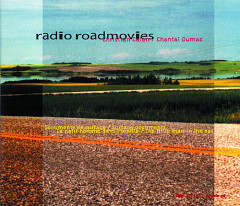
    The idea of a Canadian road movie may conjure up perversely disturbing images of defensive driving, speed limits rigidly observed and perfectly nice people encountered along the way. For the most part, that’s what Calon and Dumas deliver in these two pieces realised for Radio Canada’s L’Espace du son and Deutschland Radio in Berlin.

    Made for the former, Le petit homme dans l’oreille presents its found materials with a minimum of manipulation. Wind, birds, snatches of conversation, background ambience from a threshermen’s reunion and stampede in Manitoba contribuate to a gently bucolic cross-country journey. At times the spirit of R Murray Schafer’s prolific music is invoqued but without his ambitious grandiloquence. The key emphasis here is on the human trace in the lanscape. An awesome landscape acoustic, stirred with breaths of air and occasional bird twitters, is suddenly transformed by the Doppler wail of a freight train, human voices are caught either in the boxy acoustic of a camper van or in the delicious echo of the Ouimet Canyon.

    And so it goes, gentle and strangely uninvolving, like a long distance journey when fatigue and a drift of attention eases the miles by in affectless boredom. On Documents de surface, the human archaeology is minimal, replaced by animal and weather sounds. Canadian Pacific still puts in an appearance, but the action is more operatic with long naturalistic recitatives intersperced with choric effetcs from trees and watercourses and odd dramatic aria provided by birds.

    As a radio experience, these are doutless compelling pieces. They’re more troublesome on CD. They could have done with some visual enhancement, possibly a CD-ROM of location photography or a virtual map of relevant routes.

    Diversion in Exclaim!

    “Review”, Glen Hall, Exclaim!, January 1, 2004
    Thursday, January 1, 2004 Press

    Canada’s pre-eminent free jazz group NOMA hits a home run with Diversion. Tom Walsh has absorbed Ornette Coleman’s Harmolodic concept, synthesized it with a dizzying array of sound art gestures, and produced a recording of compelling resonance. The coloristic brilliance of prepared guitar by Rainer Wiens, the funk-solid electric bass of Alan Baculis, the earthy feel of drummers Francois Chauvette, Thom Gossage and Pierre Tanguay, all coalesce in music that is ethereal and butt-shaking, abstract yet visceral. Forget New York, Chicago, London, Amsterdam; Montréal’s NOMA makes music so unapologetically direct, conceptually articulate, sonically rich that its boldness demands global musical and critical acknowledgement. A 32 track CD, Diversion, recorded live in Montréal and at Toronto’s Music Gallery, ranges from the koto-like Ouvert Tour to the dynamic Conversation, by turns subtle and stark, lyrical and acidic, funky and swinging. Walsh’s visionary approach has yet to garner him the worldwide acclaim a NYC-based artist would long ago have achieved, but dauntless, he has, in true Canadian fashion, persisted, making a highly personal music in his brilliantly idiosyncratic way.
    … he has, in true Canadian fashion, persisted, making a highly personal music in his brilliantly idiosyncratic way.
  • 32
  • 33
  • 34
  • 35
  • 36
  • 37
  • 38
  • 39
  • 40