actuellecd

Blog

192 results
  • 13
  • 14
  • 15
  • 16
  • 17
  • 18
  • 19
  • 20
  • 21
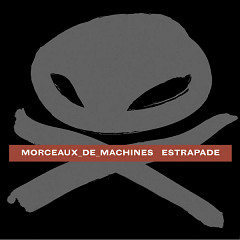
  • Estrapade, morceaux_de_machines in De:Bug

    “Kritik”, ASB, De:Bug, June 1, 2005
    Wednesday, June 1, 2005 Press

    Improv-Noise und Musique Concrète könnten sogar die Tanzflächen rocken, wenn man sie irgendwo ließe. Das bieten zumindest einige Tracks dieses französischen Duos an, die sich hier mit den Turntablisten Otomo Yoshihide und Martin Tétreault sowie Diane Labrosse zusammen tun. Von Tanzmusik kann allerdings wirklich nicht die Rede sein, wohl aber von spannend gemachten digitalen Lärmattacken, die eben auch durchaus mal rhythmisch oder aber ambient sein dürfen. Klasse unakademisch! 3/5

    Estrapade in Wreck This MeSS — Paris

    “Critique”, Laurent Diouf, Wreck This MeSS — Paris, June 1, 2005
    Wednesday, June 1, 2005 Press

    Un album d’electronic-noise dans la grande tradition de la musique post-industrielle. Aux manettes, A_dontigny et Érick d’Orion qui utilisent des CDs préparés, des effets doublés de computers, percus et objets électroniques… Il en résulte un conglomérat sonore très brut, voire brutal… Crissements et sonorités métalliques zèbrent leurs compositions qui affichent une densité acoustique exceptionnelle. Et plus rarement des rythmiques (Triple fermentation). Ce pataquès noisy s’adresse en priorité à ceux qui ont les tympans déjà bien aguerris… Dans la joie et la douleur (Fonçage de pieux, Onanisme, Placenta compressa, etc.), ces terroristes bruitistes ancre leur démarche en revendiquant une filiation avec la musique concrète tout en invoquant Marcel Duchamp, Claude Lévi-Strauss et Kurt Vonnegut (auteur de science-fiction dans la lignée de Brown et Scheckley). En plus, ils ont reçu le soutien actif d’Otomo Yoshihide (grand maître du genre) sur un morceau au titre emblématique: Trépanation. Autres invités: Diane Labrosse (échantillonneur) et Martin Tétreault qui jongle, pour sa part, avec des tourne-disques amplifiés; rejoignant ainsi, en un sens la démarche de Saule et Philip Jeck. Ne pas dépasser la dose prescrite…

    Dans la joie et la douleur, ces terroristes bruitistes ancre leur démarche en revendiquant une filiation avec la musique concrète…

    Veuillez procéder in AllMusic

    “Review”, François Couture, AllMusic, June 1, 2005
    Wednesday, June 1, 2005 Press

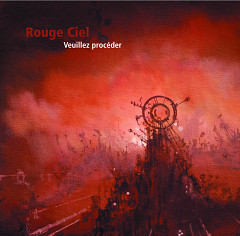
    Released three years and a half after the group’s debut CD, Veuillez procéder (literally: “Please Proceed”) was bound to feature some evolution in its music, but the giant leap it represents was unforeseen. Since their 2001 opus, Guido Del Fabbro, Simon Lapointe, Antonin Provost and Némo Venba have sharpen their edge, loosing the slightly pastoral feel that had previously drawn comparisons to Maneige and Conventum in favor of a rougher-edged, harder-rocking sound that takes them closer to The Muffins or Miriodor. The music still feature a certain level of tension between complex rhythm-driven pieces and studied moments of contemporary chamber music. Del Fabbro’s violin and Venba’s trumpet play key parts in the music’s excitement, but it seems that on this second effort the guitarist and keyboardist take more room — and all for the better. Veuillez procéder features twelve pieces split three-way between short transitional improvisations (the Bond précisionnel series), pieces in the three-to-five-minute range and longer epics. Del Fabbro’s Bois dur presents Rouge Ciel at their most arcane and jumpy, with elements of Univers Zero and a bastardized acoustic take on brutal prog. Nostradamus l’avait prédit and L’Occupation are breathtaking workouts, filled to the rim with clever ideas, dizzying counterpoint and folk overtones. Teuteuta and Pour Hortense offer an interlude of playful, more immediately accessible tunes. The album’s only small caveat is the 11-minute Névréalité postparapsychophysiologique which seems to get lost among its multiple themes. There might have been three or four great song ideas in there instead. Still, the piece will give avant-proggers something to chew on and the remainder of the album is pure creative delight. Rarely is a long-awaited second album this suited to meet expectations.

    Rarely is a long-awaited second album this suited to meet expectations.
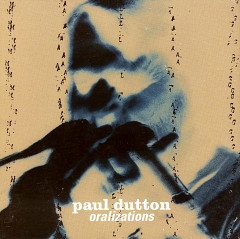
    Oralizations in Blow Up

    “Recensione”, Nicola Catalano, Blow Up, no. 85, June 1, 2005
    Wednesday, June 1, 2005 Press

    Già noto dagli anni ‘70 per la sua attività di letterato e poeta sonoro e, in anni più recenti, per le collaborazoni con altri acrobati della voce (i Five Men Singing con Phil Minton, David Moss, Jaap Blonk e Makigami Koichi) e le azioni del collettivo CCMC con John Oswald e Michael Snow, Paul Dutton raccoglie in Oralizations una serie di lavori che coprono circa sei lustri di sperimentazioni. Grammelot estemporanei, canto di gola, proto-rap pirotecnici e primordiali per sole ugola e cavità orale senza trattamenti elettronici e unicamente qualche sovraincisione qua e là, disinibito andirivieni tra fonemi in libertà e poesia verbale (in Wolf Chant il testo è di R Murray Schafer) con grande attenzione alla pura qualità acustica dell’offerta vocale.

    Veuillez procéder in Blow Up

    “Recensione”, Nicola Catalano, Blow Up, no. 85, June 1, 2005
    Wednesday, June 1, 2005 Press

    Ricco e fantasioso anche il secondo album di Rouge Ciel, quartetto capitanato da Guido del Fabbro, classe 1980, canadese a dispetto del nome. I materiali sono quelli tipici del circuito delle musiche eterodosse così popolari nel Canada francofono (la Monsieur Fauteux è sottoetichetta della Ambiances Magnétiques), una variopinta tavolozza di jazz, progressive e art-rock, disinvolta energia popular e colte cogitazioni avant-improvvisative alla stregua dei numi tutelari Henry Cow e Conventum.

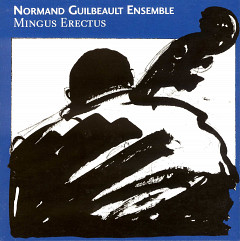
    Mingus Erectus in Blow Up

    “Recensione”, Nicola Catalano, Blow Up, no. 85, June 1, 2005
    Wednesday, June 1, 2005 Press

    Non nuovo a tributi nei confronti della vasta e composita opera mingusiana (si veda Hommage à Mingus del ‘96 su Justin Time), il contrabbassista Normand Guilbeault ha in pratica dedicato interamente questi ultimi anni della carriera al repertorio del maestro di Nogales. Accompagnato da altri nomi noti della scena quebecoise, su tutti Jean Derome (già sodale in Bruire, insieme a Martin Tétreault e Michel Coté), il nostro infonde tale grande ardore nella rilettura competente e appassionata di rinomate pagine del catalogo dell’autore di colore (i classici Pithecanthropus Erectus, Moanin’ e Fable of Faubus con titolo e testo riadattati per un attacco frontale al George W. più detestato del mondo…), passando per episodi più oscuri e aggiungendovi un po’ di crusca del proprio sacco (MDMD, per la verità firmata da Derome con perfetta grafia mingusiana). Data la complessità della scrittura originale, operazione non facile ma ottimamente riuscita.

  • 13
  • 14
  • 15
  • 16
  • 17
  • 18
  • 19
  • 20
  • 21