actuellecd

Blog

78 results
  • 5
  • 6
  • 7
  • 8
  • 9
  • 10
  • 11
  • 12
  • 13
  • La femme territoire ou 21 fragments d’humus in Blow Up

    “Altrisuoni”, Dionisio Capuano, Blow Up, no. 180, May 1, 2013
    Wednesday, May 1, 2013 Press

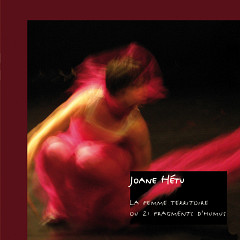
    Il nuovo progetto della Hétu, costruito secondo il modello del teatro sonoro, è sviluppato da un quintetto di musicisti-interpreti che vede in organico, oltre alla stessa compositrice, Alice Tougas St-Jak, Jean Derome, Isaiah Ceccarelli, and Susanna Hood. La struttura a scene-frammenti esplora temi la cui diversità epistemologica (sesso, corpo, politica, ecologia, morte) viene unificata attraverso l’idea della complessità femminile. La scrittura musicale è caratterizzata dal modo di lavorare sulla melodia proprio del rock in opposition e dell’avant-song, che può concedersi anche sembianze popolari come in S’la couler douce, limpida melodia per l’accordion e la voce della Tougas St-Jak. Più spesso però la forma canzone viene destrutturata tra tecniche vocali estreme, invenzioni patafisiche, field recordings, rumorismi da oggetti trovati, questo forse per meglio rappresentare la frammentarietà dell’esistenza. Ci vogliono un paio di ascolti per cogliere il valore complessivo di forma e sostanza del lavoro, che peraltro subito può essere apprezzato nell’impasto maschile-femminile di Ô madame la morte, nell’aplomb contemporaneo di Fragment Discipline de vie e nell’ugola quasi bianca di Susanna Hood (Nue). Ed è principalmente attraverso il canto che si rinviene traccia di quel senso difficile d’unità al quale si accennava e pure l’immagine d’una donna-umanità ferita ma ancora viva.

    Ailleurs in The WholeNote

    “Something in the Air: Liberation of the Unaccompanied Bass Solo”, Ken Waxman, The WholeNote, no. 18:8, May 1, 2013
    Wednesday, May 1, 2013 Press

    Of all the instruments that needed the advances of free music in the 20th century to show off its true character, it has been the double bass which benefitted most from this situation. Relegated to decorative, scene setting or mere rhythmic functions in conventional classical and jazz performances, it was only when bassists were able to express themselves without restraint that their role grew. By the 21st century in fact, solo bass recitals became as commonplace as those by other instrumentalists. The reason, as these CDs demonstrate, is the arrival of performers who can extract a multiplicity of novel tones, timbres and textures from four tautly wound strings. […]

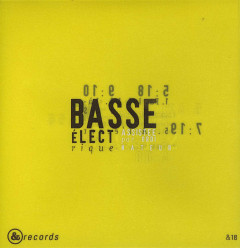
    If Jones’ electronic interface is limited, Montréal-based Alexandre St-Onge and Norwegian-in-Austin Ingebrigt Håker Flaten draw more textures to their finger tips by utilizing amplified electric basses on their solos sessions. A member of bands such as Klaxon Gueule, as well as studying for his PhD in art, St-Onge describes himself as a sound performer and the six selections on Ailleurs (&records ET 18) are studded as much with signal-processed drones and splutters as reflective string modulations. Layering the sequences with loops that replicate sounds ranging from ring-modulator whooshes to bell ringing and distorted flanges, the basic double bass-like rhythmic qualities of the instrument are muted. Only on the fifth track does the tremolo, dial-twisting exposition pull back enough for a semi-acoustic interlude. Here juddering bass-string plucks can be heard contrapuntally advancing the narrative, which is still decorated with additional droning lines and wiggling voltage-affiliated cries. The achievement of Ailleurs is that by mutating its intonation and freeing the bass from its limitations as a purely rhythmic instrument a new interface appears. The reverberating result is of an expansive formula that evocatively builds on expected bull fiddle timbres the way a realistic photograph could be the basis for a surrealistic art. […]

    The achievement of Ailleurs is that by mutating its intonation and freeing the bass from its limitations as a purely rhythmic instrument a new interface appears.

    Arômes d’ailleurs in Monsieur Délire

    “Listening Diary”, François Couture, Monsieur Délire, April 25, 2013
    Thursday, April 25, 2013 Press

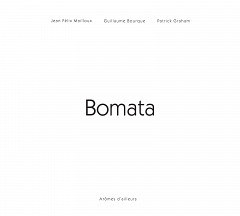
    Bomata is Montréal-based doublebassist Jean-Félix Mailloux’s second trio (the first one being the string trio Cordâme). And Arômes d’ailleurs (“Scents from Abroad”) is the second album, just out, by this trio also featuring clarinettist Guillaume Bourque (of Sagapool) and percussionist Patrick Graham. Mailloux’s music keeps gaining in sophistication, borrowing elements from India, Asia, and Northern Africa to feed his taste for non-obvious melodies. Graham, a master of the frame drum, anchors these borrowed elements in credibility (he is also helped in that regard by Ziya Tabassian on four tracks). This album shows how thin the line has grown between Cordâme and Bomata — it’s just a matter of instrumentation, since the creative drive and quality of the arrangements are one and the same.

    Mailloux’s music keeps gaining in sophistication

    Arômes d’ailleurs in Le Devoir

    “Critique”, Yves Bernard, Le Devoir, April 19, 2013
    Friday, April 19, 2013 Press

    C’est comme la trame d’un film intérieur, une suite sonore bellement évocatrice de paysages imaginaires qui rappellent pourtant des géographies, des états d’esprit, des modes et des épices. Sous la direction du compositeur contrebassiste Jean Félix Mailloux, le trio montréalais transporte plus qu’il ne brasse, évoque plus qu’il ne dicte, transmet la sérénité même sur les rythmes qui s’animent entre le jazz, la Méditerranée et l’Orient. La contrebasse est ronde, intense, jouée à l’archet, en pizzicato, multiple. Les clarinettes de Guillaume Bourque sont enjouées, insouciantes ou plus basses pour les profondeurs. Quelques invités ramènent au jazz plus dense ou aéré. Et Patrick Graham remplace maintenant Ziya Tabassian aux percussions. Il joue parfois avec lui. Multipercussions atmosphériques ou rythmiques aux nombreux petits effets chez le premier, très grande finesse chez le second.

    Le trio montréalais transporte… sur les rythmes qui s’animent entre le jazz, la Méditerranée et l’Orient.

    Arômes d’ailleurs in Bird is the Worm

    “Jazz from the Montreal, Canada scene”, Dave Sumner, Bird is the Worm, April 15, 2013
    Monday, April 15, 2013 Press

    Arômes d’ailleurs, the intoxicating new album by the Bomata trio, has an irresitable brooding disposition, even when the sound gets a bit chipper. This is not unexpected, because clarinet can be made to sound just like moonlight as it can a bright ray of sunlight. Now add to that mix a bass that knows how to sing and percussion with a dynamic nuance, and the resulting concoction transforms a pensive demeanor into a state of elegance, replete with a sunny warmth to contrast with music of cloudy skies. Guest appearances on piano and additional percussion add some welcome texture to the affair, and offer a little extra punch to the music’s emotional impact.

    Your album personnel: Guillaume Bourque (clarinet, bass clarinet), Jean Félix Mailloux (bass), Patrick Graham (percussion), and guests: Jérôme Beaulieu (piano), Philippe Melanson (drums), and Ziya Tabassian (percussion).

    Overall, a consistent album in terms of sound cohesion, but it does shift within that framework. There’s some influence from music of the Middle-East and the Mediterranean, but, ultimately, it eludes definitive categorization.

    Tracks like Nuit blanche and Somnambule epitomize the brooding element of this recording. Bourque’s soulful statements on bass clarinet pair well with Beaulieu’s pensive expressions on piano. Mailloux cries out on bass, an arco message of quavering resonance. Graham’s percussion possesses the fluidity of a river, the crash and shake of rapids over rocks.

    But it’s not all cloudy skies. Sesame has an upbeat nature. Clarinet rises up like thick smoke, incited to greater heights by percussion. Bass, which perhaps began as a motivating force, rises up to join clarinet’s elevation by song’s end. Opening track Au parc also maintains a cheerful disposition, each instrument getting the opportunity to let their voice rise above the others, but always accompanied by complementary chatter.

    Chinoiseries has a deliberate pace, though this is belied by some very active percussion… not unlike an early-morning sleepy face crowned with a head of crazy bed-hair. As wakefulness grows, so does the song’s intensity, rising to a fevered pitch. Jamine also moves at a steadied gait, and in this instance, maintains it evenly throughout. On Sabzi, the deep sway of bass clarinet is crosshatched with the spinning wheels of percussion. And on album closer Genmaicha, bass arco sweeps back and forth across the tilled soil of percussion.

    A very happy surprise to have happened upon this album, and I wanted to get some print down for it. The album is Self-Produced.
    Intoxicating

    Annunciations in Skug

    “Kritik”, Curt Cuisine, Skug, no. 94, April 6, 2013
    Saturday, April 6, 2013 Press

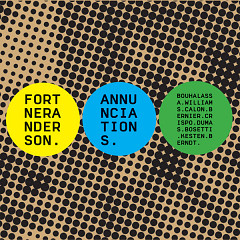
    Fortner Anderson gilt als einer der ersten spoken word — Künstler überhaupt, bekannt für eindrucksvolle Performances und acapella — Lesungen. Seit 1976 lebt und arbeitet der gebürtige Amerikaner in Montréal. Annunciations ist sein vierter Longplayer. Das gilt in diesem Fall dreifach, denn wir haben es mit einer Triple-CD zu tun, allerdings jeweils eher in halber bis ganzer LP-Länge. Es gibt vermutlich gute Gründe, warum sich diese neun Stücke von neun verschiedenen Komponisten auf drei CDs verteilen, allein, man kennt diese vermutlich nur, wenn man das dazugehörige book of poems besitzt. Denn kompositorisch liegen zwischen den neun Herren teilweise Welten und auch der Umgang mit dem Sprach — oder Lesematerial Fortners ist in manchen Fällen mit radikal noch halbwegs harmlos beschrieben. Bei Christian Kestens Remix etwa sind wir nahe dran an Heinrich Bölls berühmter Kurzgeschichte Dr. Murkes gesammeltes Schweigen bzw. in diesem Fall eher Dr. Andersons gesammeltes Räuspern. Na gut. Beeindruckend an Annunciations ist, wer hier quasi vertont. Neben Kesten treten auf: John Berndt, Christian Calon, Martine Crispo, Ned Bouhalassa, Chantal Dumas, Andy Williams, sowie Nicolas Bernier und Alessandro Bosetti. Vor allem die letztgenannten Herren haben großartig eigenständige Arbeiten abgeliefert, Bosetti mit Der italienische Manierismus, Bernier mit Strings.Lines. und stechen daher nicht von ungefähr ein wenig heraus. Insgesamt eine durchaus stimmige, fast ein wenig demonstrative Sache. Wer heimlich Gedichte (der jede andere Spielarten von Poesie) verfasst und schon mal daran gedacht hat, die eigenen Texte durch die zeitgenössische Avantgarde vertonen zu lassen, hört hier hinein und weiß danach, ob bzw. auf welche Art davon er/sie das wirklich will.

  • 5
  • 6
  • 7
  • 8
  • 9
  • 10
  • 11
  • 12
  • 13