actuellecd

Blog

66 results
  • 3
  • 4
  • 5
  • 6
  • 7
  • 8
  • 9
  • 10
  • 11
  • 6 improvisations in Downtown Music Gallery

    “Review”, Bruce Lee Gallanter, Downtown Music Gallery, March 30, 2014
    Sunday, March 30, 2014 Press

    All three members of this trio have played together (two at a time in different groups) on three previous AM discs. While Jean Derome (AM founding member) can be found on more than seventy discs so far, Malcolm Goldstein plays on some dozen discs and Rainer Wiens on just three so far, hence this is an unique trio with a modest title, 6 Improvisations.

    This is some extraordinary, intense, bristling improv! Wow!

    The opening piece is similar to some old Frith and Zorn improv but with some scary violin added to great effect. Mr. Derome does a fine job of balancing his extreme bent-note dialogue with tasty alto segments detouring to Monkland at times. Malcolm Goldstein, who is also a composer, starts with Polly Bradfield-like weird string sounds and then goes further out, tapping on the strings with the bow and his fingers. Mr. Wiens, who is the least known member of the trio, is impressive at playing his prepared guitar in a variety of strange ways. Certain sounds he gets I can figure out while at times he keeps me guessing with sounds from somewhere else.

    This trio creates their own world with their distinctive sounds which balance precariously between fascinating and disorienting.

    This trio creates their own world with their distinctive sounds which balance precariously between fascinating and disorienting.

    Le caillou in Downtown Music Gallery

    “Review”, Bruce Lee Gallanter, Downtown Music Gallery, March 30, 2014
    Sunday, March 30, 2014 Press

    Ensemble SuperMusique, has become more ambitious as their ranks have swelled with new members over the past few years. This version now features some twenty musicians including founding members: Jean Derome, Joane Hétu, Diane Labrosse, Pierre Cartier, Bernard Falaise, Danielle Palardy Roger and Pierre Tanguay plus newer members Lori Freedman, Charity Chan, Isaiah Ceccarelli and Alexandre St-Onge. Their guest from across the pond is French bassist Joëlle Léandre.

    I’ve caught this ensemble a few times over the past few years at the Victo and Guelph Festivals and know that there are a number of long-evolved concepts, themes or directions which help focus what they do and make their music a bit easier to understand. Especially while watching them live or reading liner notes in English, one gets a better idea of what is going on. Listening to this music on CD and not being able to translate the liner notes in French force to focus more closely on the music found within.

    The twenty musicians who are involved here play various reeds, strings, trombone, piano, basses, turntable, sampler and several percussionists. There is a careful, well-sculpted or directed approach going on. A few different subsections emerge from certain more chaotic moments and then interact or are interspersed between select connected fragments. I dig when the occasional melodic line or unexpected change in direction suddenly appear and then quickly disappear. Although there is no singer listed, odd bits of voices are used to pepper the proceedings in whimsical ways. Some of my favorite moments feature the great saxist/flutist Jean Derome, who always adds his distinctive bent-note charm at the right times.

    There is a playful visual element that can be seen whenever we catch this ensemble play live, which also can be heard in this music as it swerves through different scenes. Each piece sounds or feels like a different episode in an ongoing (TV?) story or series. There is one piece that was recorded live at The Stone, most likely when I was a volunteer working the door to help my Québécois friends feels more comfortable. As with most discs on the AM label, I look forward to digging deeper into what makes them so special.

    As with most discs on the AM label, I look forward to digging deeper into what makes them so special.

    Rêve éveillé in Le Devoir

    “Critique”, Yves Bernard, Le Devoir, March 28, 2014
    Friday, March 28, 2014 Press

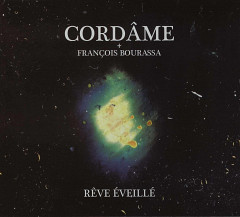
    Sous la direction de Jean-Félix Mailloux, Cordâme est à la croisée du jazz, du classique et des musiques du monde, sans être l’un ou l’autre. Sur leur disque précédent, ses membres étaient revenus à une formule plus intime en trio. Les revoici avec plus d’invités pour un disque plus jazz, avec la participation du pianiste François Bourassa et l’ajout de la harpiste Annabelle Renzo, qui adoucit les atmosphères, et du clarinettiste Guillaume Bourque, qui donne une touche plus désinvolte. Reste toujours ce trio de contrebasse, violon et violoncelle qui confère du lyrisme et de la sensibilité, tout en rapprochant de la musique de chambre, même sur des cadences doucement syncopées. La musique est contrastée, souvent imagée, parfois même cinématographique. Les formules instrumentales sont diversifiées d’une pièce à l’autre. Des couleurs orientales, subtiles ou hachurées apparaissent. Une musique sans lieu fixe qui transporte partout.

    … contrastée, souvent imagée, parfois même cinématographique.

    Rêve éveillé in Monsieur Délire

    “Listening Diary”, François Couture, Monsieur Délire, March 25, 2014
    Tuesday, March 25, 2014 Press

    At first, Cordâme was a string trio, but Montreal bassist Jean-Félix Mailloux’s band keeps on growing in size. On Rêve éveillé, violin, cello and doublebass are joined by Guillaume Bourque’s clarinets, Annabelle Renzo’s harp, Isaiah Ceccarelli’s drumkit, and, most importantly, François Bourassa’s piano. Recorded live in March 2013, this new album features mostly new compositions (and the ones that were previously recorded have been rearranged). Mailloux’s music is growing closer and closer to John Zorn’s jazzier, mystical side: easy to listen to, hybridized with various world cultures, sensual, and rich from a deep artistic process. The match between Cordâme and Bourassa (one of Quebec’s top-rated jazz pianists) borders on perfection. Balm for the soul.

    Balm for the soul.

    Transparence in Circuit

    “Critique”, Isaiah Ceccarelli, Circuit, no. 24:1, March 17, 2014
    Monday, March 17, 2014 Press

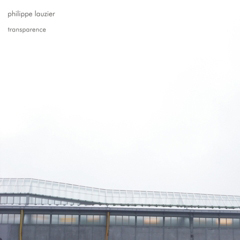
    Enregistré entre 2010 et 2013 dans trois lieux différents de Montréal (Église Saint-Zotique, Studio Oboro et Espace InQuiet), Transparence n’est rien de moins qu’un chef-d’œuvre. Virtuose, ciblé et clair, cet album nous transporte irréductiblement dans le monde musical profond, personnel et concentré du multi-instrumentiste, compositeur et concepteur d’installations sonores Philippe Lauzier.

    Lauzier occupe une place importante dans la scène musicale québécoise. À 36 ans, il tourne et enregistre avec de nombreux ensembles depuis 15 ans en Amérique du Nord et en Europe. Il a récemment collaboré avec le légendaire compositeur américain Phill Niblock. Il fait partie d’une génération de musiciens qui a côtoyé les domaines de la musique classique et contemporaine, du jazz, de la musique actuelle et de la variété — son curriculum vitæ n’en donne qu’un aperçu! — et il sait créer une musique entièrement originale, qui évite toutefois d’être rangée trop facilement dans les catégories décrites ci-dessus. Ce qui est encore plus impressionnant pour ceux qui, comme moi, connaissent le travail de Lauzier et le suivent dans ses nombreuses apparitions à Montréal et ailleurs, c’est la maîtrise absolue de ses instruments et le renouveau de ses recherches et de son monde sonore sur cette parution chez Schraum, une étiquette berlinoise.

    Pour l’occasion, Philippe Lauzier se sert des saxophones soprano et alto ainsi que de nombreuses façons de jouer de la clarinette basse, de l’amplification de celle-ci et de la «demi-clarinette basse». La dernière piste de l’album, Bruine, est une pièce pour cloches motorisées, une approche qui fait partie de son travail en installation sonore. Toutes les pistes de cet album emploient une variété de techniques étendues et Lauzier sait les employer à la perfection. Rien n’est «m’as-tu-vu»; tout est au service d’une musique captivante, planante, harmonique et chantante.

    Est-ce purement improvisé? Partiellement composé? Les deux tout à la fois? Comme seuls savent le faire les plus grands musiciens, Philippe Lauzier esquive aisément ces questions grâce à une maîtrise impeccable de ses instruments et une vision musicale soignée. Je conseille vivement Transparence à tous ceux qui désirent vivre une expérience musicale hors pair, présentée par un musicien de classe mondiale.

    Transparence n’est rien de moins qu’un chef-d’œuvre.

    Combines, Beau comme un aéroport in Vital

    “Review”, Dolf Mulder, Vital, no. 924, March 17, 2014
    Monday, March 17, 2014 Press

    Three new releases from Éric Normand’s label Tour de Bras. Two of them have the trumpet of Elwood Epps and the drums of Michel F Côté in common. Both are reputed players in the Montreal scene.

    Pink Saliva is an improvising trio completed by Alexandre St-Onge on bass and laptop. They present three improvised pieces recorded live in November 2010. Unpolished improvisations, with fine playing by Elwood Epps.

    In a more sophisticated context we hear Epps again in Côté’s project Mecha Fixes Clocks, together with: Philippe Lauzier (alto sax, bass clarinet), Epps (trumpet), Jean René (alto violin), Pierre-Yves Martel (viola da gamba, feedback), Bernard Falaise (guitar), Guillaume Dostaler (piano) and Côté (drums, feedback, and microphones). Again a typical Côté-release. Music of a dream-like nature. Open soundscapes in the background, with jazz-inspired instruments in the forefront, although there is no real forefront and background. The music evokes a sense of space. The music drips in your ears along unpredictable patterns and at the same time it all seems to fit.

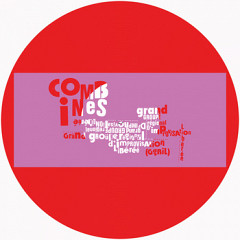
    Tour de Bras is also the driving force behind the festival Rencontres de Musiques Spontanées, with the large improvisational collective ensemble called GGRIL (Grand groupe régional d’improvisation libérée) as a returning act. Earlier they released an album with Evan Parker as a guest. This ensemble of 14 musicians under direction of Éric Normand, creates fine textures, that move seemingly independent from each other. Their interactions make you wonder what is happening here, and that is a good sign. The improvisations, pressed on red vinyl, are also surprisingly coloured due to an unusual line-up. I hear accordeon, electric guitars, percussion, strings, etc.

    Music of a dream-like nature. Open soundscapes in the background, with jazz-inspired instruments in the forefront, although there is no real forefront and background. The music evokes a sense of space. The music drips in your ears along unpredictable patterns and at the same time it all seems to fit.
  • 3
  • 4
  • 5
  • 6
  • 7
  • 8
  • 9
  • 10
  • 11