actuellecd

Blog

100 results
  • 2
  • 3
  • 4
  • 5
  • 6
  • 7
  • 8
  • 9
  • 10
  • Dur Noyau Dur in Earscape

    “Review”, Richard Cochrane, Earscape, no. 1, October 3, 1998
    Saturday, October 3, 1998 Press

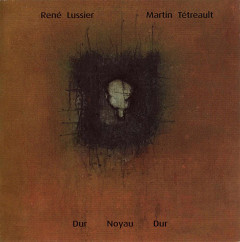
    Tétreault’s electronics and turntable manipulations have the primeval sound of early Ircam experiments; an unstable, glitching quality which gives these duets their edge. They are mostly short pieces — averaging 2 minutes or so, the briefest just 11 seconds — and this enables the pair to explore and experiment without risking the most common downfall of this kind of music, simply getting lost and boring the listener rigid. Lussier plays with great verve: on electric guitar he often blends with Tétreault, preferring abstract noise to notes, while on acoustic he takes a more conventional route, echoing Derek Bailey but sometimes even using a slide to create oblique country blues references.

    Each piece has an identity of its own, mainly due to the range of sounds which both players create, though Tétreault is especially careful not to repeat himself too much here; this makes the whole that much more approachable. In duet terms, Tétreault can sometimes be overbearing, and there are times when the two appear not to be listening to one another, but sometimes that is not so bad in this kind of music. Often enough, two different approaches emerge simultaneously and diverge; the listener must strain to follow their differing lines of argument until, some of the time at least, they converge again. This is an hour spent in intriguing company.

    This is an hour spent in intriguing company.
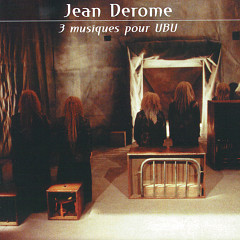
    3 musiques pour UBU in Jazz Magazine

    “Critique”, Alexandre Pierrepont, Jazz Magazine, no. 485, October 1, 1998
    Thursday, October 1, 1998 Press

    Chez les Contemporains (une ethnie), on connaissait le goût de John Zorn pour les musiques de films ou celui de Fred Frith pour les pas et figures des chorégraphes. L’étroite collaboration du saxophoniste, flûtiste et homme à tout faire Jean Derome avec la compagnie du Théâtre Ubu basée à Montréal agrandit ce cercle d’équilibristes. Au cours des dernières années, trois collages de textes ont donné lieu à autant de pièces et de musiques qui, sans tout à fait se soumettre à l’écrit, au jeu de scène, les relancent peut-être, généralement par annotations, précisément par morceaux, comme elles le feraient avec un partenaire supplémentaire et irrésistible Cantate grise s’inspire de Beckett et prête à ses divulgations oppressantes les miroirs tournants et les effacements d’un basson, d’un trombone, d’un violon et de flûtes. Luna Park reprend les chamboulements méthodiques des constructivistes russes du début du siècle et leur fait faire quelques tours de manège musical sous les commandes du trio Derome-Lussier-Tanguay, de leur ménagerie musicale, de leurs munitions bruitistes. Les Ubs, se mesurent inévitablement à l’innommable Jarry et à son très grotesque très mauvais et très ressemblant tigre de papier. Le sextette envoyé sur scène par Derome pour jouer les musiciens et les soldats des armées russe et polonaise fait le choix logique de la grandiloquence: il badine, fanfaronne et prend aux cheveux. L’irrévérencieuse «musique actuelle» serait-elle le meilleur souffleur que l’art dramatique ait connu?

    Dur Noyau Dur in Guitar Part

    “Critique”, Marie-Pierre Bionniol, Guitar Part, October 1, 1998
    Thursday, October 1, 1998 Press

    Terroristes, talentueux et innovants, René Lussier et Martin Tétreault sont deux Québécois qui se moquent des conventions, ces protocoles musicaux, figures imposées avec au moins au milieu trois accords en Ré. Tétreault, également connu dans le milieu de l’art contemporain pour ses détournements de vinyls est de ceux qui, à l’instar de Marclay ou de Yoshihide, démontent à grands coups de burin le mythe du DJ. Certes, il ne compose et improvise qu’à base de LPs mais cela dans un esprit nettement plus trituré, scratchant pour la milliseconde de craquement, faisant zipper le plastique afin de biseauter le diamant. René Lussier, lui, est un guitariste tatouilleur à qui aucune expérimentation ne fait peur: larsen, effets, objets, rien que du bruit anthropomorphique venant d’un instrument qu’il a su, au fil des années, dompter. Expérimental et extrême, ce disque tout en finesse saura interpeller les malicieux et les infatigables curieux.

    volume 3: Inédits, Ambiances Magnétiques in Hour

    “Spins”, Blair Thomson, Hour, September 24, 1998
    Thursday, September 24, 1998 Press

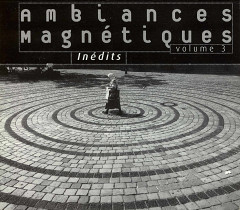
    The small but beautiful Ambiances Magnétiques label also doubles as a loose collective of nine musique actuelle stalwarts, all of whom are represented here: Côté, Derome, Duchesne, Hétu, Labrosse, Lepage, Lussier, Palardy and Tétreault. This third compilation is a collection of unpublished works whose diversity of sounds, emotions and styles is sonically refreshing, especially if listened to in one shot. The general effect is like playing back a dream in which you are inside a hollow, deeply resonant bowling ball scooting around a planet six trillion light years from Montréal. Of note are the tracks that include the voice in all of its non-pyrotechnical glory and the several live recordings that show us just how non-gimmichy improvisation can be in the hands of the musically courageous.

    … collection of unpublished works whose diversity of sounds, emotions and styles is sonically refreshing…

    Midi tapant in Hour

    “Hour Spins”, Blair Thompson, Hour, September 17, 1998
    Thursday, September 17, 1998 Press

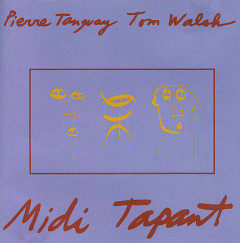
    This is a must-buy for musique actuelle devotees because trombonist Walsh and percussionist Tanguay are on to something important here. Each of the seven generous cuts feature tiny musical germs growing into sophisticated cultures before decaying with the finely mixed introduction of other directions. The samples of choirs, people and sounds are, like the trombone and percussion, neither exotic nor intrinsically dramatic, but are so tastefully incorporated into the compositions that you are surprised, but not shocked. The organicism of a musical figure running its course without the need for hip jump cuts is something in dire need of help these days, and this disc has come to its rescue in flying colours.

    … This is a must-buy for musique actuelle devotees because trombonist Walsh and percussionist Tanguay are on to something important here… Outstanding.

    Je me souviens — Hommage à Georges Perec; Tu r’luttes, Jean Derome in Splendid E-Zine

    “Review”, Andrew Magilow, Splendid E-Zine, September 14, 1998
    Monday, September 14, 1998 Press

    If authenticity is your main attraction to revivalist music, Jean Derome and company should be right up your alley. On this stunning 43-track CD, Derome leads the way through two compositions that are subdivided into smaller pieces. The first 26 tracks, recorded in 1994, pay homage to the Oulipian Georges Perec. In a true Oulipian approach, Derome produces tightly-wound tracks that are strict in arrangement yet mathematically complex, ranging in style from sultry jazz to circus music to mod-sounding surf music. There are even a few sprinklings of Monk emanating from some of the tunes, and the disc will be easily accessible to swing-band fans yet still eccentric enough to entice those searching for musical peculiarity. The second half of the CD, entitled Tu r’luttes, shows the more improvisational side of Derome and crew, as a chaotic, free jazz strain runs through the tracks. Think Zorn’s extremism without his aural ferocity. With many of your favourite Ambiances Magnetiques artists in tow, including Pierre Tanguay, René Lussier and Frank Lozano, Derome proves his amazing compositional ability while showcasing the outrageously overlooked Canadian talent that’s available. We’ve said it before, but if you haven’t checked out the Canadian experimental scene, you’re missing out on some awesome musical energy.

    … tightly-wound tracks that are strict in arrangement yet mathematically complex, ranging in style from sultry jazz to circus music to mod-sounding surf music.
  • 2
  • 3
  • 4
  • 5
  • 6
  • 7
  • 8
  • 9
  • 10