actuellecd

Blog

215 results
  • 23
  • 24
  • 25
  • 26
  • 27
  • 28
  • 29
  • 30
  • 31
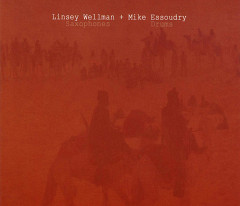
  • Mike Essoudry, Linsey Wellman, Visions fugitives op. 22 in Ottawa Citizen

    “Leaving the living room behind”, Doug Fischer, Ottawa Citizen, March 29, 2008
    Saturday, March 29, 2008 Press

    In the late ’90s, I visited a cramped living room in Vanier to watch three raw young musicians who called themselves Blue Room roar through an afternoon of loud post-bebop jazz. The trio didn’t amount to much more than a garage band, jazz-style, but it was evident bassist Pierre-Yves Martel, drummer Mike Essoudry and saxophonist Petr Cancura were going places.

    A decade later, they have arrived — separately — with a trio of debut albums: Martel as the force behind Quartetski’s free-jazz take on Sergei Prokofiev, Essoudry in an improvisational duo with saxophonist Linsey Wellman, and Cancura as frontman on a world-music-tinged CD coming later in the year.

    Of the two albums already available, Quartetski’s is more ambitious and more satisfying. But the group is working with a bigger palette — four musicians versus two — and a larger canvas: 18 piano sketches by Prokofiev versus a dozen off-the-cuff tunes.

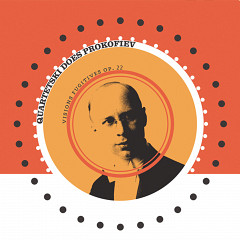
    Martel took Prokofiev’s pieces Visions Fugitives, Op. 22, written amid the chaos of the Russian Revolution — and arranged them so his Montréal-based quartet could use them as springboards (“vehicles, bridges and platforms” in his words) to improvisation.

    Given the upheaval during which the music was written, it’s hardly surprising many of the compositions are brooding and contemplative. Although the group sometimes struggles under the weight, it also frequently rises to the occasion with surprising harmonic textures and deft interplay.

    But Martel’s idea works best when the musicians are dealing with Prokofiev’s more playful compositions. The circus-like Ridicolosamente, for instance, gets a dazzling treatment featuring vibrant solos from trumpeter Gordon Allen and saxophonist Philippe Lauzier that roll over the top of Martel’s beefy bass and Isaiah Ceccarelli’s rollicking drums. The inaptly titled Allegretto tranquillo, raucous rather than calm, also gets high marks.

    On the other hand, the disc from Essoudry and Wellman, both living in Ottawa, succeeds most often when the music is more tranquil. The sax-drums combination is one of the most difficult in jazz to pull off, even in the hands of technical masters like John Coltrane and Rashied Ali. Essoudry and Wellman, of course, are not in that league, and their efforts at hard-charging improvisation are not nearly as effective as their meditative pieces, especially the delicate Jeweled Garden.

    The circus-like Ridicolosamente, for instance, gets a dazzling treatment featuring vibrant solos…

    Jean Derome, Joëlle Léandre, Danielle Palardy Roger in The Gazette

    “Joëlle Léandre waving her bow around can be a beautiful thing”, Kate Molleson, The Gazette, March 26, 2008
    Wednesday, March 26, 2008 Press

    French improv bassist Joëlle Léandre has a mighty impressive biography — she’s worked with Pierre Boulez, John Cage, Steve Lacy, Fred Frith, John Zorn — and judging by her appearance at La Sala Rossa last night, she’s a fierce enough lady to live up to it.

    She arrived late, hair wild and dress scruffy black, peered callously into the audience and picked up her instrument. Waiting for her on stage were local musique-actuelle fixtures Jean Derome and Danielle Palardy Roger, both impressive and fearless improvisers. Together the three produced an hour of music that, though not for the faint-hearted, passed through moments of surprising beauty.

    The process would be familiar to most improvisers: One musician introduces an idea — a short melody or rhythm or sound or gesture, or even, in Léandre’s case, fragments of spoken words — then the others play with and around it. The idea develops and eventually morphs into other ideas. Hopefully, somewhere in the process, the group will have arrived at some interesting sounds.

    What distinguished last night’s group was how varied and refined the sounds were. Derome played alto and baritone sax, flute and alto flute, and came equipped with an arsenal of toys: ocarinas, slide whistles, things that scrape and scratch and pop and hoot. His saxophone sound is aggressive, but works fabulously in this context, and I love the way he hints at standard jazz gestures amidst the abstract swells and screeches.

    Léandre, meanwhile, commands her bass forcibly, producing uncanny wails and sniffles and, at one point, a smacking walking bass line. She uses her bow a lot, more than most jazz bass players dare, and to great effect. When things got really heated, she’d wave the bow around in the air to make swooshing noises. It’s a visual spectacle (one reason I have trouble listening to this kind of music on record) and Léandre’s fierce personality became integral to the performance.

    People have strong feelings about this kind of improvised music (my brother, for example, calls it ‘public wanking’). Some say it’s intimidating because it’s so experimental, but I reckon that it’s because it is just so experimental that anybody can listen to it. You don’t need any background knowledge; the whole point is to experience the sounds as they come. In that sense, it’s very accessible.

    What distinguished last night’s group was how varied and refined the sounds were.

    Visions fugitives op. 22 in The Squid’s Ear

    “Review”, Paul Serralheiro, The Squid’s Ear, March 24, 2008
    Monday, March 24, 2008 Press

    Montréal’s creative music scene is growing by leaps and bounds these days, and this release is elegant proof of the fact. A piano-less and guitar-less quartet made up of trumpeter Gordon Allen, drummer Isaiah Ceccarelli, reeds player Philippe Lauzier and bassist Pierre-Yves Martel, Quartetski is a meeting of some of the more active minds on the Montréal scene all focused here in their improvisatory efforts on the score of Prokofiev’s 1917 suite of piano miniatures, Visions fugitives. Arranger and musical director Pierre-Yves Martel has reworked eighteen of the twenty Prokofiev pieces and scored them for the quartet, taking liberties with the music to make room for improvisation and interpretation.

    With standard Italian indications like Lentamente and Allegretto, and the less common Ridicolosamente and Lento irrealmente the pieces are distilled treats of classical sensibility, and while the quartet respects the spirit of the pre-composed music, they thankfully take it outside the box, as in the trumpet smearing and gentle squeals and wind-patterns of the opening cut or the Don Cherry minimalist and quasi-dixieland playfulness of Commodo.

    Using the Russian composer’s themes as “heads,” preceded by intros and followed by tags or codas, the musicians explore the character of each piece. This may seem like riding on the coat-tails of the famous Russian, but Pierre-Yves Martel’s classical background as viola de gambist gives him an edge since he obviously understands the meaning of the music well enough to pull the rabbit out of the hat. And while the personalities of these musicians are distinct, they blend convincingly. Allen’s variety of trumpet timbre, often tending to graceful understatement, Lauzier’s supple reeds, Ceccarelli’s timekeeping and colorist drumming and Martel’s eclectic bass vocabulary that can be as intense as William Parker and as light as a Strauss waltz are definitely complimentary colors. Add to this an excellent use of texture changes, tempo fluctuations and equilibrium between the composed and the improvised and this makes for a disc that is both fun and serious.

    Add to this an excellent use of texture changes, tempo fluctuations and equilibrium between the composed and the improvised and this makes for a disc that is both fun and serious.

    Mike Essoudry, Linsey Wellman, Departure in Vital

    “Review”, Dolf Mulder, Vital, no. 619, March 18, 2008
    Tuesday, March 18, 2008 Press

    Two new releases from the small Malasartes label that is run by Damian Nisenson.

    Linsey Wellman (alto and soprano sax) and Mike Essoudry (drums, percussion) are together here for their first effort. In thirteen pieces that are composed and arranged by themselves, they play charming duets. In most pieces Wellman leads with his beautiful saxplaying. He has a nice tone, and there is some eastern touch in his playing. But Essoudry places many effective accents with his reduced playing. Together they built nice atmospheres. Most pieces are of a meditative nature. Inspired music it is.

    Yul is a trio of Pierre Tanguay (drums), Erwin Vann (saxes) and Michel Mergaerts (bass). Tanguay needs no introduction. He left his mark on dozens of albums, many of them on the Ambiances Magnétiques label. Vann and Mergaerts are both from Belgium. Vann is a professional since 1985. Worked with Toots Thielemans, Wayne Shorter, Paolo Fresu, Marc Ducret, Bobby Previte, a.o. Michel Mergaerts from Brussels, started his career as a blues guitarist. Later he played with belgian jazz giants as Steve Houben, Pirly Zurstrassen and Jean-Louis Rassinfosse. Since about seven years he lives in Canada, playing with vocalist Julie Lebon and Trioxyde, a prog-rock/jazz outfit. The three met in 2005 and started their Yul-project. The title of their CD refers to a common experience for all three of them: passing airports. Compared to the cd by Wellman and Essoudry this one is much more close to jazz. The playing of Vann is delicate and poetic. A lyrical player. Mergaerts produces a warm sound from his bass. Tanguay is the most eccentric of the three with his polyrhytmic playing. But if you don’t share their love for jazz, this one will not talk to you.

    The playing of Vann is delicate and poetic. A lyrical player. Mergaerts produces a warm sound from his bass.
  • 23
  • 24
  • 25
  • 26
  • 27
  • 28
  • 29
  • 30
  • 31