Musique-politique dans The WholeNote
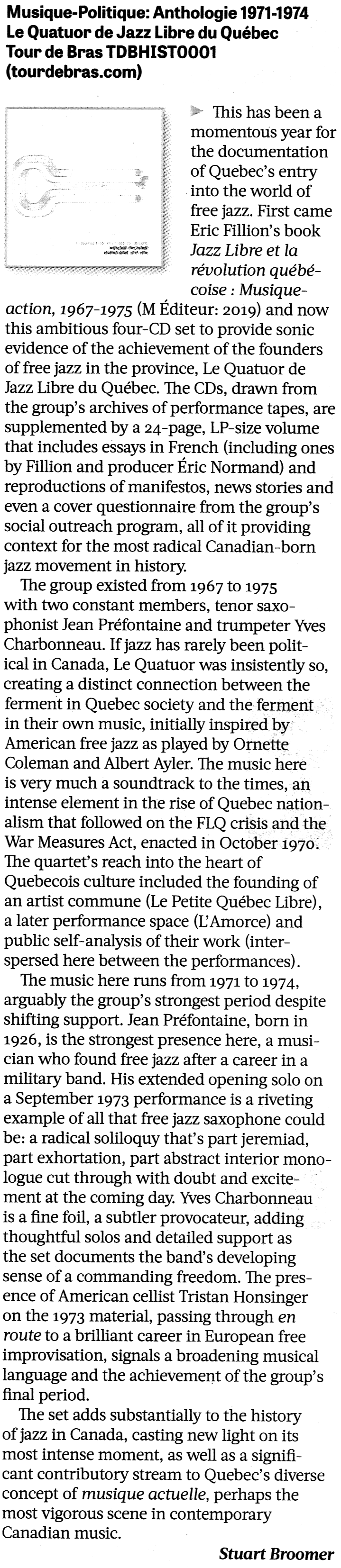
«Review», Stuart Broomer, The WholeNote, no 25:2, 1 octobre 2019
jeudi 3 octobre 2019
Presse

The piece is in five sections, each lasting between ten and fifteen minutes. Although almost entirely consisting of long-held notes, I don’t particularly hear the music as drone-related.
Very impressive, super-solidly played by the
In 2017, Switzerland’s
In November 2017, employing the methods described above,
Because of its source, there were a couple of issues with the recording. Firstly, it picked up street noise from outside Café Oto (a common occurrence at the venue) which had to be cleaned up
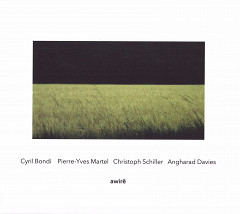
Although the quartet performance was a one-off—so far unrepeated and maybe likely to remain so—the four clearly clicked straight away, sounding as if they regularly played as a foursome. In particular, Davies readily took to the trio’s use of notes on pieces of paper to shape their improvisations—although that evening two of the pieces were blank, to encourage free improv. The end results feature all four players equally, with no-one leading or dominating unduly. The instruments’ sounds meld together into a blend that is very easy on the ear, with enough happening to keep it interesting throughout but not so much that it becomes cluttered. As the range of instruments played by the four suggests, there was plenty of scope to keep the soundscape fresh and varied—in
As a whole, the piece is such a success that it is possible to envisage more improvisers adopting the ‘pieces of paper’ methodology in future. For now, the only remaining mystery is why this quartet has not recorded together again, maybe in a studio, with more time at their disposal. On the evidence of
Undoubtedly one of the most successful encounters Québécois have had with a British citizen since 1759, this live CD captures the close musical cooperation among London-based tenor and soprano saxophonist