Sauter au contenu principal
actuellecd
  • This website is also available in English.

Blogue

3585 résultats
  • 45
  • 46
  • 47
  • 48
  • 49
  • 50
  • 51
  • 52
  • 53
  • Souffles dans Vital

    «Review», Nick Roseblade, Vital, no 1271, 10 février 2021
    vendredi 12 février 2021 Presse

    Given Derome’s legacy and standing in the field on the Canadian creative music scene Souffles feels like a culmination of a lifetime crafting forward-thinking music and, at the same time, a misfire. At times music can be dynamic. Its motifs and refrains show a style of playing that has seen Derome receive plaudits from critics, his peers and live audiences alike. Yet, there are portions of the album when it doesn’t really work. Cloudy sees Derome playing a wind instrument. Is it a penny whistle? A Piccolo? A child’s recorder? Ultimately it doesn’t matter. Its sound is in the middle of a Venn diagram featuring virtuoso reedist playing an unfamiliar instrument, toddler music group, nails down a blackboard and asthma attack. The phrases are played almost ad nauseum for its nearly five-minute duration. With each one, the tension gets more and more unbearable. When Cloudy does end you let out a pleasing sigh of relief. Which is a shame when compared to Eskers-Zoo. Here Derome delivers riff after glorious riff. The music soars. It dances all around you. It makes you feel alive and excited for the next barrage. He attacks his instrument. Playing it for all its worth, then gently caresses it and plays tenderly. It’s nothing short of wonderful. And makes the tracks like Cloudy even more infuriating. Derome is clearly a gifted player. He has an exceptional ear for melody and contrasting tones, which makes the damp squib of Cloudy, Castelet and Cantus Firmus so dejecting.

    If you are an existing fan of Derome’s work give his a-go, as you might find something I didn’t. If you don’t know Derome’s work, maybe try something else as this might be too overpowering on a first try. What is clear is that after all these years Derome isn’t running out of ideas, but much like the edible namesakes the album is named after, they need to cook to perfection. Many some of these tracks needed to come out of the cover a little soon and others needed a little more time before they were ready for public consumption.

    Its motifs and refrains show a style of playing that has seen Derome receive plaudits from critics, his peers and live audiences alike.

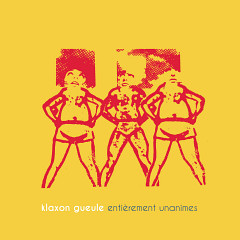
    Entièrement unanimes dans Vital

    «Review», Nick Roseblade, Vital, no 1271, 10 février 2021
    vendredi 12 février 2021 Presse

    Since 1997 Michel F Côté, Bernard Falaise and Alexandre St-Onge have been releasing music under the moniker Klaxon Gueule. These albums take bits from noise, experimentalism, avant-garde, free improvisation, and jazz to create something forward-thinking. The group have now released their eighth album, Entièrement unanimes, loosely translated to Fully Unanimous. Using the blueprints of the previous 24-years to create their strongest release to date. Which is no easy feat!

    From the opening salvo, there is something wonderfully wonky about Entièrement unanimes. Its charm comes from the giddy glee that seeps out of every pore. It reminds me of those early electronic albums where it was more about experimentation, and fun than what was actually created. That isn’t to say that Klaxon Gueule hasn’t crafted some wonderful music. Non-lieu d’adieu is a fantastic piece of music that lurches around over ad-hoc percussion, whimsical synths, and delightful bleeps.

    Toute la glu is built around a fidgeting bassline which allows lyrical guitars and obtuse synths to create something that is both transfixing and repulsive. You are drawn to it and cannot look away, but there is something at its core that makes you want to flee. This juxtaposition is something that has been missing on their previous releases, but here is used to make our stay and lives up to its title of All the Glue. Entièrement unanimes culminates on Deux ouverts directement devant. Here everything is pushed to it (ill) logical conclusion. From the psychedelic intro, gossamer guitars and xxx we are shown another side to the band. The previous 11 tracks have been atonal twitching things, but here Klaxon Gueule shows us they are capable of creating something beautiful and, dare I say, almost conventional. There are actual melodies and rhythms to latch on to, rather than writhing layers of server instrumentation. It is a fitting end for such a delightfully deviant album.

    At its core, Entièrement unanimes is an incredibly fun album. There is a conviction to the album that is inspiring. It doesn’t take itself too seriously, but the playing is done with absolute seriousness. There is no messing about here. But this is part of the album’s charm. After a quarter to a century performing and recording Côté, Falaise and St-Onge know each other well. They can predict what they others will do and counterpoint it perfectly. After listening to Entièrement unanimes for longer than I should, I am unanimous in my decision that it is one of the finest albums of the past few years. This should be shouted from the rooftops. Entièrement unanimes should be on everyone’s end of the year list and if it isn’t then you need to take a hard look at yourself in a mirror.

    After listening to Entièrement unanimes for longer than I should, I am unanimous in my decision that it is one of the finest albums of the past few years.

    Alvin Lucier: Navigations dans Exclaim!

    «Review», Tom Piekarski, Exclaim!, 2 février 2021
    lundi 8 février 2021 Presse

    Montréal-based string quartet Quatuor Bozzini have been a mainstay in the Canadian classical music scene for over two decades. Favouring the avant-garde end of the musical spectrum, the quartet has been unafraid of suffusing playful and inventive interpretations throughout a repertoire dedicated to experimentation. Off the heels of 2020’s buoyant Ana Sokolović: Short Stories, Quatuor Bozzini pare things down with Alvin Lucier: Navigations, an ode to the quartet’s relationship with the titular American composer and his material.

    This collection of five tracks recorded in concert is timely, as Alvin Lucier’s reputation has been crystallizing as of late. A contemporary of minimalist pioneers and a towering figure of experimental and contemporary classical music in his own right, Lucier and his recent work have been celebrated anew by labels like Oren Ambarchi’s Black Truffle Records.

    Quatuor Bozzini’s collection is a welcome addition to the attention on Lucier, especially given this release’s focus on some of the composer’s lesser-known works for string quartet. While Lucier’s most applauded pieces tend towards less conventional instruments, the quartet succeed in conveying his interest in relationships between the acoustic phenomena of a place and the instruments and amplification systems around. Disappearances announces what we should expect from Lucier when composing for strings; a deep respect for the power of a sustained string. The piece utilizes unison violin and cello tones to gradually bring out the characteristics of the room. Two versions of Group Tapper are highlights, as they display the sonic variety that can be had when all four players are tapping the bodies of their respective instruments in a different place and at different tempos.

    Listeners with only a passing familiarity with Lucier’s work might detect layers of conceptual baggage in the quartet’s performance, but it is important to note that the best results are achieved if one assumes that Lucier is trying to lay as bare as possible the sonic characteristics of the materials that performers have at their disposal. Whether a recording was made in the composer’s bedroom or in a concert hall, featuring the bowing of a violin or a brain’s alpha waves rendered audible, the substance of Lucier’s work often is in the particulars of an interaction. Quatuor Bozzini’s release is an occasion to celebrate what is ultimately the fearless act of letting the sounds of one’s world ring naked for others to hear.

    Quatuor Bozzini’s release is an occasion to celebrate what is ultimately the fearless act of letting the sounds of one’s world ring naked for others to hear. — 7 on 10

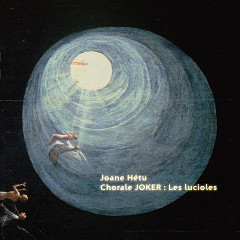
    Les lucioles dans Le Devoir

    «Le langage des signes de la Chorale Joker», Philippe Renaud, Le Devoir, 1 février 2021
    lundi 1 février 2021 Presse

    «L’été, j’habite en campagne, et les lucioles, ça fait longtemps qu’elles me fascinent, avec leurs petites lumières qui apparaissent et disparaissent», raconte la compositrice Joane Hétu, qui lance le second chapitre de ce qui est probablement la plus audacieuse proposition de sa carrière, déjà jalonnée d’audaces: Les lucioles, allégorie autour de la lueur d’espoir jaillissant de nos ténèbres composée avec ses collègues Danielle Palardy Roger et Jean Derome, et interprétée par la chorale bruitiste Joker. Une œuvre complexe mais ludique qui offre une expérience d’écoute hors de l’ordinaire.

    Vingt musiciens forment la Chorale Joker: dix-sept interprètes et improvisateurs dirigés par trois chefs de chœur, qui portent également le chapeau d’interprète, ce qui ajoute une couche de complexité à l’interprétation de l’œuvre, explique Joane Hétu, fondatrice (en 1991) et directrice de DAME (Distribution Ambiances magnétiques et cetera), diffuseur historique de la musique actuelle québécoise.

    «Diriger et interpréter en même temps, c’est un très grand défi, et c’est ce qui m’intéresse dans la musique actuelle: cette idée démocratique où tu peux être à la fois compositeur, chef d’orchestre, improvisateur ou interprète, c’est très égalitaire.» La présentation des Lucioles avait un second degré de difficulté: «C’était la première fois que je faisais ça, proposer une œuvre de 70 minutes, jouée par des musiciens qui n’ont pas de partitions et qui doivent suivre les indications du chef d’orchestre.»

    La partition des Lucioles existe pourtant, mais ce sont les chefs qui la lisent. Et elle est transcrite en signes — un code visuel, des gestes que lance le chef à ses interprètes, qui maîtrisent le langage. Cette manière de diriger une chorale est empruntée au compositeur et chef d’orchestre américain Walter Thompson, inventeur du «sound painting», une méthode où le chef d’orchestre, le «peintre sonore», signale à son orchestre les sons qu’il désire entendre pour construire son œuvre. La chorale Joker a même créé son propre vocabulaire gestuel: il comporte 80 signes, mais seulement une trentaine est nécessaire pour jouer Les lucioles.

    Les interprètes chantent, bien sûr, mais crient aussi, ricanent, font des bruits avec leurs bouches, clament aussi ces haïkus qui, dès le premier tableau, représentent la lumière se frayant un chemin dans l’obscurité. À certains égards, Les lucioles rappelle l’œuvre chorale du compositeur hongrois György Ligeti (Lux aeterna, 1961).

    Présenté en primeur au Festival international de musique actuelle de Victoriaville en 2019,  Les lucioles a été repris par la chorale Joker au Gesù le 5 mars 2020, représentation enregistrée que l’on découvre aujourd’hui et qui, on le conçoit, est aussi stimulante pour les tympans que pour les rétines, la performance en direct comportant une dimension physique, théâtrale. L’œuvre d’HétuDeromePalardy Roger a aussi une trame narrative: «J’invite les gens dans une salle pour écouter une chorale qui improvise, or j’ai toujours cru qu’il me fallait un fil conducteur, une histoire, dans le projet Joker», explique Joane Hétu.

    «Pour Les lucioles, on a travaillé sur le thème de l’émergence de la lumière à travers l’obscurité» au fil de six tableaux composés à six mains, celles des deux chefs d’orchestre attitrés de l’Ensemble SuperMusique, Danielle Palardy Roger et Joane Hétu, et du chef invité, Jean Derome. «Danielle s’est occupée de l’obscurité; c’est elle qui a composé les deux tableaux, très différents du reste de l’œuvre.»

    Ainsi, il convient d’aborder Les lucioles non pas comme un album, mais plutôt comme l’enregistrement d’une œuvre de théâtre sonore et musical, concède Joane Hétu. Elle ose la comparaison avec les enregistrements d’opéras, qui sont aussi des objets théâtraux autant que musicaux: «On ne voit plus les chanteurs, les costumes, les décors, mais on peut suivre l’histoire quand même», d’autant que le livret détaillé des Lucioles fournit à l’auditeur quelques clés pour comprendre le récit.


    Une œuvre complexe mais ludique qui offre une expérience d’écoute hors de l’ordinaire.

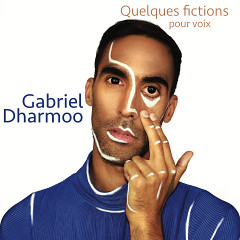
    Quelques fictions dans The Squid’s Ear

    «Editor’s List of Top Releases from 2020», Phil Zampino, The Squid’s Ear, 8 janvier 2021
    jeudi 21 janvier 2021 Presse

    Stunningly unusual vocal music from composer, music researcher and vocalist based in Montréal, Gabriel Dharmoo, collecting works from 2012 to 2019, performed with small and large ensembles using almost completely wordless voice, utterance, guttural sound, swoops and, melodic flights, augmented with physical percussion like stamping and clamping; brilliant and enthralling.

    The Montréal collectives and performer orbiting Ambiances Magnetiques consider to surprise and delight. Gabriel Dharmoo was a new name to me in 2020, but his vocal music is incredibly sophisticated and remarkably creative. His depth of interest and inquisitive nature shows through on this album, with a diverse set of ideas that make this album a unique joy.

    His depth of interest and inquisitive nature shows through on this album, with a diverse set of ideas that make this album a unique joy.

    Alvin Lucier: Navigations dans PAN M 360

    «Critique», Steve Naud, PAN M 360, 1 décembre 2020
    mardi 12 janvier 2021 Presse

    Avec Navigations, le Quatuor Bozzini nous offre une bien belle fenêtre sur l’univers d’Alvin Lucier.

    Depuis sa création il y a une vingtaine d’années, le Quatuor Bozzini a su développer des relations privilégiées avec plusieurs créateurs importants de l’époque actuelle. C’est à la demande du seul et unique Alvin Lucier que l’ensemble montréalais fait aujourd’hui paraître ce disque constitué de pièces jouées dans le cadre d’un concert sur les planches du Gesù en 2015. Elles ont été réinterprétées l’été dernier à l’église Sainte-Théodosie de Calixa-Lavalée pour les fins de cet enregistrement qui nous présente différentes facettes de l’œuvre du compositeur américain.

    Le disque s’ouvre avec Disappearances, une pièce créée en 1994 qui s’inscrit dans la portion plus drone du répertoire de Lucier. Soutenant des bourdons sonores qui se déploient sur plusieurs minutes, les membres du Quatuor Bozzini font preuve d’une adresse et d’une endurance colossales. Les mélomanes qui prisent ces faisceaux musicaux horizontaux en savoureront toute la profondeur avec beaucoup de plaisir.

    Group Tapper (2004) nous transporte dans un tout autre univers. Les quatre musiciens utilisent leurs violons comme des instruments à percussion en les frappant avec leurs archets. L’auditeur a l’impression de se retrouver dans une caverne où aurait lieu un rituel païen invoquant de mystérieuses divinités. Ce sentiment d’étrangeté s’accentue à l’écoute des vingt-quatre courtes séquences d’ Unanumo (1994) aux cours desquelles le chant des instrumentistes se marie au frottement des cordes. La musique qui en résulte déconcerte autant qu’elle fascine.

    En guise de conclusion, Navigations for Strings (1991) nous ramène sur les berges des rivières drone. Pour maîtriser ces courants sonores continus, le Bozzini se montre aussi habile que le réputé Quatuor Arditti qui a, lui aussi, endisqué cette œuvre il y a quelques années. Sa performance est, une fois de plus de très haut niveau, mais le travail de l’ingénieur de son Carl Talbot, qui nous permet d’en apprécier chaque détail avec une clarté cristalline, doit également être souligné.

    … les membres du Quatuor Bozzini font preuve d’une adresse et d’une endurance colossales. Les mélomanes qui prisent ces faisceaux musicaux horizontaux en savoureront toute la profondeur avec beaucoup de plaisir.
  • 45
  • 46
  • 47
  • 48
  • 49
  • 50
  • 51
  • 52
  • 53