Sauter au contenu principal
actuellecd
  • This website is also available in English.

Blogue

3585 résultats
  • 443
  • 444
  • 445
  • 446
  • 447
  • 448
  • 449
  • 450
  • 451
  • Télépathie dans wReck thiS MeSS

    «Review», Bart Plantenga, wReck thiS MeSS, 25 juillet 2003
    vendredi 25 juillet 2003 Presse

    Actually one of the best abstract conceptual discs I have received in some while. It seems to regard the unused and discarded noise produced by radios as fine raw material. It is a bit of adventurous sound seeking and giving shape to collections of sound found in the cracks between frequencies like there is some possibility for communicating with spirits to be found there.

    … giving shape to collections of sound found in the cracks between frequencies…

    Télépathie, liberum arbitrium dans Absurdities

    «Review», Nicolas, Absurdities, no 8, 19 juillet 2003
    samedi 19 juillet 2003 Presse

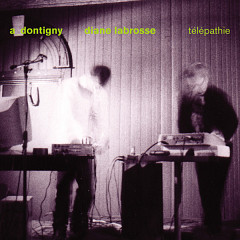
    No Type has started its own label too, besides the well known mp3 site they offer and to be honest they offer us some really cool musics for our listening pleasure. The first of the couple I checked is the A_dontigny, Diane Labrosse Télépathie CD, recorded live at the “Casa del Popolo” (guess somewhere in Québec? Or so in Canada). Within its 4 tracks (& its nearly 50 minutes) we can get electroacoustic to ambient soundscapes to more experimental noisy tunes as well that made me like a lot the rich flavours of this surprisingly good encounter. The second was the morceaux_de_machines liberum arbitrium CD, coming in the typical empreintes DIGITALes packaging (actually they house the No Type editions), a really phrenetic CD. Unfortunately don’t know much about this project besides the infos and mp3s that are available on No Type but this CD made me curious to check out their work. A kind of really “broken” sound but not with the meaning of hiss, crackle, scratch whatever. On the contrary, a kind of more noisy/frenzy Christian Marclay-like stuff. There were moments that I thought I was listening to a more noisy version of the impressive Marclay/Mueller More Encores CD. Truly impressive the way they treat & create their soundscapes & certainly a not so easy listening experience. Check it out!

    … electroacoustic to ambient soundscapes to more experimental noisy tunes… made me like a lot the rich flavours of this surprisingly good encounter.

    Prairie orange dans CHOQ

    «Les Poules de DAME», Simon Vézina, CHOQ, 15 juillet 2003
    mardi 15 juillet 2003 Presse

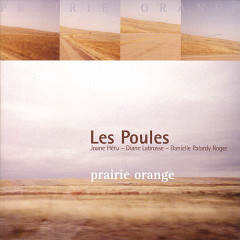
    Jeudi soir dernier, le trio féminin les Poules se réunissait à la Casa del Popolo pour le lancement d’un nouvel enregistrement: Prairie Orange. Voilà un second disque pour elles qui déphase de leur premier réalisé 15 années auparavant. Peut-être l’ignoriez-vous? Les Poules ne font plus dans la chanson. Je suis assis dans le sofa rétro de la Casa del Popolo. J’observe les murs de granges, les vieux tuyaux, le plafond imparfaitement parfait et l’éclairage de salon. Quels fabuleux contrastes avec le théâtre moderne, néonisé, et d’apparence cartésienne qui lui fait face. Je me considère chanceux d’être dans un endroit aussi sain et Saint que la Casa del Popolo. Je dis bien Saint car c’est en ses lieux que les Poules ressusciteront après 15 années. Plus que quelques minutes encore et ça y est… les Poules, Joane Hétu, Diane Labrosse et Danielle Palardy Roger, montent sur le surélevé. Ce trio nous présente alors leur nouvel album en donnant une prestation dans l’intimité du lieu. Les membres du trio sont toutes très reconnus dans l’univers de la musique actuelle montréalaise. Ses femmes nous ont offert une solide performance à la hauteur de leur réputation. Les poules nous font traverser Prairie Orange d’un seul élan. Le paysage sonore se compose de sons électroniques et acoustiques, de crépitements, de bruissements et de jeux buccaux. Avec un saxophone, un drum et un échantillonneur, les matériaux n’impressionnent pas. Par contre, ces trois femmes-là savent au moins quoi en faire. Wow! J’oublie que Joane se joue dans la bouche pour produire ses sons et me voilà transcendé. Les Iktus de Diane ouvre la marche vers un climax sonore surréaliste. Le jeu de Danielle aux percussions teint les décors et modère la progression. Les commentaires au saxe de Joane donnent parfois dans l’humour, mais sont de bon goût. Le tout se retrouve sur un autre excellent disque de l’étiquette DAME.

    Les poules ne font plus dans la chanson. À en juger par le nombre de gens sortant avant même la moitié de la prestation, cela a probablement déplu à plusieurs. Un fan possible de leur premier album est demeuré lui jusqu’à la fin et a risqué de demander en rappel la Ballade du pain. La demande fut ignorée. Par contre, le touriste belge de ma droite et les trois suffragettes de ma gauche semblaient eux comblés de bonheur. Moi de même par ailleurs.

    Merci aux Poules pour cette soirée unique et fabuleuse.

    Ses femmes nous ont offert une solide performance à la hauteur de leur réputation. Les poules nous font traverser Prairie Orange d’un seul élan.

    Asymétries dans Ici Montréal

    «Compact!», François Couture, Ici Montréal, no 6:40, 10 juillet 2003
    jeudi 10 juillet 2003 Presse

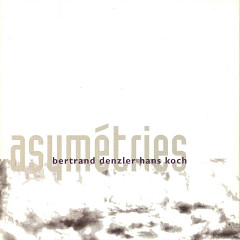
    Voilà une rareté: un disque d’Ambiances Magnétiques sans musicien québécois. Denzler (saxo ténor) et Koch (clarinette basse et saxo soprano) sont deux improvisateurs suisses que la recherche d’un nouveau vocabulaire musical a poussés aux limites de l’expression sonore. Rendant floue la frontière entre le corps et l’instrument, leur musique consiste en un tissu de gargouillis, de cliquetis et de cris retenus. Aride, vous dites? Absolument; le genre de disque qui fera dire à plusieurs que «c’est pas d’ia musique, ca». Mais la créativité et le niveau d’écoute entre les deux improvisateurs captiveront quiconque se donne la peine d’écouter avec l’esprit ouvert. 9/10

    … les deux improvisateurs captiveront quiconque se donne la peine d’écouter…
    9/10

    Télépathie dans Blow Up

    «Recensione», Nicola Catalano, Blow Up, no 62-63, 1 juillet 2003
    mardi 1 juillet 2003 Presse

    Registrato dal vivo sulle assi dell’attivissimo club Casa del Popolo, il disco è un incontro impro-telepatico tra il computer di A_dontigny (Napalm Jazz e morceaux_de_machines) e il campionatore di Diane Labrosse (un passato in gruppi art-rock al femminile nonchè frquenti collaborazioni con Ikue Mori, Zeena Parkins, Martin Tétreault etc.), scuro e pastoso sound design elettro-acustico sotterrato da brute valanghe di interferenze e disturbi.

    Montréal Free dans Signal to Noise

    «On the Record», Jay Collins, Signal to Noise, no 30, 1 juillet 2003
    mardi 1 juillet 2003 Presse

    Montréal Free is a four-disc box set spotlighting four separate groups that explore the realm of free improv. All are regularly featured performers at Montréal’s Casa del Popolo, a club founded in 2000 by Mauro Pezzente of Godspeed and his partner Kiva Stimac.

    The first group heard on this release features drummer John Heward, guitarist Sam Shalabi, bassist Alexandre St-Onge and the electric and prepared guitars of Rainer Wiens and is known as PO, an acronym for “provocative operations.” Collectively, they exploit textures with the emphasis being on coiling, twisting guitars, stirring arco bass reflections and vivacious drumplay. II for instance contains scratchy, abrasive guitar tones that eventually resolve into a mechanized industrialist motif. Distortion and guitar trickery have a role as well and eventually, Shalabi’s Arabic-tinged single note lines come to the fore. On the other hand, both IV and VI employ blustery and spirited bursts of energy, sometimes drawing upon repetitive patterns. While melodic content is distant and elusive, the explorative nature is intriguing.

    Disc two features the duo of ’Gypt Gore comprised of saxophonist Philémon and the ubiquitous guitarist Sam Shalabi both of whom appear later with Balai Mechanique. The duo invites two guests to expand their sound on four separate tracks, bassist Thierry Amar (of GY!BE and several other ensembles) on two and guitarist Andrew Dickson on two. As for duo pieces like Angular Momentum, And everything that looks like you, and Chair à canon, the duo follows one methodology, that of full-tilt, mercurial force without much of an intermission. Shalabi’s craggy, angular guitar lines continually joust with Philémon’s abrasive, impassioned alto sax in a percussive maelstrom that seldom subsides. While they avoid stepping on each other’s toes a sense of sameness does tend to set in as the torrential intensity doesn’t leave much breathing room for the listener. Shalabi demonstrates his diverse talents throughout, interestingly enough, even hinting at an almost jazzy sensibility on occasion. The guests have the effect of essentially reigning in the frenzy of the duo explorations, where more spacious, if even, ballad-like approaches are revealed. Navigation pacifique, an interaction with Dickson, is a strong point, suggesting a boat navigating through murky, unknown waters.

    The trio heard on disc three explores the art of using and filling space, rather than blowing the house down. Bassist Nicolas Caloia is perhaps the linchpin of this operation as he lightly coaxes the collective to follow new courses of action or drives the ensemble with his alternating rhythmic or broken tones. His arco work in particular, is striking, perhaps best evidenced in tandem with guitarist Chris Burns on presence #7. Drummer John Heward is supportive throughout, as he plinks, clinks and shuffles around his kit, carefully crafting his lines, like a painter choosing his colors and textures in a thoughtful manner (coincidentally, Heward is also known for his visual art). Burns demonstrates an impressive proclivity for interesting sounds and accents, particularly seen through his 12-string guitar work on presence #2 and presence #4. His lines evoke a slippery sensibility, like a slinky tumbling down the stairs. All in all this is a group focused on the depths of sound and intertwining lines that resuit from a combination of curious souls.

    The final chapter of this set comes from the “supergroup of the Montréal free improv scene” Balai Mécanique, a sextet consisting of saxophonist Philémon, trombonist Jacques Gravel, keyboardist Jesse Levine, guitarist Sam Shalabi, bassist Thierry Amar and drummer Will Glass. From the first notes, this is a balls to the wall affair that recalls the spirit of European free improv, and certainly, it is the fiercest of the groups heard on this set. The program itself contains seven tracks, four being lengthy explorations and three being brief interludes. The lengthy tracks encourage the interactions of each musician and contain a mix of waves of contrasting intensity and brief lulls before the impending tempest. Both Philémon and Shalabi follow similar paths that they explored on the ’Gypt Core sessions with extroverted, austere saxisms and the rumble tumble of jagged guitar lines. Of particular interest is Levine, who employs a host of sounds both on keyboard and piano. At times, he reminds one of enigmatic, spacey universes the other funky organ interludes (Cashel Boyle) and the next, flights of piano prowess. Most of the lengthier pieces swell and subside with brief breaks from the thunder only to eventually rise again in a final detonation of rugged, sinuous interplay. Ultimately, this is ambitious and demanding music that should put some hair on your chest.

    Taken as a whole then this four-disc set will prove a boon to fans of free improv and especially those curious about Montréal’s improvised music scene. While there may be some difficult moments the rewards can be significant.

    … this is ambitious and demanding music that should put some hair on your chest.
  • 443
  • 444
  • 445
  • 446
  • 447
  • 448
  • 449
  • 450
  • 451