Sauter au contenu principal
actuellecd
  • This website is also available in English.

Blogue

3585 résultats
  • 249
  • 250
  • 251
  • 252
  • 253
  • 254
  • 255
  • 256
  • 257
  • Vulgarités dans Downtown Music Gallery

    «Review», Bruce Lee Gallanter, Downtown Music Gallery, 16 janvier 2009
    vendredi 16 janvier 2009 Presse

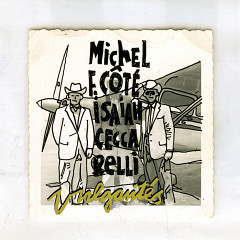
    Drum wiz Michel F Côté has been an integral member of the Ambiances Magentiques scene since the early days, playing with Bruire, Klaxon Gueule, later François Carrier and a few offerings as leader. Young drummer Isaiah Ceccarelli is one of the most recent members AM network, only appearing on a few discs as of now. For this duo disc, both drummers also switch off on other instruments like lap steel, piano and trumpet. The sound is more like selective silences and spacious sonic fragments. I dig the blend of quiet mallets, bowed cymbals, minimal eerie electronics, stark piano and other evocative suspense-filled sounds. Although the drums are often at the center of many of these pieces, they are just one ingredient in the swirling, shape-shifting world of exotic sounds found here. There is also little or no repeating rhythms or pulses involved. I did find the entire CD to be most engaging, thought provoking and consistently fascinating.

    I did find the entire CD to be most engaging, thought provoking and consistently fascinating.

    Arbor Vitæ dans BR-online

    «Kritik», Helmut Rohm, BR-online, 12 janvier 2009
    lundi 12 janvier 2009 Presse

    Nie hatte er großes Aufsehens von sich und seiner Arbeit gemacht und die Medien haben ihn lange Zeit auch kaum beachtet. So konnte es kommen, dass man ihn als den berühmtesten unbekannten Komponist Amerikas bezeichnet hat: James Tenney, der als experimentell orientierter, antiakademischer und authentischer Typ durchaus in die illustre Reihe der großen Nachfolger des Charles Ives gehört.

    Edgard Varèse hatte dem 1934 in Silver City/New Mexico Geborenen seinen Segen gegeben. Als Pianist studierte Tenney u.a. bei Eduard Steuermann (dessen konservative Haltung ihm freilich nicht behagte), als Komponist u.a. bei Carl Ruggles, Henry Brant und — elektronische Musik — bei Lejaren Hiller. Er begeisterte sich für die Ideen Cage und der New York School ebenso wie für die mikrotonalen Experimente eines Harry Partch. Er beschäftigte sich mit den polyrhythmischen Studien des Conlon Nancarrow und gehörte den ersten Ensembles der Minimalisten Steve Reich und Philip Glass an. Fluxus und Konzeptkunst beeinflussten seinen stilistischen Weg. Als Theoretiker und inspirierter Lehrer (u.a. bis zu seinem Tod 2006 am California Institute of Arts in Valencia) war er von großem Einfluss, doch seine faszinierende, oft radikal reduktionistische, auf mikrotonalen Klangverwandlungsprozessen beruhende Musik, wird erst in den letzten Jahren in weiteren Kreisen bekannt.

    Auf unausgetretenen Pfaden

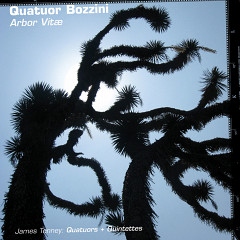
    Nun hat das engagiert auf unausgetretenen Pfaden wandelnde Quatuor Bozzini, das 2007 u.a. mit dem Förderpreis der Siemens Stiftung ausgezeichnet worden ist, beim kanadischen Label Collection QB (Québec) eine Doppel-CD mit einem Programm vorgelegt, das für Tenney instrumentales Schaffen bis zu einem gewissen Grade repräsentative genannt werden kann. CD 1 birgt alle Streichquartette — von der 1955 entstandenen Miniatur des Studenten, über stochastisch Strukturiertes, die hochartifiziellen Werke Koan (1984) und Saxony (1978-84) bis zur abgeklärten Erkundung harmonischer Zwischenreiche Arbor Vitæ aus dem letzten Lebensjahr des Komponisten.

    Suchen und finden

    Auf CD 2 finden sich die nicht weniger tief in seelische Tiefenbereiche vordringenden, teilweise auch geradezu exstatisch anrührenden Quintette: die Cognate Canons mit Perkussion (1995), die Diaphonic Study mit hinzutretendem Klavier (1997) und Quintext I-V: Five Textures mit obligatem Kontrabass (1972); letztere wunderbar inspirierte Stücke, mit denen Tenney auf Essentielles in der Kunst von Feldman, Xenakis, Ruggles, Varèse und Partch Bezug nimmt. Gewiss: Vordergründig handelt es sich um Musik für Kenner; für solche aber, die um die eminente Relativität des Begriffs der Kennerschaft wissen. Für Leute ohne Scheuklappen, die suchen und die ins Finden verliebt sind.

    … das engagiert auf unausgetretenen Pfaden wandelnde Quatuor Bozzini, das 2007 u.a. mit dem Förderpreis der Siemens Stiftung ausgezeichnet worden ist, [hat] beim kanadischen Label Collection QB (Québec) eine Doppel-CD mit einem Programm vorgelegt, das für Tenney instrumentales Schaffen bis zu einem gewissen Grade repräsentative genannt werden kann…

    Y’a du bruit dans ma cabane, Phénix dans Vital

    «Review», Dolf Mulder, Vital, no 660, 6 janvier 2009
    mardi 6 janvier 2009 Presse

    Les Poules is a trio made up of Joane Hétu saxophone, voice, Diane Labrosse (sampler), and Danielle Palardy Roger (percussion). Their collaboration as Les Poules has a history going back to 1986 when they released their first record Les contes de l’amère loi, to be followed by Prairie Orange in 2002. But under the names of Justine and Wondeur Brass their history goes back even further. All three of these women are very experienced improvisors and composers. All three of them have their own projects going on, and also they participate in even more projects and groups. From time to time they decide to write another chapter in the Les Poules-book. Phénix, their third project, is comprised of 24 tracks divided in six sections. All tracks are under 3 minutes and the tracks within each section make up one continuous whole. The recordings took place on two days in january 2008. Hétu contributes most (and best) of the time with her voice, making all kinds of noises that go well with the disciplined use of the sampler by Labrosse and the percussion work by Roger. They create moods and textures through improvisations that concentrate on the qualities of sound.

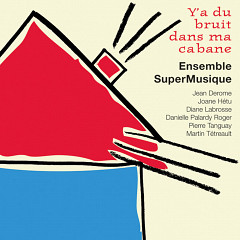
    All three take also part in the Ensemble Supermusique that is completed by Jean Derome (sax, objects, voice), Pierre Tanguay (drums) and Martin Tétreault (turntables). Recorded live in September 2007, the CD offers four improvisations for which respectively Hétu, Roger, Labrosse and Derome delivered the leading ideas. Canot-camping is a conducted improvisation by Derome. Y’a du bruit dans ma cabane originated from a improvisation concept designed by Danielle Palardy Roger. 8 moments brefs is also a conducted game-improvisation by Hétu. In this improvisation “Each sequence lasts exactly one minute. Every minute, all musicians switch material at random.” Also for this ensemble this is a third effort. The improvisations on both records have a similar outlook. Non-rhythmic percussion, vocal sounds by Hétu and others. Detailed pictures full of small and delicate sounds and noises. At times the music becomes loud and cacophonic, but most of the time, the improvisations pass by in a steady stream full of little and small sounds and noises. The longer you look in this river, the more fish you discover. Of both records I like the one by Ensemble Supermusique the most. Improvisations on this one have many exciting moments and dynamics, and personally I’m always having a good time by the turntable contributions by Tétreault in line ups as these.

    Detailed pictures full of small and delicate sounds and noises.

    BASE, Clic, Pas de deux, Geggie Project, Phénix dans Blow Up

    «Altrisuoni», Stefano Isidoro Bianchi, Blow Up, no 128, 1 janvier 2009
    jeudi 1 janvier 2009 Presse

    Quintetto di nuove uscite per la Ambiances Magnétiques. Nel secondo CD a nome personale il chitarrista dei Klaxon Gueule e dei Foodsoon Bernard Falaise chiama a raccolta una band voluminosa e di tutto rispetto (Gordon Allen alla tromba, Jean Derome al sax e al flauto, Lori Freedman al clarinetto e al clarone, Julien Grégoire alla marimba, Jean Martin alla batteria e Tom Walsh al trombone), dichiarandosi polistrumentista duttile ed accorto (chitarra, basso, banjo, mandolino, giradischi ecc.) per dar vita a una serie di quadri in cui rielabora i propri amori legati al passato: rock d’impianto ‘prog’, jazzetto informale, folk barocco, art-rock post canterburiano e persino fumi di centramerica come li amerebbe Tom Waits.

    Da parte loro Joane Hétu (sax e voce), Diane Labrosse (sampler) e Danielle Palardy Roger (percussioni) riportano in vita il vecchio progetto Les Poules, con cui elaborano una serie di stralunati schizzi in cui un’improvvisazione liberissima incontra la surrealtà del caso, la costruzione dada e le sfasature del jazz con molto, forse troppo, senso del gioco (la Hétu come Phil Minton, ecc.): gioverebbe parecchio la visione delle tre all’opera piuttosto che il solo ascolto.

    La stessa Palardy Roger rende molto meglio duettando con la chitarra di Fred Frith in Pas de deux, disco d’improvvisata che coagula elementi avant rock, jazz ed elettronici in un mix esuberante e una volta tanto veramente indefinibile, alieno da facili catalogazioni quanto prodigo di idee e input sorprendentemente freschi: dietro l’angolo sbucano un assolo di chitarra slide-hawaiiana, minacciose escrescenze elettroniche (i ‘treatments’ di Frith) o voci in format-strumento. Uno dei migliori Frith ascoltati negli ultimi anni.

    Profondamente diverse ma di tutto rispetto anche le chitarre di Antoine Berthiaume ed Elliott Sharp, che in Base celebrano un onirico viaggio impro-noise a base di feedback e drones trattati in modo tale da costitire un corpo compatto ma non monocromatico, anzi decisamente eccentrico nella scelta dei timbri, secchi e risonanti, metallici, a tratti quasi plastici: c’è qualcosa di spaziale e cosmico in questi suoni che sapere esclusivamente chitarristici stupisce non poco; anche in questo caso si tratta di uno dei migliori Sharp degli ultimi anni.

    Infine il CD accreditato al contrabbassista John Geggie, le cui composizioni, qui suonate assieme a Marilyn Crispell (piano) e Nick Fraser (batteria), ispirano uno struggente sentimento jazz old fashioned senza però mai restare impantanate nella semplice nostalgia ma viceversa ammiccando spesso verso l’avant; alla consumata abilità strumentale dei musicisti fare il resto.

    Uno dei migliori Frith ascoltati negli ultimi anni.

    BASE, Vulgarités, Pas de deux, Out of Nowhere dans Vital

    «Review», Dolf Mulder, Vital, no 659, 1 janvier 2009
    jeudi 1 janvier 2009 Presse

    Four CDs of improvising duos. Duos that take very different routes. With the exception of the CD by Frith and Roger, this are also examples of meetings between young and older generations. Berthiaume teams up with veteran Elliott Sharp. Quentin Sirjacq works with reputed French improvisor Joëlle Léandre, and Isaiah Ceccarelli works with Michel F Côté.

    Pas de deux is a first encounter — at last — between veterans Fred Frith (electric guitar, processing, voice) and Danielle Palardy Roger (drums, percussion, voice). Roger was most of her career involved in all-women line ups like Wondeur Brass, Justine and Les Poules. The recordings come from two duo concerts that took place in 2007 at the Festival des Musiques de Création. But they are not delivered here as played. Through a process of editing and mixing by Roger, Frith and others they compiled a collage of the best moments from these concerts. Frith uses many different techniques here. He integrates melodic and other conventional musical aspects into the improvised context where he earlier concentrated on pure sound and noise. This an album by two improvisors who are still passionate about their art as this album proves.

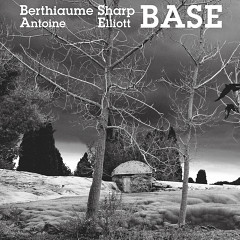
    Base is filled with 11 improvisations by guitarists Berthiaume and Sharp. They were recorded in New York. Berthiaume played duets earlier with Derek Bailey and Fred Frith, as well as with another guitarist, Takumi Seino and Mary Clare Brzytwa on flute and electronics. Now he has a date with Elliott Sharp, a central force from the New York avantgarde scene for some 30 years now. Their guitar improvisations consist of thick layers of heavily processed noisy sounds. Although this is a radical investigation into the world of sound and noise, their powerplay failed to impress me. For my taste it all sounded a bit arbitrary.

    Let’s switch to another duo. In contrast with the lengthy and at times bombastic streams of noise of Berthiaume and Sharp, Ceccarelli and Côté concentrate on small and subtile sounds.

    Both Ceccarelli and Côté play drums and percussion, piano, electronics, lap steel, trumpet and drumhead feedback on their inspired collaboration Vulgarités. Michel F Côté is already around for some time and his discography carries many remarkable CDs like Compil Zouave and (Juste) Claudette. Ceccarelli is a young drummer and composer. He plays a lot with other Montréal-based musicians in projects like Steppe Trio, Quartetski does Prokofiev and Quartetski does Satie. With a great sense for detail Côté and Ceccarelli deliver a very spirited improvised music. And without losing themselves in these details they are able to built captivating and surprising structures. Their pointillist style assures you hear something new after each listening.

    Quentin Sirjacq (piano, gong, prepared piano) I only met once before on a CD with Anthoine Berthiaume and Norman Teale. Joëlle Léandre needs no further introduction. She is a french improvisor on cello, to be heard on dozens and dozens of records. The improvisations on this record where done on one day in january in Paris.

    From all four duets these ones may be the most conventional and accessible ones. A romantic mood prevails here. The use of extended techniques is very limited. This has the advantage that the players can be easily distinguished. The interplay is more transparent. Their improvisations often come close to modern composed chamber music, like in the closing track Closing.

    A romantic mood prevails here.

    Quatuor Bozzini dans La Presse

    «Messiaen et les autres», Claude Gingras, La Presse, 27 décembre 2008
    samedi 27 décembre 2008 Presse
    L’intégrale des Quatuors à cordes de John Cage, […] traversé avec conviction par notre prodigieux Bozzini.
  • 249
  • 250
  • 251
  • 252
  • 253
  • 254
  • 255
  • 256
  • 257