Sauter au contenu principal
actuellecd
  • This website is also available in English.

Blogue

3585 résultats
  • 140
  • 141
  • 142
  • 143
  • 144
  • 145
  • 146
  • 147
  • 148
  • Wow! dans Monsieur Délire

    «Journal d’écoute», François Couture, Monsieur Délire, 19 décembre 2012
    mercredi 19 décembre 2012 Presse

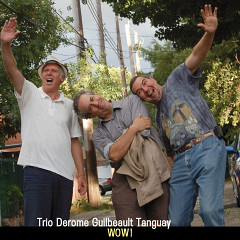
    Ce Wow du titre, quant à moi, vaut aussi pour “wow! Ambiances Magnétiques est toujours en vie!”. Après un silence de plus d’un an, voici que l’auguste étiquette de musique actuelle montréalaise publie trois disques à l’aube de 2013. À commencer par ce Wow!, quatrième album du Trio Derome Guilbeault Tanguay (cinquième si on compte le DVD en concert). Pour cet album, le trio de jazz actuel reprend la recette utilisée sur Danse à l’Anvers, le disque précédent, soit un mélange de standards, presque-standards et compositions originales de Jean Derome. Lennie Tristano et Eric Dolphy s’ajoutent au répertoire du groupe, ainsi que The Best Things in Life Are Free, qui perpétue la tradition qu’ont adopté ces compères et qui consiste à faire chanter Derome une fois par disque. Palestine et La danse de Raphaëlle de Derome sont des moments forts, le medley You Can Depend On Me & Wow aussi. Derome alterne entre un saxo baryton chaud à souhait et une flûte gaillarde — pas d’appeaux et autres objets sur ce disque, on s’en tient à une instrumentation jazz traditionnelle. Le contrebassiste Normand Guilbeault est particulièrement en forme sur cet enregistrement, et Pierre Tanguay fait des miracles pour détourner ses idées au lieu de les suivre. Wow.

    Wow

    Bruit court-circuit dans Cult#Mtl

    «Review», Lawrence Joseph, Cult#Mtl, 18 décembre 2012
    mardi 18 décembre 2012 Presse

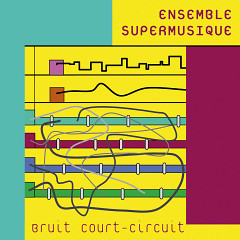
    The spark plugs at Ambiances Magnétiques have been energizing the musique actuelle field since René Lussier conducted 1983’s Fin du travail, and the label’s current catalogue is now overloaded with 229 releases. Long in sync with Victoriaville’s annual Musique Actuelle festival, it is no shock to learn that their latest project, whose title translates to “short circuit noise,” premiered at last May’s FIMAV.

    Although core musicians remain, the Ensemble SuperMusique has transformed itself since its founding in 1998, spinning in new members with great potential. Joining stalwarts Joane Hétu (sax, voice, objects), Jean Derome (sax, flute, objects), Martin Tétreault (turntables) and the double-A battery team of Michel F Côté and Danielle Palardy Roger are relative newcomers Alexandre St-Onge (bass and electronics), Émilie Girard-Charest (cello), Guido Del Fabbro (violin) and Vergil Sharkya’ (synths). The latter recruits are equally able to coax sounds out of their instruments, and the ensemble remains grounded in free improvisation relayed by graphic, oral or written scores.

    The CD features six tracks from five different composers. Previous projects included canoe trips and works about the seasons, recalling the earthier times before we all got lost in an electronic flux. Bruit Court-Circuit charges towards more modern developments, and, given past themes, can perhaps be heard as a warning as much as it is an embrace of technology.

    This is most clearly suggested in Tétreault’s Malgré tout, face A, which starts out with a simple drum meter, quickly followed by bursts of impulsive and dizzying noise from the rest, but ends with Hétu’s vocalization of basic human physical and psychological qualities. Thus we cycle from corporeal beats to industrial noise and back to our natural characteristics, from which we cannot escape, regardless of progress.

    It is sometimes difficult to source the sounds. Careful listening can provide clues based on placement in the mix, as each member is given their own corner, but puzzles remain. Is that drumbeat from Tétreault’s vinyl or Côté/Roger? Is the Beethoven cello sonata quote live or Memorex? Is that high-pitched wavering sound flute, sine wave electronics, amp/mic feedback or a fuse of all three?

    This is classic actuelle from the inventors of the genre. Fighting against technology’s tendency to black out human ideals, a ceaseless spirit of positive fun pervades the disc. Electrifying music and a thoughtful message upon which to end the year.

    This is classic actuelle from the inventors of the genre. Electrifying music and a thoughtful message upon which to end the year.

    Ailleurs dans Monsieur Délire

    «Journal d’écoute», François Couture, Monsieur Délire, 18 décembre 2012
    mardi 18 décembre 2012 Presse

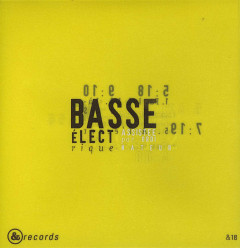
    … cela dit, ce nouveau disque de St-Onge ne sonne en rien comme celui de Xanthocephalus. Sur Ailleurs, le bassiste montréalais aligne des pièces de basse électrique assistée par ordinateur. Chaque note déclenche une action sonore numérique. Moins bruitiste, plus électroacoustique que ses albums solo précédents. Ailleurs est un album aride, cérébral, et les choix de palettes numériques sont parfois questionnables.

    Moins bruitiste, plus électroacoustique que ses albums solo précédents

    S’enfouir dans Monsieur Délire

    «Journal d’écoute», François Couture, Monsieur Délire, 17 décembre 2012
    lundi 17 décembre 2012 Presse

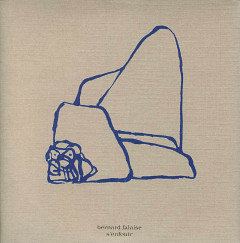
    Un nouvel album solo du guitariste Bernard Falaise (Miriodor, Klaxon Gueule, etc.). S’enfouir est un album cent pour cent solo, donc plus près de Do que de Clic. Or, Falaise n’y joue pas que de la guitare, ce qui lui donne une palette sonore plus étendue que Do. Vingt pièces courtes (rien n’atteint les trois minutes), des ambiances sonores surtout glauques, refermées sur elle-mêmes, quoi que l’humour de Falaise est bien présent. Un travail minutieux au niveau des arrangements et de l’ordre des pièces, qui permet de voir S’enfouir comme une suite en vingt mouvements plutôt qu’une collection de pièces éparses. Un disque fascinant.

    Un disque fascinant

    S’enfouir, Ailleurs dans Vital

    «Review», Frans de Waard, Vital, no 859, 3 décembre 2012
    lundi 3 décembre 2012 Presse

    Two new releases on one of Montréal’s finer homes of anything improvised (be it rock, modern classical, computer), one by someone we heard before and a new name. That one is Bernard Falaise, who plays electric guitar and is part of improvising ensembles such as Miriodor, Klaxon Gueule, Les Projectionnistes, Diesel and others. As a composer he wrote pieces for Ensemble contemporain de Montréal (ECM+) , Quartango and the Isis Quartet, as well as for film, theatre and choreography. I assume he plays the guitar here as well but also the piano, and uses some kind of way to process that playing. I assume, but am not sure, that this is the computer. It’s maybe more a gist than a certainty on y part. Twenty pieces, somewhere between under one minute and just under three minutes, with a total length of thirty-three minutes. An album of action, I should think, packed with ideas. On the website Falaise is quoted: “A suite of five pieces repeated four times. At each repetition, I scratched, twisted, dislocated, polluted, deboned, objected. A record about exhaustion, saturation and sinking. That’s how it is.” I don’t agree, necessarily. It’s not really exhausting to hear all of this music, but things do indeed appear and disappear rather quickly from time to time. As outlined five pieces, repeated four times (which you can see, more or less, by the equal lengths of respective songs), which have a fine sensible character to it. Part experimental, part improvised, a bit of musique concrete like, but perhaps due to its brief character also a bit ‘pop’ like in approach. Short, sketch like ideas, but nevertheless quite worked out into well formed compositions. An excellent CD, I thought, full of sparkling pieces, strange moves and with an exciting brief character per track. Certainly moving around various musical circles.

    Less tracks — six — and a bit longer — thirty-five minutes — is the new release by Alexandre St-Onge, who is a well-known musician from Montréal, who has played with such bands as Et Sans, K.A.N.T.N.A.G.A.N.O., Klaxon Gueule, Pink Saliva, Mineminemine, Shalabi Effect and Undo and has already released seven solo CDs for labels as Oral, Alien8, Squint Fucker Press and Namskeio. His main instrument is the bass, sometimes acoustic, but on his new solo CD the electric one and also the computer. Here we deal with an interesting combination of improvisation and musique concrete. I assume — again and again — that he feeds the recordings of his bass playing through the computer, perhaps in real time, perhaps not, where it’s being transposed and pitched up and down the scale. That’s is nice, but I must admit that I though the CD was also a bit too much based on a single idea, which happened to take six almost identical forms. The improvised plucking of the bass, and the transposition of those sounds is something we know after a while, and one wonders if there is anything more that could be done. Probably there is, but it’s not happening here. That is a pity. No matter how brief the whole album is (well, a real LP length by old standards of course), the similarity in approaches works a bit against the album as a whole, whereas each track individually is actually quite nice.

    An excellent CD, I thought, full of sparkling pieces, strange moves and with an exciting brief character per track.
  • 140
  • 141
  • 142
  • 143
  • 144
  • 145
  • 146
  • 147
  • 148