Sauter au contenu principal
actuellecd
  • This website is also available in English.

Blogue

3585 résultats
  • 134
  • 135
  • 136
  • 137
  • 138
  • 139
  • 140
  • 141
  • 142
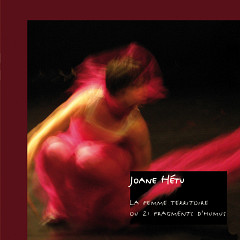
  • La femme territoire ou 21 fragments d’humus dans Vital

    «Review», Dolf Mulder, Vital, no 881, 6 mai 2013
    lundi 6 mai 2013 Presse

    The new solo work by Hétu is most fascinating. If ‘pittoresque’ is a useful qualification to describe abstract soundworks, I would like to use it in the case. An intriguing work. It is a vocal dominated work, sparsely instrumented and completed by noises, sounds and field recording. All five players sing and play (accordion, percussion, flutes, sax, objects, etc.). Most texts are by Hétu herself, plus some by Cavafy, Shakespeare, Cechov and Caille, all in translated in French. But this was not limiting my experience of this piece, like some of her earlier work. Most texts are spoken, performed, sung and everything in between. The whole is made up of 21 small pieces, each with its own dramatic and musical quality.

    The whole is made up of 21 small pieces, each with its own dramatic and musical quality.

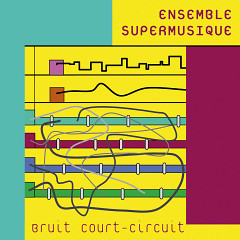
    Bruit court-circuit dans Vital

    «Review», Dolf Mulder, Vital, no 881, 6 mai 2013
    lundi 6 mai 2013 Presse

    Ensemble Supermusique interprets six compositions, by the hands of Tétreault, St-Onge, Roger, Hétu and Derome. They are also the players of these pieces together with Émile Girared-Charest (violoncello),Vergil Sharkya (synthesizer), Michel F Coté (drums, microphones) and Guido del Fabbro (violin). The opening piece Malgré tout Face A is an work by Tétreault. Based on a straight and simple beat, sampled sounds, voice,s, etc. are put over it. Halfway after a break of silence, a narrator speaks with mellotron-like sounds in the background. Also in his second piece on this album, Malgré tout Face B experiments with beat. In Le fruit du hasard by Derome, rhythm and melody and not far way. In all other compositions we are dealing with far more abstract soundconstructions, built from a diversity of sounds, instruments and objects. An example of this is the piece SM: re-trait de l’abjection, the work I liked most. The ensemble uses noise-esthetics, sound-improvisation, sprechgesang, acoustic and electronic soundsources, etc, for well-defined excursions and compositions, that are far more than just an eclectic mix. But a new musical language.

    The ensemble uses noise-esthetics, sound-improvisation, sprechgesang, acoustic and electronic soundsources, etc, for well-defined excursions and compositions, that are far more than just an eclectic mix. But a new musical language.

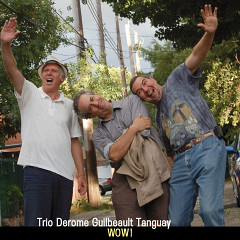
    Wow! dans Vital

    «Review», Dolf Mulder, Vital, no 881, 6 mai 2013
    lundi 6 mai 2013 Presse

    New releases by well-known combinations and artists. Wow! is a fine release, because it brings a new perspective for people like me who say by impulse, exposed to traditional jazz, ‘oh yes, I know that, but please pass it to someone else’. Their interpretations are very vivid and here and now. They don’t bring old pieces to the present, but also the other way around if that makes any sense. Wow! is their fifth effort featuring three compositions by Derome and four standards: The Best Things in Life Are Free (Ray Henderson), Wow and Dreams, both written by Lennie Tristano and The Baron, a composition by Eric Dolphy. A mix we know already from their earlier releases. The players are true believers in the classic jazz material, and succeed in putting them in unpretentious and convincing jackets.

    Wow! is a fine release, because it brings a new perspective for people like me

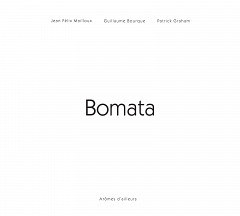
    Arômes d’ailleurs dans A jazz listener’s thoughts

    «Review», A jazz listener’s thoughts, 6 mai 2013
    lundi 6 mai 2013 Presse

    Bomata Arômes d’ailleurs (Mam 2013): A French Canadian trio of Jean Felix Mailloux on bass,Guillaume Bourque on clarinet and bass clarinet, and Patrick Graham on drums, with support from pianist Jerome Beaulieu on piano on two pieces and additional percussion on others. This is a soothing outing featuring the clear and mellow lower registers of the clarinets over some nice rhythmic play from the bass and percussion, always taken at a moderate pace and dynamic. Many of the pieces are named for spices and flavorings — cumin, sesame, saffron, jasmine, cardamon — and others have names like At the Park and White Night which are expressive of the delicate flavors that the band produces. Really pretty modern impressionism.

    Really pretty modern impressionism

    La femme territoire ou 21 fragments d’humus dans Blow Up

    «Altrisuoni», Dionisio Capuano, Blow Up, no 180, 1 mai 2013
    mercredi 1 mai 2013 Presse

    Il nuovo progetto della Hétu, costruito secondo il modello del teatro sonoro, è sviluppato da un quintetto di musicisti-interpreti che vede in organico, oltre alla stessa compositrice, Alice Tougas St-Jak, Jean Derome, Isaiah Ceccarelli, and Susanna Hood. La struttura a scene-frammenti esplora temi la cui diversità epistemologica (sesso, corpo, politica, ecologia, morte) viene unificata attraverso l’idea della complessità femminile. La scrittura musicale è caratterizzata dal modo di lavorare sulla melodia proprio del rock in opposition e dell’avant-song, che può concedersi anche sembianze popolari come in S’la couler douce, limpida melodia per l’accordion e la voce della Tougas St-Jak. Più spesso però la forma canzone viene destrutturata tra tecniche vocali estreme, invenzioni patafisiche, field recordings, rumorismi da oggetti trovati, questo forse per meglio rappresentare la frammentarietà dell’esistenza. Ci vogliono un paio di ascolti per cogliere il valore complessivo di forma e sostanza del lavoro, che peraltro subito può essere apprezzato nell’impasto maschile-femminile di Ô madame la morte, nell’aplomb contemporaneo di Fragment Discipline de vie e nell’ugola quasi bianca di Susanna Hood (Nue). Ed è principalmente attraverso il canto che si rinviene traccia di quel senso difficile d’unità al quale si accennava e pure l’immagine d’una donna-umanità ferita ma ancora viva.

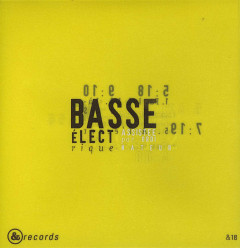
    Ailleurs dans The WholeNote

    «Something in the Air: Liberation of the Unaccompanied Bass Solo», Ken Waxman, The WholeNote, no 18:8, 1 mai 2013
    mercredi 1 mai 2013 Presse

    Of all the instruments that needed the advances of free music in the 20th century to show off its true character, it has been the double bass which benefitted most from this situation. Relegated to decorative, scene setting or mere rhythmic functions in conventional classical and jazz performances, it was only when bassists were able to express themselves without restraint that their role grew. By the 21st century in fact, solo bass recitals became as commonplace as those by other instrumentalists. The reason, as these CDs demonstrate, is the arrival of performers who can extract a multiplicity of novel tones, timbres and textures from four tautly wound strings. […]

    If Jones’ electronic interface is limited, Montréal-based Alexandre St-Onge and Norwegian-in-Austin Ingebrigt Håker Flaten draw more textures to their finger tips by utilizing amplified electric basses on their solos sessions. A member of bands such as Klaxon Gueule, as well as studying for his PhD in art, St-Onge describes himself as a sound performer and the six selections on Ailleurs (&records ET 18) are studded as much with signal-processed drones and splutters as reflective string modulations. Layering the sequences with loops that replicate sounds ranging from ring-modulator whooshes to bell ringing and distorted flanges, the basic double bass-like rhythmic qualities of the instrument are muted. Only on the fifth track does the tremolo, dial-twisting exposition pull back enough for a semi-acoustic interlude. Here juddering bass-string plucks can be heard contrapuntally advancing the narrative, which is still decorated with additional droning lines and wiggling voltage-affiliated cries. The achievement of Ailleurs is that by mutating its intonation and freeing the bass from its limitations as a purely rhythmic instrument a new interface appears. The reverberating result is of an expansive formula that evocatively builds on expected bull fiddle timbres the way a realistic photograph could be the basis for a surrealistic art. […]
    The achievement of Ailleurs is that by mutating its intonation and freeing the bass from its limitations as a purely rhythmic instrument a new interface appears.
  • 134
  • 135
  • 136
  • 137
  • 138
  • 139
  • 140
  • 141
  • 142