Sauter au contenu principal
actuellecd

Blogue

3585 résultats
  • 121
  • 122
  • 123
  • 124
  • 125
  • 126
  • 127
  • 128
  • 129
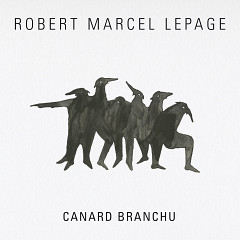
  • 6 improvisations, Canard branchu, Le lait maternel, Le Sacre du printemps, Le caillou dans Vital

    «Review», Dolf Mulder, Vital, no 929, 21 avril 2014
    lundi 21 avril 2014 Presse

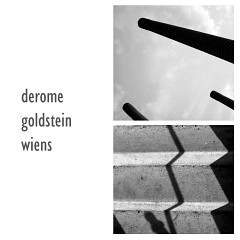
    A new bunch of CDs from Ambiances Magnetiques. From Goldstein and Wiens we know earlier releases as a trio with Ganesh Anandan and John Heward. This time Jean Derome is their partner. As a trio however they have already performed for a longer time. On april 12th, 2013 they recorded this crystal clear recording in the studio. Goldstein playing violin, Wiens mainly prepared electric guitar plus kalimba, and Derome alto sax, flute and objects. Intense and concentrated improvisations with lots of colour and sounds. Fine interplay and interaction between these reputed players, with some breath-taking moments. Like Derome, Robert Marcel Lepage is one of the founding members of Ambiances Magnétiques. He didn’t release many albums in the last few years if I’m right, but now he strikes back with two releases. He presents the more light-hearted and accessible part of the Montréal musical spectrum. Le lait maternel contains 18 compositions Lepage wrote between 2003 and 2010 for film. It has some very catchy tunes like the jumpy Le Rock du Bungalow that evokes orchestral film music from the 60s. Good time music! Very friendly music, tapping from a diversity of styles and idioms. Pieces on Canard Branchu leave some more room for improvisation, but in essence this is also an album of melodious and harmonious music, typical for the Ambiances scene since the 80s. Again performed for a big ensemble of 9 musicians. So both albums offer a bunch of well-defined tunes, dressed up in fine arrangements giving voice to many different instruments and sounds. They may not surprise you, but will sure entertain you. With the new release by Palardy we turn again to a more serious face of this scene. Again we are dealing with one of the early member of the Ambiances scene. Self-taught Danielle Palardy Roger made her mark since the early 80s with groups like Justine, Wondeur Brass and Les Poules. In the last few years — since about 1998 — she concentrates on writing for Ensemble SuperMusique, an ensemble that was founded by her. Compared with earlier projects by her, this one is most close to composed new music and deals with the play between improvisation and composition. Le Caillou is one of her oldest and most played works for this ensemble. It “is a simple game piece in which the players pass the musical development of the piece to each other while building up a slow crescendo; another set of instructions tells the musicians to trace back their steps and play as exactly as possible what they did play the first time around”, Roger explains. The one that surprised me most this time is Quartetski doing Stravinsky. Quartetski is a project founded by Pierre-Yves Martel in 2007, focused on reinterpreting works of classical composers in an improvised setting. They reworked compositions by Prokofiev, Purcell, Satie, Ellington, Cage, a.o. Because of the 100th anniversary of Stravinsky’s Rite of Spring they decided to chose this work. Besides Pierre-Yves Martel (viola da gamba, objects), we hear Isaiah Ceccarelli (drums), Bernard Falaise (electric guitar), Philippe Lauzier (bass clarinet, soprano sax) and Joshua Zubot (violin). Marvellous job in transposing this orchestral work for small ensemble. Martel started from Stravinsky’s two-piano version of this composition. His re-working leaves the original work in tact concerning spirit, energy and drive that is in the original piece. Adding room for improvisation. Chapeau!

    Chapeau!

    Canard branchu dans Downtown Music Gallery

    «Review», Bruce Lee Gallanter, Downtown Music Gallery, 18 avril 2014
    vendredi 18 avril 2014 Presse

    This disc features six clarinetists: Jean-Sébastien Leblanc, Pierre-Emmanuel Poizat, André Moisan, Guillaume Bourque, Lori Freedman & Robert Marcel Lepage on assorted clarinets plus Nicolas Borycki on organ (3 tracks), Fraser Hollins on contrabass and Pierre Tanguay on drums. Mr. Lepage is a clarinet player with more than a dozen discs out on the Ambiances Magnétiques label, each one with a different theme or strategy. There appears to a theme for this disc but since I still can’t read French, I can’t tell you what that theme is. As a big fan of the clarinet myself, I really dig what few clarinet ensembles I’ve been able to check out. This one is equally formidable thanks to the strong writing of Lepage and the spirited playing of the clarinets and rhythm section. Lepage composes quirky, playful melodies which seem deceptively simple yet there is more going on than what we hear on the surface. Some pieces are just the clarinets with weaving their elegant lines. I dig the way Mr. Borycki’s sly yet cheesy organ adds a certain lounge-like charm to Rainettes à la brunante. The ever-inspired Lori Freedman takes a couple of fine bass clarinet solos here, which is yet another reason to savor this gem. What I like most about this disc is that none of it is very avant or overly adventurous. The music stands on its own quietly inventive and thoughtfully played enchantments.

    The music stands on its own quietly inventive and thoughtfully played enchantments.

    Transparence dans Kathodik

    «Recensione», Marco Carcasi, Kathodik, 17 avril 2014
    jeudi 17 avril 2014 Presse

    Casa Schraum, difficilmente sbaglia un colpo.

    Transparence di Philippe Lauzier, è una raccolta di dodici passaggi (impro) solisti, registrati in vari luoghi della sua città natale (Montreal), fra il 2010 e il 2012.

    Per clarinetto basso o sax.

    Espressione acustica leggera ed in costante movimento.

    Nuda e cruda o sollecitata dall’amplificazione, in versione sovrapposta multitraccia o screziata di leggero feedback, delle campane motorizzate sul finire.

    Riduzionista, ma non priva di una forte componente persuasiva (è un fitto dialogo di silenzi e microsegnali quello offerto).

    Luminosa e suadente, sia quando raschia pancia a terra (Gisement), o s’alza come candida nebbia trafitta dall’alba (Au-dessus).

    Una vibrazione pigolante, calda ed accogliente (Serpenter), per un percorso narrativo che intriga e rasserena.

    L’avvicinarsi è consigliato.

    Rêve éveillé dans Voir

    «Critique», Réjean Beaucage, Voir, 17 avril 2014
    jeudi 17 avril 2014 Presse

    Le trio de base de l’ensemble Cordâme s’est transformé en septet pour ce concert enregistré à L’Astral, mais la cohésion est telle qu’on croirait bien que ces musiciens-là jouent toujours ensemble. La musique de Jean Félix Mailloux (contrebasse), qui a des racines partout, laisse bien sûr une belle place aux cordes (celles du violon, du violoncelle, de la harpe ou du piano), mais la clarinette de Guillaume Bourque et la batterie d’Isaiah Ceccarelli permettent aussi au compositeur de varier les couleurs. Le pianiste François Bourassa est vraiment utilisé comme un membre de l’ensemble, faisant évidemment un solo ici et là, mais servant surtout la musique avec brio (son ajout donne un petit côté «Michel Legrand» pas désagréable du tout à une pièce comme Vancouver).

    … la cohésion est telle qu’on croirait bien que ces musiciens-là jouent toujours ensemble.

    Rubedo’ ro dans Le Devoir

    «Critique», Yves Bernard, Le Devoir, 11 avril 2014
    vendredi 11 avril 2014 Presse

    Au cœur des mutations entre langues réelles et langages inventés, à travers le parcours géographique ou imaginaire des peuples qu’elle a fréquentés ou rêvés, Géraldine Eguiluz refait son monde, chante et vocalise sa folie, improvise, libère son enfant intérieur et marie sa voix à celle des cordes qui l’accompagnent. Elle vient du Mexique, est passée par la Colombie, la France et le Portugal, puis s’est installée à Québec et à Montréal, où elle vit maintenant. Mais dans sa musique, elle est de partout. Ou plutôt de l’alchimie, de la force mystérieuse, de la puissance tragique et de la composition instantanée, quelque part entre la musique contemporaine écrite ou improvisée, la musique de chambre, les sons afro-américains, la valse déconstruite, l’opéra volontairement croche et le chant autochtone. Elle joue dans le chant, incarne ses personnages intérieurs, connecte avec l’au-delà. En pénétrant le souffle de la terre.

    Elle joue dans le chant, incarne ses personnages intérieurs, connecte avec l’au-delà. En pénétrant le souffle de la terre.

    Transparence dans The Sound Projector

    «The Man with the Horn(s)», Paul Margree, The Sound Projector, 10 avril 2014
    jeudi 10 avril 2014 Presse

    A series of solo investigations into various woodwinds with some ‘motorized bells’ (whatever they are) thrown in for good measure, from the Montreal-based improviser and composer. Lauzier works with bass and half-bass clarinet and alto and soprano saxophones; sometimes he amplifies or multitracks the explorations to fill out the sound, but for the most part it’s just him and the horn.

    That said, it’s not as austere as you’d expect. Empoigner’s bass clarinet clicks and squeaks are pretty minimal, true, but the rest of the record is full of life and quirks. Geyser is just under four minutes of bubbling and hissing with an almost inaudible whine underscoring, like a giant kettle (or, in fact, a geyser). Meanwhile, Pigment, is a less liquid, more angular, a whistling, popping piece. Despite its analogue origins, it sounds atonally digital, as if it were generated by the sound card of some primitive computer. Bruine — the final track on the album, and the only one not created with a woodwind instrument (it’s those pesky mechanical bells) — is a gorgeous and glistening sheet of sound.

    Lauzier provides a succinct yet comprehensive summary on the back of the CD to explain which instrument was used for each piece, and which, if any treatments were applied. So, for, example, it is interesting to know that En-dessus’s long, uneasy drone was made by four multi-tracked bass clarinets, and surprising to find Gisement’s grind and roar is unadulterated bass clarinet.

    Listening to this record, I keep feeling I’m eavesdropping on a roomful of instruments after their players have gone home. The tracks are like exhalations, utterances, cries, conversations, the instruments playing themselves. The seesawing wheeze of Interlignes is like an alto saxophone stretching and relaxing after a long day in the orchestra pit. The Evan-Parker-on-holiday-style trilling of Au-dessus is the soprano saxophone’s joyful, bird-like preening. Silhouette advances slowly, like a panther picking its way through long grass.
    Lauzier has put together an intriguing collection of pieces for this record, which open our ears to the possibilities of his chosen instruments. An engrossing listen.

    An engrossing listen.
  • 121
  • 122
  • 123
  • 124
  • 125
  • 126
  • 127
  • 128
  • 129